English
- Afrikaans
- Albanian
- Amharic
- Arabic
- Armenian
- Azerbaijani
- Basque
- Belarusian
- Bengali
- Bosnian
- Bulgarian
- Catalan
- Cebuano
- Corsican
- Croatian
- Czech
- Danish
- Dutch
- English
- Esperanto
- Estonian
- Finnish
- French
- Frisian
- Galician
- Georgian
- German
- Greek
- Gujarati
- Haitian Creole
- hausa
- hawaiian
- Hebrew
- Hindi
- Miao
- Hungarian
- Icelandic
- igbo
- Indonesian
- irish
- Italian
- Japanese
- Javanese
- Kannada
- kazakh
- Khmer
- Rwandese
- Korean
- Kurdish
- Kyrgyz
- Lao
- Latin
- Latvian
- Lithuanian
- Luxembourgish
- Macedonian
- Malgashi
- Malay
- Malayalam
- Maltese
- Maori
- Marathi
- Mongolian
- Myanmar
- Nepali
- Norwegian
- Norwegian
- Occitan
- Pashto
- Persian
- Polish
- Portuguese
- Punjabi
- Romanian
- Russian
- Samoan
- Scottish Gaelic
- Serbian
- Sesotho
- Shona
- Sindhi
- Sinhala
- Slovak
- Slovenian
- Somali
- Spanish
- Sundanese
- Swahili
- Swedish
- Tagalog
- Tajik
- Tamil
- Tatar
- Telugu
- Thai
- Turkish
- Turkmen
- Ukrainian
- Urdu
- Uighur
- Uzbek
- Vietnamese
- Welsh
- Bantu
- Yiddish
- Yoruba
- Zulu

Telephone: +86 13120555503
Email: frank@cypump.com


Apr . 01, 2024 17:55 Back to list
interchangeable slurry pump spare parts Performance Analysis
Introduction
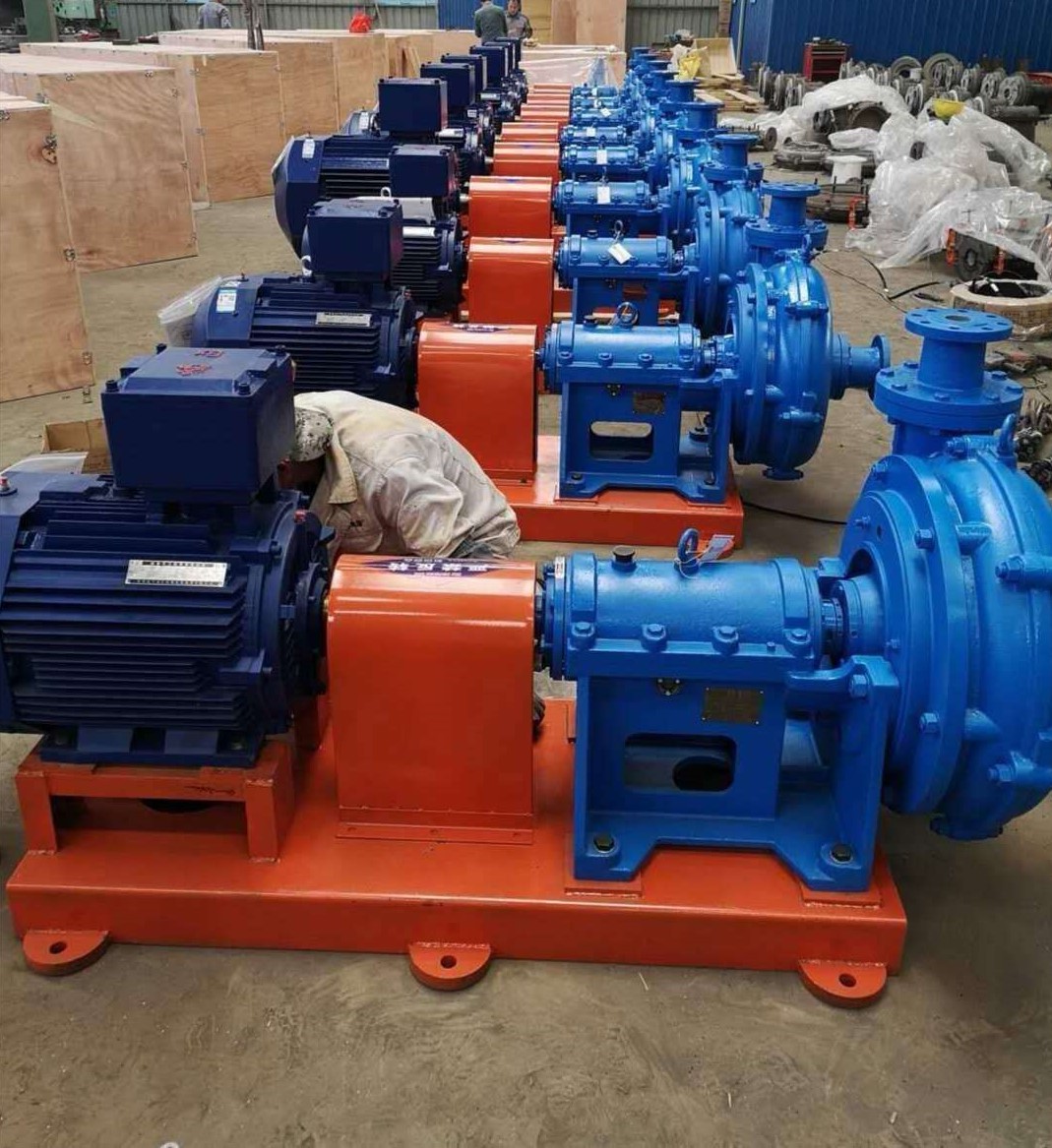
Interchangeable slurry pump spare parts represent a critical component within the broader fluid handling industry, serving sectors including mining, wastewater treatment, chemical processing, and oil & gas. These components – encompassing impellers, liners, casings, seals, and shaft sleeves – are engineered to withstand the abrasive and corrosive nature of slurries, mixtures of liquids carrying solid particles. The demand for interchangeability stems from the need to minimize downtime, reduce maintenance costs, and provide operational flexibility. Unlike proprietary parts locked to a single Original Equipment Manufacturer (OEM), interchangeable parts adhere to industry-accepted dimensional standards, allowing end-users to source replacements from multiple vendors. Core performance metrics defining these parts include abrasion resistance, corrosion resistance, hydraulic efficiency, and operational lifespan under demanding conditions. A key industry pain point centers around balancing initial cost versus long-term total cost of ownership, with cheaper materials often exhibiting accelerated wear and necessitating more frequent replacements.
Material Science & Manufacturing
The materials selection for interchangeable slurry pump spare parts is paramount, dictated by the slurry’s composition and operating environment. High-chrome cast iron (typically 27% Cr) is a common choice for impellers and liners due to its excellent abrasion resistance, stemming from the formation of hard chromium carbides during the casting process. However, it's susceptible to corrosion, particularly in acidic or saline environments. Stainless steel alloys (304, 316, CD4MCu) offer superior corrosion resistance but generally exhibit lower abrasion resistance than high-chrome iron. Ceramic materials (alumina, silicon carbide) are employed in applications demanding extreme abrasion resistance and chemical inertness, albeit at a higher cost. Polymer-based materials, such as polyurethane and rubber, are utilized for liners and seals, providing cushioning and wear protection, particularly for fragile slurries. Manufacturing processes vary depending on the component and material. Impellers and casings are typically produced via investment casting or sand casting, followed by heat treatment to optimize mechanical properties. Liners are often manufactured using rubber lining processes, involving bonding rubber to a steel shell under pressure and temperature. Shaft sleeves are frequently machined from solid bar stock. Critical parameter control during manufacturing includes dimensional accuracy (to ensure interchangeability), hardness testing (to verify material properties), and non-destructive testing (NDT), such as radiographic inspection, to detect internal flaws. Welding processes, if employed, must adhere to stringent standards (e.g., AWS D1.1) to maintain structural integrity.
Performance & Engineering
The performance of interchangeable slurry pump spare parts is intrinsically linked to hydraulic design and mechanical integrity. Impeller geometry (blade angle, vane number, impeller diameter) significantly impacts pump capacity, head, and efficiency. Force analysis, employing computational fluid dynamics (CFD), is crucial to optimize impeller design and minimize erosion and cavitation. Cavitation, the formation and collapse of vapor bubbles, is a major cause of impeller damage and noise. Environmental resistance necessitates consideration of operating temperature, pH, and solid particle characteristics. High temperatures can reduce material strength and accelerate corrosion. Abrasive particles cause wear through mechanisms like micro-cutting, fatigue, and impact. Compliance requirements, dictated by industry standards (discussed in Section 7), mandate minimum material specifications, dimensional tolerances, and performance testing. Functional implementation involves proper component assembly, ensuring correct clearances and alignment to prevent premature failure. Seal performance is critical for preventing leakage and maintaining pump efficiency. Mechanical seals are commonly used, relying on a rotating seal face and a stationary seal face to create a tight barrier. Proper lubrication and cooling are essential for seal longevity.
Technical Specifications
| Component | Material Grade | Hardness (BHN) | Tensile Strength (MPa) |
|---|---|---|---|
| Impeller | High-Chrome Cast Iron (27% Cr) | 550-650 | 400-600 |
| Liner | Rubber (Natural Rubber, EPDM) | 40-60 (Shore A) | 10-20 |
| Casing | Cast Iron (ASTM A48 Class 30) | 150-250 | 200-350 |
| Shaft Sleeve | 4140 Alloy Steel | 250-350 | 600-800 |
| Mechanical Seal (Face) | Silicon Carbide | 900-1200 (Vickers) | 3000-4000 |
| Volute Liner | Ceramic (Alumina) | 1800-2000 (Vickers) | 300-500 |
Failure Mode & Maintenance
Failure modes for interchangeable slurry pump spare parts are diverse and dependent on operating conditions. Impeller failure commonly manifests as erosion, cavitation damage, and fatigue cracking, often initiating at the blade tips or within the vane passages. Liners are susceptible to wear, particularly in areas directly exposed to the slurry flow. Rubber liners can degrade due to chemical attack and abrasion. Casing failures typically involve cracking due to stress corrosion or fatigue. Shaft sleeves can experience wear and corrosion, leading to increased clearances and leakage. Mechanical seal failures are often attributed to abrasion, corrosion, and improper installation. Failure analysis techniques, including visual inspection, microscopic examination, and metallurgical testing, are crucial for identifying the root cause of failure. Maintenance strategies include preventative maintenance (regular inspections, lubrication, seal replacement) and condition monitoring (vibration analysis, temperature monitoring). Proper impeller balancing is essential to minimize vibration and extend bearing life. Regular liner replacement is necessary to maintain pump efficiency. Corrosion inhibitors can be added to the slurry to mitigate corrosion. Proper storage of spare parts is also important to prevent deterioration. A well-defined maintenance schedule and trained personnel are essential for maximizing pump uptime and minimizing total cost of ownership.
Industry FAQ
Q: What are the key considerations when selecting interchangeable impeller materials for a highly abrasive slurry containing angular quartz particles?
A: For highly abrasive slurries containing angular quartz, prioritize materials with exceptional abrasion resistance. High-chrome cast iron is a good starting point, but consider ceramic materials (alumina or silicon carbide) for extended lifespan, especially if the slurry also exhibits corrosive characteristics. Evaluate the slurry’s pH and temperature to determine the optimal ceramic composition. Consider using a harder liner material to complement the impeller material, providing enhanced wear protection.
Q: How does the hardness of a liner material affect its resistance to wear in a slurry pump application?
A: Generally, higher hardness correlates with increased abrasion resistance. However, it's not a simple linear relationship. Excessive hardness can lead to brittle fracture under impact loading. The optimal hardness depends on the type of abrasive particles. For hard, sharp abrasives, a higher hardness liner is beneficial. For softer, more ductile abrasives, a slightly lower hardness liner can provide better wear resistance by allowing some degree of plastic deformation. Rubber liners offer excellent wear resistance against rounded particles due to their elasticity.
Q: What are the typical causes of mechanical seal failure in slurry pump applications, and how can they be mitigated?
A: Common causes include abrasive wear from solid particles, corrosion from the slurry, dry running (lack of lubrication), and improper installation. Mitigation strategies include selecting seal materials compatible with the slurry, using seal flush systems to provide lubrication and cooling, installing strainers to remove large particles, and ensuring correct seal alignment and compression during installation. Regular seal inspection and replacement are also crucial.
Q: What is the significance of dimensional interchangeability standards for slurry pump parts, and what organizations define these standards?
A: Dimensional interchangeability ensures that spare parts from different manufacturers can be used in the same pump without requiring modifications. This reduces downtime and provides cost savings. Key organizations defining these standards include Hydraulic Institute (HI) and ISO, though specific standards often relate to pump dimensions and performance rather than individual spare part interchangeability. Adherence to ANSI/ASME standards for flanges and connections is also important.
Q: How do you determine the appropriate maintenance frequency for slurry pump spare parts, considering varying slurry compositions and operating conditions?
A: Maintenance frequency should be based on a combination of factors, including the slurry’s abrasiveness, corrosivity, solid particle size distribution, operating hours, and pump performance monitoring data. Implementing a condition monitoring program (vibration analysis, temperature monitoring, pressure readings) can provide early warning signs of component wear. Develop a preventative maintenance schedule based on historical failure data and manufacturer recommendations, adjusting it as needed based on operating experience.
Conclusion
Interchangeable slurry pump spare parts offer a compelling solution for optimizing fluid handling operations within demanding industrial applications. The careful selection of materials, adherence to robust manufacturing processes, and a proactive maintenance strategy are essential for maximizing component lifespan and minimizing total cost of ownership. Understanding the specific failure modes associated with each component and implementing appropriate preventative measures are critical for ensuring reliable pump performance.
Moving forward, advancements in materials science, particularly the development of new ceramic composites and polymer coatings, will continue to enhance the durability and performance of these components. The integration of predictive maintenance technologies, utilizing sensor data and machine learning algorithms, will further optimize maintenance schedules and reduce unplanned downtime. Ultimately, a holistic approach encompassing material selection, engineering design, manufacturing quality, and proactive maintenance is paramount for achieving long-term operational efficiency.
-
Comprehensive Guide to Waterproof ORings for Optimal Sealing Solutions
News2026-06-09
-
drainage pumps Performance and Engineering
News2026-06-09
-
basement bathroom ejector pump Material Science
News2026-06-09
-
Sewer Ejector Pump Cost Performance Analysis
News2026-06-09
-
Septic Tank Pump Replacement Performance Analysis
News2026-06-09
-
septic sump pump Performance and Engineering
News2026-06-09
-
Septic Pump System Performance Analysis
News2026-06-08
-
pump for septic Material Science
News2026-06-08
-
basement sewer pump Performance Analysis
News2026-06-08
-
submerged pump Performance Engineering
News2026-06-08
-
Septic System Pumps Performance Analysis
News2026-06-08
-
septic system pump Material Science and Manufacturing
News2026-06-07
-
pump for septic tank Material Science Manufacturing
News2026-06-07
-
submersible sewage pump Material Science
News2026-06-07
-
Sewage Ejector Material Science and Manufacturing
News2026-06-07




