English
- Afrikaans
- Albanian
- Amharic
- Arabic
- Armenian
- Azerbaijani
- Basque
- Belarusian
- Bengali
- Bosnian
- Bulgarian
- Catalan
- Cebuano
- Corsican
- Croatian
- Czech
- Danish
- Dutch
- English
- Esperanto
- Estonian
- Finnish
- French
- Frisian
- Galician
- Georgian
- German
- Greek
- Gujarati
- Haitian Creole
- hausa
- hawaiian
- Hebrew
- Hindi
- Miao
- Hungarian
- Icelandic
- igbo
- Indonesian
- irish
- Italian
- Japanese
- Javanese
- Kannada
- kazakh
- Khmer
- Rwandese
- Korean
- Kurdish
- Kyrgyz
- Lao
- Latin
- Latvian
- Lithuanian
- Luxembourgish
- Macedonian
- Malgashi
- Malay
- Malayalam
- Maltese
- Maori
- Marathi
- Mongolian
- Myanmar
- Nepali
- Norwegian
- Norwegian
- Occitan
- Pashto
- Persian
- Polish
- Portuguese
- Punjabi
- Romanian
- Russian
- Samoan
- Scottish Gaelic
- Serbian
- Sesotho
- Shona
- Sindhi
- Sinhala
- Slovak
- Slovenian
- Somali
- Spanish
- Sundanese
- Swahili
- Swedish
- Tagalog
- Tajik
- Tamil
- Tatar
- Telugu
- Thai
- Turkish
- Turkmen
- Ukrainian
- Urdu
- Uighur
- Uzbek
- Vietnamese
- Welsh
- Bantu
- Yiddish
- Yoruba
- Zulu

Telephone: +86 13120555503
Email: frank@cypump.com


Apr . 01, 2024 17:55 Back to list
interchangeable slurry pump factory Performance Analysis
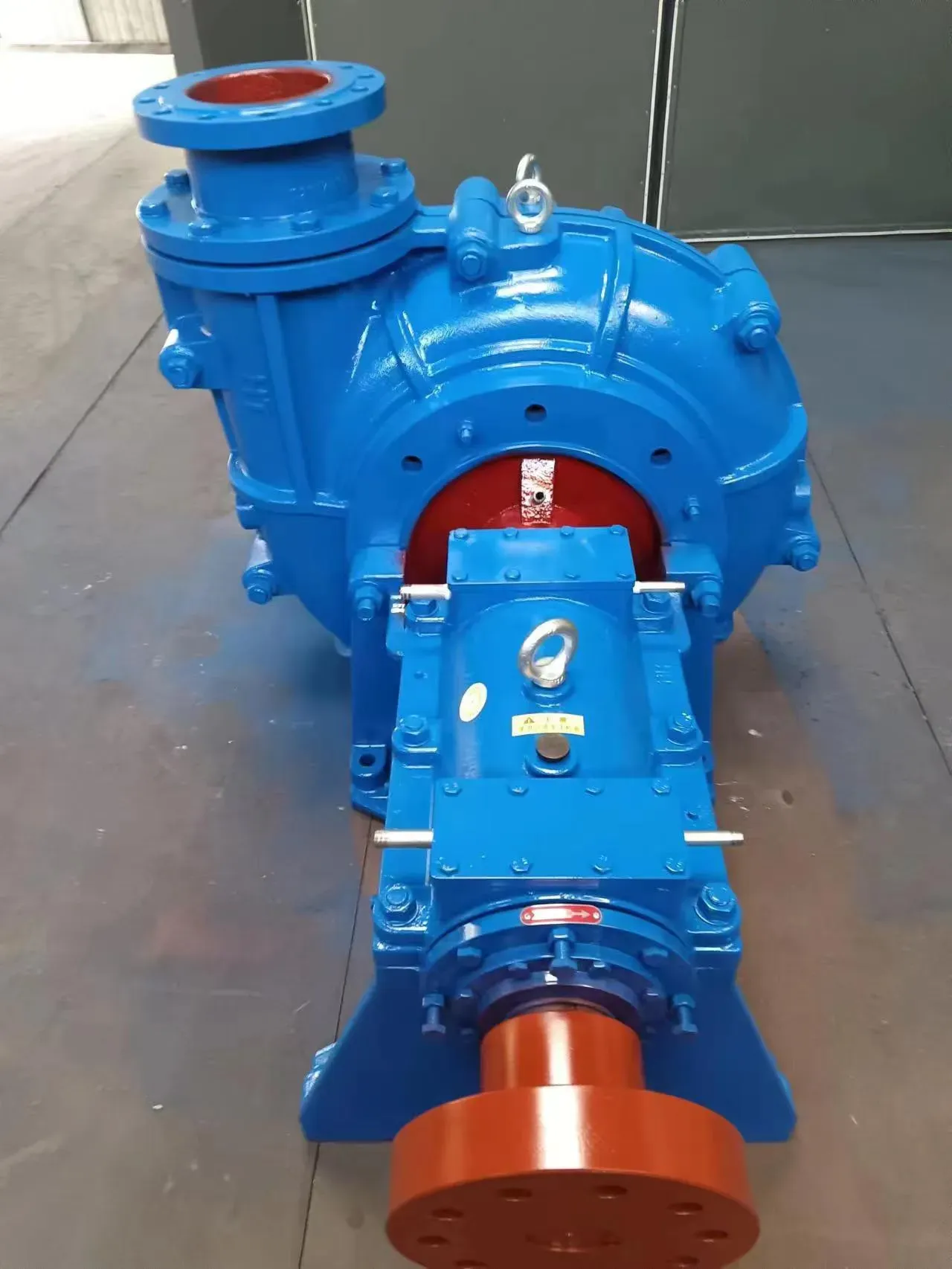
Introduction
Interchangeable slurry pumps represent a critical component in numerous industrial processes, including mining, wastewater treatment, chemical processing, and oil & gas. These pumps are characterized by their modular design, allowing for rapid replacement of wear parts – specifically impellers, liners, and seals – minimizing downtime and reducing maintenance costs compared to traditional, non-interchangeable pumps. Their core performance centers around the efficient and reliable transfer of abrasive, corrosive, and high-solids-content fluids. This guide provides an in-depth technical analysis of interchangeable slurry pump design, material selection, performance characteristics, failure modes, and relevant industry standards, targeted towards engineers, procurement managers, and maintenance personnel. A key challenge within the industry is optimizing pump selection for specific slurry characteristics to maximize lifespan and minimize total cost of ownership. Understanding the interplay between slurry abrasivity, pump hydraulics, and material compatibility is paramount for successful implementation.
Material Science & Manufacturing
The construction of interchangeable slurry pumps relies heavily on materials resistant to abrasion, corrosion, and impact. Common materials include high-chrome cast iron (typically 15-30% chromium), offering excellent abrasion resistance due to the formation of hard chromium carbides. For highly corrosive environments, stainless steels (304, 316, and duplex stainless steels) are employed, with duplex offering superior resistance to chloride stress corrosion cracking. Ceramic materials, such as alumina and silicon carbide, are increasingly used for liners and impellers due to their exceptional hardness and wear resistance, but their brittleness requires careful consideration in pump design. Manufacturing processes significantly impact pump performance. Impellers are typically cast, utilizing sand casting or investment casting to achieve complex geometries. Liners are often manufactured via rubber lining of steel shells, providing a resilient barrier against abrasion and corrosion. Welding processes, particularly submerged arc welding (SAW) and shielded metal arc welding (SMAW), are critical for joining pump casings and volute sections. Parameter control during welding – preheating temperature, welding current, and travel speed – directly influences weld integrity and resistance to cracking. The heat treatment of cast iron components is crucial for achieving the desired hardness and microstructure, optimizing abrasion resistance. Dimensional accuracy is maintained through rigorous quality control procedures, including coordinate measuring machines (CMM) and non-destructive testing (NDT) methods like radiography and ultrasonic testing.
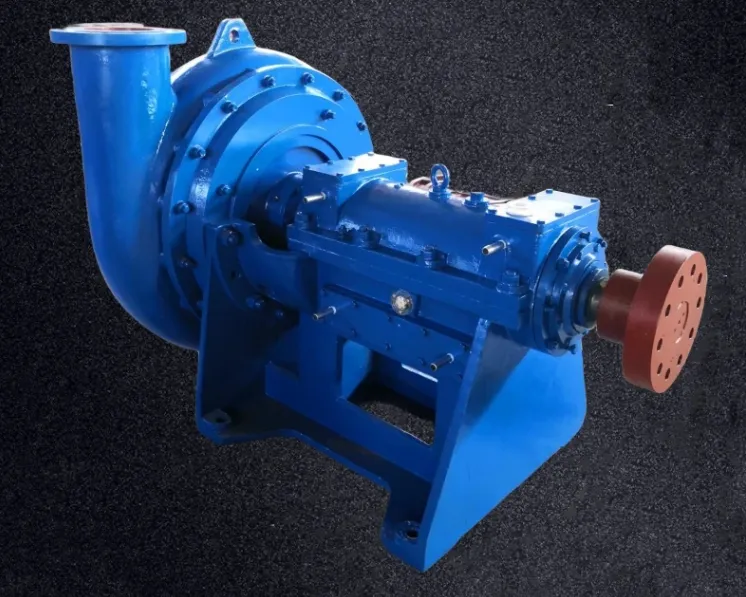
Performance & Engineering
Slurry pump performance is governed by several key engineering principles. Hydraulic design focuses on maximizing pump efficiency while minimizing wear. Impeller geometry – including vane angle, impeller diameter, and number of vanes – is optimized for specific flow rates and head requirements. Volute design plays a crucial role in converting kinetic energy into pressure energy. Force analysis considers the impact forces exerted by abrasive particles on pump components. Cavitation, a common failure mechanism, occurs when the absolute pressure at the impeller inlet falls below the vapor pressure of the fluid, forming vapor bubbles that collapse and damage the impeller. Net Positive Suction Head Required (NPSHr) is a critical parameter to prevent cavitation. Environmental resistance is also paramount. Pumps operating in extreme temperatures or corrosive atmospheres require specialized materials and protective coatings. Compliance with industry standards, such as ANSI/ASME B73.1 for centrifugal pumps, is essential for ensuring safety and reliability. The pump's mechanical design must account for the stresses induced by fluid pressure, particle impact, and thermal expansion. Finite element analysis (FEA) is often used to model stress distributions and optimize component geometry. Bearing selection is critical for supporting the impeller shaft and ensuring smooth operation. Bearing life is influenced by load, speed, and lubrication.
Technical Specifications
| Parameter | Unit | Typical Range (Small Pump) | Typical Range (Large Pump) |
|---|---|---|---|
| Flow Rate | m³/hr | 5 - 50 | 200 - 1000 |
| Head | m | 10 - 30 | 50 - 150 |
| Solid Handling Size | mm | Up to 25 | Up to 100 |
| Pump Speed | RPM | 500 - 1500 | 500 - 1800 |
| Power | kW | 1.5 - 7.5 | 30 - 150 |
| Casing Material | - | High Chrome Iron | Duplex Stainless Steel |
Failure Mode & Maintenance
Interchangeable slurry pumps are susceptible to several failure modes. Abrasion is the most common, leading to wear of impellers, liners, and volute sections. Fatigue cracking can occur in pump casings due to cyclic loading. Corrosion, particularly in acidic or saline environments, can degrade pump materials. Erosion-corrosion, a combined effect, accelerates material loss. Cavitation, as previously mentioned, causes localized damage to impeller vanes. Mechanical seal failure is another frequent issue, leading to leakage and reduced pump efficiency. Failure analysis techniques, including visual inspection, metallography, and scanning electron microscopy (SEM), are used to identify the root cause of failures. Preventive maintenance is crucial for extending pump life. Regular inspection of wear parts and replacement before catastrophic failure is essential. Lubrication of bearings and seals is critical. Monitoring pump performance parameters, such as flow rate, head, and power consumption, can detect early signs of degradation. Vibration analysis can identify bearing wear or impeller imbalance. Proper slurry management, including controlling particle size distribution and solids concentration, can minimize abrasion. Implementing a robust maintenance schedule, including regular inspections, lubrication, and component replacement, is key to minimizing downtime and maximizing return on investment.
Industry FAQ
Q: What is the optimal impeller material for handling highly abrasive slurries containing silica?
A: For highly abrasive slurries containing silica, high-chrome cast iron is generally the most cost-effective solution. The high chromium content (typically 15-30%) forms hard chromium carbides, providing excellent resistance to abrasive wear. While ceramic materials like alumina offer superior hardness, their brittleness can make them susceptible to impact damage from larger particles. The specific silica concentration and particle size distribution should be considered when selecting the optimal impeller material.
Q: How does pump speed affect impeller wear rate?
A: Increasing pump speed generally increases impeller wear rate. Higher speeds result in greater impact velocities between abrasive particles and the impeller surface, leading to accelerated erosion. However, reducing pump speed may decrease flow rate and head, potentially impacting process efficiency. An optimal pump speed should be determined based on a balance between wear rate and process requirements.
Q: What are the key considerations when selecting a mechanical seal for a slurry pump?
A: Key considerations include the slurry’s abrasive content, chemical compatibility, temperature, and pressure. For abrasive slurries, robust seal designs with hard faces (e.g., tungsten carbide) are essential. The seal material must be chemically resistant to the slurry. Double mechanical seals with a barrier fluid are often used to provide an extra layer of protection and prevent abrasive particles from entering the seal faces. Regular seal inspection and replacement are crucial.
Q: What is the significance of NPSHr (Net Positive Suction Head Required) and how can it be avoided cavitation?
A: NPSHr is the minimum absolute pressure required at the pump suction to prevent cavitation. If the available NPSH (Net Positive Suction Head Available) is less than the NPSHr, cavitation will occur, causing damage to the impeller. To avoid cavitation, ensure the suction pipe is adequately sized, minimize suction lift, maintain sufficient fluid level in the suction tank, and cool the pumped fluid to reduce its vapor pressure.
Q: What are the benefits of using interchangeable slurry pump components compared to traditional pumps?
A: Interchangeable slurry pump components significantly reduce downtime and maintenance costs. Wear parts can be quickly and easily replaced without removing the entire pump, minimizing process interruptions. This modularity also simplifies inventory management, as only the frequently replaced parts need to be stocked. The reduced downtime and maintenance translate to increased operational efficiency and lower total cost of ownership.
Conclusion
Interchangeable slurry pumps represent a vital technology for industries handling abrasive and corrosive fluids. Their modular design and reliance on robust materials offer significant advantages in terms of reduced downtime, lower maintenance costs, and improved operational efficiency. However, successful implementation requires a thorough understanding of slurry characteristics, pump hydraulics, and material compatibility. Careful consideration of these factors, coupled with a proactive maintenance strategy, is essential for maximizing pump lifespan and minimizing total cost of ownership.
Future advancements in slurry pump technology are likely to focus on the development of new materials with enhanced wear and corrosion resistance, as well as improved hydraulic designs to minimize energy consumption and reduce cavitation risk. Furthermore, the integration of sensor technology and predictive maintenance algorithms will enable more efficient monitoring of pump performance and proactive identification of potential failures, leading to further reductions in downtime and maintenance costs.
-
Comprehensive Guide to Waterproof ORings for Optimal Sealing Solutions
News2026-06-09
-
drainage pumps Performance and Engineering
News2026-06-09
-
basement bathroom ejector pump Material Science
News2026-06-09
-
Sewer Ejector Pump Cost Performance Analysis
News2026-06-09
-
Septic Tank Pump Replacement Performance Analysis
News2026-06-09
-
septic sump pump Performance and Engineering
News2026-06-09
-
Septic Pump System Performance Analysis
News2026-06-08
-
pump for septic Material Science
News2026-06-08
-
basement sewer pump Performance Analysis
News2026-06-08
-
submerged pump Performance Engineering
News2026-06-08
-
Septic System Pumps Performance Analysis
News2026-06-08
-
septic system pump Material Science and Manufacturing
News2026-06-07
-
pump for septic tank Material Science Manufacturing
News2026-06-07
-
submersible sewage pump Material Science
News2026-06-07
-
Sewage Ejector Material Science and Manufacturing
News2026-06-07




