English
- Afrikaans
- Albanian
- Amharic
- Arabic
- Armenian
- Azerbaijani
- Basque
- Belarusian
- Bengali
- Bosnian
- Bulgarian
- Catalan
- Cebuano
- Corsican
- Croatian
- Czech
- Danish
- Dutch
- English
- Esperanto
- Estonian
- Finnish
- French
- Frisian
- Galician
- Georgian
- German
- Greek
- Gujarati
- Haitian Creole
- hausa
- hawaiian
- Hebrew
- Hindi
- Miao
- Hungarian
- Icelandic
- igbo
- Indonesian
- irish
- Italian
- Japanese
- Javanese
- Kannada
- kazakh
- Khmer
- Rwandese
- Korean
- Kurdish
- Kyrgyz
- Lao
- Latin
- Latvian
- Lithuanian
- Luxembourgish
- Macedonian
- Malgashi
- Malay
- Malayalam
- Maltese
- Maori
- Marathi
- Mongolian
- Myanmar
- Nepali
- Norwegian
- Norwegian
- Occitan
- Pashto
- Persian
- Polish
- Portuguese
- Punjabi
- Romanian
- Russian
- Samoan
- Scottish Gaelic
- Serbian
- Sesotho
- Shona
- Sindhi
- Sinhala
- Slovak
- Slovenian
- Somali
- Spanish
- Sundanese
- Swahili
- Swedish
- Tagalog
- Tajik
- Tamil
- Tatar
- Telugu
- Thai
- Turkish
- Turkmen
- Ukrainian
- Urdu
- Uighur
- Uzbek
- Vietnamese
- Welsh
- Bantu
- Yiddish
- Yoruba
- Zulu

Telephone: +86 13120555503
Email: frank@cypump.com


Apr . 01, 2024 17:55 Back to list
industrial slurry pumps Performance Analysis and Manufacturing Specifications
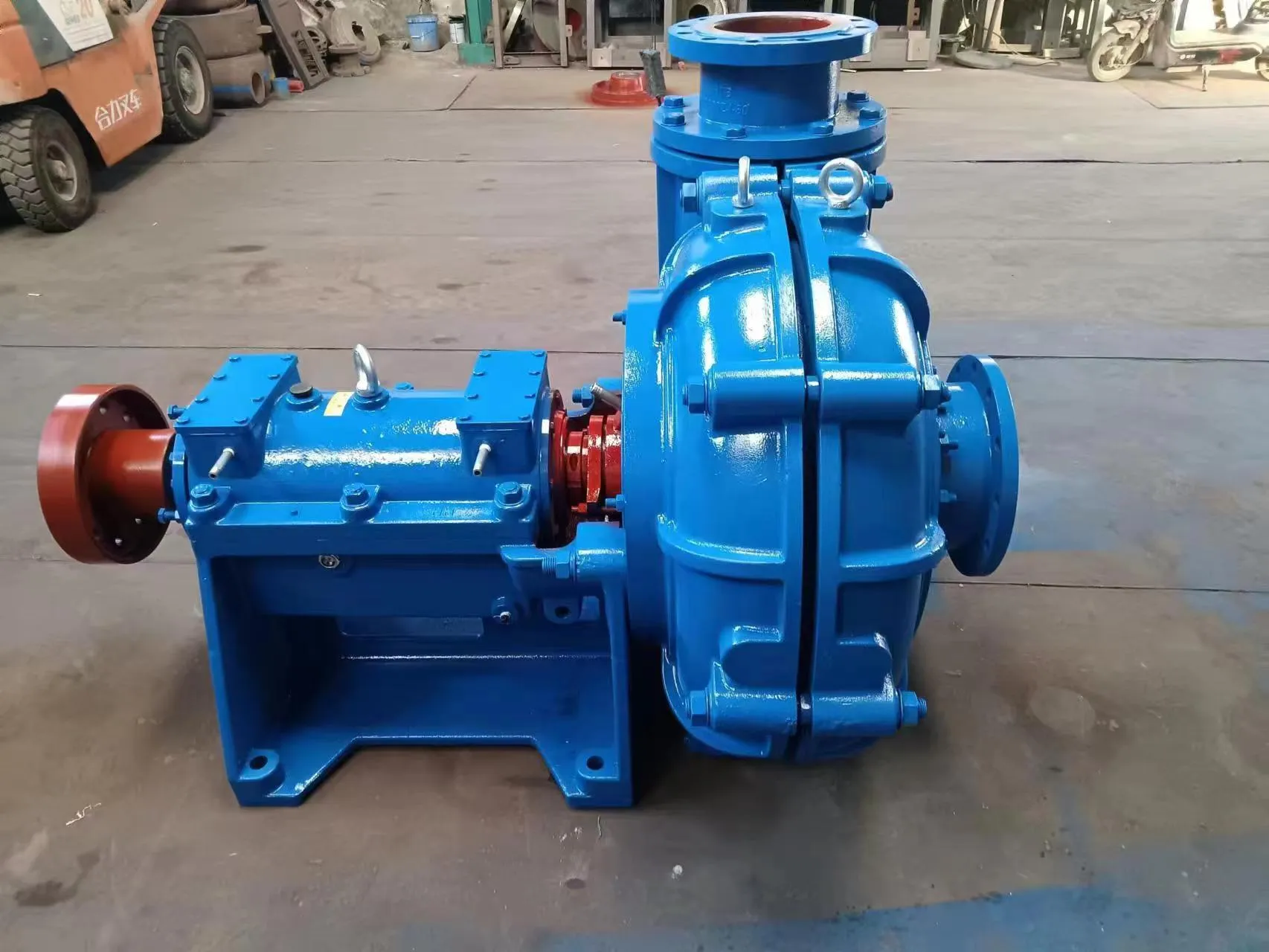
Industrial Slurry Pumps Performance Analysis and Manufacturing Specifications
Industrial slurry pumps are specialized centrifugal pumping systems engineered to transport non-Newtonian fluids containing suspended solid particles, ranging from fine silts to coarse abrasive minerals. Positioned as critical infrastructure in the mining, dredging, chemical processing, and wastewater treatment sectors, these pumps function as the primary conveyor of abrasive media. Unlike standard water pumps, slurry pumps must manage the complex rheology of the fluid, where viscosity and density fluctuate based on the solid-to-liquid concentration. The core technical challenge lies in balancing the hydraulic efficiency of the impeller with the extreme erosive forces exerted by the slurry, requiring a sophisticated integration of material science and fluid dynamics to prevent premature systemic failure.
Material Science & Manufacturing
The manufacturing of industrial slurry pumps is governed by the necessity to combat abrasive wear and corrosive attack. The selection of materials for the wetted parts—specifically the impeller, volute, and liner—is determined by the Mohs hardness of the transported solids and the pH value of the carrier fluid.
High-Chrome White Irons: For highly abrasive environments, ASTM A532 Class III type A alloys are utilized. These materials contain 25% to 28% chromium, forming a matrix of M7C3 carbides. This metallurgical structure provides a hardness typically exceeding 60 HRC, ensuring that the primary wear surfaces resist micro-cutting and plastic deformation during high-velocity particle impact.
Natural and Synthetic Elastomers: In applications involving fine particles with high velocity, natural rubber liners are employed. Due to their viscoelastic properties, elastomers absorb the kinetic energy of impacting particles through elastic deformation, preventing the brittle fracture seen in metals. The manufacturing process involves precision vulcanization to ensure a seamless bond between the liner and the pump casing.
Manufacturing Process Control: The production flow begins with precision casting of the volute, followed by CNC machining of the wearing rings and shaft sleeves to maintain tolerances within microns. To ensure structural integrity, components undergo heat treatment (quenching and tempering) to relieve internal stresses induced during the casting process. Dynamic balancing of the impeller is conducted to ISO 1940-1 standards to minimize vibration-induced fatigue in the bearings and mechanical seals.
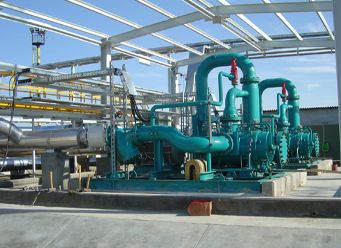
Performance & Engineering
Engineering a slurry pump requires a deep analysis of the fluid's behavior. The primary engineering constraint is the Critical Settling Velocity; if the flow velocity drops below this threshold, solids will precipitate, leading to pipeline blockage and localized erosion (slugging).
Hydraulic Design: The impeller geometry is optimized to minimize turbulence and internal recirculation, as eddies accelerate the wear rate of the pump casing. Open or semi-open impeller designs are preferred to allow the passage of larger solids without clogging. The Net Positive Suction Head (NPSH) must be carefully calculated, accounting for the increased density of the slurry, to avoid cavitation, which can cause catastrophic pitting on the impeller vanes.
Force Analysis and Shaft Deflection: Slurry pumps experience significant radial thrust due to the asymmetric pressure distribution in the volute. Engineering specifications require reinforced shafting and heavy-duty bearings to counteract this deflection. The use of expeller seals or gland sealing systems is mandatory to prevent abrasive particles from migrating into the bearing housing, which would result in instantaneous seizure.
Compliance and Environmental Resistance: Systems are engineered to meet stringent environmental standards regarding noise pollution and energy efficiency. Variable Frequency Drives (VFDs) are integrated to optimize the pump's duty point, reducing the energy wasted through throttling and extending the Mean Time Between Failures (MTBF) by reducing operational stress.
Technical Specifications
| Parameter Dimension | High-Chrome Alloy Series | Natural Rubber Series | Duplex Stainless Series | Evaluation Metric |
|---|---|---|---|---|
| Hardness Rating | 60-65 HRC | 60-80 Shore A | 25-30 HRC | Abrasion Resistance |
| Max Particle Size | Up to 15mm | Up to 5mm | Up to 10mm | Passage Capacity |
| Corrosion Resistance | Moderate | High (Non-acidic) | Excellent (Chloride) | Chemical Stability |
| Operating Temp Range | -20°C to 150°C | -10°C to 70°C | -40°C to 200°C | Thermal Limit |
| Max Slurry Density | 1.8 t/m³ | 1.4 t/m³ | 1.6 t/m³ | Mass Loading |
| Wear Life Expectancy | High (Coarse) | High (Fine) | Moderate | Lifecycle Value |
Failure Mode & Maintenance
The failure modes of industrial slurry pumps are primarily driven by the interaction between the fluid medium and the pump components. Understanding these modes is essential for implementing an effective Predictive Maintenance (PdM) strategy.
1. Abrasive Erosion: This is the most common failure mode, characterized by the gradual removal of material from the impeller vanes and volute liner. Failure manifests as a drop in discharge pressure and flow rate. Maintenance involves the replacement of sacrificial liners and the application of hard-facing welding to restore impeller profiles.
2. Cavitation Pitting: Occurs when the local pressure drops below the vapor pressure of the liquid, creating bubbles that collapse violently against the metal surface. This leads to "sponge-like" pitting. Corrective actions include increasing the suction head or reducing the fluid temperature.
3. Mechanical Seal Leakage: Infiltrated solids can score the seal faces, leading to leakage. This is often a result of improper flush water pressure. Maintenance requires the transition to double mechanical seals with a pressurized barrier fluid system.
4. Fatigue Cracking: Caused by excessive vibration or cyclic loading from slurry slugs. Cracks typically originate at the shaft shoulder or impeller hub. Maintenance involves ultrasonic testing (UT) during scheduled shutdowns to detect subsurface fractures before catastrophic failure.
Industry FAQ
Q: How do we determine whether to specify a high-chrome alloy or a rubber liner for a new installation?
A: The decision is based on the particle size and impact velocity. For coarse, large particles (e.g., crushed rock), high-chrome alloys are required because they resist the high-energy impact. For fine, sandy particles at high velocities, rubber liners are superior as they "bounce" the particles off the surface rather than being cut by them.
Q: What is the impact of slurry viscosity on the pump's efficiency and power consumption?
A: Increased viscosity increases the skin friction loss within the pump and pipeline, which shifts the performance curve downward and to the left. This requires a higher brake horsepower (BHP) to maintain the same flow rate, often necessitating a motor upgrade to avoid overloading.
Q: Why is "priming" more complex for slurry pumps than for clean water pumps?
A: Slurries are denser and can settle in the suction line during shutdown. Priming requires not only removing air but also ensuring that the suction line is cleared of settled solids to prevent a "plug" from entering the impeller, which could cause an immediate mechanical overload.
Q: How can we mitigate the effect of "slugging" in a continuous pumping operation?
A: Slugging is mitigated by installing a mixing tank or a surge bin upstream of the pump. This ensures a homogenous feed of solids, preventing spikes in density that cause erratic radial loads on the shaft and premature bearing failure.
Q: What is the recommended frequency for measuring liner thickness in high-abrasion environments?
A: We recommend ultrasonic thickness gauging every 500 to 1,000 operating hours, depending on the concentration of solids. Monitoring the "wear rate per 1,000 hours" allows the engineering team to schedule replacements during planned outages rather than reacting to a breakthrough failure.
Conclusion
The operational integrity of industrial slurry pumps depends on a rigorous alignment between material selection, hydraulic engineering, and proactive maintenance. By integrating high-chrome alloys or specialized elastomers based on the specific abrasive characteristics of the medium, operators can significantly optimize the trade-off between initial capital expenditure and long-term operational costs. The transition from reactive to predictive maintenance, utilizing thickness monitoring and vibration analysis, is the only viable path to maximizing the Mean Time Between Failures in extreme industrial environments.
Looking forward, the integration of smart sensors and real-time rheology monitoring will allow for dynamic adjustment of pump speeds via VFDs, further reducing energy consumption and wear. As global industries push toward higher efficiency and stricter environmental compliance, the evolution of slurry pumping technology will likely center on advanced composite materials and Computational Fluid Dynamics (CFD) optimization to eliminate dead zones and minimize turbulence.
-
Comprehensive Guide to Waterproof ORings for Optimal Sealing Solutions
News2026-06-09
-
Waste Tank Pump Performance Analysis
News2026-06-27
-
Sewer System Pump Out Material Science
News2026-06-27
-
Sewer Ejector Pit Performance Analysis
News2026-06-27
-
septic tank pumps for sale Performance Engineering
News2026-06-27
-
septic system with lift pump Performance Engineering
News2026-06-27
-
septic system sump pump Performance Analysis
News2026-06-26
-
septic pump company Performance Analysis
News2026-06-26
-
pumps water treatment Performance Analysis
News2026-06-26
-
pumps for septic tanks Material Science and Manufacturing
News2026-06-26
-
pump for septic system Material Science Manufacturing
News2026-06-26
-
heavy duty submersible pump Performance Analysis
News2026-06-25
-
best submersible pump for septic tank Performance Analysis
News2026-06-25
-
basement sewer ejector pump Performance Analysis
News2026-06-25
-
basement pumps ejector pumps Performance Analysis
News2026-06-25




