English
- Afrikaans
- Albanian
- Amharic
- Arabic
- Armenian
- Azerbaijani
- Basque
- Belarusian
- Bengali
- Bosnian
- Bulgarian
- Catalan
- Cebuano
- Corsican
- Croatian
- Czech
- Danish
- Dutch
- English
- Esperanto
- Estonian
- Finnish
- French
- Frisian
- Galician
- Georgian
- German
- Greek
- Gujarati
- Haitian Creole
- hausa
- hawaiian
- Hebrew
- Hindi
- Miao
- Hungarian
- Icelandic
- igbo
- Indonesian
- irish
- Italian
- Japanese
- Javanese
- Kannada
- kazakh
- Khmer
- Rwandese
- Korean
- Kurdish
- Kyrgyz
- Lao
- Latin
- Latvian
- Lithuanian
- Luxembourgish
- Macedonian
- Malgashi
- Malay
- Malayalam
- Maltese
- Maori
- Marathi
- Mongolian
- Myanmar
- Nepali
- Norwegian
- Norwegian
- Occitan
- Pashto
- Persian
- Polish
- Portuguese
- Punjabi
- Romanian
- Russian
- Samoan
- Scottish Gaelic
- Serbian
- Sesotho
- Shona
- Sindhi
- Sinhala
- Slovak
- Slovenian
- Somali
- Spanish
- Sundanese
- Swahili
- Swedish
- Tagalog
- Tajik
- Tamil
- Tatar
- Telugu
- Thai
- Turkish
- Turkmen
- Ukrainian
- Urdu
- Uighur
- Uzbek
- Vietnamese
- Welsh
- Bantu
- Yiddish
- Yoruba
- Zulu

Telephone: +86 13120555503
Email: frank@cypump.com


Apr . 01, 2024 17:55 Back to list
industrial slurry pump Technical Dimension and Performance Analysis
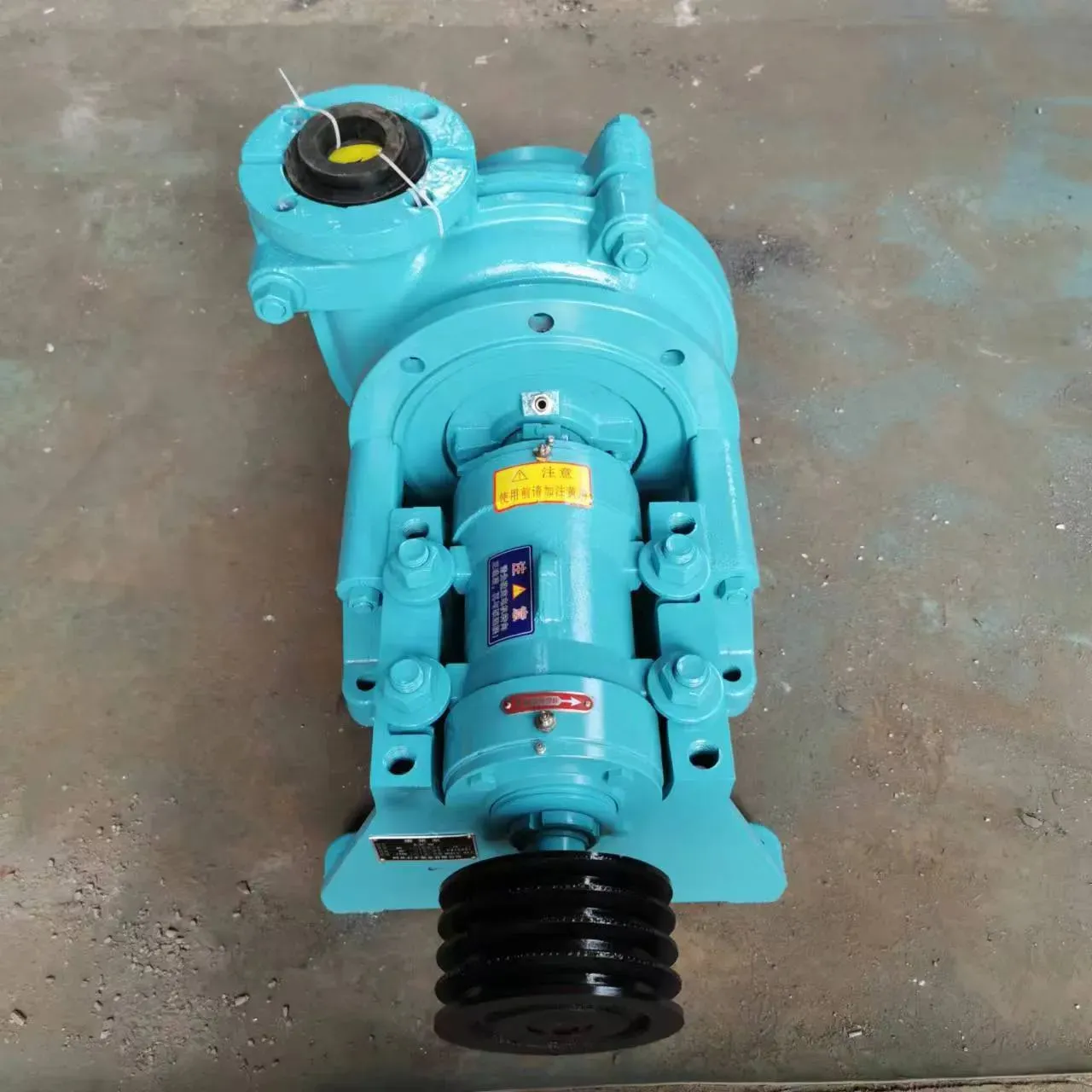
Industrial Slurry Pump: Technical Dimension and Performance Analysis
An industrial slurry pump is a specialized heavy-duty centrifugal pump engineered to transport non-Newtonian fluids containing suspended solid particles, known as slurries. Positioned as a critical asset in the mid-stream process of mining, mineral processing, dredging, and chemical manufacturing, these pumps are designed to handle high-density fluids that exhibit extreme abrasive and corrosive properties. Unlike standard water pumps, the industrial slurry pump must maintain hydraulic efficiency while resisting the mechanical wear caused by the impact and sliding friction of particulate matter. The technical core of these systems lies in the optimization of the impeller geometry and the strategic selection of liner materials to manage the trade-off between flow rate (capacity) and the rate of material erosion. In the industrial value chain, the slurry pump serves as the primary motive force for tailings disposal, ore transport, and waste treatment, where failure directly results in catastrophic production downtime and systemic environmental risk.
Material Science & Manufacturing
The longevity of an industrial slurry pump is fundamentally determined by the metallurgical properties of its wetted parts. Because slurry transport involves constant impingement of solids against the pump internals, material science focuses on hardness, toughness, and chemical stability.
1. High-Chrome Alloys (ASTM A532): For highly abrasive environments, high-chromium cast irons (typically 25% to 28% Cr) are employed. These materials form a hard eutectic structure consisting of M7C3 carbides embedded in a martensitic matrix. The high hardness (typically 600-650 HB) provides superior resistance to abrasive wear, though it introduces brittleness, requiring precise heat treatment to prevent stress-induced cracking.
2. Natural and Synthetic Elastomers: In applications involving smaller, finer particles with higher velocity, natural rubber or polyurethane liners are utilized. These materials operate on the principle of "resilience," where the elastic deformation of the surface absorbs the kinetic energy of the impacting particles, allowing them to bounce off rather than gouge the material. The polymer chain density and cross-linking degree are critical parameters controlled during vulcanization to ensure the liner does not delaminate under high-pressure conditions.
3. Manufacturing Process Control: The manufacturing of the pump casing involves precision sand casting followed by rigorous machining. A critical phase is the "dynamic balancing" of the impeller; any eccentricity in a high-density slurry application can lead to severe shaft vibration and premature bearing failure. Furthermore, the mating surfaces of the volute and the impeller are engineered with specific clearances to minimize recirculation and localized turbulence, which are the primary drivers of accelerated erosion (cavitation-erosion synergy).
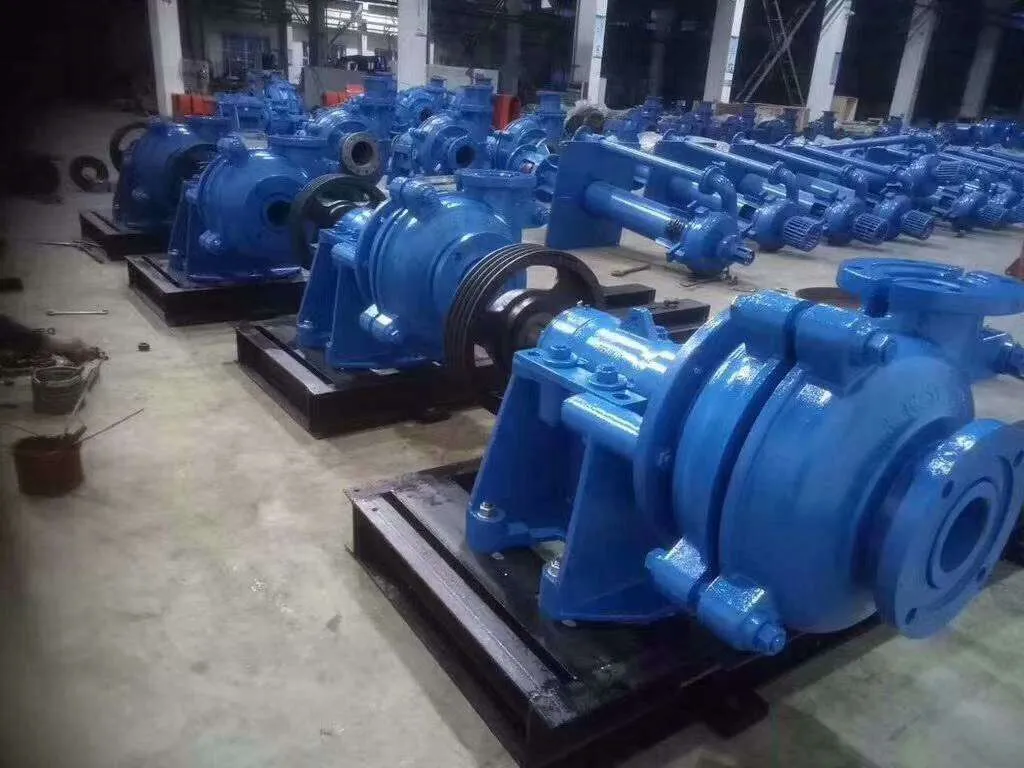
Performance & Engineering
Engineering an industrial slurry pump requires a complex force analysis to manage the interaction between the fluid's rheology and the pump's mechanical components.
Hydraulic Design and NPSH: Slurries often exhibit non-Newtonian behavior, specifically Bingham plastic or pseudoplastic characteristics. Engineers must calculate the Net Positive Suction Head (NPSH) with a safety margin significantly higher than that of clean water to account for the higher viscosity and the tendency of solids to settle. If the pressure drops below the vapor pressure of the liquid, cavitation occurs, leading to pitting on the impeller vanes and a precipitous drop in head pressure.
Velocity Control and Critical Velocity: A fundamental engineering constraint is the "Critical Settling Velocity." If the flow velocity is too low, suspended solids will precipitate, causing blockages and "sanding" of the pump. Conversely, excessive velocity leads to an exponential increase in abrasive wear (wear rate is typically proportional to the cube of the velocity). Engineering the optimal pipe diameter and impeller speed is therefore essential to maintain a stable suspension without sacrificing the pump's lifespan.
Seal Engineering: The interface between the shaft and the casing is a primary failure point. Industrial slurry pumps typically employ expeller seals or mechanical seals with an external flushing system (API Plan 32 or 54). The flushing medium prevents abrasive particles from entering the seal face, maintaining a hydrodynamic film that prevents dry running and thermal deformation of the seal rings.
Technical Specifications
| Performance Parameter | High-Chrome Alloy Series | Natural Rubber Series | Duplex Stainless Series | Technical Unit/Limit |
|---|---|---|---|---|
| Max Particle Size | 15 mm - 50 mm | 5 mm - 20 mm | 2 mm - 10 mm | Millimeters (mm) |
| Abrasive Resistance | Extreme (Hard Rock) | High (Fine Sands) | Moderate (Chemical) | Qualitative Scale |
| Max Flow Rate | 1,200 m³/h | 800 m³/h | 1,500 m³/h | Cubic meters/hour |
| Operating Pressure | Up to 25 bar | Up to 10 bar | Up to 40 bar | Bar (pressure) |
| Corrosion Resistance | Moderate | High (Acids/Alkalis) | Extreme (Chlorides) | Qualitative Scale |
| Typical Efficiency | 65% - 78% | 60% - 72% | 70% - 85% | Percentage (%) |
Failure Mode & Maintenance
The operational environment of a slurry pump is inherently destructive. Systematic failure analysis reveals four primary modes of degradation:
1. Abrasive Wear and Erosion: This occurs via micro-plowing and micro-cutting of the material surface. The most common failure point is the impeller vane tip and the volute tongue. Maintenance involves the installation of replaceable wear liners and the use of "sacrificial" components that can be swapped during planned outages without replacing the entire pump casing.
2. Cavitation-Induced Pitting: When local pressure drops, vapor bubbles form and collapse violently. This creates localized shockwaves that fatigue the metal, resulting in a "sponge-like" surface appearance. Solution: Increasing the suction head or reducing the pump speed through a Variable Frequency Drive (VFD) to align the operating point with the Best Efficiency Point (BEP).
3. Mechanical Seal Failure: Contamination of the seal face by slurry particles leads to rapid scoring and leakage. This is often caused by a failure in the flush water system. Maintenance requires the rigorous inspection of flush line pressures and the replacement of seal faces with silicon carbide or tungsten carbide.
4. Fatigue Cracking: Cyclic loading, especially in pumps handling high-density solids, can cause fatigue cracks in the shaft or the impeller hub. Professional maintenance involves Non-Destructive Testing (NDT), such as Dye Penetrant Inspection (DPI) or Ultrasonic Testing (UT), during semi-annual overhauls to detect subsurface fissures before catastrophic breakage occurs.
Industry FAQ
Q: How do we determine whether to use a high-chrome alloy or a rubber liner for a specific slurry?
A: The selection is based on the particle size and the nature of the abrasion. High-chrome alloys are superior for large, sharp, and hard particles (e.g., crushed granite) that would easily pierce rubber. Rubber liners are preferred for fine, abrasive particles (e.g., silica sand) where the material's elasticity can absorb the impact energy, significantly extending the wear life compared to brittle alloys.
Q: What is the impact of slurry density on the pump's power consumption?
A: Slurry density increases the fluid's specific gravity, which linearly increases the brake horsepower (BHP) required to maintain a given flow rate. Additionally, as density increases, the viscosity typically rises, increasing the disk friction losses within the pump. Engineers must oversize the motor to handle the "start-up torque" required to move settled solids from a stagnant condition.
Q: Why does the pump exhibit high vibration despite being newly installed?
A: High vibration in new slurry pumps is often attributed to three factors: misalignment between the pump and motor, improper impeller balancing, or operating too far from the BEP. In slurry applications, "recirculation" at low flow rates can create hydraulic instability, which manifests as vibration. Verifying the alignment with laser tools and checking the flow coefficient is the standard corrective procedure.
Q: How can we mitigate the risk of "sanding" during pump shutdown?
A: To prevent solids from settling and blocking the pump during downtime, a "flush-out" cycle must be implemented. This involves pumping clean water through the system until the discharge is clear of solids. If this is not possible, the pump must be designed with a bottom-drain valve to manually evacuate settled slurry before restarting.
Q: What is the correlation between impeller clearance and pump efficiency in slurry service?
A: Increasing the clearance between the impeller and the wear plate reduces the risk of jamming by large solids but increases internal leakage (recirculation). This drop in volumetric efficiency leads to higher energy consumption and localized wear in the recirculation zones. The engineering goal is to maintain the tightest possible clearance that still allows for the maximum expected particle size to pass without blockage.
Conclusion
The industrial slurry pump is a sophisticated synthesis of hydraulic engineering and material science, designed to operate in some of the most hostile environments in the industrial world. Its effectiveness is not merely a function of raw power, but of the precise calibration between material hardness, fluid dynamics, and the rheological properties of the transported medium. By optimizing the synergy between high-chrome alloys and rubber elastomers while strictly adhering to NPSH and critical velocity constraints, operators can significantly reduce the total cost of ownership and maximize system availability.
Looking forward, the integration of smart monitoring—such as acoustic emission sensors for real-time wear detection and AI-driven VFDs for adaptive flow control—will transition slurry pumping from reactive maintenance to predictive reliability. The industry must continue to prioritize the development of nano-composite liners and advanced metallurgical coatings to further push the boundaries of erosion resistance, ensuring that the infrastructure of mineral and chemical processing remains robust and sustainable.
-
Comprehensive Guide to Waterproof ORings for Optimal Sealing Solutions
News2026-06-09
-
septic system sump pump Performance Analysis
News2026-06-26
-
septic pump company Performance Analysis
News2026-06-26
-
pumps water treatment Performance Analysis
News2026-06-26
-
pumps for septic tanks Material Science and Manufacturing
News2026-06-26
-
pump for septic system Material Science Manufacturing
News2026-06-26
-
heavy duty submersible pump Performance Analysis
News2026-06-25
-
best submersible pump for septic tank Performance Analysis
News2026-06-25
-
basement sewer ejector pump Performance Analysis
News2026-06-25
-
basement pumps ejector pumps Performance Analysis
News2026-06-25
-
basement lift pump Performance and Engineering
News2026-06-25
-
basement bathroom pump systems Performance Analysis
News2026-06-24
-
basement bathroom ejector pump system Performance Engineering
News2026-06-24
-
2 hp sewage pump Performance Engineering
News2026-06-24
-
1 hp septic pump Performance Engineering
News2026-06-24




