English
- Afrikaans
- Albanian
- Amharic
- Arabic
- Armenian
- Azerbaijani
- Basque
- Belarusian
- Bengali
- Bosnian
- Bulgarian
- Catalan
- Cebuano
- Corsican
- Croatian
- Czech
- Danish
- Dutch
- English
- Esperanto
- Estonian
- Finnish
- French
- Frisian
- Galician
- Georgian
- German
- Greek
- Gujarati
- Haitian Creole
- hausa
- hawaiian
- Hebrew
- Hindi
- Miao
- Hungarian
- Icelandic
- igbo
- Indonesian
- irish
- Italian
- Japanese
- Javanese
- Kannada
- kazakh
- Khmer
- Rwandese
- Korean
- Kurdish
- Kyrgyz
- Lao
- Latin
- Latvian
- Lithuanian
- Luxembourgish
- Macedonian
- Malgashi
- Malay
- Malayalam
- Maltese
- Maori
- Marathi
- Mongolian
- Myanmar
- Nepali
- Norwegian
- Norwegian
- Occitan
- Pashto
- Persian
- Polish
- Portuguese
- Punjabi
- Romanian
- Russian
- Samoan
- Scottish Gaelic
- Serbian
- Sesotho
- Shona
- Sindhi
- Sinhala
- Slovak
- Slovenian
- Somali
- Spanish
- Sundanese
- Swahili
- Swedish
- Tagalog
- Tajik
- Tamil
- Tatar
- Telugu
- Thai
- Turkish
- Turkmen
- Ukrainian
- Urdu
- Uighur
- Uzbek
- Vietnamese
- Welsh
- Bantu
- Yiddish
- Yoruba
- Zulu

Telephone: +86 13120555503
Email: frank@cypump.com


Apr . 01, 2024 17:55 Back to list
impeller slurry pump Manufacturing Specification and Performance Analysis
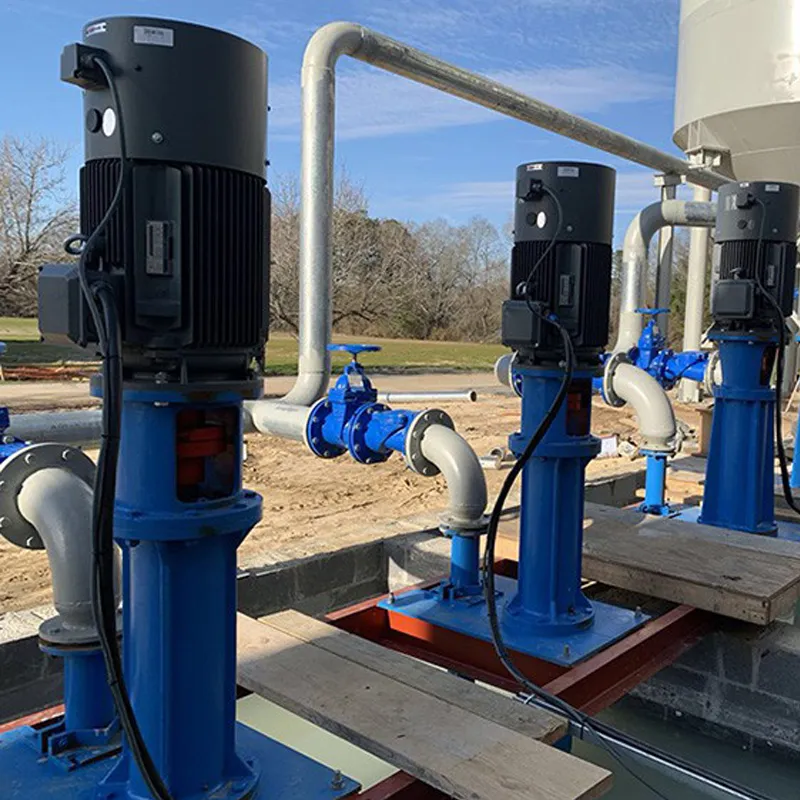
Impeller Slurry Pump Manufacturing Specification and Performance Analysis
An impeller slurry pump is a specialized centrifugal hydraulic machine engineered to transport fluids containing high concentrations of suspended solid particles, ranging from fine silts to coarse abrasive minerals. Positioned as a critical asset in the mineral processing, dredging, and chemical industries, these pumps function as the primary motive force in the industrial chain for tailings management and ore transport. Unlike standard water pumps, the impeller slurry pump must reconcile the conflicting requirements of high kinetic energy transfer and extreme wear resistance. Its core performance is defined by its ability to maintain volumetric efficiency while resisting the erosive forces of particle impingement and the corrosive nature of chemically active slurries. The technical equilibrium of the pump is achieved through precise impeller geometry, specialized metallurgy, and a robust hydraulic design that minimizes turbulence and cavitation at the suction eye.
Material Science & Manufacturing
The longevity of an impeller slurry pump is fundamentally dependent on the material science applied to the wetted parts, specifically the impeller and volute liner. The primary challenge is "abrasive wear," where hard particles cause micro-cutting and plastic deformation of the surface. To counteract this, high-chromium white irons (ASTM A532) are utilized, typically containing 25% to 30% Chromium. These alloys form a matrix of hard M7C3 carbides embedded in a martensitic matrix, providing a balance between hardness (HRC 60-65) and fracture toughness.
For applications involving extreme acidity or alkalinity combined with abrasion, duplex stainless steels or natural rubber linings are employed. Rubber-lined impellers are particularly effective for fine-particle slurries; the elastomer absorbs the energy of the impact through elastic deformation, preventing the material removal seen in rigid metals. The manufacturing process involves precision investment casting for complex impeller vanes, followed by rigorous heat treatment—including quenching and tempering—to ensure a uniform metallurgical structure and eliminate internal stresses.
Manufacturing precision is maintained through CNC grinding of the impeller shaft and dynamic balancing to ISO 1940 standards. Key parameter control focuses on the "gap clearance" between the impeller periphery and the wear plate. An excessive gap leads to internal recirculation and a drastic drop in efficiency, while a gap too tight risks catastrophic seizure during transient thermal expansion or particle jamming. The integration of hard-facing techniques, such as tungsten carbide cladding via plasma spraying, is often applied to the leading edges of the vanes to extend the Mean Time Between Failures (MTBF).
Performance & Engineering
Engineering a slurry pump requires a deep analysis of the fluid-structure interaction (FSI). The primary engineering constraint is the "Critical Settling Velocity." If the flow velocity drops below this threshold, particles precipitate, leading to sedimentation and potential blockage of the pump casing. Consequently, the impeller is designed with a wide-vane profile to minimize shear stress and prevent the clogging of large solids.
Force analysis indicates that the impeller is subjected to immense radial thrust, especially when operating away from the Best Efficiency Point (BEP). To mitigate this, heavy-duty bearing housings and reinforced shafts are employed. Environmental resistance is further addressed through the selection of mechanical seals or expeller seals. Expeller seals are particularly critical in slurry applications; they use a secondary impeller to create a centrifugal pressure barrier, pushing abrasive particles away from the shaft seal to prevent premature degradation of the sealing faces.
Compliance with hydraulic standards requires the optimization of the Net Positive Suction Head required (NPSHr). In slurry pumping, the presence of solids increases the effective viscosity and density of the medium, which can trigger "slurry cavitation." This occurs when local pressure drops below the vapor pressure of the liquid, creating bubbles that collapse violently against the impeller surface, leading to pitting and rapid material loss. Engineers mitigate this by optimizing the suction eye diameter and reducing the inlet velocity.
Technical Specifications
| Parameter Dimension | High-Chrome Alloy (27% Cr) | Natural Rubber Lining | Duplex Stainless Steel | Tungsten Carbide Clad |
|---|---|---|---|---|
| Hardness (HRC/Shore A) | 60 - 65 HRC | 65 - 75 Shore A | 25 - 35 HRC | 70 - 80 HRC |
| Max Particle Size (mm) | Up to 50mm | Up to 10mm | Up to 20mm | Up to 30mm |
| Corrosion Resistance | Moderate (Oxidizing) | Excellent (Acids) | Superior (Chlorides) | High (Chemicals) |
| Wear Mechanism | Abrasive/Erosive | Impact/Elastic | Corrosive/Erosive | Extreme Abrasion |
| Max Operating Temp (°C) | 400°C | 70°C | 250°C | 300°C |
| Efficiency Range (%) | 75% - 85% | 60% - 75% | 70% - 82% | 72% - 84% |
Failure Mode & Maintenance
The failure modes of impeller slurry pumps are predominantly categorized into erosive wear, corrosive degradation, and mechanical fatigue. "Erosive wear" typically manifests as thinning of the vane trailing edges and "scouring" of the volute liner. This is caused by high-velocity particle impingement. When the vane thickness decreases, the pump experiences a loss of head and a shift in the performance curve, necessitating an impeller replacement or rebuild.
"Cavitation-induced pitting" is another critical failure mode, appearing as small, sponge-like holes on the suction side of the impeller. This is usually a result of improper suction piping or operating the pump too far to the right of its performance curve. Furthermore, "shaft deflection" can occur due to the unbalanced load of non-homogeneous slurry, leading to the failure of the mechanical seals and bearing seizure.
Professional maintenance involves a proactive "Condition Monitoring" strategy. This includes vibration analysis to detect bearing wear and ultrasonic thickness testing of the casing to monitor liner degradation without dismantling the pump. For maintenance, the use of "wear-plate adjustment" is paramount; as the impeller wears, the wear plate should be advanced to maintain the tightest possible clearance, thereby restoring volumetric efficiency. Periodic flushing of the pump during shutdown is mandatory to prevent the slurry from solidifying, which could lead to an "overload trip" upon restart.
Industry FAQ
Q: How do I determine whether to select a high-chrome alloy or a rubber-lined impeller?
A: The selection depends on the particle size and the nature of the abrasion. High-chrome alloys are superior for coarse, sharp-edged particles that cause micro-cutting. Rubber linings are preferred for fine particles (silt/sand) where the wear mechanism is based on high-frequency impact; the rubber's elasticity allows it to "bounce back" rather than be cut.
Q: What is the primary cause of premature seal failure in slurry pumps?
A: The most common cause is the ingress of abrasive particles into the seal faces. This is often due to a failure of the seal flush system or an incorrectly configured expeller seal. Once particles enter the seal interface, they act as an abrasive paste, rapidly grinding down the seal faces and causing leakage.
Q: How does the slurry density affect the power requirements of the pump?
A: Slurry density increases the fluid's specific gravity, which directly increases the brake horsepower (BHP) required. Because the power is proportional to the density, pumping a slurry with a specific gravity of 1.5 requires significantly more energy than pumping water, often requiring the upgrading of the motor to avoid overheating.
Q: Why is the pump vibrating excessively even though it is newly installed?
A: This is typically caused by either misalignment between the motor and pump shafts or an imbalance in the impeller due to uneven casting/wear. Additionally, if the pump is operating too far from its Best Efficiency Point (BEP), radial forces increase, leading to hydraulic instability and vibration.
Q: What is the impact of "air entrainment" on slurry pump performance?
A: Air entrainment significantly reduces the pump's efficiency and can lead to "air binding." Air bubbles change the density of the medium and can cause the impeller to lose prime. Moreover, the collapse of air bubbles can mimic cavitation, accelerating the erosion of the impeller surfaces.
Conclusion
The engineering of an impeller slurry pump is a sophisticated balance of material science and hydraulic optimization. By integrating high-chromium alloys or specialized elastomers with precise geometric tolerances, these machines are capable of handling the most aggressive industrial media. The core technical logic dictates that the mitigation of abrasive wear and cavitation is not merely a matter of material hardness, but a result of systemic design—including the management of settling velocities and the implementation of robust sealing technologies.
Looking forward, the industry is shifting toward "smart pumping" solutions, incorporating real-time wear sensors and variable frequency drives (VFDs) to optimize energy consumption based on slurry density. To ensure maximum operational lifespan, operators must prioritize rigorous condition monitoring and adhere to strict maintenance schedules regarding wear-plate adjustments and metallurgical inspections, ensuring the pump remains a reliable link in the industrial processing chain.
-
Comprehensive Guide to Waterproof ORings for Optimal Sealing Solutions
News2026-06-09
-
Waste Tank Pump Performance Analysis
News2026-06-27
-
Sewer System Pump Out Material Science
News2026-06-27
-
Sewer Ejector Pit Performance Analysis
News2026-06-27
-
septic tank pumps for sale Performance Engineering
News2026-06-27
-
septic system with lift pump Performance Engineering
News2026-06-27
-
septic system sump pump Performance Analysis
News2026-06-26
-
septic pump company Performance Analysis
News2026-06-26
-
pumps water treatment Performance Analysis
News2026-06-26
-
pumps for septic tanks Material Science and Manufacturing
News2026-06-26
-
pump for septic system Material Science Manufacturing
News2026-06-26
-
heavy duty submersible pump Performance Analysis
News2026-06-25
-
best submersible pump for septic tank Performance Analysis
News2026-06-25
-
basement sewer ejector pump Performance Analysis
News2026-06-25
-
basement pumps ejector pumps Performance Analysis
News2026-06-25




