English
- Afrikaans
- Albanian
- Amharic
- Arabic
- Armenian
- Azerbaijani
- Basque
- Belarusian
- Bengali
- Bosnian
- Bulgarian
- Catalan
- Cebuano
- Corsican
- Croatian
- Czech
- Danish
- Dutch
- English
- Esperanto
- Estonian
- Finnish
- French
- Frisian
- Galician
- Georgian
- German
- Greek
- Gujarati
- Haitian Creole
- hausa
- hawaiian
- Hebrew
- Hindi
- Miao
- Hungarian
- Icelandic
- igbo
- Indonesian
- irish
- Italian
- Japanese
- Javanese
- Kannada
- kazakh
- Khmer
- Rwandese
- Korean
- Kurdish
- Kyrgyz
- Lao
- Latin
- Latvian
- Lithuanian
- Luxembourgish
- Macedonian
- Malgashi
- Malay
- Malayalam
- Maltese
- Maori
- Marathi
- Mongolian
- Myanmar
- Nepali
- Norwegian
- Norwegian
- Occitan
- Pashto
- Persian
- Polish
- Portuguese
- Punjabi
- Romanian
- Russian
- Samoan
- Scottish Gaelic
- Serbian
- Sesotho
- Shona
- Sindhi
- Sinhala
- Slovak
- Slovenian
- Somali
- Spanish
- Sundanese
- Swahili
- Swedish
- Tagalog
- Tajik
- Tamil
- Tatar
- Telugu
- Thai
- Turkish
- Turkmen
- Ukrainian
- Urdu
- Uighur
- Uzbek
- Vietnamese
- Welsh
- Bantu
- Yiddish
- Yoruba
- Zulu

Telephone: +86 13120555503
Email: frank@cypump.com


Apr . 01, 2024 17:55 Back to list
hydraulic slurry pump Performance Analysis
Introduction
Hydraulic slurry pumps are positive displacement pumps specifically engineered for the transport of abrasive and erosive slurries. Unlike centrifugal pumps, which rely on velocity energy, hydraulic slurry pumps utilize a reciprocating motion to impart energy to the fluid. This makes them particularly suitable for applications where high pressures, high solids concentrations, and the efficient conveyance of viscous materials are required. Their position within the industrial chain is crucial in sectors such as mining, wastewater treatment, dredging, chemical processing, and power generation, serving as a critical component in material handling systems. Core performance characteristics center around flow rate, discharge pressure, solids handling capability (particle size and concentration), and resistance to abrasive wear. Traditional positive displacement pumps, while capable of handling slurries, often suffer from reduced efficiency and increased wear when exposed to abrasive particles. Hydraulic slurry pump technology addresses these shortcomings through robust construction, specialized materials, and optimized hydraulic designs.
Material Science & Manufacturing
The performance and longevity of a hydraulic slurry pump are inextricably linked to the materials of construction and manufacturing processes employed. Commonly utilized materials include high-chrome cast iron for liners and impellers, offering excellent abrasion resistance. Pump housings and fluid ends are often fabricated from carbon steel or alloy steels, selected for their strength and weldability. For highly corrosive environments, stainless steel alloys (e.g., 316 stainless steel, duplex stainless steels) are employed. Elastomeric components, such as seals and diaphragms, are typically made from materials like nitrile rubber, EPDM, or Viton, chosen for their chemical compatibility and resilience. The manufacturing process begins with precision casting and machining of components. Liners and impellers are often produced via sand casting or investment casting to achieve complex geometries and minimize porosity. Pump housings undergo extensive welding procedures, requiring stringent quality control to ensure structural integrity and prevent defects. Critical parameters during manufacturing include material hardness (verified through Rockwell or Brinell testing), dimensional accuracy (ensured via coordinate measuring machines - CMM), and weld quality (assessed through non-destructive testing methods like ultrasonic testing and radiographic inspection). Hydraulic fluid selection is also paramount; mineral oils, synthetic fluids, and water-glycol mixtures are common choices, based on operating temperature, pressure, and environmental considerations. Proper heat treatment of metallic components is essential to optimize hardness, toughness, and wear resistance. Surface treatments, such as hard chrome plating or tungsten carbide coating, can further enhance abrasion resistance in critical wear areas.
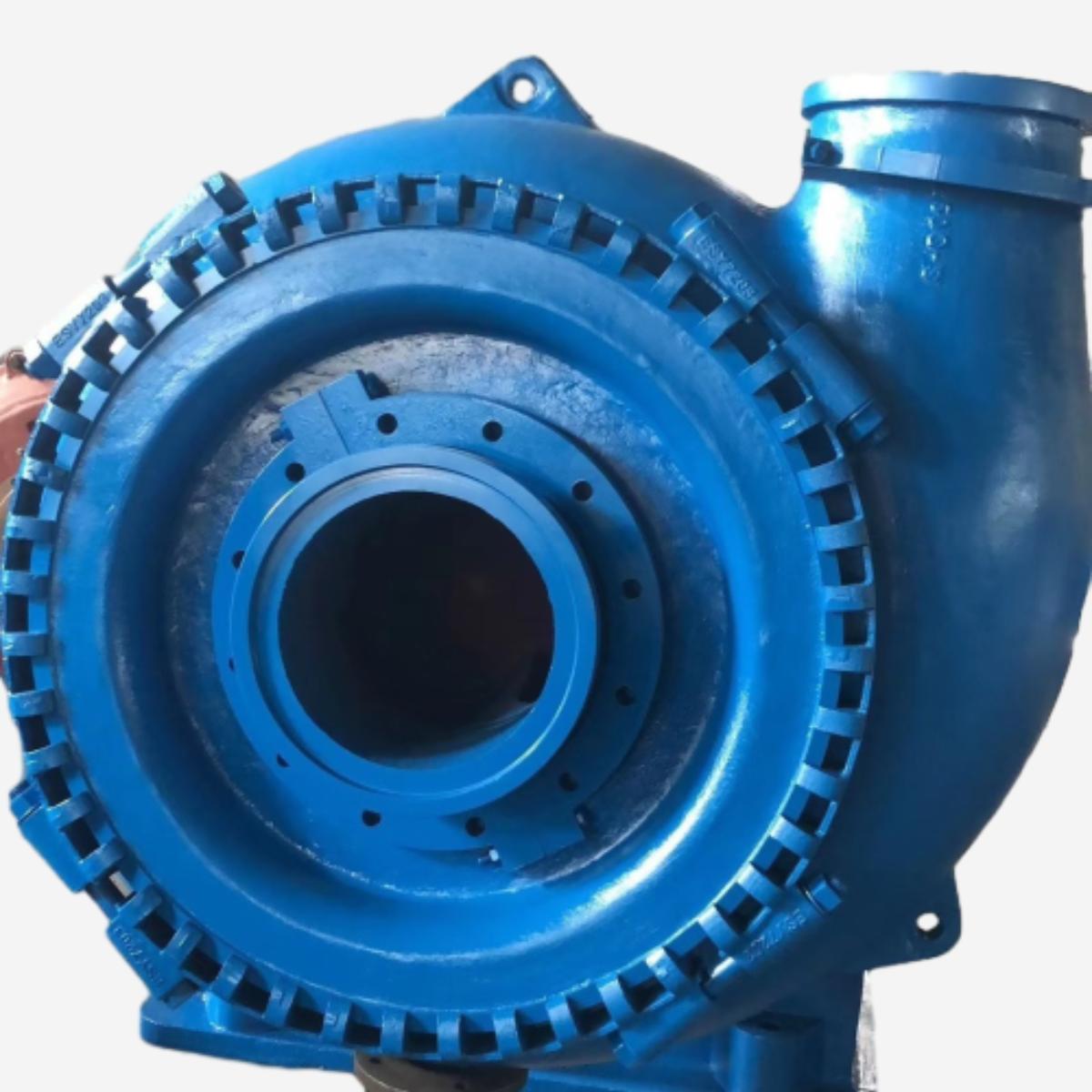
Performance & Engineering
The engineering principles governing hydraulic slurry pump performance revolve around force analysis, fluid dynamics, and materials science. The primary driving force is generated by a hydraulic cylinder, which imparts reciprocating motion to the piston or diaphragm. The force exerted is directly proportional to the hydraulic pressure and the effective area of the piston/diaphragm. Flow rate is determined by the stroke length, piston/diaphragm area, and the frequency of the reciprocating motion. A critical engineering consideration is the prevention of cavitation, which can occur when the pressure at the suction side of the pump drops below the vapor pressure of the fluid. Cavitation leads to the formation of vapor bubbles that collapse violently, causing erosion and damage to pump components. Proper suction lift limitations and optimized pump inlet geometry are crucial for mitigating cavitation risk. Environmental resistance is another key factor. Pumps operating in corrosive environments require careful material selection and protective coatings. Pumps exposed to extreme temperatures necessitate specialized seals and hydraulic fluids. Compliance requirements vary depending on the application. In the mining industry, pumps must meet stringent safety standards related to explosion-proof operation and grounding. Wastewater treatment applications may require pumps to comply with environmental regulations regarding leakage and emissions. Finite element analysis (FEA) is frequently used to optimize pump designs, predict stress concentrations, and ensure structural integrity. Computational fluid dynamics (CFD) simulations are employed to analyze flow patterns, identify potential areas of erosion, and improve pump efficiency.
Technical Specifications
| Parameter | Unit | Typical Range (Small Pump) | Typical Range (Large Pump) |
|---|---|---|---|
| Flow Rate | m³/hr | 5 - 50 | 200 - 1000 |
| Discharge Pressure | bar | 10 - 50 | 100 - 300 |
| Maximum Solids Size | mm | 10 - 25 | 50 - 150 |
| Slurry Concentration (Max) | % by weight | 20 - 40 | 60 - 80 |
| Hydraulic Fluid Viscosity | cSt | 20 - 100 | 30 - 150 |
| Pump Weight | kg | 50 - 200 | 500 - 2000 |
Failure Mode & Maintenance
Hydraulic slurry pumps, despite their robust design, are susceptible to various failure modes in demanding applications. Fatigue cracking in pump housings and liners is a common issue, resulting from cyclical loading and stress concentrations. Erosion, caused by the abrasive impact of solid particles, leads to material loss and dimensional changes in impellers and liners. Corrosion, particularly in aggressive chemical environments, degrades pump components and reduces their structural integrity. Seal failure results in leakage of hydraulic fluid and loss of pump efficiency. Diaphragm rupture, in diaphragm pumps, leads to complete pump failure. Failure analysis often reveals that inadequate lubrication, improper fluid selection, or exceeding pump operating limits contribute to these failures. Predictive maintenance strategies, such as vibration analysis, oil analysis, and thermal imaging, can help detect early signs of wear and prevent catastrophic failures. Regular inspection of liners, impellers, and seals is crucial. Liners should be replaced when their thickness falls below a specified minimum value. Seals should be replaced periodically to prevent leakage. Hydraulic fluid should be analyzed for contamination and viscosity changes. Proper alignment of pump components is essential to minimize stress and vibration. Periodic flushing of the pump housing removes accumulated solids and prevents clogging. Adhering to manufacturer’s recommended maintenance schedules and utilizing genuine spare parts are critical for maximizing pump lifespan and minimizing downtime.
Industry FAQ
Q: What are the key differences between a hydraulic slurry pump and a centrifugal slurry pump in terms of performance and application?
A: Centrifugal slurry pumps are best suited for handling lower solids concentrations and less abrasive slurries at higher flow rates. They are generally more cost-effective for these applications. However, they suffer significant performance degradation with increasing solids content and particle size. Hydraulic slurry pumps excel in high-solids, highly abrasive applications where maintaining consistent flow and pressure is critical, even with significant wear. They are less sensitive to changes in slurry composition and provide more positive displacement action.
Q: How does the choice of hydraulic fluid impact the performance and lifespan of the pump?
A: The hydraulic fluid's viscosity, lubricity, and thermal stability are paramount. Too low a viscosity can lead to increased leakage and reduced efficiency. Too high a viscosity increases energy consumption and may hinder pump responsiveness. Poor lubricity accelerates wear in hydraulic cylinders and seals. Insufficient thermal stability leads to fluid degradation and reduced pump performance at elevated temperatures. Selecting a fluid compatible with the slurry composition and operating environment is also crucial to prevent corrosion or contamination.
Q: What is the role of liner material in abrasion resistance and how is liner wear monitored?
A: Liner material is the first line of defense against abrasive wear. High-chrome cast iron is widely used due to its exceptional hardness and abrasion resistance. Other materials, like tungsten carbide or ceramic composites, offer even higher wear resistance but are more expensive. Liner wear is monitored through periodic inspections, measuring liner thickness using ultrasonic testing, and analyzing the composition of the wear debris. Significant reduction in liner thickness indicates the need for replacement.
Q: What are the common causes of seal failure in hydraulic slurry pumps and how can they be mitigated?
A: Common causes include abrasive particles lodging in the seal, chemical attack from the slurry, excessive pressure fluctuations, and improper installation. Mitigation strategies include using seals made from compatible materials, implementing effective slurry filtration to remove large particles, maintaining stable hydraulic pressure, ensuring proper seal installation according to manufacturer specifications, and using double mechanical seals with a barrier fluid.
Q: What are the key considerations when selecting a hydraulic slurry pump for a specific application, beyond flow rate and pressure?
A: Particle size and distribution, slurry concentration, slurry composition (chemical compatibility), operating temperature, suction lift requirements, and the presence of abrasive or corrosive components all need careful consideration. The pump's ability to handle entrained gases or air pockets should also be assessed. Furthermore, the total cost of ownership – including maintenance, repair, and downtime – should be factored into the selection process.
Conclusion
Hydraulic slurry pumps represent a critical technology in industries requiring the reliable and efficient transport of abrasive and erosive fluids. Their positive displacement action, combined with robust materials and specialized designs, allows them to excel in applications where centrifugal pumps fall short. Understanding the underlying material science, manufacturing processes, and engineering principles is essential for selecting, operating, and maintaining these pumps effectively.
Future advancements in hydraulic slurry pump technology are likely to focus on optimizing pump efficiency, reducing wear rates, and developing smart monitoring systems for predictive maintenance. The integration of advanced materials, such as ceramic composites and self-healing polymers, could significantly extend pump lifespan and reduce operating costs. Furthermore, the development of more sophisticated control algorithms and sensor technologies will enable real-time monitoring of pump performance and early detection of potential failures, ultimately enhancing operational reliability and minimizing downtime.
-
Comprehensive Guide to Waterproof ORings for Optimal Sealing Solutions
News2026-06-09
-
Septic Pump System Performance Analysis
News2026-06-08
-
pump for septic Material Science
News2026-06-08
-
basement sewer pump Performance Analysis
News2026-06-08
-
submerged pump Performance Engineering
News2026-06-08
-
Septic System Pumps Performance Analysis
News2026-06-08
-
septic system pump Material Science and Manufacturing
News2026-06-07
-
pump for septic tank Material Science Manufacturing
News2026-06-07
-
submersible sewage pump Material Science
News2026-06-07
-
Sewage Ejector Material Science and Manufacturing
News2026-06-07
-
Ejection Pump Material Science
News2026-06-07
-
pump submersible Performance Analysis
News2026-06-06
-
ejector pumps Performance Engineering
News2026-06-06
-
basement ejector pump Material Science Manufacturing
News2026-06-06
-
Septic Tanks Pumping Performance Analysis
News2026-06-06




