English
- Afrikaans
- Albanian
- Amharic
- Arabic
- Armenian
- Azerbaijani
- Basque
- Belarusian
- Bengali
- Bosnian
- Bulgarian
- Catalan
- Cebuano
- Corsican
- Croatian
- Czech
- Danish
- Dutch
- English
- Esperanto
- Estonian
- Finnish
- French
- Frisian
- Galician
- Georgian
- German
- Greek
- Gujarati
- Haitian Creole
- hausa
- hawaiian
- Hebrew
- Hindi
- Miao
- Hungarian
- Icelandic
- igbo
- Indonesian
- irish
- Italian
- Japanese
- Javanese
- Kannada
- kazakh
- Khmer
- Rwandese
- Korean
- Kurdish
- Kyrgyz
- Lao
- Latin
- Latvian
- Lithuanian
- Luxembourgish
- Macedonian
- Malgashi
- Malay
- Malayalam
- Maltese
- Maori
- Marathi
- Mongolian
- Myanmar
- Nepali
- Norwegian
- Norwegian
- Occitan
- Pashto
- Persian
- Polish
- Portuguese
- Punjabi
- Romanian
- Russian
- Samoan
- Scottish Gaelic
- Serbian
- Sesotho
- Shona
- Sindhi
- Sinhala
- Slovak
- Slovenian
- Somali
- Spanish
- Sundanese
- Swahili
- Swedish
- Tagalog
- Tajik
- Tamil
- Tatar
- Telugu
- Thai
- Turkish
- Turkmen
- Ukrainian
- Urdu
- Uighur
- Uzbek
- Vietnamese
- Welsh
- Bantu
- Yiddish
- Yoruba
- Zulu

Telephone: +86 13120555503
Email: frank@cypump.com


Apr . 01, 2024 17:55 Back to list
Hydrated Lime Slurry Pumping Performance Analysis
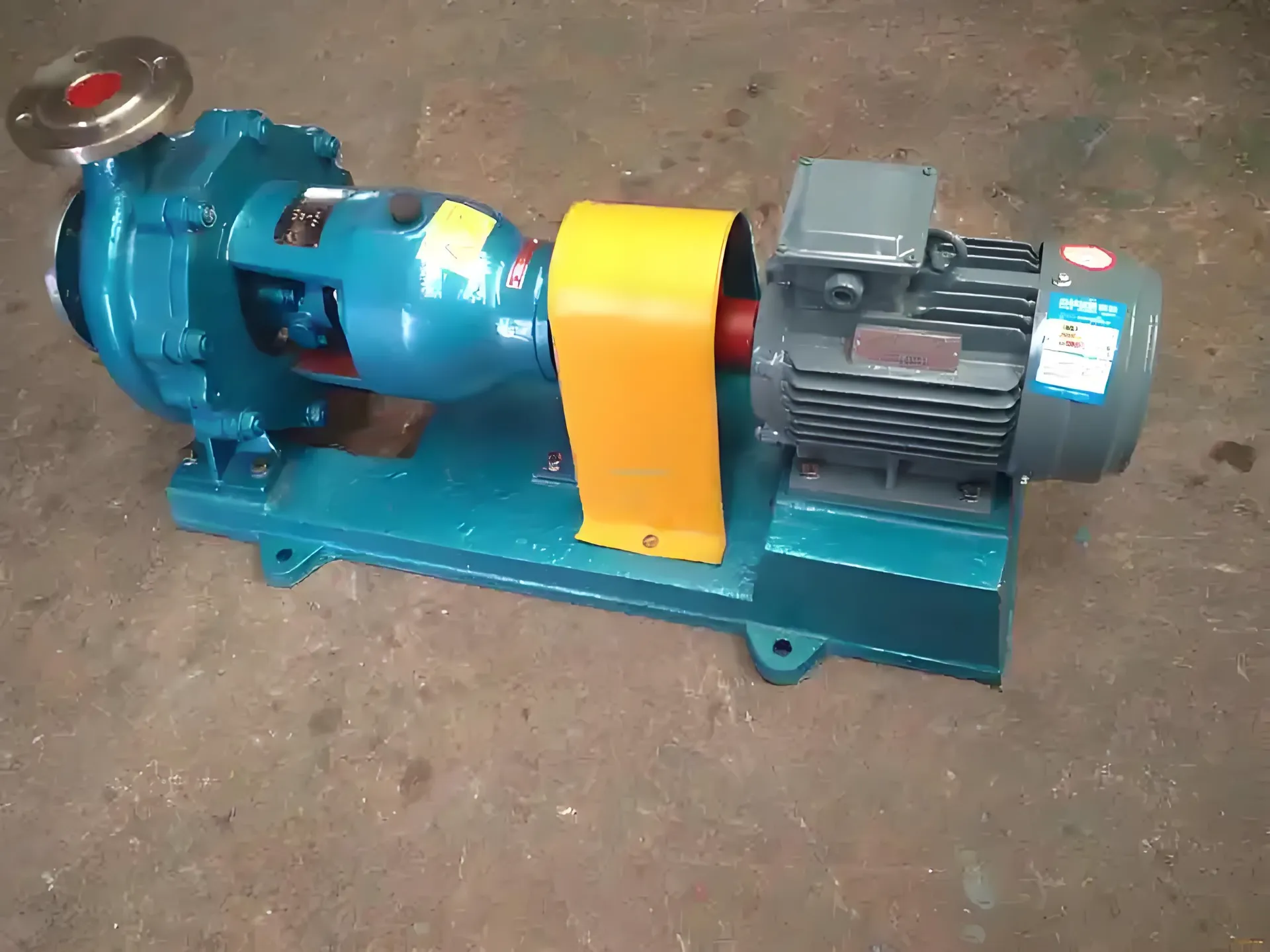
Introduction
Hydrated lime slurry pumping represents a critical unit operation across numerous industrial sectors, including flue gas desulfurization (FGD), wastewater treatment, mineral processing, and construction. The process involves the reliable and efficient transfer of a suspension of calcium hydroxide (Ca(OH)₂) in water. Unlike pumping purely aqueous solutions, hydrated lime slurries present unique challenges due to their abrasive nature, tendency to settle, and potential for pipeline blockage. This guide provides an in-depth technical overview of the material science, manufacturing considerations, performance parameters, failure modes, and maintenance protocols associated with hydrated lime slurry pumping systems. The industry consistently grapples with pump wear, solids deposition, and maintaining consistent slurry concentration. Optimizing pump selection and system design is paramount to minimize downtime, reduce operational costs, and ensure process efficiency. This document will dissect these challenges, providing a comprehensive resource for engineers, procurement specialists, and maintenance personnel.
Material Science & Manufacturing
Hydrated lime (calcium hydroxide) is produced via the hydration of quicklime (calcium oxide, CaO). The reaction, CaO + H₂O → Ca(OH)₂, is exothermic, generating heat that must be managed during the manufacturing process. The physical properties of the resulting hydrated lime powder significantly impact slurry pumpability. Particle size distribution is a key factor; finer particles contribute to higher slurry viscosity and a greater propensity for settling. Typical particle size ranges from 1 to 100 μm, with a mean particle size of 10-20 μm being common. Crystallinity also influences slurry behavior; less crystalline forms tend to be more reactive and create more viscous slurries. The manufacturing process involves controlled addition of water to quicklime in rotating kilns or slakers, followed by drying and classification.
Slurry characteristics are governed by solid-liquid interactions. The slurry’s rheology is non-Newtonian, exhibiting shear-thinning behavior. This means its viscosity decreases with increasing shear rate, a property critical for pump performance. Settling velocity is a function of particle size, density, and fluid viscosity. Agglomeration of particles increases the effective particle size and accelerates settling. Chemical compatibility is also crucial. Hydrated lime is alkaline (pH ~ 12.5), and prolonged exposure can corrode certain pump materials, such as carbon steel and some aluminum alloys. Therefore, pump construction materials must be selected based on their resistance to alkaline corrosion. Commonly used materials include high-chrome cast iron, stainless steel (304L, 316L), and ceramic liners.
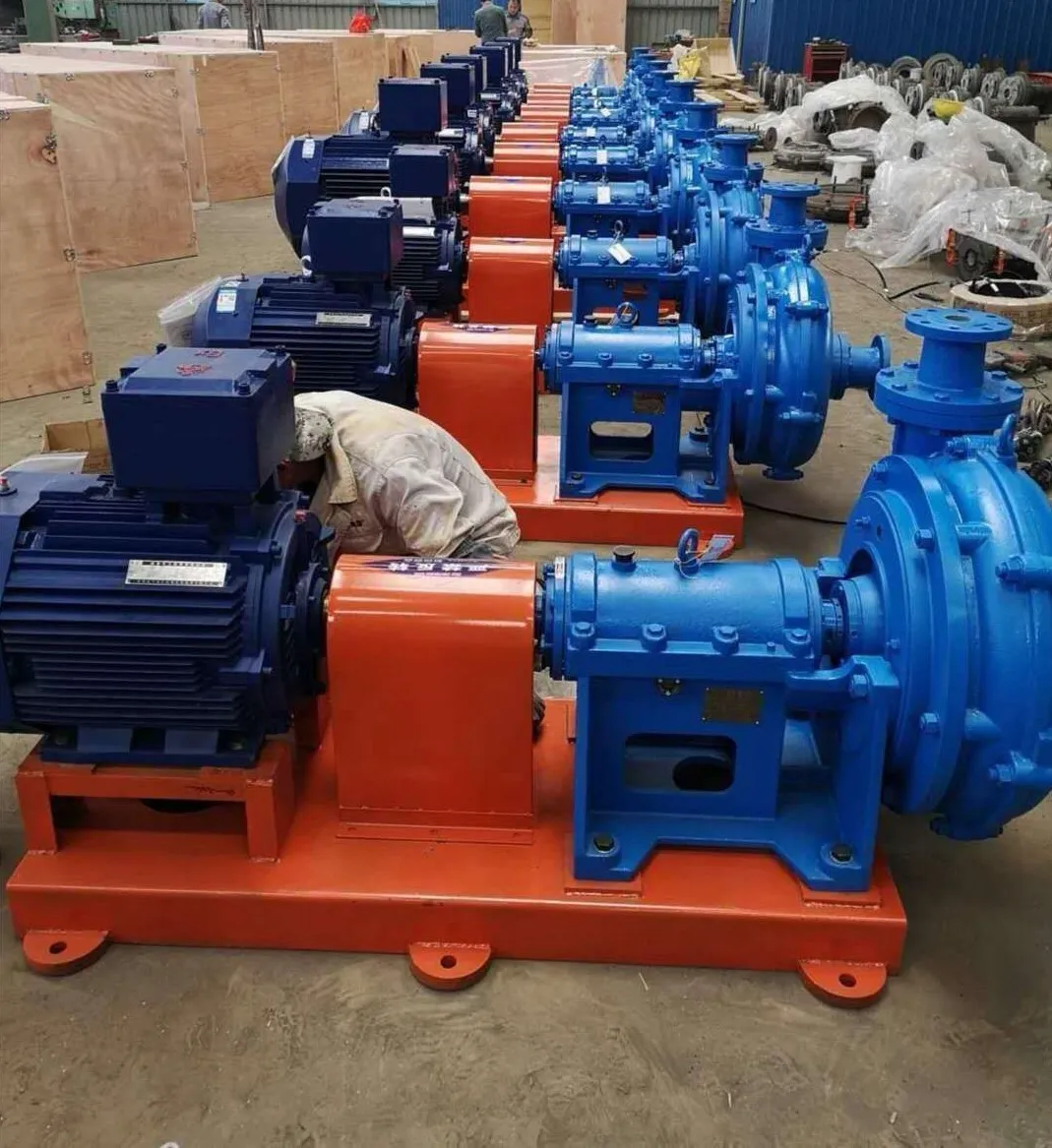
Performance & Engineering
The primary engineering challenge in hydrated lime slurry pumping is minimizing abrasive wear and preventing pipeline blockage. Abrasive wear is caused by the impact of lime particles on pump components, especially the impeller and casing. The wear rate is influenced by particle size, concentration, velocity, and the hardness of the pump materials. Force analysis reveals that the kinetic energy of the particles directly contributes to the erosive forces. Higher slurry velocities exacerbate this issue. Pump selection must consider the slurry’s specific gravity, which typically ranges from 1.2 to 1.6 depending on the solids concentration. The pump's Net Positive Suction Head Required (NPSHr) must be carefully matched to the Net Positive Suction Head Available (NPSHa) to prevent cavitation, which can accelerate impeller erosion.
Environmental resistance is also a consideration. While hydrated lime itself is relatively stable, exposure to carbon dioxide in the atmosphere leads to carbonation (Ca(OH)₂ + CO₂ → CaCO₃), forming calcium carbonate scale on pump surfaces and within the pipeline. This scale buildup reduces flow capacity and increases energy consumption. Compliance requirements, such as those related to environmental discharge permits, dictate the allowable slurry leakage and the need for containment systems. Proper pump sealing is, therefore, critical. Positive displacement pumps, such as progressing cavity pumps and peristaltic pumps, are often favored for their ability to handle high solids concentrations and maintain a consistent flow rate, minimizing pulsations that can contribute to settling. Centrifugal pumps are also utilized, but require careful impeller design and operating point selection to avoid excessive wear and settling.
Technical Specifications
| Parameter | Unit | Typical Range (Hydrated Lime Slurry) | Pump Material Recommendation |
|---|---|---|---|
| Slurry Concentration (Solids %) | % w/w | 20-60 | High-Chrome Cast Iron / SS316L |
| Slurry Specific Gravity | - | 1.2 – 1.6 | Stainless Steel (316L) |
| Slurry Viscosity | cP | 50 – 500 (dependent on concentration & particle size) | Progressing Cavity Pump / Centrifugal with optimized impeller |
| Particle Size (d50) | µm | 10 – 20 | Ceramic Liners / Hardfacing Alloys |
| pH | - | 12.5 – 13.5 | SS316L / Alloy 20 |
| Maximum Slurry Velocity | m/s | 2 – 4 (depending on pipe material and slurry concentration) | Abrasion-Resistant Linings |
Failure Mode & Maintenance
The most common failure modes in hydrated lime slurry pumping systems include abrasive wear of pump components (impeller, casing, liners), erosion of pipeline elbows and bends, and blockage due to slurry settling and scale formation. Fatigue cracking can occur in pump casings subjected to cyclical loading. Delamination of protective coatings (e.g., rubber linings) can expose the underlying metal to corrosion. Degradation of seals leads to leakage and loss of pump efficiency. Oxidation of pump components, particularly in environments with elevated temperatures, can reduce their mechanical strength.
Preventative maintenance is crucial. Regular inspections should focus on identifying wear patterns, checking seal integrity, and monitoring slurry concentration and viscosity. Periodic replacement of wear parts (impeller, liners, seals) is essential. Pipeline flushing and cleaning should be performed regularly to remove settled solids and scale buildup. Proper pump alignment prevents excessive vibration and reduces bearing wear. Consider using automated slurry concentration control systems to maintain consistent slurry properties. Implementing a predictive maintenance program based on vibration analysis and thermal imaging can detect early signs of failure. When performing repairs, ensure that all components are compatible with the alkaline environment and that proper corrosion protection measures are in place. The use of sacrificial anodes can mitigate corrosion in steel pipelines.
Industry FAQ
Q: What is the best pump type for handling highly concentrated hydrated lime slurries (50-60% solids)?
A: For highly concentrated slurries, positive displacement pumps, specifically progressing cavity pumps, are generally preferred. They excel at maintaining a consistent flow rate and can handle the high viscosity and solids loading without significant performance degradation. Centrifugal pumps can be used, but require careful impeller selection (open or semi-open impeller designs) and operation at lower speeds to minimize shear and wear.
Q: How can I minimize abrasive wear on my pump impeller?
A: Several strategies can minimize impeller wear. Using high-chrome cast iron or ceramic-lined impellers provides superior abrasion resistance. Operating the pump within its recommended flow range, avoiding excessive velocities, is critical. Implementing a closed-loop slurry recirculation system can help maintain a uniform slurry distribution and reduce localized wear. Regular inspection and replacement of worn impeller components are also essential.
Q: What causes scaling inside the pipeline, and how can it be prevented?
A: Scaling is primarily caused by carbonation of the hydrated lime, forming calcium carbonate deposits. Preventing carbonation requires minimizing exposure to atmospheric CO₂. Insulating pipelines and using closed-loop systems can help. Regular pipeline flushing and chemical cleaning with mild acids (under controlled conditions) can remove existing scale. Maintaining a slightly elevated slurry pH can also inhibit carbonation.
Q: What considerations should I make when selecting materials for pump seals?
A: Pump seals must be resistant to both the abrasive nature of the slurry and its high alkalinity. Elastomeric seals (e.g., EPDM, Viton) are commonly used, but their lifespan can be limited by abrasion. Mechanical seals with hardened faces (e.g., silicon carbide) offer improved wear resistance. Double mechanical seals with a barrier fluid provide additional protection and prevent leakage.
Q: What is the role of NPSH in hydrated lime slurry pumping?
A: NPSH (Net Positive Suction Head) is critical. Hydrated lime slurries have a tendency to cavitate due to their density and potential for gas entrainment. Ensuring that the NPSHa (available) is significantly greater than the NPSHr (required by the pump) is vital to prevent impeller damage and maintain pump performance. Proper suction piping design, minimizing suction lift, and controlling slurry temperature all contribute to increasing NPSHa.
Conclusion
Effective hydrated lime slurry pumping hinges on a thorough understanding of the material science governing slurry behavior, careful selection of pump components and materials, and diligent maintenance practices. The abrasive nature of the slurry, combined with its alkaline properties and tendency to settle, presents significant engineering challenges. Successfully addressing these challenges requires a holistic approach, considering factors such as slurry concentration, velocity, pH, and pump NPSH requirements. Ignoring these crucial elements can lead to premature pump failure, increased downtime, and higher operational costs.
Looking ahead, advancements in materials science, such as the development of more wear-resistant coatings and alloys, will continue to improve the longevity and reliability of hydrated lime slurry pumping systems. The integration of smart sensors and predictive maintenance technologies will enable proactive identification of potential failures, optimizing maintenance schedules and reducing unplanned downtime. Continued research into slurry rheology and flow dynamics will further refine pump designs and enhance overall system efficiency.
-
Comprehensive Guide to Waterproof ORings for Optimal Sealing Solutions
News2026-06-09
-
Septic Pump Replacement Performance Analysis
News2026-06-10
-
Septic Pump Price Performance Analysis
News2026-06-10
-
pumps for septic systems Material Science Manufacturing
News2026-06-10
-
ejector pumps for basement bathrooms Performance Analysis
News2026-06-10
-
Ejector Pump Cost Analysis
News2026-06-10
-
drainage pumps Performance and Engineering
News2026-06-09
-
basement bathroom ejector pump Material Science
News2026-06-09
-
Sewer Ejector Pump Cost Performance Analysis
News2026-06-09
-
Septic Tank Pump Replacement Performance Analysis
News2026-06-09
-
septic sump pump Performance and Engineering
News2026-06-09
-
Septic Pump System Performance Analysis
News2026-06-08
-
pump for septic Material Science
News2026-06-08
-
basement sewer pump Performance Analysis
News2026-06-08
-
submerged pump Performance Engineering
News2026-06-08




