English
- Afrikaans
- Albanian
- Amharic
- Arabic
- Armenian
- Azerbaijani
- Basque
- Belarusian
- Bengali
- Bosnian
- Bulgarian
- Catalan
- Cebuano
- Corsican
- Croatian
- Czech
- Danish
- Dutch
- English
- Esperanto
- Estonian
- Finnish
- French
- Frisian
- Galician
- Georgian
- German
- Greek
- Gujarati
- Haitian Creole
- hausa
- hawaiian
- Hebrew
- Hindi
- Miao
- Hungarian
- Icelandic
- igbo
- Indonesian
- irish
- Italian
- Japanese
- Javanese
- Kannada
- kazakh
- Khmer
- Rwandese
- Korean
- Kurdish
- Kyrgyz
- Lao
- Latin
- Latvian
- Lithuanian
- Luxembourgish
- Macedonian
- Malgashi
- Malay
- Malayalam
- Maltese
- Maori
- Marathi
- Mongolian
- Myanmar
- Nepali
- Norwegian
- Norwegian
- Occitan
- Pashto
- Persian
- Polish
- Portuguese
- Punjabi
- Romanian
- Russian
- Samoan
- Scottish Gaelic
- Serbian
- Sesotho
- Shona
- Sindhi
- Sinhala
- Slovak
- Slovenian
- Somali
- Spanish
- Sundanese
- Swahili
- Swedish
- Tagalog
- Tajik
- Tamil
- Tatar
- Telugu
- Thai
- Turkish
- Turkmen
- Ukrainian
- Urdu
- Uighur
- Uzbek
- Vietnamese
- Welsh
- Bantu
- Yiddish
- Yoruba
- Zulu

Telephone: +86 13120555503
Email: frank@cypump.com


Apr . 01, 2024 17:55 Back to list
hose pumps for slurry Manufacturing Specifications and Performance Analysis
Hose Pumps for Slurry: Manufacturing Specifications and Performance Analysis
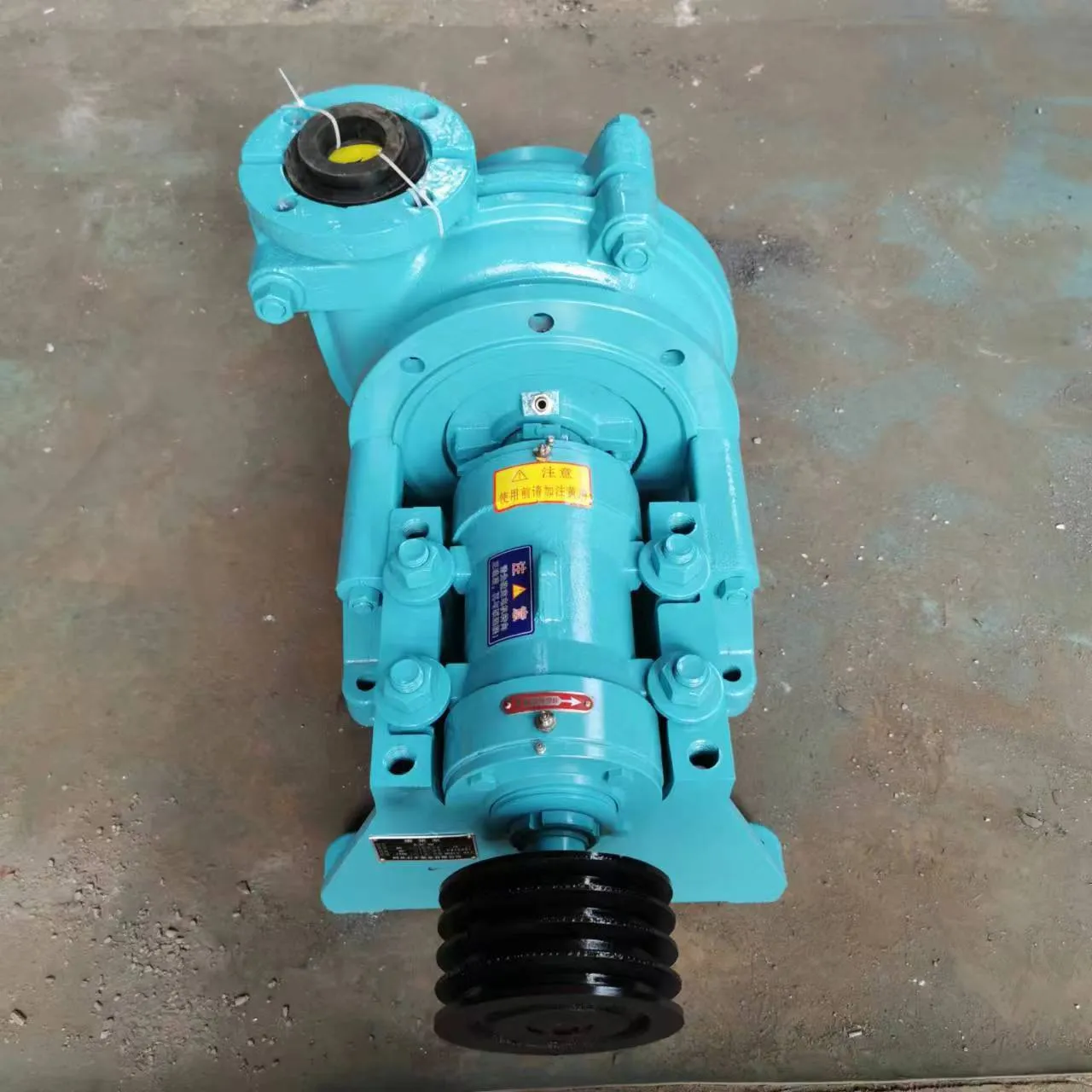
Hose pumps for slurry, technically classified as peristaltic pumps, represent a critical engineering solution for the transport of highly abrasive, viscous, and chemically aggressive fluids. Unlike centrifugal or diaphragm pumps, the hose pump utilizes a positive displacement mechanism where the fluid is encapsulated within a reinforced elastomer hose, completely isolated from the mechanical drive components. This architectural configuration eliminates the risk of seal failure and minimizes internal friction, making it the industry standard for handling slurries containing large particulate matter, such as mining tailings, chemical sludge, and wastewater grit. In the industrial value chain, these pumps serve as the primary conveyance mechanism for materials that would cause rapid erosive wear in traditional pump volutes and impellers.
Material Science & Manufacturing
The operational integrity of a hose pump for slurry is fundamentally dependent on the material science of the elastomer hose and the precision of the rotor geometry. The hose is typically engineered from high-performance synthetic rubbers, such as Natural Rubber (NR) for maximum abrasion resistance, Nitrile (NBR) for oil resistance, or Ethylene Propylene Diene Monomer (EPDM) for high-temperature and chemical stability. The manufacturing process involves a complex vulcanization sequence to ensure a homogeneous molecular structure, preventing premature delamination under the repeated compression-decompression cycles of the rotor.
From a manufacturing perspective, the rotor is the core mechanical assembly. It is typically forged from high-grade alloy steel and precision-machined to ensure a specific compression ratio—the ratio between the hose's outer diameter and the rotor's roller diameter. Key parameter control during production focuses on the surface hardness of the rollers (typically hardened to 58-62 HRC) to prevent deformation. The hose is then integrated into the pump housing using heavy-duty clamps that ensure a leak-proof seal while allowing for the necessary radial displacement. The interaction between the elastomer's Shore A hardness and the rotor's compression force determines the volumetric efficiency and the ultimate lifespan of the pump.
Performance & Engineering
Engineering a hose pump for slurry requires a rigorous force analysis of the occlusion point. The pump operates on the principle of "occlusion," where the rotor compresses the hose completely, creating a sealed cavity that moves axially along the hose. The primary engineering challenge is managing the heat generated by hysteresis—the internal friction within the elastomer as it is rapidly deformed. In high-viscosity slurry applications, the fluid resistance increases the pressure delta across the occlusion point, necessitating a high-torque drive system and reinforced hose walls to prevent rupture.
Environmental resistance is another critical performance metric. In slurry applications, the pump must resist external corrosion and internal erosion. Since the fluid never contacts the pump casing or rotor, the primary failure point is the hose interior. To mitigate this, engineers specify hose wall thicknesses based on the predicted "abrasion index" of the slurry. Furthermore, the NPSH (Net Positive Suction Head) required is typically low, allowing these pumps to handle high-concentration slurries without cavitation, provided the suction line is engineered to prevent sedimentation. Compliance with industrial safety standards ensures that the pressure ratings of the hose are matched with integrated pressure relief valves to prevent catastrophic bursting in the event of a downstream blockage.
Technical Specifications
| Performance Parameter | Standard Slurry Grade | High-Abrasion Grade | Chemical Slurry Grade | Ultra-High Pressure Grade |
|---|---|---|---|---|
| Max Flow Rate (m³/h) | 15.0 | 12.0 | 10.0 | 8.0 |
| Max Discharge Pressure (Bar) | 16 | 16 | 10 | 25 |
| Hose Material | Natural Rubber (NR) | Reinforced NR | EPDM / Viton | High-Density Polymer |
| Max Particle Size (mm) | 20 | 30 | 15 | 10 |
| Temperature Range (°C) | -10 to +80 | -10 to +70 | -20 to +120 | -10 to +60 |
| Typical Hose Life (Hours) | 3,000 - 5,000 | 2,500 - 4,000 | 4,000 - 6,000 | 2,000 - 3,500 |
Failure Mode & Maintenance
Failure analysis in hose pumps for slurry typically reveals four primary failure modes: fatigue cracking, abrasive wear, chemical degradation, and occlusion failure. Fatigue cracking occurs due to the repetitive mechanical stress on the elastomer, leading to microscopic fissures that eventually propagate into a full rupture. Abrasive wear is characterized by the thinning of the hose wall, particularly in slurries with high quartz or metallic content, which reduces the effective occlusion and leads to internal slippage (backflow).
Chemical degradation manifests as swelling or hardening of the hose, often caused by an incompatibility between the slurry's pH level and the elastomer's polymer chain. This results in a loss of elasticity and premature splitting. Occlusion failure occurs if the rotor rollers wear down or if the hose loses its resilience, preventing a complete seal and causing a drastic drop in flow rate. Professional maintenance protocols necessitate the implementation of a "predictive replacement" schedule based on total running hours and pressure monitoring. Daily inspections should focus on the lubrication of the rotor bearings and the checking of hose tension. When replacing the hose, it is imperative to ensure the new hose is seated correctly in the clamps to avoid uneven compression, which can accelerate fatigue.
Industry FAQ
Q: How do we determine the correct hose material for a slurry containing both abrasive particles and sulfuric acid?
A: This requires a balanced material selection. While Natural Rubber is superior for abrasion, it fails in acidic environments. We recommend a specialized hybrid elastomer or a high-grade EPDM if the acid concentration is high, though this may slightly reduce the abrasion resistance. A chemical compatibility test is mandatory before final specification.
Q: What causes the "slippage" or loss of prime in a slurry hose pump?
A: Slippage is typically caused by hose wear (thinning of the wall) or the loss of elastomer elasticity due to over-heating or chemical attack. Once the hose cannot be fully compressed by the rotor, the seal is broken, allowing fluid to leak back toward the suction side.
Q: Can hose pumps handle dry-running conditions during slurry startup?
A: Yes, one of the primary advantages of hose pumps is their ability to run dry without damage, as there are no internal seals or impellers to lubricate. However, prolonged dry running can increase heat buildup in the hose via hysteresis, which may shorten the hose's lifespan.
Q: How does the particle size of the slurry affect the pump's efficiency?
A: As long as the particle size is smaller than the internal diameter of the hose, efficiency remains constant. However, oversized particles can cause localized stress concentrations on the hose wall during the occlusion phase, increasing the risk of puncture or accelerated wear.
Q: What is the recommended method for increasing the discharge pressure in an existing installation?
A: To increase pressure, you must either increase the hose wall thickness (provided the rotor can still occlude it) or transition to a pump with a smaller hose diameter and a higher-torque motor. Increasing pressure always results in a proportional decrease in hose service life due to higher mechanical stress.
Conclusion
The technical efficacy of hose pumps for slurry is rooted in the synergy between elastomer chemistry and mechanical precision. By isolating the abrasive medium from the drive components, these pumps solve the critical industry pain point of premature wear and frequent seal failure. The selection of the appropriate polymer—balanced against the specific chemical and abrasive properties of the slurry—is the single most important factor in ensuring operational stability and maximizing the Mean Time Between Failures (MTBF).
Looking forward, the integration of smart sensors for real-time hose wear monitoring and the development of nano-composite elastomers will likely further extend the lifespan of these systems. For engineers and procurement managers, the focus must remain on rigorous material verification and the adherence to strict maintenance intervals to ensure the reliability of slurry conveyance in demanding industrial environments.
-
Comprehensive Guide to Waterproof ORings for Optimal Sealing Solutions
News2026-06-09
-
heavy duty submersible pump Performance Analysis
News2026-06-25
-
best submersible pump for septic tank Performance Analysis
News2026-06-25
-
basement sewer ejector pump Performance Analysis
News2026-06-25
-
basement pumps ejector pumps Performance Analysis
News2026-06-25
-
basement lift pump Performance and Engineering
News2026-06-25
-
basement bathroom pump systems Performance Analysis
News2026-06-24
-
basement bathroom ejector pump system Performance Engineering
News2026-06-24
-
2 hp sewage pump Performance Engineering
News2026-06-24
-
1 hp septic pump Performance Engineering
News2026-06-24
-
submersible effluent pump Performance Analysis
News2026-06-24
-
submergable pump Material Science
News2026-06-23
-
sewer injection pump Performance Engineering
News2026-06-23
-
Sewer Ejector Pump System Performance Analysis
News2026-06-23
-
septic tank pump for sale Performance Engineering
News2026-06-23




