English
- Afrikaans
- Albanian
- Amharic
- Arabic
- Armenian
- Azerbaijani
- Basque
- Belarusian
- Bengali
- Bosnian
- Bulgarian
- Catalan
- Cebuano
- Corsican
- Croatian
- Czech
- Danish
- Dutch
- English
- Esperanto
- Estonian
- Finnish
- French
- Frisian
- Galician
- Georgian
- German
- Greek
- Gujarati
- Haitian Creole
- hausa
- hawaiian
- Hebrew
- Hindi
- Miao
- Hungarian
- Icelandic
- igbo
- Indonesian
- irish
- Italian
- Japanese
- Javanese
- Kannada
- kazakh
- Khmer
- Rwandese
- Korean
- Kurdish
- Kyrgyz
- Lao
- Latin
- Latvian
- Lithuanian
- Luxembourgish
- Macedonian
- Malgashi
- Malay
- Malayalam
- Maltese
- Maori
- Marathi
- Mongolian
- Myanmar
- Nepali
- Norwegian
- Norwegian
- Occitan
- Pashto
- Persian
- Polish
- Portuguese
- Punjabi
- Romanian
- Russian
- Samoan
- Scottish Gaelic
- Serbian
- Sesotho
- Shona
- Sindhi
- Sinhala
- Slovak
- Slovenian
- Somali
- Spanish
- Sundanese
- Swahili
- Swedish
- Tagalog
- Tajik
- Tamil
- Tatar
- Telugu
- Thai
- Turkish
- Turkmen
- Ukrainian
- Urdu
- Uighur
- Uzbek
- Vietnamese
- Welsh
- Bantu
- Yiddish
- Yoruba
- Zulu

Telephone: +86 13120555503
Email: frank@cypump.com


Apr . 01, 2024 17:55 Back to list
horizontal slurry pump Performance and Engineering
Introduction
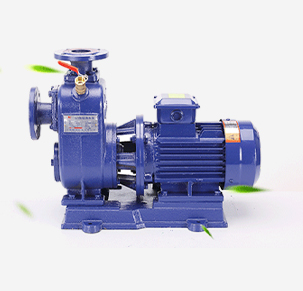
Horizontal slurry pumps are centrifugal pumps specifically designed for the transportation of abrasive, erosive, and corrosive slurries. They occupy a critical position in numerous industrial processes, including mining, wastewater treatment, chemical processing, and dredging. Unlike standard centrifugal pumps, horizontal slurry pumps are engineered to handle high solid concentrations and large particle sizes, minimizing wear and maintaining operational efficiency. Core performance characteristics include flow rate, head, solids handling capability, and resistance to abrasive wear. Their robust construction, typically utilizing high-chrome alloys or rubber liners, differentiates them from pumps used for clean fluids, addressing the key pain point of reduced lifespan and increased maintenance costs in abrasive applications.
Material Science & Manufacturing
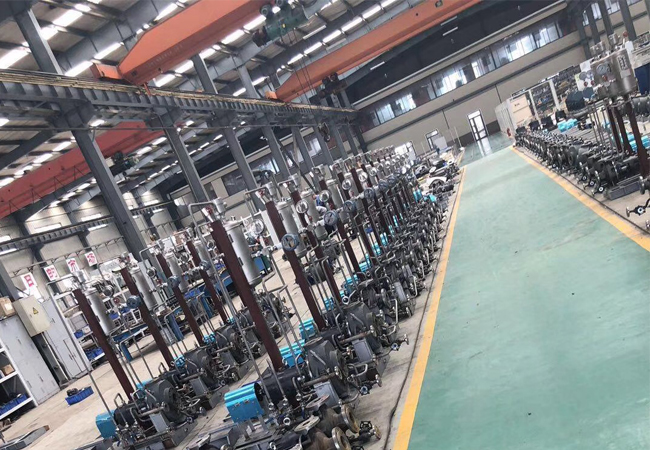
The performance and longevity of a horizontal slurry pump are inextricably linked to the materials employed in its construction and the manufacturing processes utilized. Common materials include high-chrome cast iron (A532 Grade 1 Class 30), offering excellent abrasion resistance due to the formation of hard chromium carbides; stainless steels (304, 316, duplex stainless steels) for corrosive environments; and elastomer linings (natural rubber, synthetic rubber) to provide both abrasion and corrosion protection. The impeller, volute casing, and liner materials are critical. Manufacturing typically involves sand casting for the main casing components, followed by heat treatment to optimize hardness and toughness. Impellers are often manufactured using investment casting to achieve complex geometries and tight tolerances. Welding is employed for joining components, requiring strict adherence to welding procedures (AWS D1.1) and the use of compatible filler metals to prevent galvanic corrosion. Key parameter control during manufacturing includes maintaining dimensional accuracy of the impeller and casing, ensuring proper hardness levels through heat treatment (typically Rockwell C 60-65 for high-chrome iron), and verifying the integrity of welds via non-destructive testing (NDT) methods like radiography and ultrasonic testing. Material selection is governed by the slurry’s pH, solids concentration, particle size distribution, and impact velocity.
Performance & Engineering
The engineering design of horizontal slurry pumps focuses on mitigating the detrimental effects of abrasion, erosion, and corrosion. Force analysis is paramount, considering the impact forces exerted by solid particles on the impeller and casing. Impeller design incorporates open or semi-open impeller geometries to minimize clogging and reduce wear. Volute casing design is critical for efficient hydraulic performance and minimizing turbulence, which can exacerbate erosion. Shaft design must account for radial loads imposed by the slurry, employing robust bearings and a suitable shaft diameter to prevent deflection and failure. Environmental resistance is addressed through material selection and protective coatings. Pumps operating in highly corrosive environments may utilize rubber or polymer coatings on the casing and impeller. Compliance requirements include adherence to hydraulic institute standards (ANSI/HI) for pump performance testing and classification. The pump's Net Positive Suction Head Required (NPSHr) must be carefully matched to the available NPSHa (Net Positive Suction Head Available) to prevent cavitation, a major cause of impeller damage. Proper pump selection involves considering the slurry’s specific gravity, viscosity, and flow characteristics to optimize performance and minimize energy consumption. Mechanical seals are critical components, and their selection depends on the slurry’s abrasiveness and chemical composition; options include mechanical seals with tungsten carbide faces and robust sealing elastomers.
Technical Specifications
| Parameter | Unit | Typical Range (Small Pump) | Typical Range (Large Pump) |
|---|---|---|---|
| Flow Rate | m³/hr | 10-100 | 500-2000 |
| Head | m | 5-30 | 50-150 |
| Solids Handling Size | mm | Up to 25 | Up to 100 |
| Slurry Concentration (Max) | % by weight | Up to 30 | Up to 60 |
| Pump Speed | RPM | 500-1500 | 500-1800 |
| Power | kW | 1.5-11 | 55-300 |
Failure Mode & Maintenance
Horizontal slurry pumps are subject to various failure modes, primarily driven by the abrasive and erosive nature of the slurries they handle. Common failures include impeller wear (leading to reduced head and flow), casing erosion (resulting in leakage and reduced efficiency), bearing failure (due to radial loads and lubricant contamination), seal failure (causing leakage and potential pump damage), and shaft breakage (under extreme load conditions). Failure analysis often reveals that wear patterns are concentrated in areas of high-velocity impact and turbulence. Fatigue cracking can occur in the impeller and casing due to cyclic loading. Corrosion, particularly galvanic corrosion, can weaken components. Preventive maintenance is crucial. Regular inspections should include visual checks for wear, vibration analysis to detect bearing issues, and seal inspections for leakage. Impeller and casing replacement are common maintenance tasks. Lubrication of bearings should be performed according to manufacturer’s recommendations. Regular monitoring of pump performance (flow rate, head, power consumption) can identify early signs of degradation. Implementing a robust wear monitoring program, using techniques like ultrasonic thickness testing, can help predict component lifespan and schedule maintenance proactively. Proper slurry handling practices, such as minimizing solids concentration and controlling particle size, can extend pump life. Consider using sacrificial liners to protect critical components.
Industry FAQ
Q: What is the impact of particle size distribution on pump wear?
A: A wider particle size distribution, particularly with a significant proportion of larger, harder particles, will dramatically accelerate wear rates. Larger particles impart greater impact forces, while a high concentration of fines can act as abrasive agents, increasing erosion. Proper screening or classification of the slurry upstream of the pump is often necessary to mitigate this issue.
Q: How does slurry chemistry affect material selection for the pump?
A: Slurry chemistry is a primary driver of material selection. Highly acidic or alkaline slurries require corrosion-resistant materials like stainless steel, duplex stainless steel, or polymer linings. The presence of chlorides can induce pitting corrosion, necessitating specialized alloys. Knowing the slurry's pH, redox potential, and chemical composition is critical for selecting appropriate materials.
Q: What are the common causes of cavitation in horizontal slurry pumps?
A: Cavitation occurs when the absolute pressure at the pump inlet falls below the vapor pressure of the liquid, forming vapor bubbles that collapse violently, causing damage to the impeller. Common causes include insufficient NPSHa, high suction lift, and restrictions in the suction piping. Proper system design and pump selection are essential to prevent cavitation.
Q: What are the advantages of using a rubber liner in a slurry pump?
A: Rubber liners provide excellent abrasion and corrosion resistance, particularly for slurries containing abrasive solids and corrosive chemicals. They also dampen noise and vibration. However, rubber liners have limitations in terms of temperature resistance and chemical compatibility, and their lifespan is finite.
Q: How do I determine the appropriate impeller diameter for my application?
A: Impeller diameter is selected based on the required head and flow rate. A larger impeller diameter will generate higher head but consume more power. Pump performance curves provided by the manufacturer are essential for selecting the optimal impeller diameter for a specific application. Consideration must also be given to the solids handling capability of the chosen impeller design.
Conclusion
Horizontal slurry pumps are indispensable components in numerous industries dealing with abrasive and erosive materials. Their reliable operation depends on a complex interplay of material science, engineering design, and diligent maintenance. Selecting the correct pump for a specific application requires a thorough understanding of the slurry’s properties, the system’s operating conditions, and the pump’s performance characteristics.
Future developments in horizontal slurry pump technology are likely to focus on improving wear resistance through advanced materials and coatings, optimizing hydraulic efficiency to reduce energy consumption, and implementing smart monitoring systems to predict failures and optimize maintenance schedules. Continued research into impeller geometries and casing designs will further enhance the performance and longevity of these critical machines.
-
Precision at the Pump: How Better Machining Protects Flow and Uptime
News2026-11-20
-
Why Pump Reliability Begins Before the First Drop of Fluid
News2026-11-20
-
Beyond the Pump: Designing Safer Access Around Critical Water Infrastructure
News2026-11-20
-
Why Pumping Stations Depend on the Infrastructure Beneath the Pumps
News2026-11-20
-
Beyond the Pump Room: How Smarter Loading Protects Industrial Equipment
News2026-11-19
-
When Pumps Stop: Designing More Resilient Power for Critical Pumping Systems
News2026-11-19
-
The Hidden Role of Dust and Gas Monitoring in Reliable Pump Operations
News2026-11-19
-
The Hidden Role of Mineral Compounds in Extending Industrial Pump Lifespan
News2026-10-12
-
Why Pump System Reliability Depends on Precision Hose Assembly Methods
News2026-09-15
-
How Advanced Imaging Films Are Transforming Pump Component Quality Control
News2026-08-25
-
How Advanced Filtration Protects Pump Systems from Premature Wear and Costly Downtime
News2026-08-25
-
How Steel Material Selection Drives Pump Reliability in Heavy-Duty Systems
News2026-08-25
-
Ensuring Pump System Efficiency: The Role of High-Quality Pipe Fittings and Tubing
News2026-08-24
-
Optimizing Fluid Dynamics and Material Consistency in Industrial Processing
News2026-08-18
-
Innovations and Challenges in Hydraulic Systems for Heavy Machinery
News2026-08-13




