English
- Afrikaans
- Albanian
- Amharic
- Arabic
- Armenian
- Azerbaijani
- Basque
- Belarusian
- Bengali
- Bosnian
- Bulgarian
- Catalan
- Cebuano
- Corsican
- Croatian
- Czech
- Danish
- Dutch
- English
- Esperanto
- Estonian
- Finnish
- French
- Frisian
- Galician
- Georgian
- German
- Greek
- Gujarati
- Haitian Creole
- hausa
- hawaiian
- Hebrew
- Hindi
- Miao
- Hungarian
- Icelandic
- igbo
- Indonesian
- irish
- Italian
- Japanese
- Javanese
- Kannada
- kazakh
- Khmer
- Rwandese
- Korean
- Kurdish
- Kyrgyz
- Lao
- Latin
- Latvian
- Lithuanian
- Luxembourgish
- Macedonian
- Malgashi
- Malay
- Malayalam
- Maltese
- Maori
- Marathi
- Mongolian
- Myanmar
- Nepali
- Norwegian
- Norwegian
- Occitan
- Pashto
- Persian
- Polish
- Portuguese
- Punjabi
- Romanian
- Russian
- Samoan
- Scottish Gaelic
- Serbian
- Sesotho
- Shona
- Sindhi
- Sinhala
- Slovak
- Slovenian
- Somali
- Spanish
- Sundanese
- Swahili
- Swedish
- Tagalog
- Tajik
- Tamil
- Tatar
- Telugu
- Thai
- Turkish
- Turkmen
- Ukrainian
- Urdu
- Uighur
- Uzbek
- Vietnamese
- Welsh
- Bantu
- Yiddish
- Yoruba
- Zulu

Telephone: +86 13120555503
Email: frank@cypump.com


Apr . 01, 2024 17:55 Back to list
horizontal froth slurry pump supplier Performance Analysis
Introduction
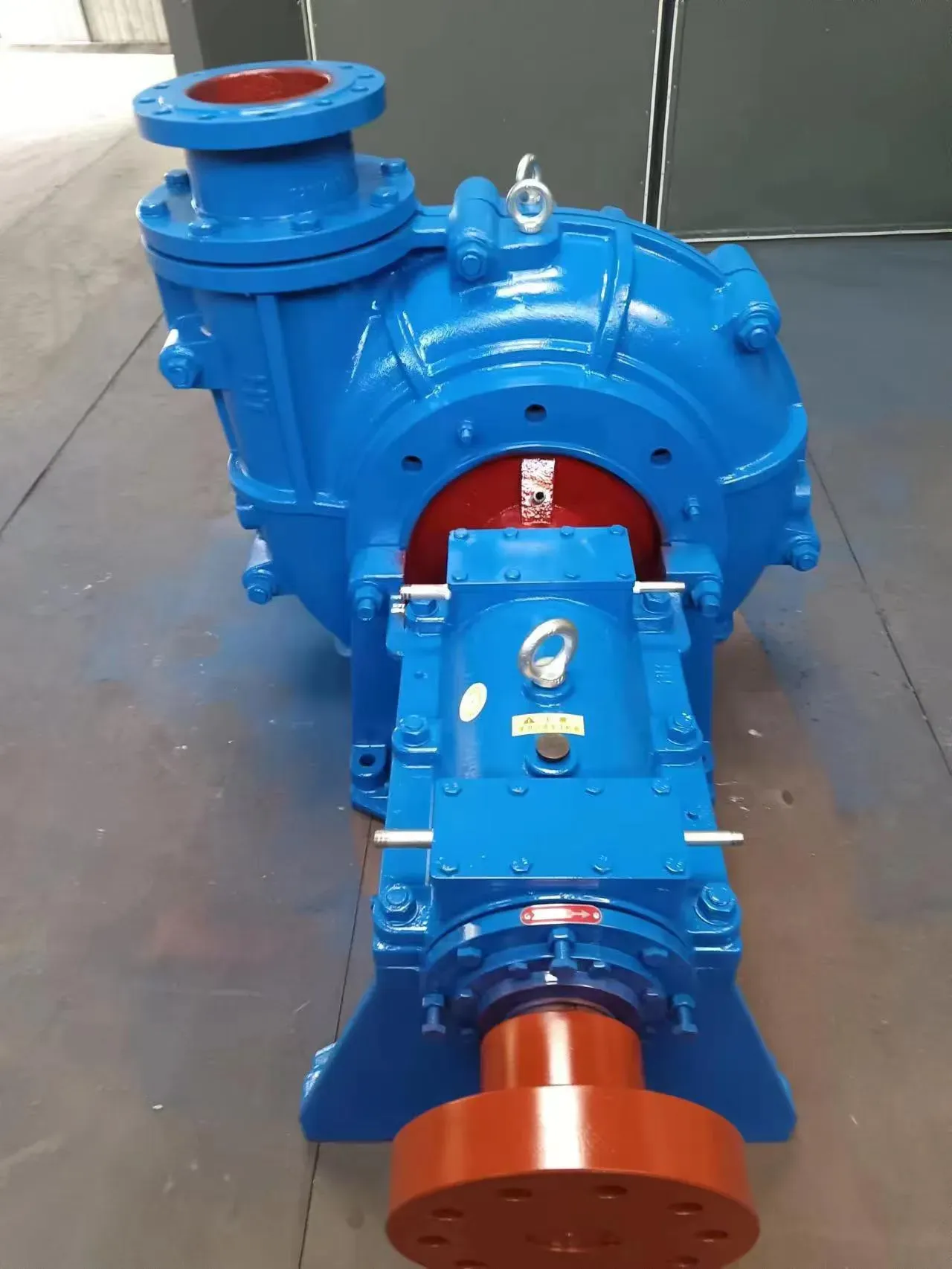
Horizontal froth slurry pumps are engineered for the efficient and reliable transfer of aerated slurries, commonly found in froth flotation circuits within mineral processing, coal washing, and wastewater treatment facilities. Distinguished by their low Net Positive Suction Head Required (NPSHr) and robust construction, these pumps manage mixtures containing a high percentage of gas, unlike conventional centrifugal pumps which suffer performance degradation with entrained air. Their technical position within the industry chain places them as a crucial component directly following the froth flotation process, ensuring stable and consistent concentrate/tailings transport. Core performance metrics include slurry flow rate (m³/hr), differential head (meters), solids concentration (% by weight), and gas volume fraction (%). The selection of a horizontal froth slurry pump is driven by the need to maintain flotation efficiency and minimize downstream processing issues caused by inconsistent slurry feed.
Material Science & Manufacturing
The performance and longevity of horizontal froth slurry pumps are intrinsically linked to the material selection and manufacturing processes employed. Pump casings are commonly constructed from high-chromium cast iron (typically 27-30% Cr) for exceptional abrasion resistance against the solid particles within the slurry. Impeller and liner materials often utilize specialized alloys such as duplex stainless steel (e.g., UNS S31803, S32205) for resistance to both abrasive wear and corrosive attack, particularly in applications involving sulfide minerals or acidic process streams. Shaft materials generally employ alloy steels (e.g., 4140, 4340) heat-treated for high tensile strength and fatigue resistance. The manufacturing process begins with precision casting of the casing and impeller, followed by rigorous quality control checks including radiographic inspection for internal flaws. Impellers are typically manufactured using investment casting for complex geometries and smooth surface finish. Welding processes (SMAW, GTAW) are critical for joining components; procedures must adhere to ASME Section IX standards to ensure weld integrity and prevent stress corrosion cracking. Key parameter control involves maintaining tight tolerances on impeller clearances, casing dimensions, and weld quality. Rubber liners, often made of natural rubber or synthetic elastomers, are bonded to the casing using vulcanization processes to provide further abrasion protection. The selection of elastomers is dictated by chemical compatibility with the specific slurry composition. Mechanical seals employ silicon carbide or tungsten carbide faces for high hardness and chemical inertness.
Performance & Engineering
The performance of a horizontal froth slurry pump is profoundly influenced by hydraulic design, particularly the impeller geometry and volute casing shape. Impeller design considers the specific gravity of the slurry, the particle size distribution, and the gas volume fraction. The impeller’s vane angle and width are optimized to maximize head generation and minimize slip. Force analysis reveals that the impeller experiences significant radial and axial loads due to the slurry’s momentum and pressure differential. Bearing selection (typically heavy-duty rolling element bearings) must account for these loads and provide adequate fatigue life. Environmental resistance is crucial, particularly in outdoor installations where pumps are exposed to extreme temperatures and corrosive atmospheres. Coatings (e.g., epoxy, polyurethane) are frequently applied to protect external surfaces from corrosion. Compliance requirements vary depending on the application and geographical location. For example, pumps destined for use in hazardous areas must comply with ATEX or IECEx standards for explosion protection. Functional implementation involves careful consideration of suction and discharge piping layout to minimize head losses and prevent cavitation. NPSHa (Net Positive Suction Head Available) must exceed NPSHr by a sufficient margin to ensure stable pump operation. Variable Frequency Drives (VFDs) are often employed to modulate pump speed and flow rate, optimizing energy consumption and process control. Pump performance curves (Head-Flow, Power-Flow) are essential for selecting the appropriate pump size and operating point.
Technical Specifications
| Parameter | Unit | Typical Range | Material (Common) |
|---|---|---|---|
| Flow Rate | m³/hr | 50 - 1500 | High-Chromium Cast Iron |
| Total Head | m | 10 - 80 | High-Chromium Cast Iron |
| Solids Concentration | % by Weight | 10 - 60 | Duplex Stainless Steel |
| Gas Volume Fraction | % | 5 - 30 | Duplex Stainless Steel |
| Impeller Diameter | mm | 200 - 600 | High-Chromium Cast Iron/Duplex SS |
| Power | kW | 7.5 – 150 | Alloy Steel (Shaft) |
Failure Mode & Maintenance
Horizontal froth slurry pumps are susceptible to several failure modes. Abrasive wear is a primary concern, leading to impeller and liner erosion, ultimately reducing pump performance and increasing energy consumption. Cavitation, caused by insufficient NPSHa, can result in impeller damage and noise. Corrosion, particularly in aggressive slurry environments, can lead to casing and impeller deterioration. Mechanical seal failure is a common issue, stemming from abrasive particles, dry running, or incompatibility with the slurry composition. Fatigue cracking can occur in the shaft or casing due to cyclic loading and stress concentration. Delamination of rubber liners can compromise abrasion protection. Oxidation of metallic components can lead to corrosion and reduced strength. Preventative maintenance is crucial. Regular inspection of impeller and liner wear is essential, with replacement scheduled based on wear rate monitoring. Seal flushing systems should be maintained to prevent abrasive buildup. Lubrication of bearings must be performed according to manufacturer’s recommendations. Vibration analysis can detect bearing faults or impeller imbalance. Periodic casing inspections are necessary to identify corrosion or cracking. Proper alignment of the pump and motor is vital to minimize bearing loads and prevent shaft failure. Routine cleaning of the pump and surrounding area prevents abrasive accumulation. A detailed maintenance log should be maintained to track repairs and replacements, allowing for predictive maintenance planning.
Industry FAQ
Q: What is the impact of varying gas volume fraction on pump performance?
A: Increasing gas volume fraction generally reduces pump head and efficiency. The pump’s impeller loses positive displacement as gas occupies space that would otherwise be filled with slurry. Selecting a pump specifically designed for froth handling, with a larger impeller eye and optimized vane geometry, mitigates this effect. De-aeration strategies upstream of the pump can also reduce gas entrainment.
Q: How do I select the appropriate liner material for a specific slurry?
A: Liner material selection depends on the slurry’s abrasive characteristics and chemical composition. For highly abrasive slurries with minimal chemical attack, high-chromium cast iron is effective. For corrosive slurries, rubber liners or specialized polymer composites are preferred. A chemical compatibility chart should be consulted to ensure the liner material is resistant to the slurry’s chemical constituents.
Q: What are the key considerations for pump installation to prevent cavitation?
A: Ensuring adequate NPSHa is paramount. Minimize suction pipe length and diameter, avoid sharp bends, and maintain a flooded suction condition. The pump should be located as close to the slurry source as possible. Regularly monitor suction pressure to verify adequate NPSHa is being maintained.
Q: What is the typical lifespan of a horizontal froth slurry pump impeller?
A: Impeller lifespan varies significantly depending on slurry abrasiveness, solids concentration, and operating conditions. In mild applications, an impeller may last several years. In highly abrasive applications, replacement may be required every few months. Regular wear monitoring is crucial to optimize impeller replacement intervals.
Q: What maintenance procedures are critical for mechanical seals?
A: Maintaining a clean seal flush line and ensuring proper seal lubrication are critical. Inspect seals regularly for wear and damage. Replace seals proactively before catastrophic failure. Verify the seal material is compatible with the slurry composition. Avoid dry running the pump, as this can rapidly damage the seal.
Conclusion
Horizontal froth slurry pumps represent a specialized and crucial component in processes demanding the reliable transfer of aerated slurries. Their performance is inextricably linked to careful material selection – prioritizing abrasion and corrosion resistance – and meticulous manufacturing processes adhering to stringent industry standards. Correct pump selection, based on a thorough understanding of slurry characteristics and operating conditions, is paramount to maximizing efficiency, minimizing downtime, and reducing total cost of ownership.
Effective preventative maintenance programs, including regular inspections, wear monitoring, and timely component replacement, are essential for ensuring long-term pump reliability and operational stability. As mineral processing and wastewater treatment facilities increasingly focus on optimizing efficiency and sustainability, the demand for robust and reliable froth slurry pumps will continue to grow, driving innovation in materials, hydraulic design, and monitoring technologies.
-
Precision at the Pump: How Better Machining Protects Flow and Uptime
News2026-11-20
-
Why Pump Reliability Begins Before the First Drop of Fluid
News2026-11-20
-
Beyond the Pump: Designing Safer Access Around Critical Water Infrastructure
News2026-11-20
-
Why Pumping Stations Depend on the Infrastructure Beneath the Pumps
News2026-11-20
-
Beyond the Pump Room: How Smarter Loading Protects Industrial Equipment
News2026-11-19
-
When Pumps Stop: Designing More Resilient Power for Critical Pumping Systems
News2026-11-19
-
The Hidden Role of Dust and Gas Monitoring in Reliable Pump Operations
News2026-11-19
-
The Hidden Role of Mineral Compounds in Extending Industrial Pump Lifespan
News2026-10-12
-
Why Pump System Reliability Depends on Precision Hose Assembly Methods
News2026-09-15
-
How Advanced Imaging Films Are Transforming Pump Component Quality Control
News2026-08-25
-
How Advanced Filtration Protects Pump Systems from Premature Wear and Costly Downtime
News2026-08-25
-
How Steel Material Selection Drives Pump Reliability in Heavy-Duty Systems
News2026-08-25
-
Ensuring Pump System Efficiency: The Role of High-Quality Pipe Fittings and Tubing
News2026-08-24
-
Optimizing Fluid Dynamics and Material Consistency in Industrial Processing
News2026-08-18
-
Innovations and Challenges in Hydraulic Systems for Heavy Machinery
News2026-08-13




