English
- Afrikaans
- Albanian
- Amharic
- Arabic
- Armenian
- Azerbaijani
- Basque
- Belarusian
- Bengali
- Bosnian
- Bulgarian
- Catalan
- Cebuano
- Corsican
- Croatian
- Czech
- Danish
- Dutch
- English
- Esperanto
- Estonian
- Finnish
- French
- Frisian
- Galician
- Georgian
- German
- Greek
- Gujarati
- Haitian Creole
- hausa
- hawaiian
- Hebrew
- Hindi
- Miao
- Hungarian
- Icelandic
- igbo
- Indonesian
- irish
- Italian
- Japanese
- Javanese
- Kannada
- kazakh
- Khmer
- Rwandese
- Korean
- Kurdish
- Kyrgyz
- Lao
- Latin
- Latvian
- Lithuanian
- Luxembourgish
- Macedonian
- Malgashi
- Malay
- Malayalam
- Maltese
- Maori
- Marathi
- Mongolian
- Myanmar
- Nepali
- Norwegian
- Norwegian
- Occitan
- Pashto
- Persian
- Polish
- Portuguese
- Punjabi
- Romanian
- Russian
- Samoan
- Scottish Gaelic
- Serbian
- Sesotho
- Shona
- Sindhi
- Sinhala
- Slovak
- Slovenian
- Somali
- Spanish
- Sundanese
- Swahili
- Swedish
- Tagalog
- Tajik
- Tamil
- Tatar
- Telugu
- Thai
- Turkish
- Turkmen
- Ukrainian
- Urdu
- Uighur
- Uzbek
- Vietnamese
- Welsh
- Bantu
- Yiddish
- Yoruba
- Zulu

Telephone: +86 13120555503
Email: frank@cypump.com


Apr . 01, 2024 17:55 Back to list
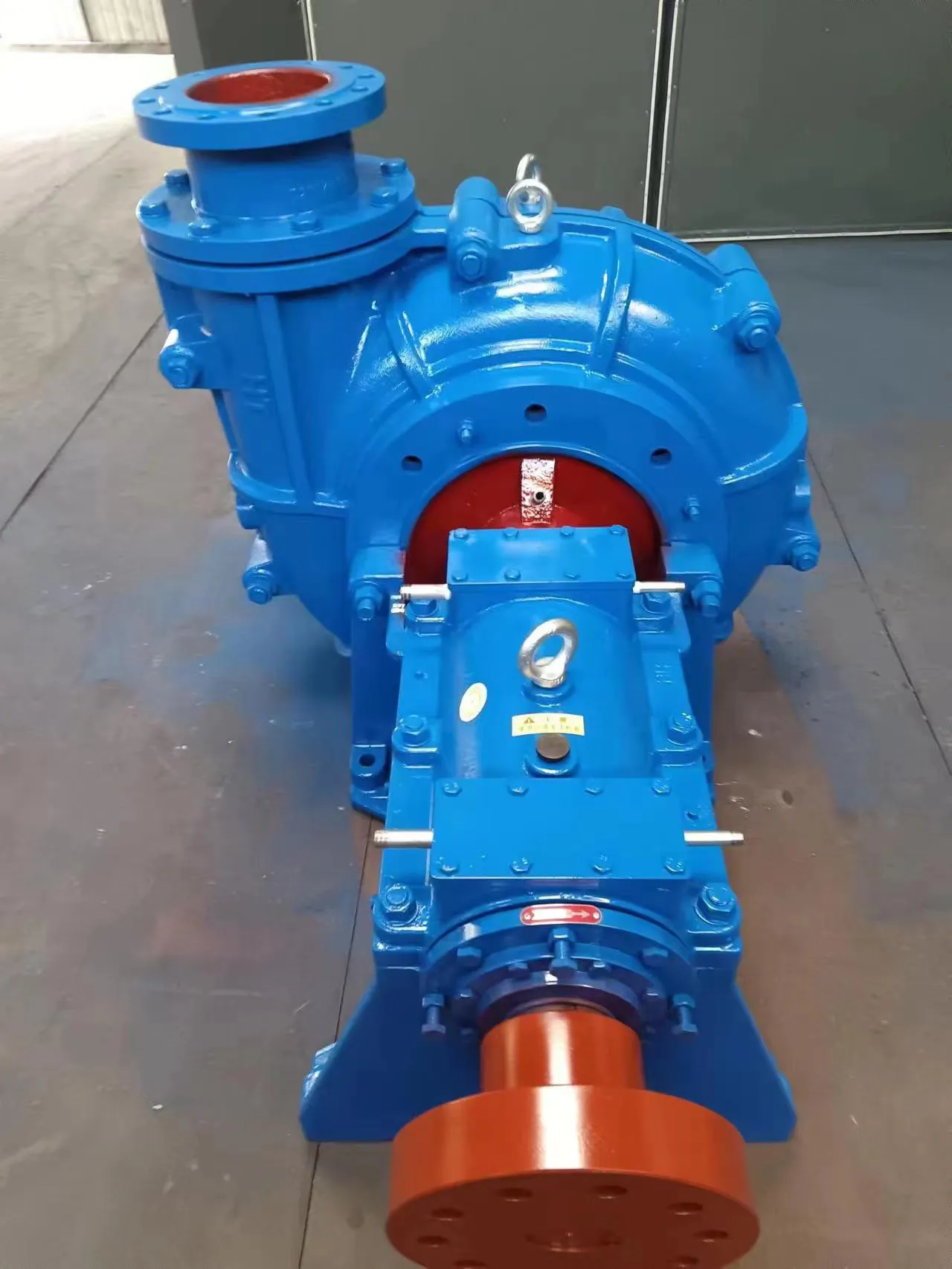
horizontal froth slurry pump factory Performance Analysis
Introduction
Horizontal froth slurry pumps are centrifugal pumps specifically designed for the transport of froth-laden slurries, commonly encountered in mineral processing, flotation circuits, and wastewater treatment applications. Their design prioritizes handling mixtures of liquid and air, differing significantly from pumps optimized for homogeneous liquids. Positioned within the mineral processing plant flow sheet after the flotation stage, these pumps provide the critical transfer of concentrated froth to downstream processes like dewatering and tailings management. Core performance indicators include volumetric flow rate, head pressure, solids handling capability, and froth recovery efficiency. The primary industry pain point revolves around maintaining consistent froth transport without pump cavitation or excessive froth breakdown, leading to reduced concentrate grade and operational inefficiencies.
Material Science & Manufacturing
The construction of horizontal froth slurry pumps relies heavily on materials resistant to abrasion and corrosion. Impellers and pump casings are typically manufactured from high-chrome cast iron (typically 26-30% Chromium), offering exceptional hardness for abrasive slurry applications. Liners, particularly in the casing and suction/discharge pipes, often utilize rubber compounds (natural or synthetic, such as EPDM) to provide cushioning against impact and reduce wear. Shaft materials predominantly consist of alloy steels (4140, 4340) heat-treated for high tensile strength and torsional rigidity. Manufacturing processes are critical; impellers are generally investment cast to achieve complex geometries and dimensional accuracy. Casings are produced via sand casting followed by extensive machining and quality control. Welding processes, specifically shielded metal arc welding (SMAW) and gas tungsten arc welding (GTAW), are employed for joining components, demanding qualified welders and adherence to AWS D1.1 standards. Parameter control during casting – cooling rates, metal composition, and mold material – are paramount to achieving desired microstructure and preventing defects like porosity or shrinkage cracks. Rubber lining application requires meticulous surface preparation, bonding agent application, and vulcanization control to ensure secure adhesion and prevent delamination.
Performance & Engineering
Performance is dictated by a complex interplay of fluid dynamics and mechanical design. Force analysis focuses on impeller centrifugal forces, hydraulic thrust, and bearing loads. Impeller design utilizes computational fluid dynamics (CFD) to optimize blade angles, volute geometry, and minimize turbulence, maximizing hydraulic efficiency and froth handling capacity. Environmental resistance considerations include temperature variations, exposure to corrosive chemicals (e.g., sulfuric acid in flotation circuits), and external weather conditions. Pump housings are designed to withstand internal pressures and external loads. Compliance requirements stem from several sources: ATEX directives (for potentially explosive atmospheres), pressure vessel directives (if applicable based on operating pressure), and environmental regulations concerning noise emissions and energy consumption. Froth recovery efficiency relies on maintaining sufficient suction lift without causing excessive froth breakdown; this is achieved through optimized impeller geometry and careful selection of pump speed. Pump stability is often analyzed via vibration analysis (ISO 10816) to detect potential imbalances or bearing failures. The selection of appropriate shaft seals (mechanical seals or gland packing) is crucial for preventing leakage and maintaining pump efficiency, factoring in slurry composition and operating pressure.
Technical Specifications
| Capacity (m³/hr) | Head (m) | Motor Power (kW) | Solids Handling Size (mm) |
|---|---|---|---|
| 20-100 | 5-30 | 5.5-30 | Up to 50 |
| 100-300 | 15-50 | 30-75 | Up to 75 |
| 300-600 | 30-80 | 75-150 | Up to 100 |
| 600-1200 | 50-120 | 150-300 | Up to 150 |
| 1200-2000 | 80-180 | 300-500 | Up to 200 |
| 2000-3000 | 120-250 | 500-750 | Up to 250 |
Failure Mode & Maintenance
Common failure modes include impeller wear (due to abrasive solids), casing erosion (particularly around the volute), bearing failure (caused by overload or improper lubrication), and seal leakage (resulting from abrasive particles or chemical attack). Fatigue cracking can occur in the impeller or shaft under cyclic loading. Delamination of rubber liners is a frequent issue if bonding fails. Oxidation of metallic components in highly oxidizing environments can lead to corrosion. Preventive maintenance is crucial, including regular visual inspections for wear, lubrication of bearings according to manufacturer specifications (typically using lithium-based grease), monitoring of vibration levels, and periodic replacement of wear parts. Seal replacement should be performed proactively to prevent catastrophic failure and downtime. Impeller rebalancing is recommended after significant wear. In case of cavitation (indicated by noise and reduced performance), the suction conditions should be reviewed and adjusted. Failure analysis, employing techniques like metallurgical examination and non-destructive testing (NDT – e.g., ultrasonic testing, radiographic inspection) is vital for determining root causes and implementing corrective actions.
Industry FAQ
Q: What is the impact of froth stability on pump performance?
A: Highly unstable froth can lead to significant performance losses. Excessive froth breakdown within the pump reduces volumetric efficiency and increases the risk of cavitation. Froth stability is influenced by factors like surfactant concentration, particle size distribution, and air flow rate. Pump selection and operating parameters must be optimized to accommodate the expected froth characteristics.
Q: How do you mitigate the risk of abrasion in handling high-solids slurries?
A: Utilizing abrasion-resistant materials (high-chrome cast iron, rubber liners) is paramount. Maintaining appropriate slurry velocity to avoid excessive particle impact is also critical. Regular inspection and replacement of wear parts, along with proper pump sizing, minimize abrasion-related failures.
Q: What are the key considerations for selecting a shaft seal?
A: Shaft seal selection depends on slurry composition, operating pressure, and the presence of corrosive chemicals. Mechanical seals offer superior sealing performance but are more susceptible to abrasive wear. Gland packing is more tolerant of solids but may require more frequent adjustment and can lead to higher leakage rates.
Q: How does pump speed affect froth handling and energy consumption?
A: Lower pump speeds generally promote better froth handling but reduce capacity. Higher speeds increase capacity but can lead to excessive froth breakdown and increased energy consumption. Optimizing pump speed involves balancing these competing factors.
Q: What are the best practices for troubleshooting pump cavitation?
A: Cavitation is typically caused by insufficient suction pressure. Troubleshooting steps include verifying suction line blockage, checking net positive suction head available (NPSHA) against the required NPSH (NPSHr), and adjusting pump speed. Also, inspect the impeller for damage.
Conclusion
Horizontal froth slurry pumps represent a specialized category of centrifugal pumps crucial to efficient mineral processing and wastewater treatment. Their performance is inextricably linked to material selection, manufacturing precision, and careful engineering considerations addressing the unique challenges posed by froth-laden slurries. Understanding the failure modes and implementing a robust preventive maintenance program are vital for maximizing pump lifespan and minimizing operational downtime.
Future advancements in froth slurry pump technology will likely focus on impeller designs that further minimize froth breakdown, the development of more abrasion-resistant materials, and the integration of predictive maintenance systems leveraging sensor data and machine learning algorithms to anticipate and prevent failures. Optimizing energy efficiency through improved hydraulic designs and variable frequency drives will also remain a key area of innovation.
-
Precision at the Pump: How Better Machining Protects Flow and Uptime
News2026-11-20
-
Why Pump Reliability Begins Before the First Drop of Fluid
News2026-11-20
-
Beyond the Pump: Designing Safer Access Around Critical Water Infrastructure
News2026-11-20
-
Why Pumping Stations Depend on the Infrastructure Beneath the Pumps
News2026-11-20
-
Beyond the Pump Room: How Smarter Loading Protects Industrial Equipment
News2026-11-19
-
When Pumps Stop: Designing More Resilient Power for Critical Pumping Systems
News2026-11-19
-
The Hidden Role of Dust and Gas Monitoring in Reliable Pump Operations
News2026-11-19
-
The Hidden Role of Mineral Compounds in Extending Industrial Pump Lifespan
News2026-10-12
-
Why Pump System Reliability Depends on Precision Hose Assembly Methods
News2026-09-15
-
How Advanced Imaging Films Are Transforming Pump Component Quality Control
News2026-08-25
-
How Advanced Filtration Protects Pump Systems from Premature Wear and Costly Downtime
News2026-08-25
-
How Steel Material Selection Drives Pump Reliability in Heavy-Duty Systems
News2026-08-25
-
Ensuring Pump System Efficiency: The Role of High-Quality Pipe Fittings and Tubing
News2026-08-24
-
Optimizing Fluid Dynamics and Material Consistency in Industrial Processing
News2026-08-18
-
Innovations and Challenges in Hydraulic Systems for Heavy Machinery
News2026-08-13




