English
- Afrikaans
- Albanian
- Amharic
- Arabic
- Armenian
- Azerbaijani
- Basque
- Belarusian
- Bengali
- Bosnian
- Bulgarian
- Catalan
- Cebuano
- Corsican
- Croatian
- Czech
- Danish
- Dutch
- English
- Esperanto
- Estonian
- Finnish
- French
- Frisian
- Galician
- Georgian
- German
- Greek
- Gujarati
- Haitian Creole
- hausa
- hawaiian
- Hebrew
- Hindi
- Miao
- Hungarian
- Icelandic
- igbo
- Indonesian
- irish
- Italian
- Japanese
- Javanese
- Kannada
- kazakh
- Khmer
- Rwandese
- Korean
- Kurdish
- Kyrgyz
- Lao
- Latin
- Latvian
- Lithuanian
- Luxembourgish
- Macedonian
- Malgashi
- Malay
- Malayalam
- Maltese
- Maori
- Marathi
- Mongolian
- Myanmar
- Nepali
- Norwegian
- Norwegian
- Occitan
- Pashto
- Persian
- Polish
- Portuguese
- Punjabi
- Romanian
- Russian
- Samoan
- Scottish Gaelic
- Serbian
- Sesotho
- Shona
- Sindhi
- Sinhala
- Slovak
- Slovenian
- Somali
- Spanish
- Sundanese
- Swahili
- Swedish
- Tagalog
- Tajik
- Tamil
- Tatar
- Telugu
- Thai
- Turkish
- Turkmen
- Ukrainian
- Urdu
- Uighur
- Uzbek
- Vietnamese
- Welsh
- Bantu
- Yiddish
- Yoruba
- Zulu

Telephone: +86 13120555503
Email: frank@cypump.com


Apr . 01, 2024 17:55 Back to list
high quality vertical spindle slurry pump Performance Analysis
Introduction
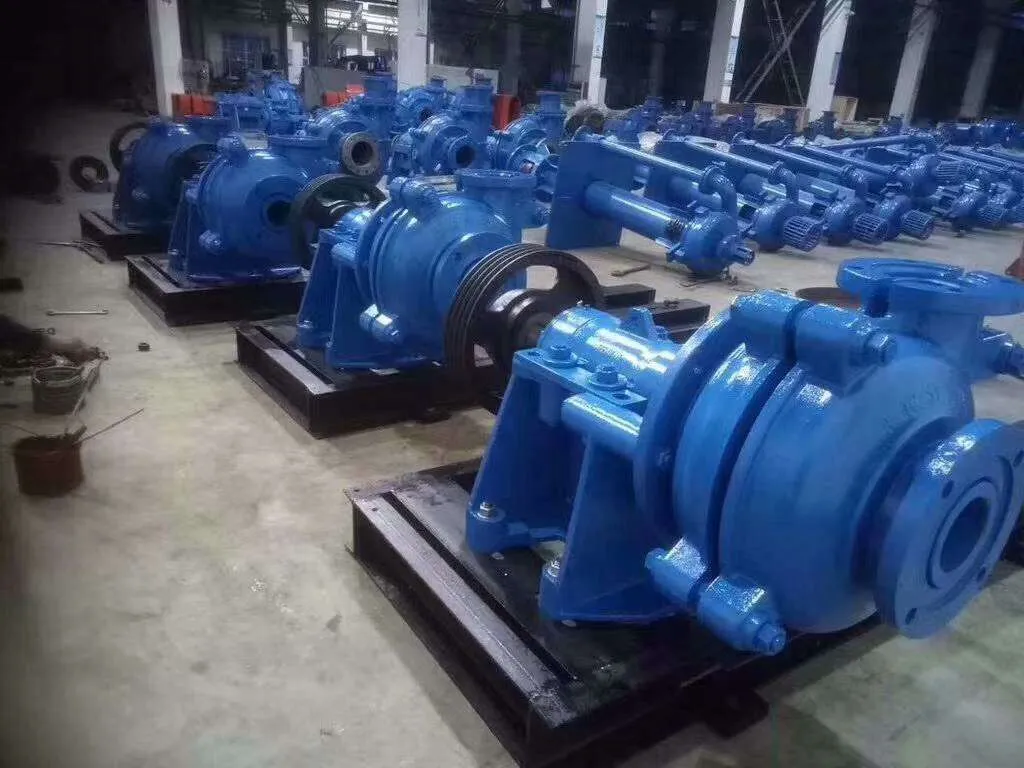
Vertical spindle slurry pumps are critical components in numerous industrial processes, designed for the efficient transfer of abrasive and corrosive fluids. Distinguished from horizontal pumps by their vertically oriented shaft, these pumps offer significant advantages in applications involving solids-laden slurries, particularly in mining, wastewater treatment, and chemical processing. Their configuration minimizes the risk of bearing failure due to solids settling and simplifies maintenance by allowing access to the impeller without disconnecting piping. Core performance characteristics include flow rate, head pressure, solids handling capability, and resistance to abrasive wear, all heavily influenced by impeller design, materials of construction, and operational parameters. The industry faces challenges in balancing pumping efficiency with longevity in highly abrasive environments, demanding advanced materials and robust design principles. This guide provides an in-depth technical examination of vertical spindle slurry pumps, covering material science, manufacturing, performance engineering, failure modes, and relevant industry standards.
Material Science & Manufacturing
The selection of materials for vertical spindle slurry pumps is paramount, dictated by the slurry's composition, concentration, and operating temperature. Pump casings are commonly constructed from high-chrome cast iron (typically 26-28% chromium) offering excellent abrasion resistance, although duplex stainless steels (e.g., 2205, 2507) are favored for highly corrosive environments. Impellers, the most wear-prone component, frequently utilize specialized alloys such as high-chrome iron, white iron (containing a high percentage of carbides), or ceramic materials like alumina and silicon carbide for extreme abrasive service. Shafts are generally made from alloy steels (e.g., 4140, 4340) hardened and tempered to provide high tensile strength and torsional resistance. Seals are critical, utilizing materials like silicon carbide, tungsten carbide, or polymer-based materials (e.g., Viton, EPDM) selected for chemical compatibility and wear resistance.
Manufacturing processes vary based on component complexity. Casings are typically produced via sand casting, utilizing refractory materials to withstand high metal temperatures. Impellers often involve investment casting (lost-wax casting) for intricate geometries and precise dimensional control. Shafts are machined from forged or billet steel, employing CNC turning and milling for accurate shaping. A critical process parameter is the heat treatment of steel components – hardening and tempering are carefully controlled to achieve the desired balance of hardness, toughness, and ductility. Welding processes, such as shielded metal arc welding (SMAW) or gas tungsten arc welding (GTAW), are employed for joining components, requiring qualified welders and adherence to stringent welding procedures to prevent defects. Non-destructive testing (NDT), including radiographic inspection (RT) and ultrasonic testing (UT), are essential for verifying weld integrity and identifying subsurface flaws. Finally, surface treatments like hardfacing (application of wear-resistant alloys) and ceramic coatings are frequently used to enhance component lifespan.
Performance & Engineering
The performance of a vertical spindle slurry pump is governed by fundamental hydraulic principles and materials selection. Force analysis focuses on the impeller’s interaction with the slurry, considering centrifugal forces, drag forces, and pressure differentials. Cavitation, a significant concern, occurs when the absolute pressure at the impeller inlet drops below the vapor pressure of the liquid, forming vapor bubbles that collapse and erode the impeller material. Net Positive Suction Head Required (NPSHr) is a critical parameter that must be carefully considered during pump selection and system design to prevent cavitation. Pump efficiency is affected by impeller geometry, slurry viscosity, and solids concentration. Optimizing impeller blade angles and minimizing flow obstructions are crucial for maximizing hydraulic efficiency.
Environmental resistance is vital. Pumps operating in corrosive environments require materials with high corrosion resistance, as detailed in the materials section. Temperature extremes necessitate materials that maintain their mechanical properties over the operating temperature range. Compliance requirements vary by industry and region. In the mining industry, pumps must often meet stringent safety standards related to explosion-proof operation (ATEX, IECEx) in potentially hazardous atmospheres. Wastewater treatment applications require pumps that conform to environmental regulations regarding leakage and material compatibility with the treated effluent. For potable water applications, pumps must comply with NSF/ANSI 61 standards for materials used in contact with drinking water. Proper bearing lubrication and seal maintenance are essential for preventing premature failure and ensuring optimal pump performance.
Technical Specifications
| Parameter | Unit | Typical Range | Typical Material |
|---|---|---|---|
| Flow Rate | m³/h | 5 – 500 | High-Chrome Iron |
| Head | m | 10 – 100 | High-Chrome Iron |
| Solids Handling Size | mm | Up to 75 | High-Chrome Iron |
| Slurry Concentration | % by weight | Up to 70 | Duplex Stainless Steel |
| Operating Temperature | °C | -30 – 120 | Silicon Carbide Seal |
| Shaft Power | kW | 1.5 – 150 | Alloy Steel (4140) |
Failure Mode & Maintenance
Vertical spindle slurry pumps are susceptible to several failure modes. Abrasive wear of the impeller and casing is a primary concern, leading to reduced pump performance and eventual failure. Fatigue cracking can occur in the shaft and impeller due to cyclic loading. Corrosion, particularly in aggressive slurry environments, can weaken pump components and lead to leaks or catastrophic failure. Seal failure is common, resulting in slurry leakage and potential contamination. Bearing failure, often caused by solids intrusion or inadequate lubrication, can lead to pump seizure.
Preventative maintenance is crucial. Regular inspections should include visual checks for wear, corrosion, and leakage. Impeller and casing replacement should be scheduled based on wear rate monitoring. Bearing lubrication should be performed according to manufacturer’s recommendations. Seal replacement should be proactive, based on seal life and operating conditions. Vibration analysis can detect early signs of bearing or impeller imbalance. Routine flushing of pump casings can remove abrasive particles and prevent buildup. When replacing components, ensure compatibility with the slurry being pumped and adhere to recommended installation procedures. Thorough documentation of maintenance activities is essential for tracking pump performance and identifying potential issues.
Industry FAQ
Q: What are the key factors influencing the selection of impeller material for a highly abrasive slurry?
A: The primary factors include the slurry’s particle size distribution, hardness, impact angle, and chemical composition. For extreme abrasion, high-chrome cast iron is a common choice, offering good wear resistance at a relatively low cost. However, for very hard abrasive particles or high impact velocities, ceramic materials like alumina or silicon carbide may be necessary, despite their higher cost. The slurry’s corrosivity also dictates material selection; duplex stainless steels offer enhanced corrosion resistance.
Q: How does solids concentration affect pump performance and what design considerations mitigate these effects?
A: Increasing solids concentration reduces pump efficiency and increases wear rates. Higher solids concentration increases slurry viscosity, leading to increased hydraulic losses. Impeller design is critical – larger passageways and more robust impeller blades are needed to handle higher solids loading. Also, selecting a pump with a larger impeller diameter can help maintain flow rate and head. Pump speed reduction can also minimize wear.
Q: What is NPSHr and why is it critical to avoid cavitation?
A: NPSHr (Net Positive Suction Head Required) is the minimum absolute pressure required at the pump suction to prevent cavitation. Cavitation damages the impeller and reduces pump performance. Ensuring the available NPSH (Net Positive Suction Head Available) in the system is significantly higher than the pump's NPSHr is crucial. This involves optimizing suction pipe design, minimizing suction lift, and controlling fluid temperature.
Q: What are the benefits of using a vertical spindle pump versus a horizontal pump in slurry applications?
A: Vertical spindle pumps offer several advantages. The vertical design minimizes the risk of bearing failure due to solids settling and simplifies impeller access for maintenance. They also typically require less floor space compared to horizontal pumps. Their configuration can also reduce the risk of air pockets forming in the pump casing.
Q: What maintenance procedures are critical for extending the service life of a vertical spindle slurry pump?
A: Regular inspection of impeller and casing wear is vital. Proactive seal replacement and bearing lubrication are essential. Monitoring vibration levels can identify early signs of imbalance. Periodic flushing of the pump casing removes abrasive particles. Maintaining accurate maintenance records allows for proactive component replacement and informed decision-making.
Conclusion
Vertical spindle slurry pumps represent a vital technology in industries handling abrasive and corrosive fluids. Their performance and longevity are intrinsically linked to meticulous material selection, precise manufacturing processes, and diligent maintenance practices. Understanding the interplay between hydraulic principles, material properties, and operational parameters is paramount for optimal pump selection and application.
Future advancements are focused on developing even more wear-resistant materials, optimizing impeller designs for improved efficiency, and incorporating advanced monitoring systems for predictive maintenance. Addressing the challenges of abrasive wear and corrosion will continue to drive innovation in this critical field, ensuring the reliable and cost-effective transfer of slurries in diverse industrial applications.
-
Precision at the Pump: How Better Machining Protects Flow and Uptime
News2026-11-20
-
Why Pump Reliability Begins Before the First Drop of Fluid
News2026-11-20
-
Beyond the Pump: Designing Safer Access Around Critical Water Infrastructure
News2026-11-20
-
Why Pumping Stations Depend on the Infrastructure Beneath the Pumps
News2026-11-20
-
Beyond the Pump Room: How Smarter Loading Protects Industrial Equipment
News2026-11-19
-
When Pumps Stop: Designing More Resilient Power for Critical Pumping Systems
News2026-11-19
-
The Hidden Role of Dust and Gas Monitoring in Reliable Pump Operations
News2026-11-19
-
The Hidden Role of Mineral Compounds in Extending Industrial Pump Lifespan
News2026-10-12
-
Why Pump System Reliability Depends on Precision Hose Assembly Methods
News2026-09-15
-
How Advanced Imaging Films Are Transforming Pump Component Quality Control
News2026-08-25
-
How Advanced Filtration Protects Pump Systems from Premature Wear and Costly Downtime
News2026-08-25
-
How Steel Material Selection Drives Pump Reliability in Heavy-Duty Systems
News2026-08-25
-
Ensuring Pump System Efficiency: The Role of High-Quality Pipe Fittings and Tubing
News2026-08-24
-
Optimizing Fluid Dynamics and Material Consistency in Industrial Processing
News2026-08-18
-
Innovations and Challenges in Hydraulic Systems for Heavy Machinery
News2026-08-13




