English
- Afrikaans
- Albanian
- Amharic
- Arabic
- Armenian
- Azerbaijani
- Basque
- Belarusian
- Bengali
- Bosnian
- Bulgarian
- Catalan
- Cebuano
- Corsican
- Croatian
- Czech
- Danish
- Dutch
- English
- Esperanto
- Estonian
- Finnish
- French
- Frisian
- Galician
- Georgian
- German
- Greek
- Gujarati
- Haitian Creole
- hausa
- hawaiian
- Hebrew
- Hindi
- Miao
- Hungarian
- Icelandic
- igbo
- Indonesian
- irish
- Italian
- Japanese
- Javanese
- Kannada
- kazakh
- Khmer
- Rwandese
- Korean
- Kurdish
- Kyrgyz
- Lao
- Latin
- Latvian
- Lithuanian
- Luxembourgish
- Macedonian
- Malgashi
- Malay
- Malayalam
- Maltese
- Maori
- Marathi
- Mongolian
- Myanmar
- Nepali
- Norwegian
- Norwegian
- Occitan
- Pashto
- Persian
- Polish
- Portuguese
- Punjabi
- Romanian
- Russian
- Samoan
- Scottish Gaelic
- Serbian
- Sesotho
- Shona
- Sindhi
- Sinhala
- Slovak
- Slovenian
- Somali
- Spanish
- Sundanese
- Swahili
- Swedish
- Tagalog
- Tajik
- Tamil
- Tatar
- Telugu
- Thai
- Turkish
- Turkmen
- Ukrainian
- Urdu
- Uighur
- Uzbek
- Vietnamese
- Welsh
- Bantu
- Yiddish
- Yoruba
- Zulu

Telephone: +86 13120555503
Email: frank@cypump.com


Apr . 01, 2024 17:55 Back to list
high quality oem medium head heavy duty slurry pump Performance Analysis
Introduction
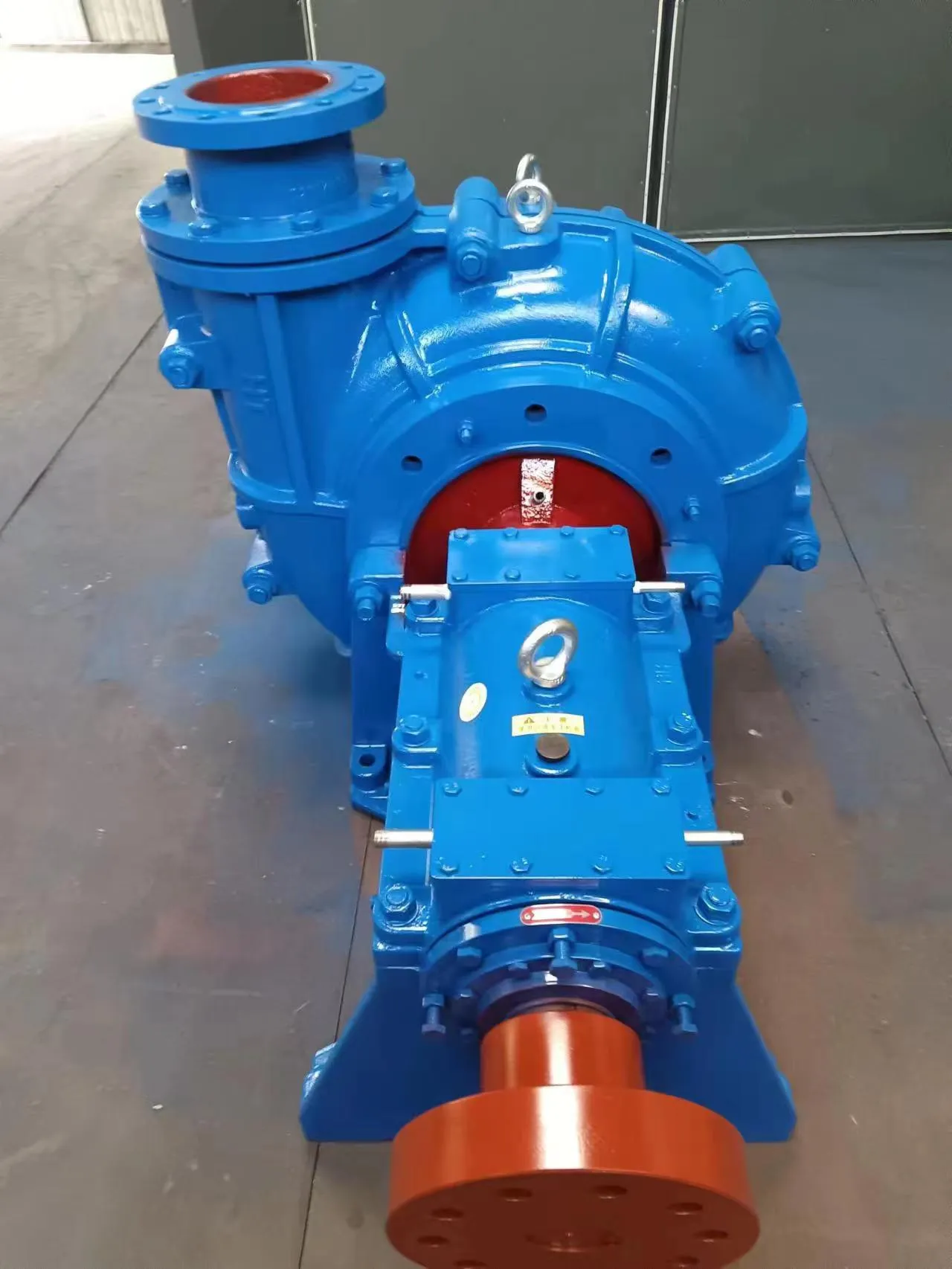
The high quality oem medium head heavy duty slurry pump represents a critical component in numerous industrial processes involving the transport of abrasive, corrosive, and high-solids fluids. Positioned within the fluid handling equipment sector, these pumps bridge the gap between initial material processing and downstream applications such as tailings management, mineral processing, wastewater treatment, and chemical processing. They are characterized by their robust construction, designed to withstand the challenges presented by these demanding environments. Core performance metrics center on volumetric flow rate (typically measured in cubic meters per hour or gallons per minute), discharge head (expressed in meters or feet), solids handling capability (percentage by weight or diameter of particles), and pump efficiency. A key industry pain point is balancing pump longevity with operational costs – minimizing downtime due to wear and tear while maintaining acceptable energy consumption. OEM customization allows tailoring of pump specifications to specific slurry characteristics, further optimizing performance and reliability. This guide provides a comprehensive technical overview of these pumps, covering material science, manufacturing processes, performance characteristics, failure modes, and relevant industry standards.
Material Science & Manufacturing
The performance and lifespan of a medium head heavy duty slurry pump are intrinsically linked to the materials used in its construction. Key components – the impeller, casing, liner, and shaft – are typically manufactured from high-chromium cast iron (typically 26-28% Cr), stainless steel (304, 316, duplex stainless steels), or specialized alloy materials like high-silicon cast iron. High-chromium cast iron offers excellent abrasion resistance due to the formation of hard chromium carbides within the matrix, but has limited corrosion resistance. Stainless steels, conversely, provide superior corrosion resistance but are generally less abrasion resistant. The choice depends heavily on the slurry composition. Manufacturing begins with pattern making for casting components. Casting is followed by heat treatment to achieve desired hardness and microstructure. Impellers are often produced using investment casting to ensure precise geometry and smooth surface finish, minimizing turbulence and maximizing hydraulic efficiency. Casings are manufactured through sand casting or centrifugal casting. Welding is a critical process, particularly for joining casing sections and reinforcing stress points. Welding procedures must adhere to strict quality control standards (e.g., AWS D1.1) to prevent defects such as porosity, slag inclusions, and cracking. The liner, typically made of rubber or polyurethane, is bonded to the casing using adhesive bonding or mechanical interlocking. Shaft materials require high tensile strength and fatigue resistance, frequently utilizing alloy steels subjected to surface hardening treatments like induction hardening. Parameter control during manufacturing – including casting temperature, cooling rate, heat treatment cycles, and welding parameters – is paramount to ensuring the material properties meet design specifications. Chemical composition verification through spectroscopic analysis is standard practice.
Performance & Engineering
The performance of a slurry pump is fundamentally governed by hydraulic principles and mechanical engineering considerations. Force analysis focuses on understanding the stresses imposed on pump components by fluid pressure, impeller forces, and external loads. Centrifugal force generated by the impeller imparts kinetic energy to the slurry, which is then converted to pressure energy as the fluid decelerates within the volute casing. Cavitation, a major concern, occurs when the absolute pressure at the impeller inlet drops below the vapor pressure of the slurry, forming vapor bubbles that collapse violently, causing erosion damage. Net Positive Suction Head Required (NPSHr) must be carefully calculated and compared to the Net Positive Suction Head Available (NPSHa) to prevent cavitation. Environmental resistance is a crucial design factor, particularly in corrosive environments. Material selection and protective coatings (e.g., epoxy coatings, ceramic linings) are employed to mitigate corrosion. Pump efficiency is determined by the ratio of hydraulic power output to shaft power input. Losses occur due to friction within the pump, impeller/casing clearances, and turbulence. Compliance requirements vary depending on the application and region. For example, pumps used in the mining industry must meet safety standards established by organizations like MSHA (Mine Safety and Health Administration) in the US. Pumps handling hazardous fluids must comply with ATEX directives (Europe) or similar regulations regarding explosion protection. Functional implementation involves selecting the appropriate pump size, impeller type, and sealing arrangement based on the specific slurry characteristics and operating conditions. Variable Frequency Drives (VFDs) are increasingly used to control pump speed and flow rate, optimizing energy consumption and process control.
Technical Specifications
| Parameter | Unit | Typical Value (Range) | Description |
|---|---|---|---|
| Flow Rate | m³/h | 50-500 | Volumetric flow rate of the slurry. |
| Discharge Head | m | 10-50 | Maximum pressure the pump can generate. |
| Solids Handling Size | mm | Up to 75 | Maximum particle size the pump can handle without clogging. |
| Slurry Concentration | % by weight | Up to 70 | Maximum solids content the pump can effectively transport. |
| Pump Efficiency | % | 65-80 | Ratio of hydraulic power output to shaft power input. |
| Impeller Material | - | High-Chromium Cast Iron, Stainless Steel | Material used for the impeller construction. |
Failure Mode & Maintenance
Slurry pumps are susceptible to various failure modes due to the abrasive and corrosive nature of the fluids they handle. Fatigue cracking in the impeller and casing is a common failure mechanism, initiated by cyclic stresses and exacerbated by corrosion. Erosion, caused by the impact of solid particles, leads to material loss and dimensional changes, particularly in the impeller and liner. Corrosion, driven by chemical reactions between the slurry and pump materials, weakens components and promotes cracking. Wear, resulting from abrasive particle contact, affects sealing surfaces and bearing components. Delamination of the liner occurs when the bond between the liner and casing fails, leading to reduced pump performance and increased corrosion. Oxidation can affect the shaft and other metal components. Preventive maintenance is crucial. Regular inspection of the impeller, casing, liner, and seals is essential. Monitoring bearing temperature and vibration levels can detect early signs of wear. Scheduled replacement of wear parts, such as the liner, impeller, and seals, minimizes downtime. Lubrication of bearings must be performed according to manufacturer’s recommendations. Proper alignment of the pump and motor prevents excessive stress on the shaft and bearings. Flushing of the pump with clean water after use prevents slurry buildup and corrosion. A robust maintenance program, coupled with accurate record-keeping, is vital for maximizing pump life and minimizing operating costs. Consider utilizing condition monitoring technologies, such as vibration analysis and thermography, for proactive maintenance planning.
Industry FAQ
Q: What is the impact of slurry particle size distribution on pump selection and lifespan?
A: The particle size distribution (PSD) significantly influences pump selection and lifespan. A wider PSD with larger particles increases abrasion rates, requiring pumps with more abrasion-resistant materials (e.g., higher chromium content cast iron or ceramic liners). Pumps designed for fine particles may not effectively handle large particles, leading to clogging and reduced performance. Understanding the PSD allows for optimizing impeller design and liner material selection to maximize pump longevity.
Q: How does the slurry’s chemical composition affect material selection for pump components?
A: The slurry's chemical composition dictates the required corrosion resistance of pump materials. Acids require stainless steel or specialized alloys. Alkaline slurries may attack certain types of rubber liners. Chlorides promote pitting corrosion in stainless steel. A thorough chemical analysis of the slurry is essential for selecting materials that will withstand the corrosive environment and prevent premature failure.
Q: What are the benefits of using a variable frequency drive (VFD) with a slurry pump?
A: VFDs offer significant benefits, including energy savings by matching pump speed to flow rate requirements, reduced mechanical stress on the pump and motor, improved process control, and the ability to operate the pump at lower speeds for abrasive slurries, extending component life. However, VFDs can introduce harmonic distortion into the power supply, which may require mitigation measures.
Q: What are the key considerations for selecting the appropriate pump sealing arrangement for a slurry application?
A: Sealing arrangement selection depends on the slurry’s abrasiveness, corrosiveness, and pressure. Mechanical seals are common but susceptible to wear in abrasive slurries. Packing glands are simpler and more tolerant of abrasives but can leak. Double mechanical seals with a barrier fluid provide enhanced reliability and prevent leakage, particularly when handling hazardous fluids. The seal material must be compatible with the slurry composition.
Q: How can cavitation be prevented in a slurry pump?
A: Cavitation can be prevented by ensuring adequate NPSHa. This involves optimizing suction piping design (minimizing bends and restrictions), lowering the pump’s elevation relative to the slurry source, increasing the slurry temperature (to reduce vapor pressure), and selecting a pump with a lower NPSHr. Regular monitoring of pump performance can also identify early signs of cavitation.
Conclusion
The selection, operation, and maintenance of a high quality oem medium head heavy duty slurry pump require a thorough understanding of material science, hydraulic principles, and industry-specific challenges. Optimizing pump performance and longevity hinges on careful consideration of slurry characteristics – particle size distribution, solids concentration, chemical composition, and abrasiveness – and selecting appropriate materials and pump configurations. Proactive maintenance programs, incorporating regular inspections, wear part replacement, and condition monitoring, are essential for minimizing downtime and maximizing return on investment.
Future advancements in slurry pump technology will likely focus on developing more wear-resistant materials, improving pump efficiency through optimized hydraulic designs, and integrating smart sensors and data analytics for predictive maintenance. The development of pumps capable of handling increasingly abrasive and corrosive slurries with reduced energy consumption will be critical for addressing the evolving needs of various industries.
-
Comprehensive Guide to Waterproof ORings for Optimal Sealing Solutions
News2026-06-09
-
Septic Pump Replacement Performance Analysis
News2026-06-10
-
Septic Pump Price Performance Analysis
News2026-06-10
-
pumps for septic systems Material Science Manufacturing
News2026-06-10
-
ejector pumps for basement bathrooms Performance Analysis
News2026-06-10
-
Ejector Pump Cost Analysis
News2026-06-10
-
drainage pumps Performance and Engineering
News2026-06-09
-
basement bathroom ejector pump Material Science
News2026-06-09
-
Sewer Ejector Pump Cost Performance Analysis
News2026-06-09
-
Septic Tank Pump Replacement Performance Analysis
News2026-06-09
-
septic sump pump Performance and Engineering
News2026-06-09
-
Septic Pump System Performance Analysis
News2026-06-08
-
pump for septic Material Science
News2026-06-08
-
basement sewer pump Performance Analysis
News2026-06-08
-
submerged pump Performance Engineering
News2026-06-08




