English
- Afrikaans
- Albanian
- Amharic
- Arabic
- Armenian
- Azerbaijani
- Basque
- Belarusian
- Bengali
- Bosnian
- Bulgarian
- Catalan
- Cebuano
- Corsican
- Croatian
- Czech
- Danish
- Dutch
- English
- Esperanto
- Estonian
- Finnish
- French
- Frisian
- Galician
- Georgian
- German
- Greek
- Gujarati
- Haitian Creole
- hausa
- hawaiian
- Hebrew
- Hindi
- Miao
- Hungarian
- Icelandic
- igbo
- Indonesian
- irish
- Italian
- Japanese
- Javanese
- Kannada
- kazakh
- Khmer
- Rwandese
- Korean
- Kurdish
- Kyrgyz
- Lao
- Latin
- Latvian
- Lithuanian
- Luxembourgish
- Macedonian
- Malgashi
- Malay
- Malayalam
- Maltese
- Maori
- Marathi
- Mongolian
- Myanmar
- Nepali
- Norwegian
- Norwegian
- Occitan
- Pashto
- Persian
- Polish
- Portuguese
- Punjabi
- Romanian
- Russian
- Samoan
- Scottish Gaelic
- Serbian
- Sesotho
- Shona
- Sindhi
- Sinhala
- Slovak
- Slovenian
- Somali
- Spanish
- Sundanese
- Swahili
- Swedish
- Tagalog
- Tajik
- Tamil
- Tatar
- Telugu
- Thai
- Turkish
- Turkmen
- Ukrainian
- Urdu
- Uighur
- Uzbek
- Vietnamese
- Welsh
- Bantu
- Yiddish
- Yoruba
- Zulu

Telephone: +86 13120555503
Email: frank@cypump.com


Apr . 01, 2024 17:55 Back to list
high quality oem high head slurry pump Performance Analysis
Introduction
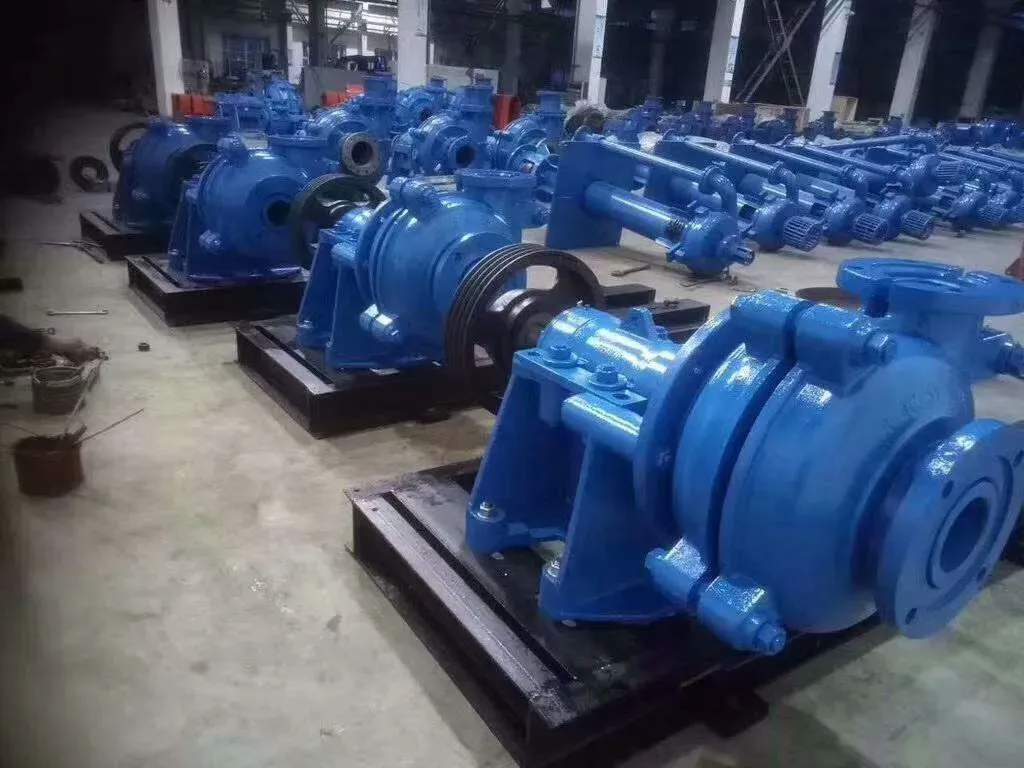
High head slurry pumps are critical components in numerous industrial processes involving the transportation of abrasive and corrosive fluids. Specifically, OEM (Original Equipment Manufacturer) high head slurry pumps represent a specialized segment, engineered for demanding applications requiring substantial pressure generation alongside handling high solids concentrations. These pumps typically operate in industries such as mining, mineral processing, wastewater treatment, dredging, and heavy chemical processing. Their technical position within the industrial chain lies between upstream raw material handling (e.g., mined ore, raw water) and downstream processing or discharge. Core performance characteristics include high discharge head, large flow rates, resistance to abrasion and corrosion, and reliable operation in harsh environments. The design prioritizes hydraulic efficiency, minimizing energy consumption while maximizing fluid delivery, and incorporates robust materials to extend service life, ultimately reducing total cost of ownership. A key differentiating factor in OEM pumps is the ability to customize designs and materials to meet the specific process requirements of individual clients, offering performance advantages over standard, off-the-shelf solutions. The selection of a high-head slurry pump hinges on understanding the slurry characteristics – particle size, density, concentration, and chemical composition – along with the system’s required head, flow rate, and operational conditions.
Material Science & Manufacturing
The construction of high head slurry pumps necessitates a careful selection of materials capable of withstanding the aggressive nature of abrasive slurries. Common materials include high-chromium cast irons (e.g., 27-28% Cr), offering excellent abrasion resistance but limited corrosion resistance; stainless steels (e.g., 304, 316) providing superior corrosion resistance but lower abrasion resistance than high-chromium irons; and specialized alloys like duplex stainless steels and nickel-based alloys for highly corrosive environments. Pump casings are frequently constructed from ductile iron due to its high tensile strength and shock resistance, often lined with rubber or polyurethane for additional abrasion and corrosion protection. Impellers, the rotating elements that impart energy to the fluid, are critical wear components and are typically manufactured from high-chromium cast iron or specialized ceramics. Shafts are generally forged from alloy steel and hardened to resist bending and torsional stresses. Manufacturing processes vary depending on component complexity. Casings are often produced using sand casting or investment casting, while impellers may be cast or forged. Welding is extensively used in pump assembly, requiring qualified welders and stringent quality control to ensure structural integrity and prevent weld defects. Key parameter control during manufacturing includes dimensional accuracy (critical for maintaining hydraulic performance), material hardness (influencing abrasion resistance), and weld quality (ensuring structural integrity). Heat treatment processes are employed to optimize material properties, such as hardness and toughness. Non-destructive testing methods like radiography, ultrasonic testing, and liquid penetrant inspection are crucial for detecting internal and surface defects.
Performance & Engineering
The performance of a high head slurry pump is governed by fundamental principles of fluid dynamics and mechanical engineering. Force analysis centers on understanding the hydrostatic and hydrodynamic forces acting on the impeller, casing, and shaft. Cavitation, the formation and collapse of vapor bubbles within the pump, is a major concern, particularly at high heads, and can lead to impeller erosion and reduced pump efficiency. Net Positive Suction Head Required (NPSHr) is a critical parameter, defining the minimum pressure required at the pump inlet to prevent cavitation. Pump selection must ensure that the available NPSH (NPSHa) exceeds NPSHr by a sufficient margin. Environmental resistance is paramount, with pumps often operating in corrosive atmospheres or submerged environments. Materials selection and protective coatings play a crucial role in mitigating corrosion. Compliance requirements vary depending on the application and geographic location. For example, pumps used in mining applications may need to comply with safety standards related to hazardous environments. Functional implementation involves optimizing impeller design (vane angle, blade thickness) and volute geometry to maximize hydraulic efficiency and head generation. Pump curves, graphically depicting the relationship between flow rate, head, and efficiency, are essential for selecting the appropriate pump size and operating point. Variable Frequency Drives (VFDs) are frequently employed to control pump speed and flow rate, optimizing energy consumption and process control. Proper alignment of the pump and motor is critical to minimize vibration and prevent bearing failure. Dynamic balancing of the impeller ensures smooth operation and reduces mechanical stress.
Technical Specifications
| Parameter | Unit | Typical Range (OEM High Head Slurry Pump) | Notes |
|---|---|---|---|
| Discharge Head | m | 50 - 300 | Varies with impeller diameter and speed |
| Flow Rate | m³/h | 20 - 500 | Dependent on impeller design and system resistance |
| Solid Handling Capacity | % by weight | 10 - 60 | Influenced by impeller type and pump size |
| Maximum Particle Size | mm | 25 - 100 | Determines impeller and casing clearances |
| Pump Speed | RPM | 500 - 3600 | Typically driven by electric motor with VFD |
| Material (Casing) | - | Ductile Iron, High Chromium Iron | Lining options: Rubber, Polyurethane |
Failure Mode & Maintenance
High head slurry pumps are susceptible to several failure modes due to the abrasive and corrosive nature of the fluids they handle. Fatigue cracking, particularly in the impeller and casing, is a common failure mechanism resulting from cyclical stresses. Erosion, caused by the impact of solid particles, leads to material loss in the impeller, volute, and diffusers, reducing pump efficiency. Corrosion, especially in aggressive chemical environments, weakens pump components and promotes leakage. Mechanical seal failure is frequent, resulting from abrasion, corrosion, or improper installation. Bearing failure can occur due to inadequate lubrication, misalignment, or excessive vibration. Cavitation damage manifests as pitting and erosion on the impeller surface. Delamination of rubber or polyurethane liners occurs when the bonding between the liner and the metal substrate fails. Oxidation can degrade metallic components over time, particularly at elevated temperatures. Professional maintenance solutions include regular inspection for wear and corrosion, impeller and casing replacement as needed, seal replacement, bearing lubrication and replacement, alignment checks, and vibration analysis. Preventive maintenance programs, incorporating scheduled inspections and component replacements, are crucial for maximizing pump uptime and minimizing unscheduled downtime. Implementation of wear-resistant coatings, such as ceramic coatings or hardfacing, can extend component life. Proper filtration of the slurry can reduce abrasive wear. Monitoring pump performance parameters (flow rate, head, power consumption) can detect early signs of degradation.
Industry FAQ
Q: What is the impact of slurry solids concentration on pump selection?
A: Higher solids concentrations increase the abrasive wear rate and require pumps with larger clearances to prevent clogging. The pump's hydraulic design must be optimized for handling dense slurries, and materials must be selected for their abrasion resistance. Increased solids content also reduces pump efficiency and increases power consumption.
Q: How does the chemical composition of the slurry affect material selection?
A: The chemical composition dictates the corrosion resistance requirements. Acidic slurries necessitate the use of corrosion-resistant alloys like stainless steels or nickel-based alloys. Alkaline slurries may require different material considerations. Understanding the slurry's pH and chemical constituents is crucial for preventing corrosion-induced failure.
Q: What are the key considerations for preventing cavitation in a high head slurry pump?
A: Ensuring sufficient NPSHa is critical. This involves optimizing suction piping design, minimizing suction lift, and controlling fluid temperature. Selecting an impeller design with a low NPSHr is also important. Regular monitoring of pump inlet pressure can detect potential cavitation issues.
Q: How important is pump alignment, and what are the consequences of misalignment?
A: Pump alignment is extremely important. Misalignment introduces stresses on the shaft, bearings, and seals, leading to premature failure. It also increases vibration, reduces pump efficiency, and can damage the pump and motor. Regular alignment checks and adjustments are essential.
Q: What role does a VFD play in optimizing pump performance?
A: A VFD allows for precise control of pump speed and flow rate, optimizing energy consumption and process control. It can also reduce mechanical stress on the pump during start-up and shut-down, extending pump life. Furthermore, VFDs enable soft starting, minimizing inrush current and preventing electrical stress.
Conclusion
The selection and maintenance of OEM high head slurry pumps demand a comprehensive understanding of materials science, fluid dynamics, and mechanical engineering principles. Successful operation hinges on meticulously matching pump characteristics to the specific slurry being handled, proactively addressing potential failure modes, and implementing rigorous maintenance schedules. The increasing focus on energy efficiency and environmental sustainability drives the adoption of advanced technologies like VFDs and wear-resistant coatings.
Future developments in high head slurry pump technology will likely focus on further enhancing abrasion and corrosion resistance through novel materials and coatings, optimizing hydraulic designs to maximize efficiency, and integrating intelligent monitoring systems for predictive maintenance. These advancements will contribute to improved pump reliability, reduced operating costs, and extended service life, solidifying the critical role these pumps play in a wide range of industrial applications.
-
Comprehensive Guide to Waterproof ORings for Optimal Sealing Solutions
News2026-06-09
-
drainage pumps Performance and Engineering
News2026-06-09
-
basement bathroom ejector pump Material Science
News2026-06-09
-
Sewer Ejector Pump Cost Performance Analysis
News2026-06-09
-
Septic Tank Pump Replacement Performance Analysis
News2026-06-09
-
septic sump pump Performance and Engineering
News2026-06-09
-
Septic Pump System Performance Analysis
News2026-06-08
-
pump for septic Material Science
News2026-06-08
-
basement sewer pump Performance Analysis
News2026-06-08
-
submerged pump Performance Engineering
News2026-06-08
-
Septic System Pumps Performance Analysis
News2026-06-08
-
septic system pump Material Science and Manufacturing
News2026-06-07
-
pump for septic tank Material Science Manufacturing
News2026-06-07
-
submersible sewage pump Material Science
News2026-06-07
-
Sewage Ejector Material Science and Manufacturing
News2026-06-07




