English
- Afrikaans
- Albanian
- Amharic
- Arabic
- Armenian
- Azerbaijani
- Basque
- Belarusian
- Bengali
- Bosnian
- Bulgarian
- Catalan
- Cebuano
- Corsican
- Croatian
- Czech
- Danish
- Dutch
- English
- Esperanto
- Estonian
- Finnish
- French
- Frisian
- Galician
- Georgian
- German
- Greek
- Gujarati
- Haitian Creole
- hausa
- hawaiian
- Hebrew
- Hindi
- Miao
- Hungarian
- Icelandic
- igbo
- Indonesian
- irish
- Italian
- Japanese
- Javanese
- Kannada
- kazakh
- Khmer
- Rwandese
- Korean
- Kurdish
- Kyrgyz
- Lao
- Latin
- Latvian
- Lithuanian
- Luxembourgish
- Macedonian
- Malgashi
- Malay
- Malayalam
- Maltese
- Maori
- Marathi
- Mongolian
- Myanmar
- Nepali
- Norwegian
- Norwegian
- Occitan
- Pashto
- Persian
- Polish
- Portuguese
- Punjabi
- Romanian
- Russian
- Samoan
- Scottish Gaelic
- Serbian
- Sesotho
- Shona
- Sindhi
- Sinhala
- Slovak
- Slovenian
- Somali
- Spanish
- Sundanese
- Swahili
- Swedish
- Tagalog
- Tajik
- Tamil
- Tatar
- Telugu
- Thai
- Turkish
- Turkmen
- Ukrainian
- Urdu
- Uighur
- Uzbek
- Vietnamese
- Welsh
- Bantu
- Yiddish
- Yoruba
- Zulu

Telephone: +86 13120555503
Email: frank@cypump.com


Apr . 01, 2024 17:55 Back to list
high quality ah slurry pump Performance Engineering
Introduction
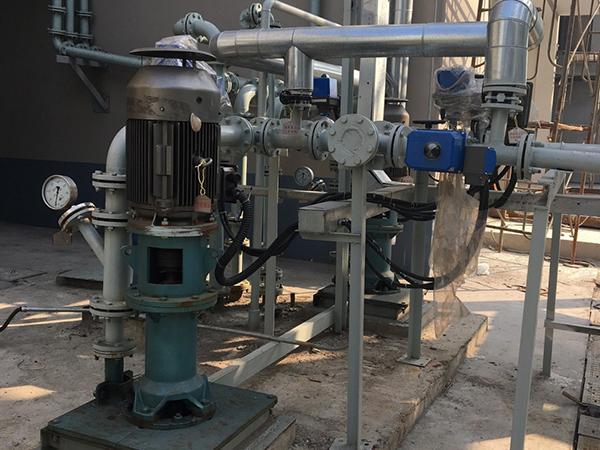
The AH slurry pump is a centrifugal pump specifically designed for handling abrasive, corrosive, and high-solids content slurries. Its position within the industrial chain lies between process operations generating slurry waste (mining, dredging, chemical processing) and downstream processing or disposal. AH pumps are crucial for maintaining process efficiency, reducing downtime, and mitigating environmental impact. Core performance characteristics are defined by flow rate (m³/hr), head (meters), solids handling capability (diameter & concentration), and abrasion resistance – all dictated by the pump’s impeller design, casing material, and sealing system. A key pain point in many industries is premature pump failure due to wear, corrosion, and inadequate materials selection leading to high maintenance costs and production losses. This guide provides an in-depth technical overview of AH slurry pumps, encompassing material science, manufacturing processes, performance engineering, failure modes, and relevant industry standards.
Material Science & Manufacturing
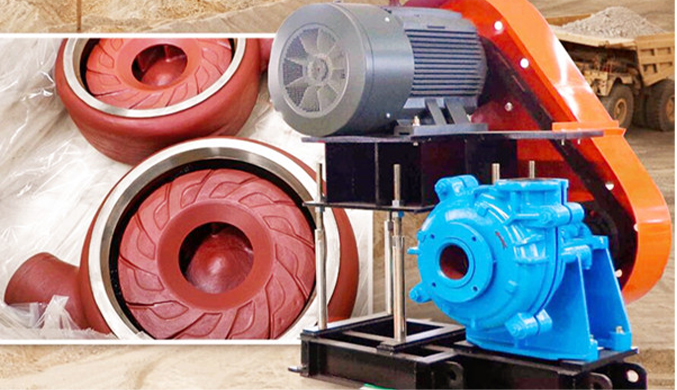
AH slurry pumps commonly utilize materials selected for their resistance to abrasion and corrosion. Casing materials often include high-chrome cast iron (typically 27% Cr) offering exceptional abrasion resistance, but limited corrosion resistance. Alternatively, alloys like stainless steel (304, 316, CD4MCu) and duplex stainless steels are employed for corrosive environments, balancing corrosion resistance with moderate abrasion resistance. Impellers are frequently constructed from high-chrome cast iron, polyurethane elastomers, or ceramic materials. Elastomers excel in handling highly abrasive slurries with low to moderate particle size, while ceramics offer superior hardness but are more brittle. The manufacturing process typically involves sand casting for the casing and impeller, followed by heat treatment to achieve desired hardness and microstructure. Impeller balancing is critical to minimize vibration and bearing wear. Welding procedures (SMAW, GTAW) used for repair or fabrication must adhere to stringent quality control standards (AWS D1.1) to maintain material integrity. Parameter control during casting – including mold temperature, pouring rate, and cooling rate – directly impacts the microstructure and mechanical properties. Proper heat treatment, including austenitizing and tempering, is crucial for optimizing the wear resistance of high-chrome iron components. Liners, often made of rubber or ceramic, are frequently added to the casing volute to further enhance corrosion and abrasion resistance. The adhesion between the liner and the metal casing is a critical manufacturing parameter.
Performance & Engineering
The performance of an AH slurry pump is dictated by several key engineering principles. Force analysis considers hydrostatic pressure, slurry dynamic pressure, and centrifugal forces acting on the impeller and casing. Cavitation, a significant concern with slurries, occurs when the absolute pressure drops below the vapor pressure of the liquid, forming vapor bubbles that implode and damage the impeller. Net Positive Suction Head Required (NPSHr) must be carefully calculated and compared to Net Positive Suction Head Available (NPSHa) to prevent cavitation. Pump curves (Head vs. Flow Rate, Power vs. Flow Rate) are generated through hydraulic testing (ISO 9906) and are vital for selecting the appropriate pump for a specific application. Environmental resistance is paramount. Pump seals (mechanical seals, packing glands) must prevent slurry leakage and protect the bearing assembly from contamination. Seals are selected based on slurry composition, pressure, and temperature. Compliance requirements vary depending on the industry. Mining applications require adherence to safety standards (e.g., MSHA in the US), while chemical processing demands compliance with environmental regulations regarding emissions and waste disposal. The impeller geometry – vane angle, impeller diameter, and number of vanes – is optimized to maximize hydraulic efficiency and solids handling capability. Finite Element Analysis (FEA) is frequently used to simulate stress distribution and identify potential failure points in the impeller and casing.
Technical Specifications
| Parameter | Unit | Typical Range (Example) | Notes |
|---|---|---|---|
| Flow Rate | m³/hr | 5 – 500 | Dependent on impeller size and speed |
| Head | m | 5 – 80 | Dependent on impeller diameter and speed |
| Solids Handling Size | mm | Up to 100 | Varies with pump design and slurry characteristics |
| Slurry Concentration (Wt%) | % | Up to 70 | Higher concentrations require careful impeller and casing design |
| Casing Material | - | High-Chrome Iron, SS304, SS316 | Selection based on corrosion and abrasion resistance |
| Impeller Material | - | High-Chrome Iron, Polyurethane, Ceramic | Selection based on slurry abrasiveness |
Failure Mode & Maintenance
Common failure modes in AH slurry pumps include impeller wear, casing erosion, seal failure, and bearing damage. Impeller wear is primarily caused by abrasion from solid particles in the slurry. Failure analysis reveals that wear patterns are often non-uniform, concentrated at the leading edges of the vanes. Casing erosion is typically observed in the volute and discharge areas, caused by the impingement of abrasive particles. Seal failure can result from abrasive wear of the seal faces, corrosion, or improper installation. Bearing damage can occur due to excessive vibration, improper lubrication, or contamination. Fatigue cracking can develop in the impeller or casing due to cyclic loading. Preventive maintenance is crucial for maximizing pump lifespan. This includes regular inspection of wear parts, lubrication of bearings, and monitoring of seal performance. Scheduled impeller and casing replacement is often necessary based on wear rate. Vibration analysis can detect early signs of bearing damage or impeller imbalance. Periodic pump performance monitoring (flow rate, head, power consumption) can identify deviations from baseline performance, indicating potential problems. Coating the internal surfaces of the casing with wear-resistant materials (e.g., ceramic coatings) can significantly extend service life. Proper slurry management, including screening or classification to remove larger particles, can also reduce wear rates.
Industry FAQ
Q: What is the primary difference between a high-chrome iron impeller and a polyurethane impeller in terms of wear characteristics?
A: High-chrome iron impellers offer superior resistance to abrasive wear from hard, angular particles, making them suitable for handling mineral slurries with significant quartz content. However, they are brittle and susceptible to impact damage. Polyurethane impellers are more resilient and can withstand impact from larger particles and varying particle sizes, offering better performance in slurries with a broader particle size distribution, but exhibit lower abrasion resistance against very hard particles compared to high-chrome iron.
Q: How does slurry velocity impact the rate of erosion within the pump casing?
A: Slurry velocity is a critical factor in erosion rates. Higher velocities increase the kinetic energy of the particles, resulting in more severe impingement damage to the casing walls, particularly in areas with sharp bends or changes in flow direction. Maintaining optimal slurry velocity, within the pump’s design parameters, is crucial for minimizing erosion.
Q: What considerations are important when selecting a mechanical seal for a corrosive slurry application?
A: Seal face material compatibility with the slurry is paramount. Materials like silicon carbide or tungsten carbide are often used for their corrosion resistance. Seal arrangement (single, double, tandem) should be chosen based on the slurry’s toxicity and the required level of containment. Flushes and barrier fluids may be necessary to prevent solids buildup and provide lubrication.
Q: What are the implications of operating an AH slurry pump outside of its Best Efficiency Point (BEP)?
A: Operating outside the BEP increases power consumption, reduces pump efficiency, and accelerates wear. Operating at flow rates significantly below the BEP can lead to recirculation and increased turbulence, while operation above the BEP can cause cavitation and impeller damage. It’s essential to select a pump whose BEP closely matches the required operating point.
Q: What is the role of NPSH in preventing pump damage when handling slurries?
A: Adequate NPSH is critical to prevent cavitation. Slurries often have lower vapor pressures and higher viscosity than clean water, increasing the risk of cavitation. Ensuring that NPSHa (available) is significantly greater than NPSHr (required) is essential for reliable operation and preventing impeller damage.
Conclusion
The AH slurry pump represents a critical component in numerous industrial processes, demanding careful material selection, robust design, and diligent maintenance. The interplay between slurry characteristics, pump hydraulics, and material properties governs pump performance and longevity. Understanding failure modes and implementing preventative maintenance strategies are essential for minimizing downtime and optimizing operational costs. Selecting the appropriate materials, impeller design, and seal configuration based on the specific slurry composition and operating conditions is paramount for reliable and efficient operation.
Looking ahead, advancements in materials science (e.g., ceramic matrix composites) and pump design (e.g., variable speed drives, improved impeller geometries) will continue to enhance the performance and efficiency of AH slurry pumps. Furthermore, the integration of predictive maintenance techniques, leveraging sensor data and machine learning algorithms, will enable proactive identification of potential failures and optimization of maintenance schedules, ultimately leading to significant cost savings and improved process reliability.
-
Comprehensive Guide to Waterproof ORings for Optimal Sealing Solutions
News2026-06-09
-
drainage pumps Performance and Engineering
News2026-06-09
-
basement bathroom ejector pump Material Science
News2026-06-09
-
Sewer Ejector Pump Cost Performance Analysis
News2026-06-09
-
Septic Tank Pump Replacement Performance Analysis
News2026-06-09
-
septic sump pump Performance and Engineering
News2026-06-09
-
Septic Pump System Performance Analysis
News2026-06-08
-
pump for septic Material Science
News2026-06-08
-
basement sewer pump Performance Analysis
News2026-06-08
-
submerged pump Performance Engineering
News2026-06-08
-
Septic System Pumps Performance Analysis
News2026-06-08
-
septic system pump Material Science and Manufacturing
News2026-06-07
-
pump for septic tank Material Science Manufacturing
News2026-06-07
-
submersible sewage pump Material Science
News2026-06-07
-
Sewage Ejector Material Science and Manufacturing
News2026-06-07




