English
- Afrikaans
- Albanian
- Amharic
- Arabic
- Armenian
- Azerbaijani
- Basque
- Belarusian
- Bengali
- Bosnian
- Bulgarian
- Catalan
- Cebuano
- Corsican
- Croatian
- Czech
- Danish
- Dutch
- English
- Esperanto
- Estonian
- Finnish
- French
- Frisian
- Galician
- Georgian
- German
- Greek
- Gujarati
- Haitian Creole
- hausa
- hawaiian
- Hebrew
- Hindi
- Miao
- Hungarian
- Icelandic
- igbo
- Indonesian
- irish
- Italian
- Japanese
- Javanese
- Kannada
- kazakh
- Khmer
- Rwandese
- Korean
- Kurdish
- Kyrgyz
- Lao
- Latin
- Latvian
- Lithuanian
- Luxembourgish
- Macedonian
- Malgashi
- Malay
- Malayalam
- Maltese
- Maori
- Marathi
- Mongolian
- Myanmar
- Nepali
- Norwegian
- Norwegian
- Occitan
- Pashto
- Persian
- Polish
- Portuguese
- Punjabi
- Romanian
- Russian
- Samoan
- Scottish Gaelic
- Serbian
- Sesotho
- Shona
- Sindhi
- Sinhala
- Slovak
- Slovenian
- Somali
- Spanish
- Sundanese
- Swahili
- Swedish
- Tagalog
- Tajik
- Tamil
- Tatar
- Telugu
- Thai
- Turkish
- Turkmen
- Ukrainian
- Urdu
- Uighur
- Uzbek
- Vietnamese
- Welsh
- Bantu
- Yiddish
- Yoruba
- Zulu

Telephone: +86 13120555503
Email: frank@cypump.com


Apr . 01, 2024 17:55 Back to list
high density slurry pump Manufacturing Specifications and Performance Analysis

High Density Slurry Pump Manufacturing Specifications and Performance Analysis
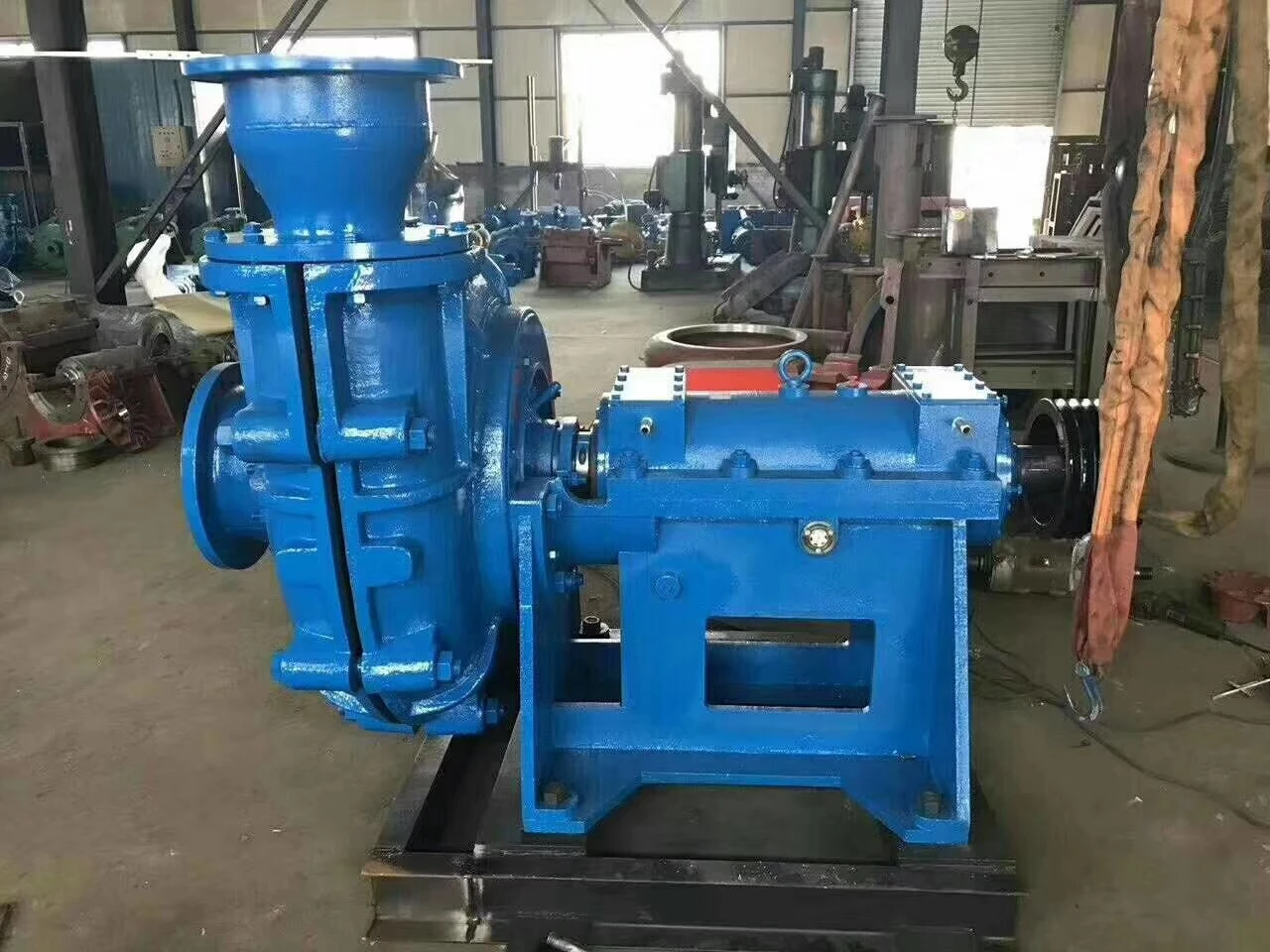
High density slurry pumps are specialized heavy-duty industrial machines designed to transport fluids containing a high concentration of solid particles, often characterized by high viscosity, abrasive nature, and non-Newtonian flow behavior. In the industrial value chain, these pumps serve as the critical link between extraction/processing stages and waste management or further refinement. Unlike standard centrifugal pumps, high density slurry pumps must overcome the challenges of particle settling, severe erosive wear, and high frictional head losses. The core performance of these systems is defined by their ability to maintain a stable volumetric flow rate while minimizing the "critical carrying velocity" required to keep solids in suspension, thereby reducing energy consumption and internal component degradation.
Material Science & Manufacturing
The operational environment of a high density slurry pump is characterized by extreme abrasive stress and, frequently, chemical corrosion. Consequently, material selection is governed by the Hardness-Toughness balance. The primary wetted parts—including the impeller and liner—are typically manufactured from High-Chrome White Cast Irons (ASTM A532), which contain primary M7C3 carbides. These carbides provide a hardness typically exceeding 60 HRC, essential for resisting the micro-cutting action of mineral particles.
In cases of extreme acidity or alkalinity, duplex stainless steels or specialized rubber linings (such as Natural Rubber or Nitrile) are utilized. Rubber linings operate on the principle of elastic deformation; the material absorbs the impact energy of the particles and "rebounds," effectively preventing the surface removal seen in rigid metals. Manufacturing processes involve precision investment casting for impellers to ensure hydraulic efficiency and CNC machining of the casing to maintain tight tolerances and minimize internal turbulence, which can otherwise lead to localized erosion hotspots.
Key parameter control during manufacturing focuses on the metallurgical structure. For high-chrome alloys, the cooling rate during casting is strictly controlled to optimize the eutectic structure and minimize porosity, ensuring that the pump can withstand the high radial loads generated by asymmetric slurry distribution within the volute.
Performance & Engineering
Engineering a high density slurry pump requires a deep analysis of the fluid dynamics of particulate suspensions. The primary challenge is the management of "Slurry Density" (specific gravity) and "Concentration by Weight" (Cw). As the concentration of solids increases, the mixture exhibits Bingham Plastic or Pseudoplastic behavior, requiring a higher "Yield Stress" to initiate flow. Engineering solutions include the implementation of oversized impellers and lower rotational speeds to reduce the velocity of impact against the casing walls, as erosion rates are typically proportional to the cube of the velocity (V³).
Force analysis is critical regarding the shaft and bearings. High density slurries create significant unbalanced hydraulic forces. To counter this, pumps are engineered with heavy-duty shafting and reinforced bearing housings, often employing Labyrinth seals or Mechanical seals with external flushing systems to prevent slurry ingress into the lubricant. Environmental resistance is ensured through the application of epoxy-based anti-corrosion coatings on the external pump housing, protecting the equipment from the harsh atmospheric conditions of mining or chemical plants.
Technical Specifications
| Parameter Dimension | Standard High-Chrome Variant | Rubber Lined Variant | Extreme Heavy Duty Variant | Unit of Measure |
|---|---|---|---|---|
| Max. Particle Size | 15 mm | 10 mm | 30 mm | mm |
| Max. Slurry Density | 1.45 | 1.30 | 1.80 | t/m³ |
| Abrasive Resistance | High (Hardness) | Medium (Elasticity) | Ultra-High | Qualitative |
| Operating Temperature | -20 to 150 | -10 to 70 | -20 to 200 | °C |
| Efficiency Range | 65% - 82% | 60% - 78% | 55% - 75% | % |
| Service Life (Liner) | 4,000 - 8,000 | 3,000 - 6,000 | 10,000+ | Hours |
Failure Mode & Maintenance
The most prevalent failure mode in high density slurry pumps is Erosive Wear, specifically "Cavitation-Induced Erosion." When the Net Positive Suction Head Available (NPSHa) drops below the Required (NPSHr), vapor bubbles form and collapse violently against the impeller surface, creating micro-jets that pit the material. This is often exacerbated by high slurry viscosity, which increases friction loss in the suction line.
Another critical failure mode is "Shaft Fatigue Cracking," caused by the cyclic loading of non-homogeneous slurry. This leads to microscopic fractures that propagate over time, eventually causing catastrophic shaft failure. Additionally, "Seal Failure" occurs when solids bypass the primary seal, leading to bearing contamination and seizure.
Professional maintenance protocols require a predictive approach. This includes vibration analysis to detect bearing wear and ultrasonic thickness testing (UT) of the pump volute and impeller to monitor wear rates. Maintenance schedules must prioritize the replacement of liners before the base metal casing is compromised. For seal maintenance, the implementation of a "Clean Water Flush" (Plan 32 or 54) is recommended to maintain a positive pressure barrier against the slurry.
Industry FAQ
Q: How do we determine the optimal impeller material for a slurry with high silica content?
A: For high silica content, which is extremely abrasive, we recommend High-Chrome White Iron (27% Cr). The silica particles are hard enough to cut through standard steels; therefore, the material must have a hardness value exceeding the hardness of the particles to prevent abrasive wear.
Q: What is the risk of running a high density slurry pump at a flow rate below the critical carrying velocity?
A: Running below the critical velocity leads to "Sanding" or "Settling." The solids will precipitate out of the suspension and accumulate in the pump casing or pipeline, leading to total blockage and potential pump seizure due to the sudden increase in torque.
Q: Can these pumps handle air entrainment in the slurry?
A: High density slurry pumps are sensitive to air entrainment. Air bubbles can cause "Air Binding," where the pump loses its prime, and can significantly increase the risk of cavitation, leading to rapid impeller degradation.
Q: Which is more effective for fine-particle slurries: rubber lining or chrome alloy?
A: For fine particles with high impact but low cutting action, rubber lining is generally superior. It absorbs the energy of the fine particles more effectively than the rigid structure of chrome alloys, which may experience surface spalling under constant fine-particle bombardment.
Q: How does slurry density affect the power requirements of the motor?
A: The power requirement is directly proportional to the density of the fluid. An increase in slurry density increases the mass flow rate and the viscosity, which raises the hydraulic friction. We typically apply a "Density Correction Factor" to the motor sizing to prevent overloading.
Conclusion
The engineering and operation of high density slurry pumps represent a complex intersection of fluid dynamics, metallurgy, and mechanical reliability. To achieve operational stability, it is imperative to align the material properties—specifically the hardness and elasticity of liners—with the specific mineralogy and concentration of the slurry. The integration of precise manufacturing tolerances and rigorous force analysis ensures that the equipment can withstand the inherent stresses of transporting high-viscosity particulate suspensions.
Moving forward, the industry is shifting toward "Intelligent Wear Monitoring" and the use of ceramic-metal composites (Cermets) to further extend service life. For procurement and engineering managers, the focus must remain on the Total Cost of Ownership (TCO) rather than initial capital expenditure, prioritizing pumps that demonstrate superior resistance to failure modes like cavitation and erosive wear to maximize plant uptime.
-
Comprehensive Guide to Waterproof ORings for Optimal Sealing Solutions
News2026-06-09
-
Septic Pump System Performance Analysis
News2026-06-08
-
pump for septic Material Science
News2026-06-08
-
basement sewer pump Performance Analysis
News2026-06-08
-
submerged pump Performance Engineering
News2026-06-08
-
Septic System Pumps Performance Analysis
News2026-06-08
-
septic system pump Material Science and Manufacturing
News2026-06-07
-
pump for septic tank Material Science Manufacturing
News2026-06-07
-
submersible sewage pump Material Science
News2026-06-07
-
Sewage Ejector Material Science and Manufacturing
News2026-06-07
-
Ejection Pump Material Science
News2026-06-07
-
pump submersible Performance Analysis
News2026-06-06
-
ejector pumps Performance Engineering
News2026-06-06
-
basement ejector pump Material Science Manufacturing
News2026-06-06
-
Septic Tanks Pumping Performance Analysis
News2026-06-06




