English
- Afrikaans
- Albanian
- Amharic
- Arabic
- Armenian
- Azerbaijani
- Basque
- Belarusian
- Bengali
- Bosnian
- Bulgarian
- Catalan
- Cebuano
- Corsican
- Croatian
- Czech
- Danish
- Dutch
- English
- Esperanto
- Estonian
- Finnish
- French
- Frisian
- Galician
- Georgian
- German
- Greek
- Gujarati
- Haitian Creole
- hausa
- hawaiian
- Hebrew
- Hindi
- Miao
- Hungarian
- Icelandic
- igbo
- Indonesian
- irish
- Italian
- Japanese
- Javanese
- Kannada
- kazakh
- Khmer
- Rwandese
- Korean
- Kurdish
- Kyrgyz
- Lao
- Latin
- Latvian
- Lithuanian
- Luxembourgish
- Macedonian
- Malgashi
- Malay
- Malayalam
- Maltese
- Maori
- Marathi
- Mongolian
- Myanmar
- Nepali
- Norwegian
- Norwegian
- Occitan
- Pashto
- Persian
- Polish
- Portuguese
- Punjabi
- Romanian
- Russian
- Samoan
- Scottish Gaelic
- Serbian
- Sesotho
- Shona
- Sindhi
- Sinhala
- Slovak
- Slovenian
- Somali
- Spanish
- Sundanese
- Swahili
- Swedish
- Tagalog
- Tajik
- Tamil
- Tatar
- Telugu
- Thai
- Turkish
- Turkmen
- Ukrainian
- Urdu
- Uighur
- Uzbek
- Vietnamese
- Welsh
- Bantu
- Yiddish
- Yoruba
- Zulu

Telephone: +86 13120555503
Email: frank@cypump.com


Apr . 01, 2024 17:55 Back to list
heavy duty slurry pumps Manufacturing Specification and Performance Analysis
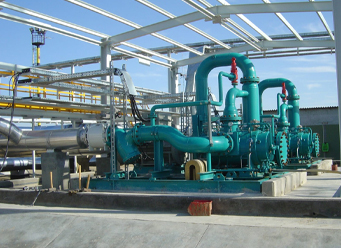
Heavy Duty Slurry Pumps Manufacturing Specification and Performance Analysis
Heavy duty slurry pumps are specialized centrifugal machinery engineered to transport highly abrasive, viscous, and corrosive fluids containing suspended solid particles. Positioned as critical infrastructure within the mineral processing, dredging, and chemical waste management chains, these pumps serve as the primary kinetic drivers for tailings transport, ore slurry movement, and hydrothermal reclamation. The technical challenge of slurry transport lies in the simultaneous management of hydraulic efficiency and structural attrition. Unlike standard water pumps, heavy duty slurry pumps must maintain volumetric efficiency while operating under extreme wall shear stress and impingement erosion. Their performance is defined by the ability to maintain a critical carrying velocity—preventing the sedimentation of solids—while minimizing the erosion rate of internal wetted components. The integration of advanced metallurgy and precision fluid dynamics allows these systems to handle high-density solids concentrations, often exceeding 50% by weight, ensuring continuous operational availability in the harshest industrial environments.
Material Science & Manufacturing
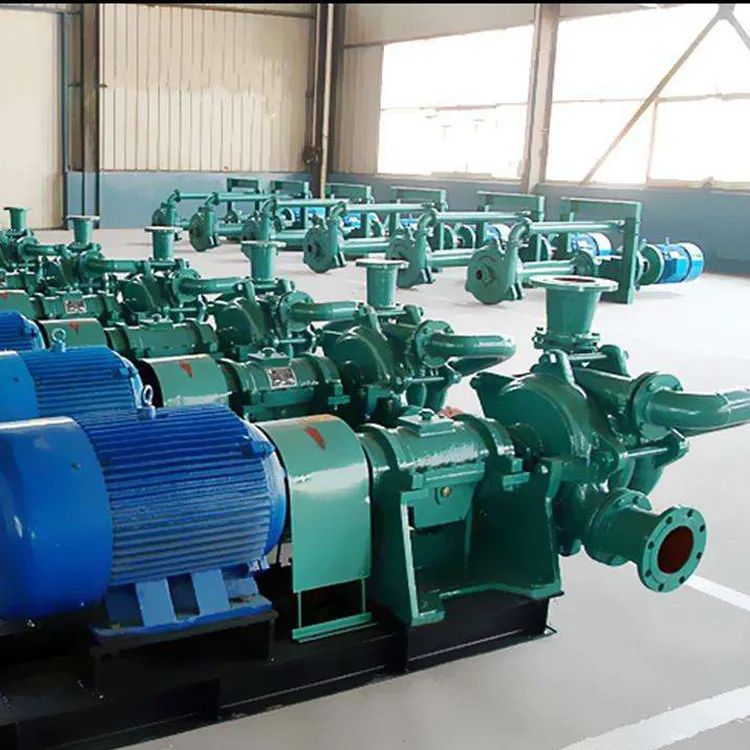
The longevity of a heavy duty slurry pump is fundamentally dependent on the material science applied to its wetted parts. The primary failure mechanism in these pumps is erosive wear, where high-velocity particles strike the impeller and casing walls. To combat this, industry standards utilize high-chrome white irons (ASTM A532) and natural rubber linings. High-chrome alloys, typically containing 25% to 30% chromium, form a hard M7C3 carbide network within a martensitic matrix, providing exceptional hardness (up to 650 HB) and resistance to abrasive wear. For applications involving finer particles or higher acidity, thermoplastic elastomers or natural rubber linings are employed; these materials absorb the kinetic energy of the particle impact through elastic deformation, thereby preventing the removal of the substrate material.
Manufacturing processes focus on the mitigation of porosity and internal stress. The casting of impellers involves precise investment casting or sand casting, followed by rigorous heat treatment—including quenching and tempering—to optimize the balance between hardness and fracture toughness. The machining phase utilizes CNC grinding to achieve strict tolerances on the impeller eye and volute clearances, which is critical for maintaining the pump's NPSH (Net Positive Suction Head) requirements. Furthermore, the shafting is typically constructed from duplex stainless steels or alloy steels with surface hardening treatments to prevent pitting corrosion and fatigue failure at the bearing interfaces. The assembly process emphasizes the alignment of the pump-motor coupling to micron-level precision to eliminate parasitic vibrations that would otherwise accelerate mechanical seal degradation.
Performance & Engineering
Engineering a heavy duty slurry pump requires a complex analysis of slurry rheology and fluid mechanics. The core engineering objective is to optimize the "Critical Velocity," the minimum flow rate required to keep solids suspended. If the velocity drops below this threshold, solids settle, leading to "sanding" of the pump and potential catastrophic blockage. This is managed through the design of the impeller geometry, where the blade angle and vane profile are optimized to maximize head while minimizing the relative velocity of the fluid at the impeller tips, as erosion rates increase exponentially with velocity (typically proportional to the cube of the velocity).
Force analysis is critical for the structural integrity of the pump casing. The pump must withstand not only the internal hydraulic pressure but also the dynamic impact forces of large particles. Engineers implement thick-walled castings and reinforced ribs to prevent casing deformation under pressure surges. Environmental resistance is addressed through the selection of seal types; heavy duty pumps often utilize expelled-water seals or mechanical seals with tungsten carbide faces to isolate the bearing housing from the abrasive slurry. Compliance with international engineering standards ensures that the pump can operate under varying slurry densities (specific gravity ranging from 1.1 to 1.8) without experiencing cavitation or excessive vibration. The integration of Variable Frequency Drives (VFDs) allows for real-time adjustment of the flow rate to match the slurry density, thereby optimizing energy consumption and extending the mean time between maintenance (MTBM).
Technical Specifications
| Parameter Dimension | High-Chrome Alloy Series | Rubber Lined Series | Duplex Steel Series | Composite/Hybrid Series |
|---|---|---|---|---|
| Max Particle Size (mm) | 100 - 150 | 20 - 50 | 60 - 100 | 80 - 120 |
| Abrasive Resistance (HB) | 600 - 650 | N/A (Elastic) | 300 - 450 | 500 - 600 |
| Max Slurry Density (sg) | 1.3 - 1.8 | 1.1 - 1.4 | 1.2 - 1.6 | 1.3 - 1.7 |
| Corrosion Resistance (pH) | pH 4 - 9 | pH 2 - 11 | pH 1 - 13 | pH 3 - 10 |
| Typical Efficiency (%) | 72% - 85% | 68% - 80% | 75% - 88% | 70% - 82% |
| Operational Temp Range | -20°C to 150°C | -10°C to 70°C | -40°C to 200°C | -20°C to 110°C |
Failure Mode & Maintenance
The failure modes of heavy duty slurry pumps are primarily categorized into mechanical wear, chemical degradation, and structural fatigue. The most prevalent mode is "impeller washout," where localized turbulence leads to accelerated erosion at the impeller vanes, resulting in a loss of head and volumetric efficiency. Another critical failure is "casing thinning," where the internal liner wears through, leading to the rapid erosion of the outer pressure shell. In chemical-heavy environments, "pitting corrosion" occurs, where the protective oxide layer of the metal is breached, creating localized cavities that act as stress concentrators for fatigue cracking.
Professional maintenance involves a predictive strategy centered on vibration analysis and thickness monitoring. Ultrasonic testing (UT) is employed to measure the remaining wall thickness of the liners without dismantling the pump. To mitigate fatigue cracking, the pump's alignment is checked quarterly using laser alignment tools. When impeller wear reaches a critical limit (typically 10-15% loss of diameter), the impeller must be replaced or rebuilt using hard-facing welding techniques (e.g., applying chromium carbide overlays). Mechanical seals should be monitored for leakage rates; an increase in leakage indicates seal face wear, necessitating an immediate swap to prevent slurry ingress into the bearing housing, which would lead to rapid bearing seizure.
Industry FAQ
Q: How do we determine the optimal liner material for a slurry pump with high acidity and high abrasiveness?
A: In cases where both acidity and abrasiveness are present, a hybrid approach is required. If the pH is below 3, high-chrome irons may suffer from acid attack. We recommend utilizing duplex stainless steel or a specialized rubber lining with acid-resistant polymers. The decision depends on the particle size: larger particles require the hardness of alloys, while finer, acidic slurries are better handled by elastomeric linings.
Q: What is the technical impact of operating a slurry pump below its minimum flow rate?
A: Operating below the critical carrying velocity leads to the deposition of solids within the volute and piping. This "sanding" increases the internal friction and can lead to a complete blockage. Furthermore, the lack of flow prevents the cooling of the pump internals, causing thermal expansion that can lead to impeller-casing contact and catastrophic mechanical failure.
Q: How does the specific gravity of the slurry affect the motor power requirement?
A: The power required to pump slurry is directly proportional to the density of the fluid. As specific gravity increases, the mass flow rate for the same volumetric flow increases, necessitating higher torque. We calculate the power requirement using the formula: Power = (Flow x Head x Density x g) / Efficiency. A rise from 1.1 to 1.5 sg can increase power demand by approximately 36%.
Q: Why is NPSH (Net Positive Suction Head) more critical in slurry applications than in clean water?
A: Slurry has a higher viscosity and higher density, which increases friction losses in the suction piping. If the available NPSH drops below the required NPSH, cavitation occurs. In slurry pumps, cavitation bubbles collapse with higher force due to the presence of solids, which accelerates the erosion of the impeller eye, leading to rapid pitting and failure.
Q: What is the recommended frequency for impeller clearance adjustments?
A: Impeller clearance should be monitored every 500 to 1,000 operational hours depending on the abrasiveness of the material. As the wear rings and impeller erode, the gap increases, allowing fluid to recirculate from the discharge back to the suction. This reduces pump efficiency significantly. Adjusting the pump position or replacing wear liners restores the volumetric efficiency.
Conclusion
The engineering of heavy duty slurry pumps is a delicate balance between hydraulic performance and material endurance. By integrating high-chrome metallurgy and precision-engineered fluid paths, these systems can successfully mitigate the extreme forces of impingement and attrition. The technical synergy between correct material selection, adherence to critical velocity limits, and rigorous vibration monitoring ensures the operational stability of mineral and waste processing plants.
Looking forward, the industry is shifting toward "smart slurry management," integrating IoT sensors for real-time wear monitoring and AI-driven flow optimization. To maximize the lifecycle of these assets, operators should prioritize a shift from reactive to predictive maintenance, emphasizing ultrasonic thickness gauging and the adoption of high-efficiency VFDs to adapt to fluctuating slurry densities.
-
Comprehensive Guide to Waterproof ORings for Optimal Sealing Solutions
News2026-06-09
-
Septic Pump System Performance Analysis
News2026-06-08
-
pump for septic Material Science
News2026-06-08
-
basement sewer pump Performance Analysis
News2026-06-08
-
submerged pump Performance Engineering
News2026-06-08
-
Septic System Pumps Performance Analysis
News2026-06-08
-
septic system pump Material Science and Manufacturing
News2026-06-07
-
pump for septic tank Material Science Manufacturing
News2026-06-07
-
submersible sewage pump Material Science
News2026-06-07
-
Sewage Ejector Material Science and Manufacturing
News2026-06-07
-
Ejection Pump Material Science
News2026-06-07
-
pump submersible Performance Analysis
News2026-06-06
-
ejector pumps Performance Engineering
News2026-06-06
-
basement ejector pump Material Science Manufacturing
News2026-06-06
-
Septic Tanks Pumping Performance Analysis
News2026-06-06




