English
- Afrikaans
- Albanian
- Amharic
- Arabic
- Armenian
- Azerbaijani
- Basque
- Belarusian
- Bengali
- Bosnian
- Bulgarian
- Catalan
- Cebuano
- Corsican
- Croatian
- Czech
- Danish
- Dutch
- English
- Esperanto
- Estonian
- Finnish
- French
- Frisian
- Galician
- Georgian
- German
- Greek
- Gujarati
- Haitian Creole
- hausa
- hawaiian
- Hebrew
- Hindi
- Miao
- Hungarian
- Icelandic
- igbo
- Indonesian
- irish
- Italian
- Japanese
- Javanese
- Kannada
- kazakh
- Khmer
- Rwandese
- Korean
- Kurdish
- Kyrgyz
- Lao
- Latin
- Latvian
- Lithuanian
- Luxembourgish
- Macedonian
- Malgashi
- Malay
- Malayalam
- Maltese
- Maori
- Marathi
- Mongolian
- Myanmar
- Nepali
- Norwegian
- Norwegian
- Occitan
- Pashto
- Persian
- Polish
- Portuguese
- Punjabi
- Romanian
- Russian
- Samoan
- Scottish Gaelic
- Serbian
- Sesotho
- Shona
- Sindhi
- Sinhala
- Slovak
- Slovenian
- Somali
- Spanish
- Sundanese
- Swahili
- Swedish
- Tagalog
- Tajik
- Tamil
- Tatar
- Telugu
- Thai
- Turkish
- Turkmen
- Ukrainian
- Urdu
- Uighur
- Uzbek
- Vietnamese
- Welsh
- Bantu
- Yiddish
- Yoruba
- Zulu

Telephone: +86 13120555503
Email: frank@cypump.com


Apr . 01, 2024 17:55 Back to list
grundfos slurry pumps Manufacturing Specification and Performance Analysis
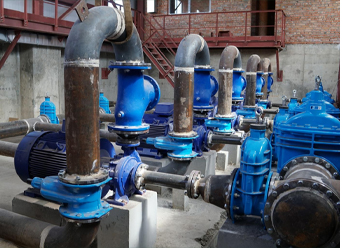
Grundfos Slurry Pumps Manufacturing Specification and Performance Analysis
Grundfos slurry pumps represent a specialized category of industrial pumping technology engineered to transport fluids containing high concentrations of suspended solids, ranging from abrasive minerals to organic waste. In the industrial value chain, these pumps serve as the critical link between extraction/processing and refining, where the fluid medium is characterized by non-Newtonian behavior and high volumetric wear. The technical positioning of these pumps focuses on balancing hydraulic efficiency with extreme material durability. By utilizing advanced impeller geometries and specialized wear-resistant linings, Grundfos slurry pumps mitigate the destructive effects of erosive wear and cavitation, ensuring operational stability in mining, wastewater treatment, and chemical processing environments where standard centrifugal pumps would suffer rapid catastrophic failure.
Material Science & Manufacturing
The engineering of Grundfos slurry pumps begins with the selection of materials capable of resisting both abrasive erosion and chemical corrosion. The primary challenge in slurry transport is the impact of solid particles on the internal surfaces of the pump; thus, material science focuses on high-chromium alloys (e.g., ASTM A532) and reinforced elastomers. High-chrome white irons are utilized for impellers and volute liners due to their high hardness (HRC 60+) and the presence of M7C3 carbides, which provide a primary defense against micro-cutting and plowing by abrasive particles.
The manufacturing process involves precision casting followed by rigorous heat treatment (quenching and tempering) to optimize the martensitic structure of the metal, balancing hardness with necessary fracture toughness. For chemical-heavy slurries, duplex stainless steels or specialized polymers like Polyurethane (PU) are employed to prevent oxidation and pitting. Key parameter control during manufacturing includes the strict regulation of the "clearance" between the impeller and the wear plate; excessive clearance leads to internal recirculation and accelerated wear, while insufficient clearance risks seizing under thermal expansion. Furthermore, the integration of heavy-duty shafting, typically constructed from high-tensile alloy steel, ensures that the pump can withstand the radial loads induced by uneven slurry distribution within the pump casing.
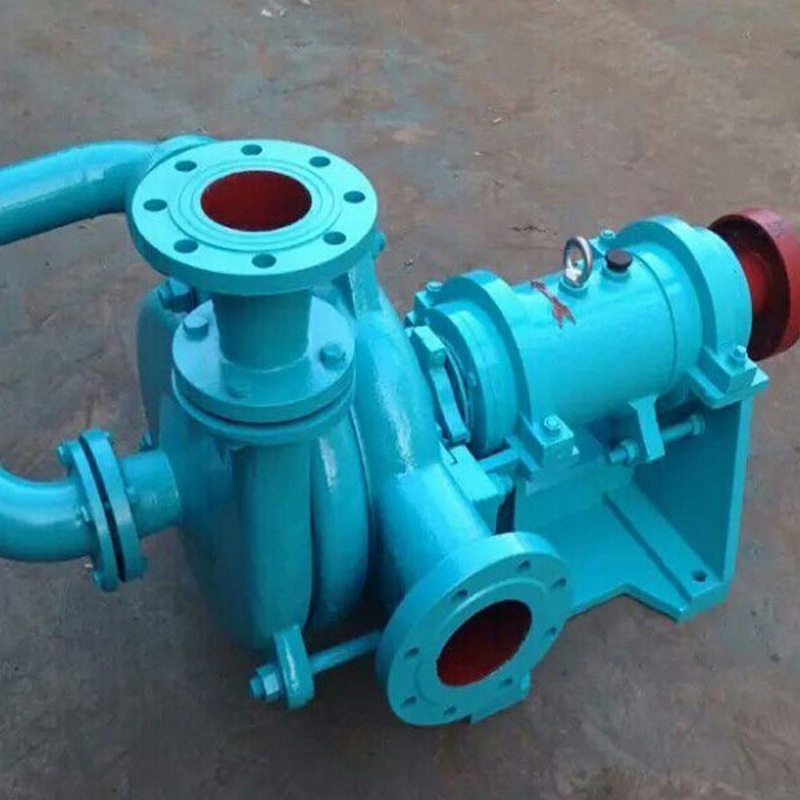
Performance & Engineering
The engineering logic of slurry pumps centers on the management of "Critical Settling Velocity." If the fluid velocity falls below a specific threshold, suspended solids precipitate, leading to blockage and severe localized erosion. Grundfos engineers these pumps with optimized hydraulic pathways to maintain a constant velocity profile. The force analysis involves calculating the impact energy of particles hitting the impeller vanes; by optimizing the vane angle and utilizing a semi-open impeller design, the pump minimizes the stagnation zones where solids typically accumulate.
Environmental resistance is achieved through the deployment of specialized sealing systems. Mechanical seals in slurry applications are often designed with external flushing (API Plan 32 or 54) to prevent abrasive particles from entering the seal faces, which would otherwise cause immediate scoring and leakage. Compliance with engineering standards requires a rigorous analysis of the Net Positive Suction Head required (NPSHr) versus available (NPSHa), as slurry fluids are more prone to cavitation than clear water. The density of the slurry (typically measured in g/cm³) significantly alters the power requirement, necessitating the use of oversized motors with Variable Frequency Drives (VFDs) to handle the high starting torque required to move a stagnant column of solids.
Technical Specifications
| Parameter Dimension | Standard Slurry Specification | High-Abrasion Specification | Corrosive Slurry Specification | Evaluation Metric |
|---|---|---|---|---|
| Lining Material | High-Grade Cast Iron | High-Chrome Alloy (27% Cr) | Duplex Stainless Steel / CD4MCu | Hardness (HRC/HV) |
| Max Particle Size | Up to 15mm | Up to 30mm | Up to 10mm | Passage Diameter (mm) |
| Fluid Density | 1.1 - 1.3 g/cm³ | 1.3 - 1.6 g/cm³ | 1.1 - 1.4 g/cm³ | Specific Gravity |
| Seal Configuration | Single Mechanical Seal | Double Seal w/ Flush | Chemical Resistant Bellows | Leakage Rate (ml/h) |
| Operating Temp | -10°C to +90°C | -20°C to +110°C | -20°C to +150°C | Thermal Stability (°C) |
| Efficiency Range | 65% - 78% | 60% - 72% | 62% - 75% | Hydraulic Efficiency (%) |
Failure Mode & Maintenance
Failure analysis in slurry pumping systems typically identifies three primary modes: abrasive erosion, cavitation-induced pitting, and seal degradation. Abrasive erosion occurs predominantly at the impeller tips and the volute tongue, where fluid velocity is highest. This manifests as a gradual decline in discharge pressure and flow rate. To combat this, a "Sacrificial Liner" strategy is employed, allowing the inner lining to be replaced without compromising the structural integrity of the pump casing.
Cavitation occurs when the local pressure drops below the vapor pressure of the liquid, creating bubbles that collapse violently against the metal surface. In slurry pumps, this is exacerbated by the presence of solids, which act as nucleation sites. Maintenance protocols require the monitoring of vibration signatures via accelerometers to detect the high-frequency noise associated with cavitation. Additionally, shaft deflection caused by uneven wear of the impeller can lead to premature bearing failure. Professional maintenance involves quarterly inspections of the impeller clearances and the implementation of a predictive maintenance schedule based on the "Wear Rate per 1000 Hours" metric, ensuring that components are replaced before reaching the critical failure threshold.
Industry FAQ
Q: How do we determine the correct impeller material for a slurry with a pH of 3.5 and high quartz content?
A: For this specific condition, a standard high-chrome alloy may suffer from acid corrosion despite its hardness. We recommend a Duplex Stainless Steel or a specialized rubber-lined impeller if the temperature is low. The combination of low pH and quartz requires a material with both a passive oxide layer for corrosion resistance and high surface hardness to resist the abrasive nature of quartz.
Q: What is the impact of slurry concentration (wt%) on the pump's NPSH requirements?
A: Increasing the concentration of solids increases the viscosity and the density of the fluid, which generally increases the friction losses in the suction piping. This leads to a decrease in NPSH available (NPSHa). To prevent cavitation, you must either lower the pump installation height or increase the suction pipe diameter to reduce fluid velocity and friction.
Q: Why is a VFD critical for Grundfos slurry pumps compared to standard water pumps?
A: Slurry pumps often face "slugging," where a sudden increase in solids concentration occurs. A VFD allows the system to adjust the pump speed in real-time to maintain the critical settling velocity. Moreover, starting a pump full of heavy slurry requires significantly higher torque than water; a VFD provides a controlled ramp-up to prevent motor overload and shaft shear.
Q: How can we differentiate between erosive wear and corrosive attack during an inspection?
A: Erosive wear typically presents as directional "grooving" or "scalloping" in the direction of the fluid flow, particularly on the impeller vanes. Corrosive attack, however, manifests as uniform thinning of the walls or localized "pitting" and "voids" that are not aligned with the flow direction. If both are present, it is termed erosion-corrosion, which accelerates material loss synergistically.
Q: What is the recommended maintenance interval for the wear plates in high-concentration tailings applications?
A: In high-concentration tailings, we recommend a baseline inspection every 500 to 1,000 operating hours. Because wear is non-linear, the first 20% of the liner thickness is often lost quickly, followed by a stabilization period. We advise using ultrasonic thickness testing (UT) to monitor the liner degradation without dismantling the pump.
Conclusion
The operational success of Grundfos slurry pumps is predicated on the precise alignment of material hardness, hydraulic design, and fluid dynamics. By integrating high-chrome alloys and specialized sealing mechanisms, these systems effectively manage the aggressive nature of abrasive solids, transforming a potentially destructive process into a controlled industrial operation. The technical synergy between the pump's structural robustness and its hydraulic efficiency ensures a minimized total cost of ownership through extended mean time between failures (MTBF).
Looking forward, the integration of IoT-based condition monitoring and AI-driven predictive analytics will further optimize the maintenance of slurry systems. Transitioning from scheduled maintenance to condition-based maintenance will allow operators to replace wear components at the exact moment of efficiency loss, thereby maximizing uptime. As industrial requirements move toward more sustainable and energy-efficient processing, the evolution of slurry pump engineering will focus on reducing the power-to-flow ratio while maintaining extreme durability standards.
-
Comprehensive Guide to Waterproof ORings for Optimal Sealing Solutions
News2026-06-09
-
Septic Pump System Performance Analysis
News2026-06-08
-
pump for septic Material Science
News2026-06-08
-
basement sewer pump Performance Analysis
News2026-06-08
-
submerged pump Performance Engineering
News2026-06-08
-
Septic System Pumps Performance Analysis
News2026-06-08
-
septic system pump Material Science and Manufacturing
News2026-06-07
-
pump for septic tank Material Science Manufacturing
News2026-06-07
-
submersible sewage pump Material Science
News2026-06-07
-
Sewage Ejector Material Science and Manufacturing
News2026-06-07
-
Ejection Pump Material Science
News2026-06-07
-
pump submersible Performance Analysis
News2026-06-06
-
ejector pumps Performance Engineering
News2026-06-06
-
basement ejector pump Material Science Manufacturing
News2026-06-06
-
Septic Tanks Pumping Performance Analysis
News2026-06-06




