English
- Afrikaans
- Albanian
- Amharic
- Arabic
- Armenian
- Azerbaijani
- Basque
- Belarusian
- Bengali
- Bosnian
- Bulgarian
- Catalan
- Cebuano
- Corsican
- Croatian
- Czech
- Danish
- Dutch
- English
- Esperanto
- Estonian
- Finnish
- French
- Frisian
- Galician
- Georgian
- German
- Greek
- Gujarati
- Haitian Creole
- hausa
- hawaiian
- Hebrew
- Hindi
- Miao
- Hungarian
- Icelandic
- igbo
- Indonesian
- irish
- Italian
- Japanese
- Javanese
- Kannada
- kazakh
- Khmer
- Rwandese
- Korean
- Kurdish
- Kyrgyz
- Lao
- Latin
- Latvian
- Lithuanian
- Luxembourgish
- Macedonian
- Malgashi
- Malay
- Malayalam
- Maltese
- Maori
- Marathi
- Mongolian
- Myanmar
- Nepali
- Norwegian
- Norwegian
- Occitan
- Pashto
- Persian
- Polish
- Portuguese
- Punjabi
- Romanian
- Russian
- Samoan
- Scottish Gaelic
- Serbian
- Sesotho
- Shona
- Sindhi
- Sinhala
- Slovak
- Slovenian
- Somali
- Spanish
- Sundanese
- Swahili
- Swedish
- Tagalog
- Tajik
- Tamil
- Tatar
- Telugu
- Thai
- Turkish
- Turkmen
- Ukrainian
- Urdu
- Uighur
- Uzbek
- Vietnamese
- Welsh
- Bantu
- Yiddish
- Yoruba
- Zulu

Telephone: +86 13120555503
Email: frank@cypump.com


Apr . 01, 2024 17:55 Back to list
grundfos slurry pump Manufacturing Specification and Performance Analysis
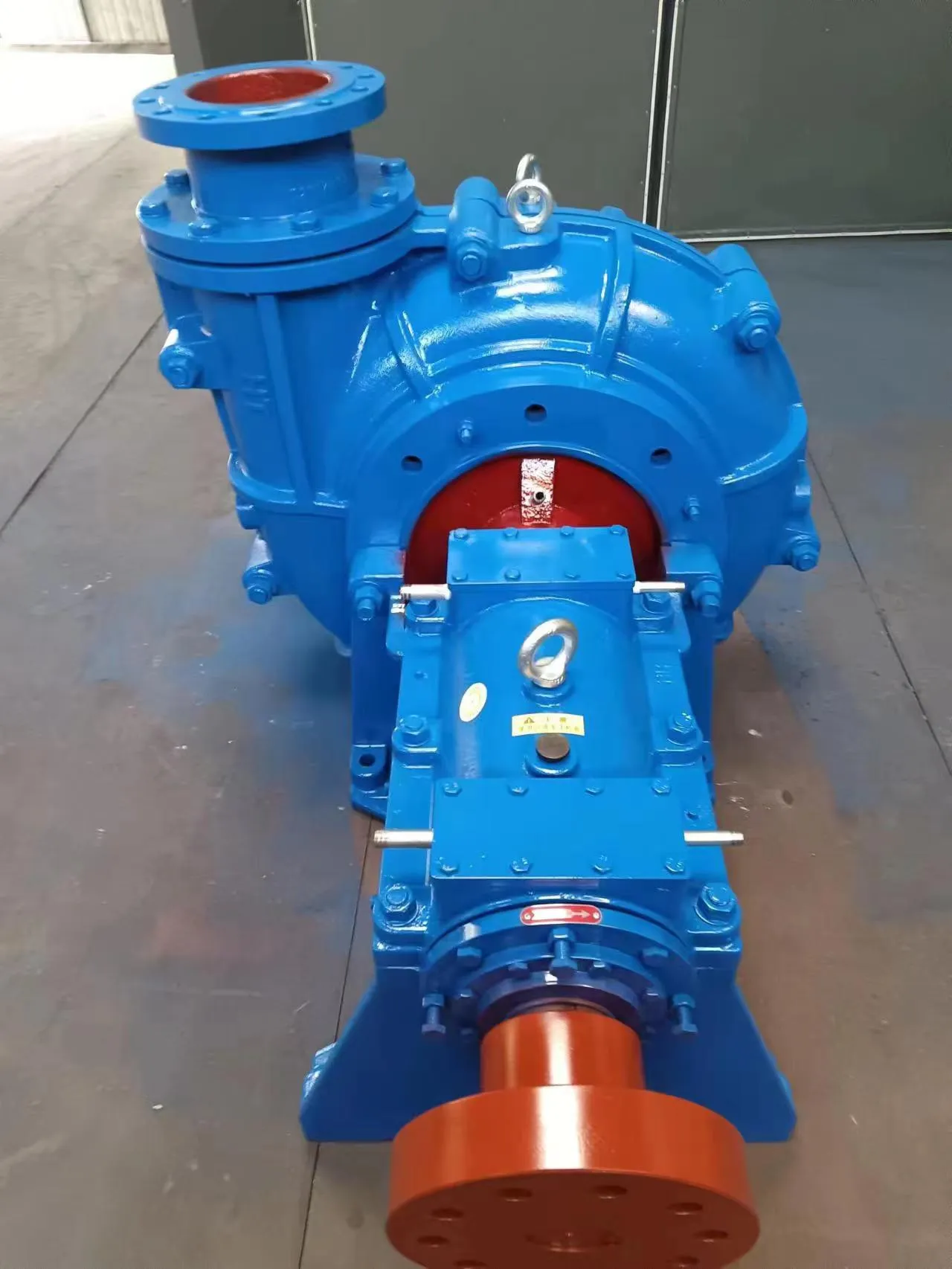
Grundfos Slurry Pump Manufacturing Specification and Performance Analysis
The Grundfos slurry pump is a specialized industrial centrifugal pumping system engineered to transport fluids containing high concentrations of suspended solid particles, ranging from abrasive minerals and tailings to wastewater sludge. Within the industrial value chain, these pumps serve as the critical nexus between extraction/processing and waste management or refining. Unlike standard water pumps, slurry pumps must overcome the dual challenges of high viscosity and extreme abrasive wear. The core technical positioning of the Grundfos slurry series focuses on maintaining hydraulic efficiency while maximizing the Mean Time Between Failures (MTBF) through advanced metallurgy and precision fluid dynamics. By optimizing the impeller geometry and utilizing high-chrome alloys, these pumps ensure stable volumetric flow rates even when dealing with non-Newtonian fluid behaviors and varying particle size distributions.
Material Science & Manufacturing
The operational longevity of a Grundfos slurry pump is fundamentally dependent on its material composition and the precision of its manufacturing processes. The primary challenge is erosive wear, where the kinetic energy of solid particles causes micro-cutting and plastic deformation of the pump internals. To mitigate this, Grundfos employs a stratified material selection strategy. For high-abrasion environments, high-chromium cast irons (e.g., ASTM A532) are utilized, which form hard primary carbides (M7C3) within a martensitic matrix, providing a hardness often exceeding 60 HRC. For corrosive slurries, duplex stainless steels or specialized polymer linings are integrated to prevent chemical degradation and pitting corrosion.
The manufacturing process begins with precision investment casting to ensure the structural integrity of the volute and impeller. Post-casting, components undergo rigorous heat treatment—specifically quenching and tempering—to refine the grain structure and eliminate internal stresses. The impeller machining process utilizes CNC grinding to achieve stringent tolerances on the vane profiles, which is critical for reducing turbulence and localized high-velocity zones that accelerate wear. Furthermore, the sealing system is a masterpiece of engineering; the use of mechanical seals with tungsten carbide or silicon carbide faces ensures that the abrasive medium does not penetrate the bearing housing, maintaining a hermetic seal under high-pressure differentials.
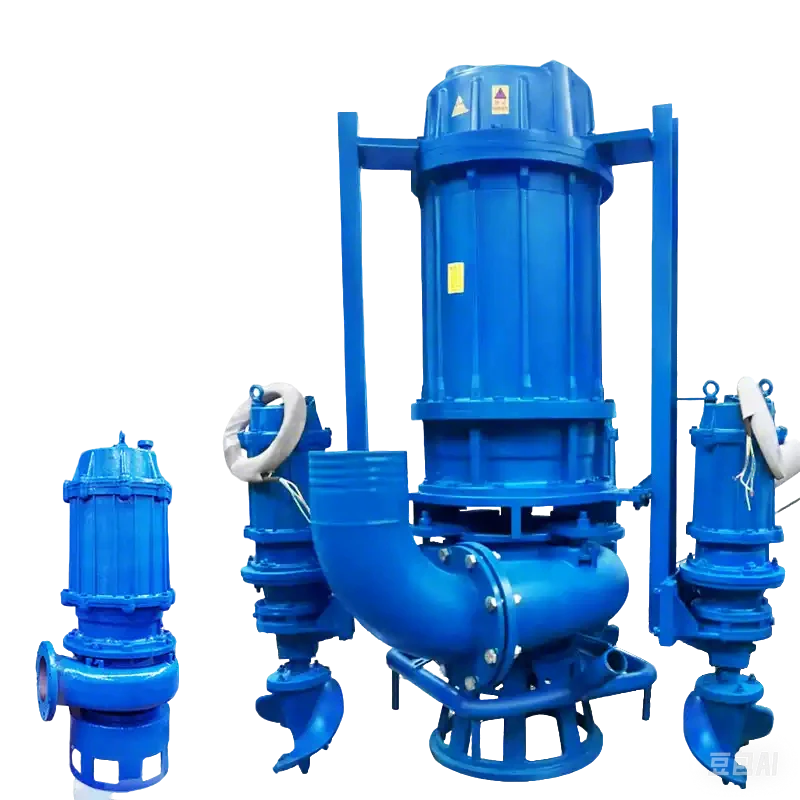
Performance & Engineering
Engineering a slurry pump requires a deep understanding of the interaction between fluid dynamics and solid particle trajectory. The primary engineering focus is the "critical velocity"—the minimum flow velocity required to keep solids suspended and prevent sedimentation within the pump casing. If the velocity drops below this threshold, "sanding" occurs, leading to catastrophic blockage and pump failure. Grundfos engineers utilize Computational Fluid Dynamics (CFD) to optimize the flow path, ensuring that the slurry moves through the impeller and volute with minimal recirculation and turbulence.
Force analysis is another critical dimension. Slurry pumps experience significant radial thrust due to the uneven distribution of pressure around the impeller, especially when operating away from the Best Efficiency Point (BEP). To counteract this, reinforced shafting and heavy-duty bearings are implemented to prevent shaft deflection and premature seal failure. Environmental resistance is also integrated; the pump housings are coated with epoxy-based industrial resins to prevent external corrosion in humid or saline environments. Compliance with international standards ensures that the pump's performance curves—specifically the head-flow relationship—remain predictable even as the wear liner thins over time, allowing for planned maintenance rather than reactive shutdowns.
Technical Specifications
| Parameter Dimension | Standard Slurry Grade | High-Abrasion Grade | Corrosive-Slurry Grade | Heavy-Duty Industrial |
|---|---|---|---|---|
| Max Flow Rate (m³/h) | 450 | 600 | 300 | 800 |
| Max Head (m) | 60 | 85 | 45 | 110 |
| Material Composition | Cast Iron/Steel | High-Chrome Alloy | Duplex SS / Rubber | Hardened Alloy Steel |
| Max Particle Size (mm) | 15 | 25 | 10 | 40 |
| Seal Type | Single Mechanical | Double Mechanical | Chemical-Resistant | Expeller Seal |
| Operating Temp (°C) | -10 to 90 | -10 to 120 | -20 to 80 | -10 to 150 |
Failure Mode & Maintenance
In practical application, Grundfos slurry pumps are subject to several distinct failure modes. The most prevalent is "Abrasive Erosion," characterized by the gradual thinning of the impeller vanes and volute liner. This leads to a drop in discharge pressure and volumetric efficiency. Another critical failure is "Cavitation," which occurs when the Net Positive Suction Head Available (NPSHa) falls below the required (NPSHr), causing vapor bubbles to collapse violently against the metal surface, creating microscopic pits that act as stress concentrators for fatigue cracking.
Mechanical seal failure is often caused by "Dry Running" or the ingress of large particles into the seal faces, leading to delamination and leakage. To prevent these failures, a rigorous maintenance protocol is mandatory. This includes the installation of vibration sensors to detect impeller imbalance early and the use of pressure transducers to monitor for cavitation. Maintenance engineers should perform scheduled "Clearance Checks" between the impeller and the wear plate; when the gap exceeds the manufacturer's specification, the wear liner must be replaced to prevent internal recirculation. Lubrication systems must be flushed regularly to ensure that no abrasive dust has contaminated the bearing oil, which would otherwise lead to rapid bearing seizure.
Industry FAQ
Q: How do we determine the correct material for a slurry pump when the fluid is both abrasive and corrosive?
A: This requires a synergistic analysis of the medium. We typically recommend Duplex Stainless Steel or high-chrome alloys with specific molybdenum additions. If the corrosion is dominant, a rubber-lined casing is preferred; if abrasion is dominant, high-chrome cast iron is the industry standard. A laboratory sample of the slurry is usually analyzed for pH and particle hardness (Mohs scale) before selection.
Q: What is the impact of slurry density on the pump's power consumption?
A: Slurry density directly increases the specific gravity of the fluid, which linearly increases the brake horsepower (BHP) required to maintain the same flow rate. We calculate the power requirement based on the combined density of the carrier fluid and the solids concentration, applying a correction factor for the viscosity increase associated with high-density slurries.
Q: How can we prevent the pump from clogging during startup after a long shutdown?
A: The primary risk is the settling of solids in the suction line. We recommend implementing a flushing system or a "start-up bypass" that allows the pump to prime with clean water before introducing the slurry. Additionally, maintaining a slight positive suction head can prevent the pump from running dry and sucking in settled debris.
Q: What are the signs that the impeller has reached its wear limit?
A: The most prominent sign is a gradual decline in the discharge pressure (head) and flow rate while the motor current remains constant or slightly decreases. An increase in vibration levels often accompanies late-stage wear due to the loss of impeller balance. We recommend monitoring the performance curve monthly to track this degradation.
Q: Is it possible to vary the pump speed using a VFD in slurry applications?
A: Yes, but with caution. While a Variable Frequency Drive (VFD) provides operational flexibility, reducing the speed too far can drop the flow velocity below the critical settling velocity, leading to solids deposition and clogging. The VFD must be programmed with a "minimum speed limit" based on the slurry's critical velocity calculations.
Conclusion
The Grundfos slurry pump represents a sophisticated integration of material science and hydraulic engineering, specifically designed to withstand the punishing environments of abrasive fluid transport. By utilizing high-chrome metallurgy, precision CFD-optimized geometries, and robust sealing systems, these pumps solve the industry's core pain points regarding erosive wear and operational downtime. The technical logic dictates that the longevity of the system is not merely a result of the raw materials used, but the precision of the manufacturing tolerances and the adherence to critical velocity parameters during operation.
Looking forward, the integration of IoT-based predictive maintenance and real-time wear monitoring will further optimize the lifecycle of slurry pumping systems. For operators, the transition from scheduled maintenance to condition-based maintenance—driven by vibration and pressure analytics—will be the key to reducing total cost of ownership. Ensuring strict compliance with international standards and rigorous material validation remains the only viable path to achieving maximum reliability in heavy-industrial slurry applications.
-
Comprehensive Guide to Waterproof ORings for Optimal Sealing Solutions
News2026-06-09
-
Septic Pump System Performance Analysis
News2026-06-08
-
pump for septic Material Science
News2026-06-08
-
basement sewer pump Performance Analysis
News2026-06-08
-
submerged pump Performance Engineering
News2026-06-08
-
Septic System Pumps Performance Analysis
News2026-06-08
-
septic system pump Material Science and Manufacturing
News2026-06-07
-
pump for septic tank Material Science Manufacturing
News2026-06-07
-
submersible sewage pump Material Science
News2026-06-07
-
Sewage Ejector Material Science and Manufacturing
News2026-06-07
-
Ejection Pump Material Science
News2026-06-07
-
pump submersible Performance Analysis
News2026-06-06
-
ejector pumps Performance Engineering
News2026-06-06
-
basement ejector pump Material Science Manufacturing
News2026-06-06
-
Septic Tanks Pumping Performance Analysis
News2026-06-06




