English
- Afrikaans
- Albanian
- Amharic
- Arabic
- Armenian
- Azerbaijani
- Basque
- Belarusian
- Bengali
- Bosnian
- Bulgarian
- Catalan
- Cebuano
- Corsican
- Croatian
- Czech
- Danish
- Dutch
- English
- Esperanto
- Estonian
- Finnish
- French
- Frisian
- Galician
- Georgian
- German
- Greek
- Gujarati
- Haitian Creole
- hausa
- hawaiian
- Hebrew
- Hindi
- Miao
- Hungarian
- Icelandic
- igbo
- Indonesian
- irish
- Italian
- Japanese
- Javanese
- Kannada
- kazakh
- Khmer
- Rwandese
- Korean
- Kurdish
- Kyrgyz
- Lao
- Latin
- Latvian
- Lithuanian
- Luxembourgish
- Macedonian
- Malgashi
- Malay
- Malayalam
- Maltese
- Maori
- Marathi
- Mongolian
- Myanmar
- Nepali
- Norwegian
- Norwegian
- Occitan
- Pashto
- Persian
- Polish
- Portuguese
- Punjabi
- Romanian
- Russian
- Samoan
- Scottish Gaelic
- Serbian
- Sesotho
- Shona
- Sindhi
- Sinhala
- Slovak
- Slovenian
- Somali
- Spanish
- Sundanese
- Swahili
- Swedish
- Tagalog
- Tajik
- Tamil
- Tatar
- Telugu
- Thai
- Turkish
- Turkmen
- Ukrainian
- Urdu
- Uighur
- Uzbek
- Vietnamese
- Welsh
- Bantu
- Yiddish
- Yoruba
- Zulu

Telephone: +86 13120555503
Email: frank@cypump.com


Apr . 01, 2024 17:55 Back to list
gravel slurry pump Performance Analysis
Introduction
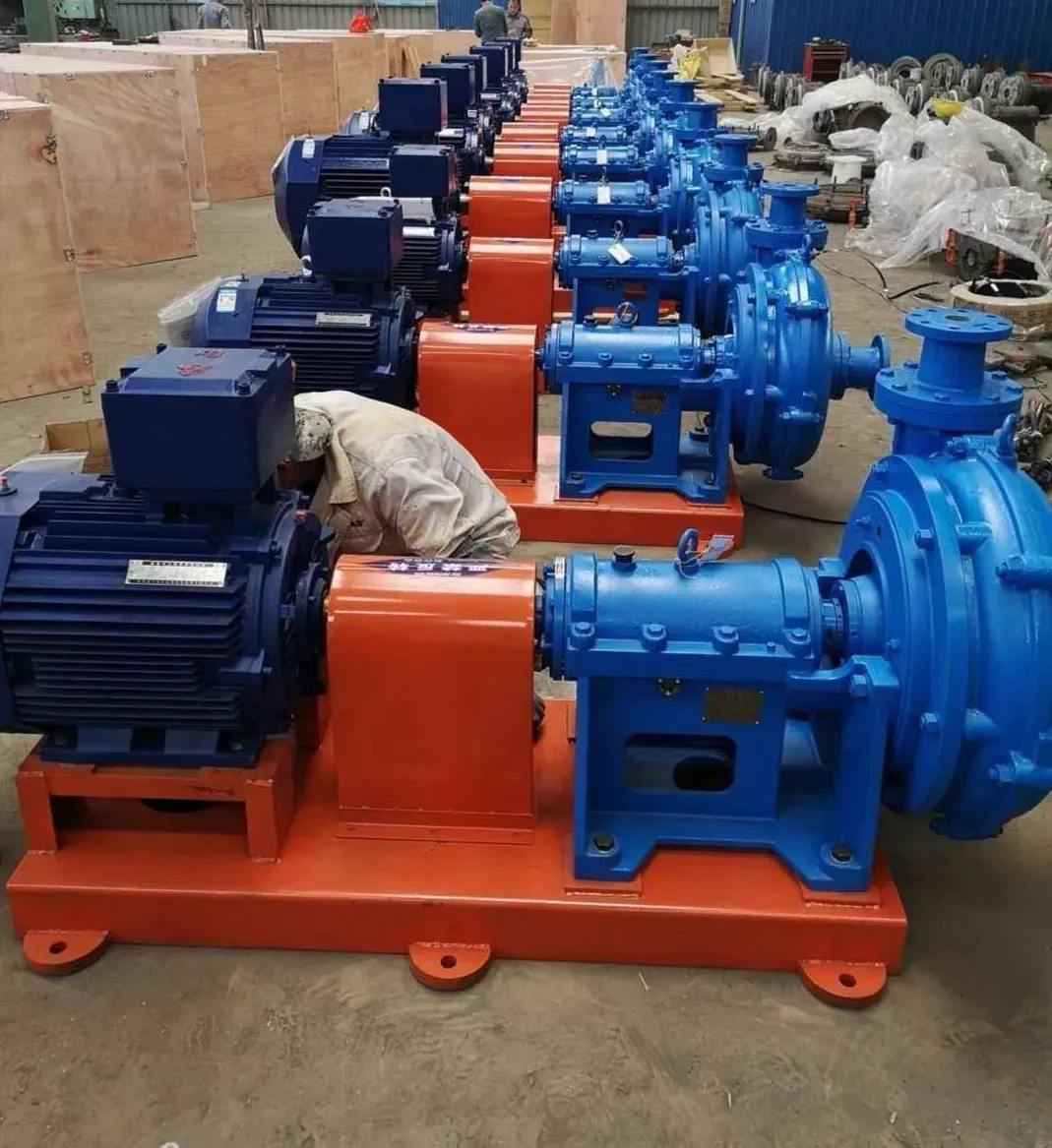
Gravel slurry pumps are heavy-duty centrifugal pumps specifically engineered for the continuous pumping of highly abrasive and erosive slurries containing gravel, sand, rock, and other solid materials. Positioned within the mineral processing, dredging, wastewater treatment, and construction industries, these pumps represent a critical component in material transport systems. Unlike standard centrifugal pumps, gravel slurry pumps feature robust construction, wear-resistant materials, and specialized hydraulic designs to withstand the demanding conditions inherent in handling solid-laden fluids. Core performance characteristics center around flow rate (typically measured in gallons per minute or cubic meters per hour), head (pressure generated, measured in feet or meters), solids handling capability (maximum particle size and concentration by weight), and overall operational efficiency, directly impacting process throughput and maintenance costs. A primary industry pain point is balancing pump longevity with operational efficiency, as highly wear-resistant materials often come at a higher initial cost. Furthermore, optimizing impeller design and internal clearances to minimize wear while maximizing flow rate remains a significant engineering challenge.
Material Science & Manufacturing
The construction of gravel slurry pumps relies heavily on materials capable of resisting abrasion, erosion, and corrosion. Common materials include high-chrome cast iron (typically containing 15-30% chromium), which provides exceptional hardness and wear resistance for components directly exposed to the slurry, such as impellers, volute casings, and liners. Alternatively, specialized alloys incorporating nickel-hard iron or tungsten carbide are employed for exceptionally abrasive applications. Pump casings are often manufactured using sand casting or investment casting techniques to achieve the required complex geometries and internal profiles. Impellers are commonly produced using centrifugal casting, ensuring a dense and homogeneous structure to withstand high stresses. Liners, critical for protecting the pump casing, are frequently rubber-lined using natural or synthetic rubber compounds, providing a cushioning effect and reducing the impact of solid particles. Manufacturing parameter control is paramount. In casting, precise control of alloy composition, pouring temperature, and cooling rates is crucial to avoid defects such as porosity or cracking. Welding processes, used for joining various pump components, must adhere to stringent quality control standards (AWS D1.1) to ensure structural integrity. The hardness of the chrome iron is typically controlled within 57-62 HRC. Rubber lining thickness and adhesion strength are vital, inspected via non-destructive testing methods. Chemical compatibility between the pump materials and the transported slurry must be rigorously assessed to prevent corrosion or degradation.
Performance & Engineering
Gravel slurry pump performance is fundamentally governed by principles of fluid mechanics and solids transport. The pump's hydraulic power is determined by the flow rate and head, and is directly related to the impeller’s diameter, rotational speed, and blade geometry. Force analysis reveals that impeller blades experience significant impact forces from solid particles, leading to erosive wear. Therefore, impeller design prioritizes robustness and shock resistance. The pump’s Net Positive Suction Head Required (NPSHr) is critical, representing the minimum pressure required at the pump inlet to prevent cavitation. Cavitation, the formation and collapse of vapor bubbles, severely degrades pump performance and can cause significant damage. Environmental resistance is a key consideration, particularly in outdoor applications. Pump casings must be designed to withstand extreme temperatures, humidity, and potential exposure to corrosive substances. Compliance requirements vary by region but often include adherence to hydraulic machinery directives (e.g., European Machinery Directive 2006/42/EC) and safety standards (e.g., ISO 13709 for slurry pumps). Proper pump alignment is also vital; misalignment introduces vibrations that accelerate wear and reduce bearing life. The selection of appropriate sealing mechanisms (e.g., mechanical seals, packing glands) is critical for preventing leakage and ensuring reliable operation, particularly when handling hazardous or environmentally sensitive slurries.
Technical Specifications
| Pump Size (Inlet/Outlet, inches) | Maximum Flow Rate (GPM) | Maximum Head (ft) | Maximum Solids Handling (inches) |
|---|---|---|---|
| 4x3 | 300 | 100 | 2 |
| 6x4 | 600 | 150 | 3 |
| 8x6 | 1000 | 200 | 4 |
| 10x8 | 1500 | 250 | 5 |
| 12x10 | 2000 | 300 | 6 |
| 14x12 | 2500 | 350 | 8 |
Failure Mode & Maintenance
Gravel slurry pumps are susceptible to several failure modes. Erosive wear, primarily affecting impellers and liners, is the most common. This occurs due to the constant impact of solid particles. Fatigue cracking can develop in pump casings and impellers due to cyclical stress from slurry flow and pressure fluctuations. Corrosion, particularly in acidic or alkaline slurries, can degrade pump materials over time. Mechanical seal failures, resulting in leakage, are frequently caused by abrasive particles damaging the seal faces or improper installation. Bearing failures can occur due to inadequate lubrication, misalignment, or excessive loads. To mitigate these failures, a robust preventative maintenance program is essential. Regular inspection of impellers, liners, and casings for wear is critical. Lubrication schedules must be strictly adhered to, utilizing appropriate greases or oils. Pump alignment should be checked periodically and corrected if necessary. Mechanical seals should be replaced proactively based on operating hours or observed performance degradation. A thorough failure analysis (utilizing methods like metallography and fracture analysis) should be conducted whenever a significant failure occurs to identify the root cause and prevent recurrence. Monitoring slurry composition and adjusting pump operating parameters (e.g., flow rate, speed) can also extend pump life. Implementation of a condition monitoring system (vibration analysis, temperature monitoring) allows for early detection of potential issues.
Industry FAQ
Q: What is the impact of slurry solids concentration on pump performance and lifespan?
A: Increasing slurry solids concentration generally reduces pump efficiency and accelerates wear. Higher concentrations lead to increased friction losses, reduced flow rate, and more frequent impact events on pump components. However, pumps are designed for specific solids concentration ranges. Operating outside of these ranges significantly shortens lifespan. Proper sizing and selection based on anticipated solids concentration are crucial.
Q: How does impeller material selection affect pump resistance to abrasion?
A: Impeller material directly dictates abrasion resistance. High-chrome cast iron is a cost-effective solution for moderate abrasion. For highly abrasive slurries, more expensive materials like tungsten carbide or ceramic composites offer superior wear resistance but come at a higher initial cost. The selection should balance performance needs and budgetary constraints.
Q: What are the common causes of cavitation in gravel slurry pumps, and how can they be prevented?
A: Cavitation occurs when the absolute pressure at the pump inlet falls below the vapor pressure of the liquid, forming vapor bubbles that collapse violently. Common causes include insufficient NPSHa (Net Positive Suction Head Available), high suction lift, and partially blocked suction lines. Prevention involves ensuring adequate NPSHa, minimizing suction lift, maintaining clean suction lines, and selecting a pump with a lower NPSHr.
Q: What are the key considerations when selecting a mechanical seal for a gravel slurry pump?
A: Mechanical seal selection must account for slurry abrasiveness, pressure, temperature, and chemical compatibility. Rotating seals with hardened faces (silicon carbide, tungsten carbide) are generally preferred for abrasive applications. Double mechanical seals with a barrier fluid are often used to provide additional protection and prevent slurry ingress. Proper installation and lubrication are also critical.
Q: What preventative maintenance practices are most effective in extending the lifespan of a gravel slurry pump?
A: Regular inspection of wear components (impeller, liners, casing), proper lubrication, pump alignment checks, and vibration analysis are the most effective preventative maintenance practices. Monitoring slurry composition and adjusting pump operating parameters accordingly can also significantly extend lifespan. Proactive seal replacement before failure is recommended.
Conclusion
Gravel slurry pumps are critical components in numerous industrial applications requiring the handling of abrasive slurries. Their performance and longevity are deeply intertwined with material science, hydraulic design, and diligent maintenance practices. Selecting the appropriate pump size, materials, and operating parameters based on the specific slurry characteristics is paramount.
Continued advancements in materials technology, such as the development of new wear-resistant alloys and ceramic composites, are driving improvements in pump lifespan and efficiency. Furthermore, the integration of advanced monitoring systems and predictive maintenance techniques is enabling proactive identification of potential failures and optimized maintenance schedules, minimizing downtime and reducing overall lifecycle costs.
-
basement bathroom sewage pump Material Science Manufacturing
News2026-05-21
-
wastewater treatment plant pumps Material Science Manufacturing
News2026-05-21
-
waste water pump for basement Material Science Manufacturing
News2026-05-21
-
sump pump sewage Performance Analysis
News2026-05-21
-
sump pump for sewage Material Science and Manufacturing
News2026-05-21
-
sump pump for septic systems Material Science Manufacturing
News2026-05-20
-
sump pump and ejector pump Material Science Manufacturing
News2026-05-20
-
sewage treatment plant pumps Performance Analysis
News2026-05-20
-
sewage tank pump Material Science and Manufacturing
News2026-05-20
-
sewage pump for septic tank Performance Analysis
News2026-05-20
-
Sewage Pump and Tank Performance Analysis
News2026-05-19
-
Sewage Ejector Pump Replacement Performance Analysis
News2026-05-19
-
sewage ejector pump for basement bathroom Material Science Manufacturing
News2026-05-19
-
sewage ejection pump Material Science and Manufacturing
News2026-05-19
-
in line sewage pump Performance Analysis
News2026-05-19




