English
- Afrikaans
- Albanian
- Amharic
- Arabic
- Armenian
- Azerbaijani
- Basque
- Belarusian
- Bengali
- Bosnian
- Bulgarian
- Catalan
- Cebuano
- Corsican
- Croatian
- Czech
- Danish
- Dutch
- English
- Esperanto
- Estonian
- Finnish
- French
- Frisian
- Galician
- Georgian
- German
- Greek
- Gujarati
- Haitian Creole
- hausa
- hawaiian
- Hebrew
- Hindi
- Miao
- Hungarian
- Icelandic
- igbo
- Indonesian
- irish
- Italian
- Japanese
- Javanese
- Kannada
- kazakh
- Khmer
- Rwandese
- Korean
- Kurdish
- Kyrgyz
- Lao
- Latin
- Latvian
- Lithuanian
- Luxembourgish
- Macedonian
- Malgashi
- Malay
- Malayalam
- Maltese
- Maori
- Marathi
- Mongolian
- Myanmar
- Nepali
- Norwegian
- Norwegian
- Occitan
- Pashto
- Persian
- Polish
- Portuguese
- Punjabi
- Romanian
- Russian
- Samoan
- Scottish Gaelic
- Serbian
- Sesotho
- Shona
- Sindhi
- Sinhala
- Slovak
- Slovenian
- Somali
- Spanish
- Sundanese
- Swahili
- Swedish
- Tagalog
- Tajik
- Tamil
- Tatar
- Telugu
- Thai
- Turkish
- Turkmen
- Ukrainian
- Urdu
- Uighur
- Uzbek
- Vietnamese
- Welsh
- Bantu
- Yiddish
- Yoruba
- Zulu

Telephone: +86 13120555503
Email: frank@cypump.com


Apr . 01, 2024 17:55 Back to list
goulds slurry pump Performance Analysis and Manufacturing Specifications
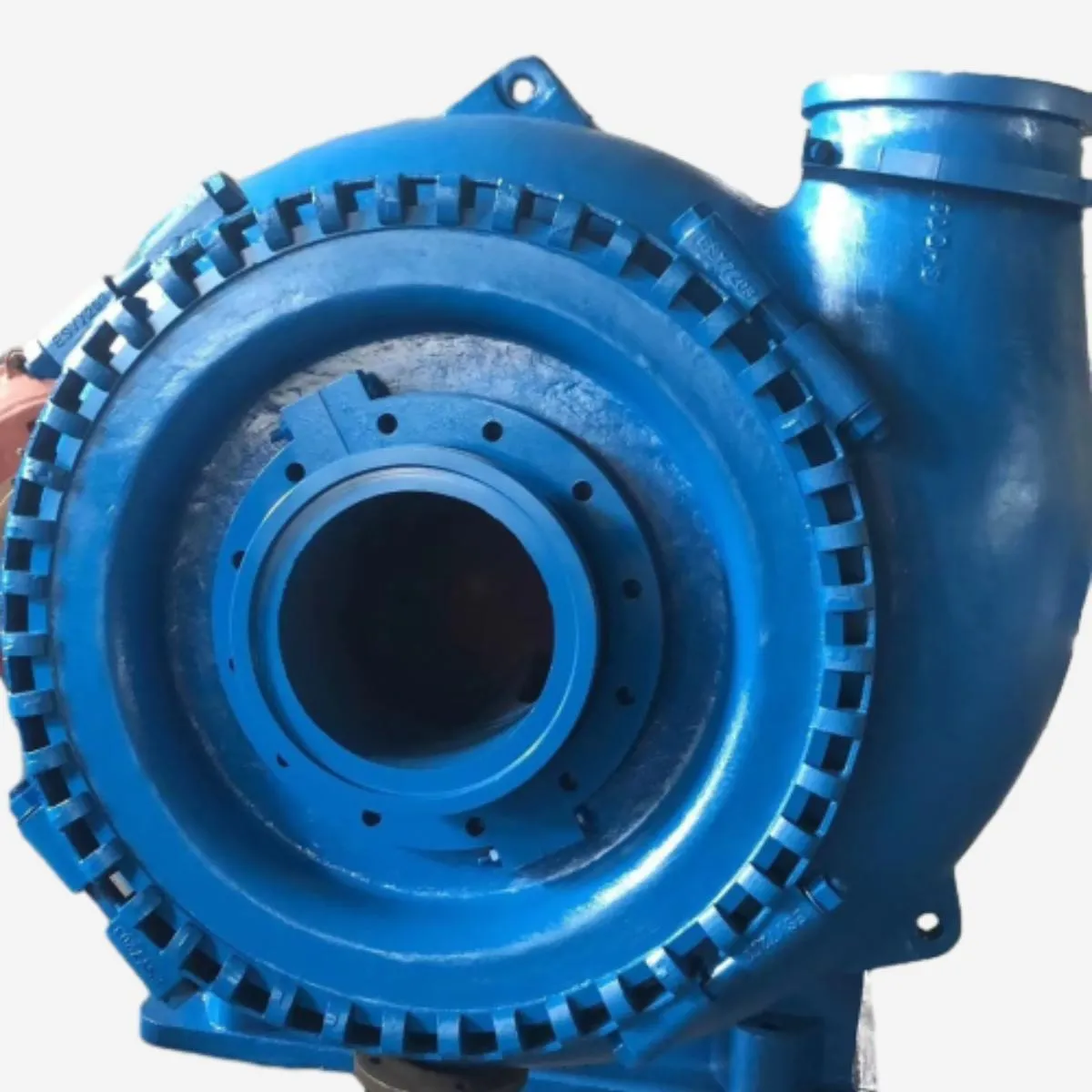
Goulds Slurry Pump Performance Analysis and Manufacturing Specifications
The Goulds slurry pump is a specialized heavy-duty centrifugal pumping system engineered specifically for the transport of abrasive solids suspended in liquid carriers. Positioned as a critical asset in the mineral processing, chemical production, and wastewater treatment industry chains, these pumps are designed to mitigate the extreme erosive wear associated with high-density slurries. Unlike standard centrifugal pumps, the technical architecture of a Goulds slurry pump focuses on managing the trade-off between hydraulic efficiency and component longevity. By utilizing specialized metallurgy and precision-engineered clearances, these systems ensure the continuous movement of particulate matter—ranging from fine tailings to coarse ore—while maintaining structural integrity under high-pressure, high-velocity conditions. The core performance of these pumps is defined by their ability to maintain a constant flow rate despite the non-Newtonian fluid characteristics often found in industrial slurries, ensuring that the critical velocity is maintained to prevent solids from settling within the pump casing.
Material Science & Manufacturing
The manufacturing of Goulds slurry pumps is centered on the application of advanced material science to combat abrasive wear and chemical corrosion. The primary challenge in slurry handling is the "impingement" effect, where solid particles strike the internal surfaces of the pump. To address this, the pump internals are typically cast from high-chrome white irons (such as ASTM A532) or specialized elastomers. High-chrome alloys provide a hard martensitic matrix with primary carbides that resist the scouring action of hard minerals, while natural rubber or polyurethane liners are utilized for softer, finer slurries where resilience is more critical than hardness.
The production process involves rigorous precision casting and CNC machining to ensure tight tolerances between the impeller and the wear plate. A critical manufacturing parameter is the "clearance control"; if the gap is too wide, recirculation occurs, leading to accelerated wear; if too narrow, the risk of clogging increases. The impeller design employs a semi-open or closed geometry depending on the particle size, with flow passages optimized via Computational Fluid Dynamics (CFD) to reduce turbulence. Furthermore, the shaft assembly undergoes induction hardening and precision grinding to ensure that the bearing housings and seals are perfectly concentric, reducing vibration-induced fatigue. The integration of heavy-duty casings, often reinforced with ribs, allows the pump to withstand the high radial loads generated by the asymmetric flow of dense slurries.

Performance & Engineering
From an engineering perspective, the performance of a Goulds slurry pump is governed by the interaction between the slurry's rheology and the pump's hydraulic design. A primary engineering focus is the "Critical Carrying Velocity," the minimum velocity required to keep solids in suspension. If the pump operates below this threshold, sedimentation occurs, leading to blockages and catastrophic mechanical failure. Engineering calculations must account for the slurry density (specific gravity), which significantly increases the brake horsepower (BHP) required compared to pumping clear water. This necessitates the use of oversized motors and reinforced couplings to handle the increased torque loads.
Environmental resistance is achieved through the implementation of advanced sealing technologies. Given that slurry is inherently destructive to mechanical seals, these pumps often employ expeller seals or gland packing with external flush systems to prevent abrasive particles from entering the seal chamber. The force analysis of the impeller reveals that high-density slurries create significant radial thrust; therefore, the bearing systems are engineered with high-capacity spherical roller bearings to accommodate slight shaft deflections without premature failure. Compliance with hydraulic standards ensures that the Net Positive Suction Head Required (NPSHr) is minimized to prevent cavitation, which, in slurry applications, can lead to "cavitation-erosion," a synergistic failure where vapor bubbles collapse and strip away the protective material layers of the impeller.
Technical Specifications
| Performance Parameter | High-Chrome Alloy Spec | Natural Rubber Spec | Stainless Steel Spec | Operating Limit |
|---|---|---|---|---|
| Hardness (Rockwell C) | 60 - 65 HRC | 60 - 70 Shore A | 20 - 30 HRC | Variable by Material |
| Max Particle Size (mm) | Up to 12mm | Up to 6mm | Up to 3mm | Application Dependent |
| Max Slurry Density (sg) | 1.6 - 1.8 | 1.2 - 1.5 | 1.1 - 1.4 | Up to 2.0 sg |
| Operating Temp Range | -20°C to 150°C | -10°C to 70°C | -40°C to 200°C | Material Constrained |
| Wear Rate (mm/1000h) | Low (Abrasive) | Ultra-Low (Fine) | Medium (Corrosive) | Based on Feedstock |
| Efficiency (%) | 72% - 85% | 68% - 80% | 75% - 88% | Hydraulic Curve Dependent |
Failure Mode & Maintenance
The failure modes of Goulds slurry pumps are primarily driven by the aggressive nature of the transported medium. The most prevalent failure is "Abrasive Erosion," characterized by the gradual thinning of the impeller vanes and the volute liner. This leads to a loss of hydraulic efficiency and an increase in NPSHr. Another critical failure mode is "Cavitation-Induced Pitting," where low-pressure zones cause vapor bubbles to implode, creating microscopic craters that accelerate erosive wear. In chemically aggressive slurries, "Corrosion-Erosion Synergy" occurs, where the chemical layer is stripped away by particles, exposing fresh metal to further corrosion, leading to rapid wall thinning.
Maintenance protocols must transition from reactive to predictive strategies. Professional maintenance begins with the monitoring of vibration signatures to detect bearing wear or impeller imbalance. A critical maintenance task is the periodic adjustment of the impeller clearance; as the wear plate thins, the impeller must be moved forward to maintain the tight seal required for efficiency. Maintenance personnel should perform "Ultrasonic Thickness Testing" on the volute casing to determine the remaining life of the liners. For seal maintenance, the flush water pressure must be monitored daily to ensure a positive pressure barrier exists, preventing the ingress of slurry into the bearing housing. When replacing components, it is imperative to verify that the new impeller is dynamically balanced to prevent shaft fatigue cracking.
Industry FAQ
Q: How do we determine whether to choose high-chrome alloy or rubber lining for a specific slurry application?
A: The selection is based on particle size and hardness. High-chrome alloys are required for coarse, hard particles (e.g., mineral ores) that would cut through rubber. Rubber linings are superior for fine, sandy particles that "bounce" off the resilient surface, providing significantly longer wear life in low-temperature, low-particle-size environments.
Q: What is the impact of slurry viscosity on the pump's power requirements?
A: Increased viscosity increases the internal friction losses within the pump and the piping. This results in a higher BHP requirement and a reduction in the total dynamic head (TDH). We recommend utilizing a viscosity correction factor based on the Modified Hydraulic Institute standards to size the motor correctly.
Q: Why is the pump experiencing premature seal failure despite following the manual?
A: This is often caused by "slurry seepage" due to inadequate flush water pressure or the use of incorrect seal face materials. Ensure the flush water pressure is at least 10-15 psi higher than the pump's internal stuffing box pressure to maintain a hydraulic barrier.
Q: How does the "Critical Carrying Velocity" affect the operational speed of the pump?
A: If the pump speed is too low, the fluid velocity drops below the critical threshold, causing solids to settle in the discharge piping. This creates blockages and increases the load on the motor. We use a VFD to optimize speed, but we set a "minimum frequency" limit to ensure solids remain suspended.
Q: Can a Goulds slurry pump handle air entrainment in the feed?
A: High levels of air entrainment can lead to "air binding" or severe cavitation. While these pumps are robust, excessive air reduces the effective density and can cause the pump to lose prime. We recommend installing a vortex breaker in the suction tank to minimize air intake.
Conclusion
The Goulds slurry pump represents a sophisticated integration of metallurgical resilience and hydraulic engineering, designed to solve the fundamental industrial problem of transporting abrasive solids. Its efficacy is not merely a result of its build quality, but the precise alignment of material selection—balancing hardness and elasticity—with the specific rheological properties of the medium. By maintaining strict control over impeller clearances and utilizing high-chrome alloys, these pumps achieve a sustainable operational lifespan in the most hostile environments.
Looking forward, the optimization of slurry pumping will rely heavily on the integration of real-time wear monitoring and AI-driven predictive maintenance. For engineers and procurement managers, the key to maximizing ROI lies in moving beyond initial purchase costs and focusing on the Total Cost of Ownership (TCO), specifically by optimizing the balance between energy consumption and component replacement intervals. Ensuring compliance with international standards remains the baseline for safety and operational reliability.
-
Comprehensive Guide to Waterproof ORings for Optimal Sealing Solutions
News2026-06-09
-
Septic Pump System Performance Analysis
News2026-06-08
-
pump for septic Material Science
News2026-06-08
-
basement sewer pump Performance Analysis
News2026-06-08
-
submerged pump Performance Engineering
News2026-06-08
-
Septic System Pumps Performance Analysis
News2026-06-08
-
septic system pump Material Science and Manufacturing
News2026-06-07
-
pump for septic tank Material Science Manufacturing
News2026-06-07
-
submersible sewage pump Material Science
News2026-06-07
-
Sewage Ejector Material Science and Manufacturing
News2026-06-07
-
Ejection Pump Material Science
News2026-06-07
-
pump submersible Performance Analysis
News2026-06-06
-
ejector pumps Performance Engineering
News2026-06-06
-
basement ejector pump Material Science Manufacturing
News2026-06-06
-
Septic Tanks Pumping Performance Analysis
News2026-06-06




