English
- Afrikaans
- Albanian
- Amharic
- Arabic
- Armenian
- Azerbaijani
- Basque
- Belarusian
- Bengali
- Bosnian
- Bulgarian
- Catalan
- Cebuano
- Corsican
- Croatian
- Czech
- Danish
- Dutch
- English
- Esperanto
- Estonian
- Finnish
- French
- Frisian
- Galician
- Georgian
- German
- Greek
- Gujarati
- Haitian Creole
- hausa
- hawaiian
- Hebrew
- Hindi
- Miao
- Hungarian
- Icelandic
- igbo
- Indonesian
- irish
- Italian
- Japanese
- Javanese
- Kannada
- kazakh
- Khmer
- Rwandese
- Korean
- Kurdish
- Kyrgyz
- Lao
- Latin
- Latvian
- Lithuanian
- Luxembourgish
- Macedonian
- Malgashi
- Malay
- Malayalam
- Maltese
- Maori
- Marathi
- Mongolian
- Myanmar
- Nepali
- Norwegian
- Norwegian
- Occitan
- Pashto
- Persian
- Polish
- Portuguese
- Punjabi
- Romanian
- Russian
- Samoan
- Scottish Gaelic
- Serbian
- Sesotho
- Shona
- Sindhi
- Sinhala
- Slovak
- Slovenian
- Somali
- Spanish
- Sundanese
- Swahili
- Swedish
- Tagalog
- Tajik
- Tamil
- Tatar
- Telugu
- Thai
- Turkish
- Turkmen
- Ukrainian
- Urdu
- Uighur
- Uzbek
- Vietnamese
- Welsh
- Bantu
- Yiddish
- Yoruba
- Zulu

Telephone: +86 13120555503
Email: frank@cypump.com


Apr . 01, 2024 17:55 Back to list
good horizontal end suction chemical pump Performance Analysis
Introduction
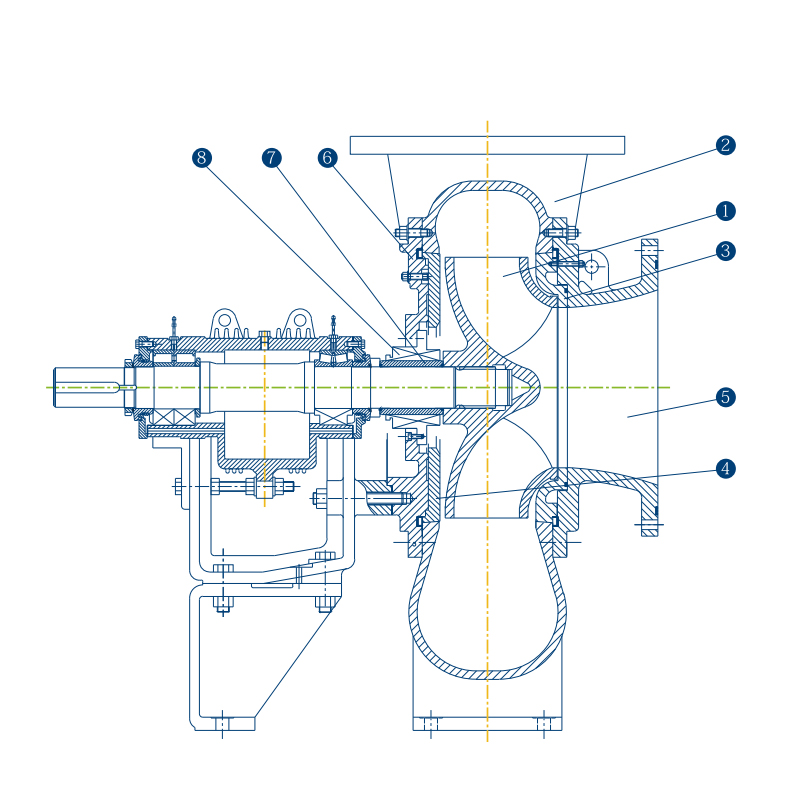
Horizontal end suction chemical pumps are centrifugal pumps specifically designed for the transfer of corrosive and hazardous chemicals. Positioned as a critical component within the larger chemical processing industry, they serve as the workhorse for fluid handling in various applications including chemical manufacturing, water treatment, pharmaceutical production, and petrochemical processing. Unlike standard centrifugal pumps, chemical pumps prioritize material compatibility and sealing integrity to prevent leakage and ensure long-term reliability in aggressive chemical environments. Core performance characteristics encompass flow rate (typically ranging from 20 GPM to 1500 GPM), head pressure (up to 400 ft), and the ability to handle a broad range of fluid viscosities and specific gravities. The selection of appropriate materials of construction and sealing mechanisms are paramount to maintaining process efficiency and safety.
Material Science & Manufacturing
The selection of materials is arguably the most critical aspect of chemical pump design. Pump components in direct contact with the fluid typically utilize materials exhibiting exceptional chemical resistance. Common materials include: 316 Stainless Steel (for moderate corrosion resistance, cost-effective), Alloy 20 (superior resistance to sulfuric acid and other aggressive chemicals), Hastelloy C-276 (exceptional resistance to a wide range of corrosive media, including chlorides), Polypropylene (PP) and Polyvinylidene Fluoride (PVDF) – thermoplastics offering excellent resistance to acids and bases, but with limitations in temperature and pressure. Pump housings are often constructed from cast iron (with epoxy or fluoropolymer coating), stainless steel, or engineered plastics. Manufacturing processes include: Casting (for housings and impellers), forging (for shafts and critical components), machining (for precise component fabrication), and welding (primarily for stainless steel or alloy components). Welding procedures require strict adherence to ASME Section IX standards to ensure weld integrity and prevent corrosion initiation at weld seams. Impeller design significantly impacts pump efficiency and hydraulic performance; radial flow impellers are common for higher head applications, while mixed flow impellers are suited for higher flow rates. Surface finish is also crucial; electropolishing stainless steel components reduces surface roughness, minimizing sites for corrosion initiation and improving cleanability.
Performance & Engineering
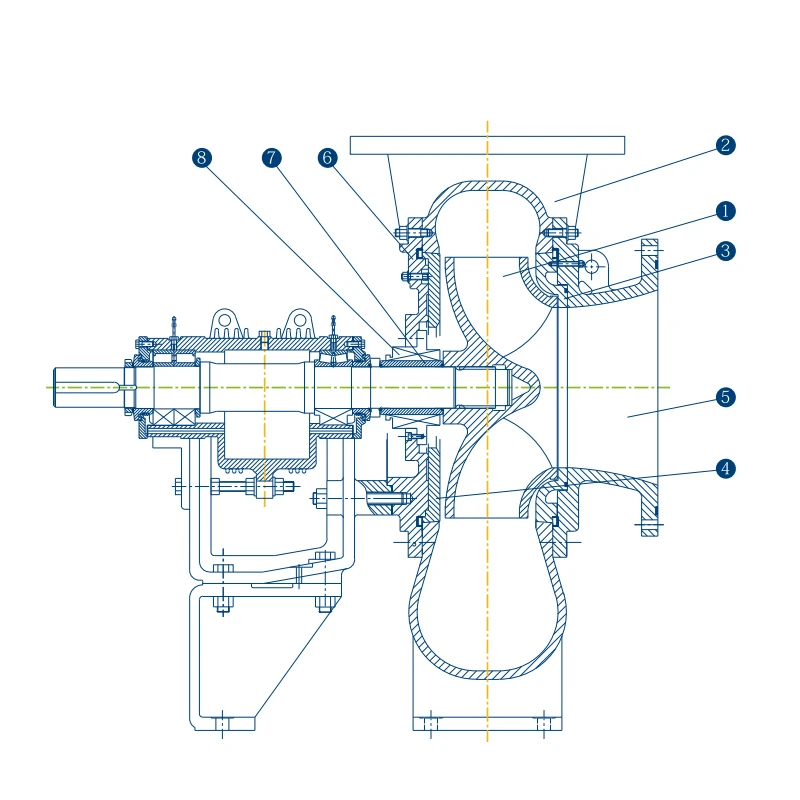
The performance of a horizontal end suction chemical pump is governed by fundamental hydraulic principles and engineering considerations. Pump affinity laws dictate the relationships between flow rate, head, and power consumption. Net Positive Suction Head Required (NPSHr) is a critical parameter; insufficient NPSH can lead to cavitation, damaging the impeller and reducing pump efficiency. Cavitation occurs when the absolute pressure at the pump suction drops below the vapor pressure of the liquid, forming vapor bubbles that collapse violently. Mechanical seals are essential for preventing leakage; single mechanical seals are suitable for less demanding applications, while double mechanical seals with barrier fluid are used for highly toxic or corrosive fluids. Seal face materials (e.g., silicon carbide, tungsten carbide) are selected based on the fluid's chemical compatibility and abrasive characteristics. Pump efficiency is affected by factors such as impeller design, internal clearances, and fluid viscosity. Force analysis considers radial and axial thrust loads acting on the impeller shaft. Axial thrust is often counteracted by balancing discs or opposed impellers. Environmental resistance necessitates consideration of temperature extremes, humidity, and potential exposure to UV radiation. Compliance requirements include adherence to API 610 (Centrifugal Pumps – Refinery Service), which specifies stringent design and testing standards for pumps used in hazardous environments.
Technical Specifications
| Parameter | Unit | Range (Typical) | Material Options |
|---|---|---|---|
| Flow Rate | GPM (US Gallons per Minute) | 20 – 1500 | Dependent on impeller size and speed |
| Head | ft (Feet) | 50 – 400 | Dependent on impeller design and speed |
| Temperature | °F (Fahrenheit) | -30 to 350 | Dependent on seal and material selection |
| Pressure | psi (Pounds per Square Inch) | Up to 200 | Dependent on casing material and design |
| Viscosity | cP (Centipoise) | 1 – 500 | May require specific impeller design |
| Specific Gravity | - | 0.5 – 2.0 | Affects pump power requirements |
Failure Mode & Maintenance
Common failure modes in horizontal end suction chemical pumps include: mechanical seal failure (caused by abrasion, corrosion, or incompatibility), impeller damage (due to cavitation, erosion, or foreign object damage), bearing failure (resulting from improper lubrication or overloading), casing corrosion (leading to leakage), and pump vibration (indicating misalignment or imbalance). Failure analysis often reveals root causes related to improper material selection, inadequate filtration, or insufficient maintenance. Preventive maintenance is crucial. This includes: regular seal inspections and replacement, bearing lubrication according to manufacturer’s recommendations, vibration monitoring, and visual inspections for corrosion or leakage. Flushing the pump with a compatible solvent before and after use can prevent buildup of corrosive residues. Impeller balancing is recommended after each repair. Non-destructive testing methods, such as ultrasonic thickness testing, can be used to assess casing wall thickness and detect corrosion. In the event of a mechanical seal failure, careful analysis of the seal faces can identify the cause (e.g., abrasion, chemical attack, or heat generation). Proper storage procedures are essential to prevent corrosion during periods of inactivity; pumps should be drained, flushed, and protected from moisture.
Industry FAQ
Q: What is the primary difference between a standard centrifugal pump and a chemical pump?
A: The key difference lies in materials of construction and sealing systems. Chemical pumps utilize materials resistant to corrosive chemicals, such as stainless steel alloys, Hastelloy, or engineered plastics, while standard centrifugal pumps typically employ cast iron or carbon steel. Chemical pumps also incorporate advanced sealing mechanisms, like double mechanical seals, to prevent leakage of hazardous fluids.
Q: How do I determine the appropriate material of construction for a chemical pump?
A: Material selection depends on the chemical composition of the fluid being pumped, its concentration, temperature, and pressure. Consult a chemical compatibility chart or work with a materials expert to identify materials that will withstand prolonged exposure without corrosion or degradation. Consider the potential for erosion if the fluid contains abrasive particles.
Q: What is NPSHr, and why is it important?
A: NPSHr (Net Positive Suction Head Required) is the minimum absolute pressure required at the pump suction to prevent cavitation. Insufficient NPSH can lead to impeller damage, reduced pump efficiency, and premature failure. It's crucial to ensure that the available NPSH (NPSHa) in the system is greater than the pump’s NPSHr.
Q: What maintenance is required for a double mechanical seal?
A: Double mechanical seals require periodic inspection of the barrier fluid system (if applicable) to ensure proper operation and prevent seal failure. Monitor barrier fluid pressure and consumption rates. Regularly check for leakage around the seal housing. Flush the barrier fluid system to remove any accumulated contaminants.
Q: How can I mitigate pump vibration?
A: Pump vibration can be caused by misalignment, imbalance, bearing wear, or cavitation. Regularly check pump alignment and tighten loose connections. Balance the impeller. Inspect bearings for wear and replace them as needed. Ensure adequate NPSH to prevent cavitation. Implement vibration monitoring to detect early signs of problems.
Conclusion
The selection and maintenance of horizontal end suction chemical pumps are critical for ensuring process reliability and safety in chemical handling applications. The emphasis on material compatibility, robust sealing solutions, and adherence to industry standards (API 610, for instance) are paramount. Understanding the fundamental principles of hydraulic performance, failure modes, and preventative maintenance procedures is essential for optimizing pump lifespan and minimizing downtime.
Future advancements in chemical pump technology will likely focus on enhanced material science (development of more corrosion-resistant alloys and polymers), improved sealing designs (magnetic drive pumps and advanced cartridge seals), and integration of smart sensors for real-time performance monitoring and predictive maintenance. Careful consideration of these factors will enable chemical processing facilities to improve efficiency, reduce operating costs, and maintain a safe working environment.
-
Precision at the Pump: How Better Machining Protects Flow and Uptime
News2026-11-20
-
Why Pump Reliability Begins Before the First Drop of Fluid
News2026-11-20
-
Beyond the Pump: Designing Safer Access Around Critical Water Infrastructure
News2026-11-20
-
Why Pumping Stations Depend on the Infrastructure Beneath the Pumps
News2026-11-20
-
Beyond the Pump Room: How Smarter Loading Protects Industrial Equipment
News2026-11-19
-
When Pumps Stop: Designing More Resilient Power for Critical Pumping Systems
News2026-11-19
-
The Hidden Role of Dust and Gas Monitoring in Reliable Pump Operations
News2026-11-19
-
The Hidden Role of Mineral Compounds in Extending Industrial Pump Lifespan
News2026-10-12
-
Why Pump System Reliability Depends on Precision Hose Assembly Methods
News2026-09-15
-
How Advanced Imaging Films Are Transforming Pump Component Quality Control
News2026-08-25
-
How Advanced Filtration Protects Pump Systems from Premature Wear and Costly Downtime
News2026-08-25
-
How Steel Material Selection Drives Pump Reliability in Heavy-Duty Systems
News2026-08-25
-
Ensuring Pump System Efficiency: The Role of High-Quality Pipe Fittings and Tubing
News2026-08-24
-
Optimizing Fluid Dynamics and Material Consistency in Industrial Processing
News2026-08-18
-
Innovations and Challenges in Hydraulic Systems for Heavy Machinery
News2026-08-13




