English
- Afrikaans
- Albanian
- Amharic
- Arabic
- Armenian
- Azerbaijani
- Basque
- Belarusian
- Bengali
- Bosnian
- Bulgarian
- Catalan
- Cebuano
- Corsican
- Croatian
- Czech
- Danish
- Dutch
- English
- Esperanto
- Estonian
- Finnish
- French
- Frisian
- Galician
- Georgian
- German
- Greek
- Gujarati
- Haitian Creole
- hausa
- hawaiian
- Hebrew
- Hindi
- Miao
- Hungarian
- Icelandic
- igbo
- Indonesian
- irish
- Italian
- Japanese
- Javanese
- Kannada
- kazakh
- Khmer
- Rwandese
- Korean
- Kurdish
- Kyrgyz
- Lao
- Latin
- Latvian
- Lithuanian
- Luxembourgish
- Macedonian
- Malgashi
- Malay
- Malayalam
- Maltese
- Maori
- Marathi
- Mongolian
- Myanmar
- Nepali
- Norwegian
- Norwegian
- Occitan
- Pashto
- Persian
- Polish
- Portuguese
- Punjabi
- Romanian
- Russian
- Samoan
- Scottish Gaelic
- Serbian
- Sesotho
- Shona
- Sindhi
- Sinhala
- Slovak
- Slovenian
- Somali
- Spanish
- Sundanese
- Swahili
- Swedish
- Tagalog
- Tajik
- Tamil
- Tatar
- Telugu
- Thai
- Turkish
- Turkmen
- Ukrainian
- Urdu
- Uighur
- Uzbek
- Vietnamese
- Welsh
- Bantu
- Yiddish
- Yoruba
- Zulu

Telephone: +86 13120555503
Email: frank@cypump.com


Apr . 01, 2024 17:55 Back to list
fs19 slurry pump Technical Performance Analysis
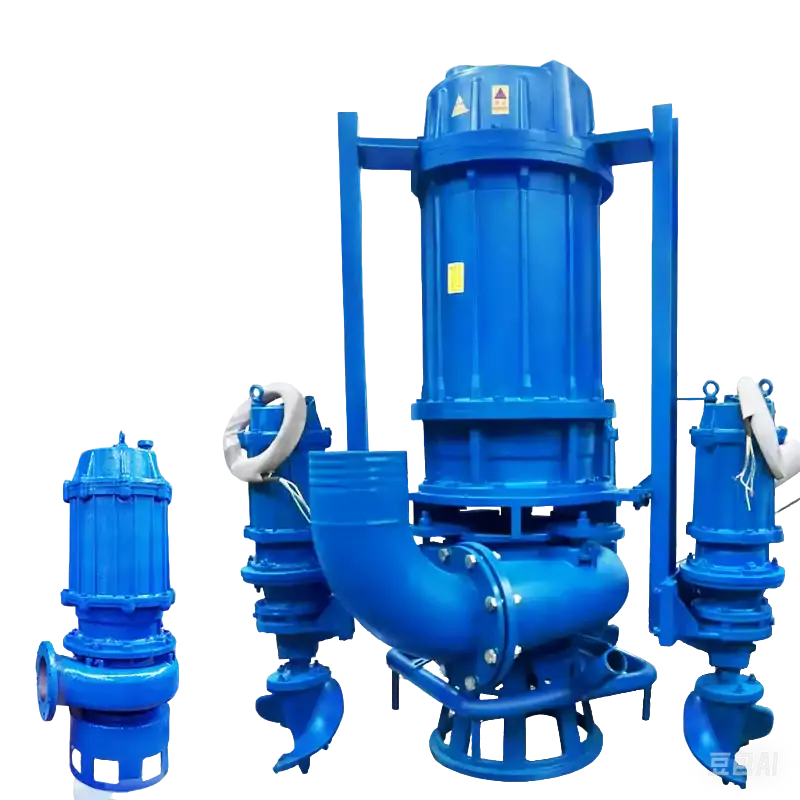
FS19 Slurry Pump Technical Performance Analysis
The FS19 slurry pump is a heavy-duty centrifugal pump specifically engineered for the transport of high-density abrasive slurries, tailings, and mineral concentrates. Positioned as a critical asset in the mid-stream processing phase of mining and chemical industrial chains, the FS19 is designed to manage fluids with high solid-to-liquid ratios while maintaining hydraulic efficiency. Its technical architecture focuses on overcoming the primary challenges of slurry transport: extreme erosive wear, cavitation under high-viscosity conditions, and the mechanical stress induced by non-homogeneous particle distribution. By integrating advanced metallurgical compositions with optimized impeller geometry, the FS19 ensures a stable flow rate and high head pressure, minimizing downtime in continuous operation environments such as gold, copper, and iron ore processing plants.
Material Science & Manufacturing
The operational longevity of the FS19 slurry pump is fundamentally dependent on its material science, specifically the management of abrasive wear and corrosive degradation. The wetted components, including the impeller and volute liner, are typically cast from high-chromium white cast iron (ASTM A532), which provides a hardness typically ranging from 60 to 65 HRC. This metallurgical structure consists of a tempered martensitic matrix embedded with primary M7C3 carbides, which act as the first line of defense against micro-cutting and plastic deformation caused by high-velocity slurry particles.
The manufacturing process employs precision investment casting followed by a rigorous heat treatment cycle to eliminate internal stresses and ensure uniform carbide distribution. For applications involving highly acidic or alkaline slurries, the FS19 can be configured with natural rubber liners (NBR or Neoprene) that offer superior resilience against fine-particle abrasion through elastic deformation. The pump shaft is forged from high-strength alloy steel (such as 42CrMo), subjected to induction hardening to prevent shaft deflection and fatigue failure at the bearing seats. Key parameter control during assembly includes the precise setting of the impeller clearance and the alignment of the mechanical seal or gland packing, ensuring that the leakage rate is minimized while maintaining optimal lubrication of the sealing interfaces.
Performance & Engineering
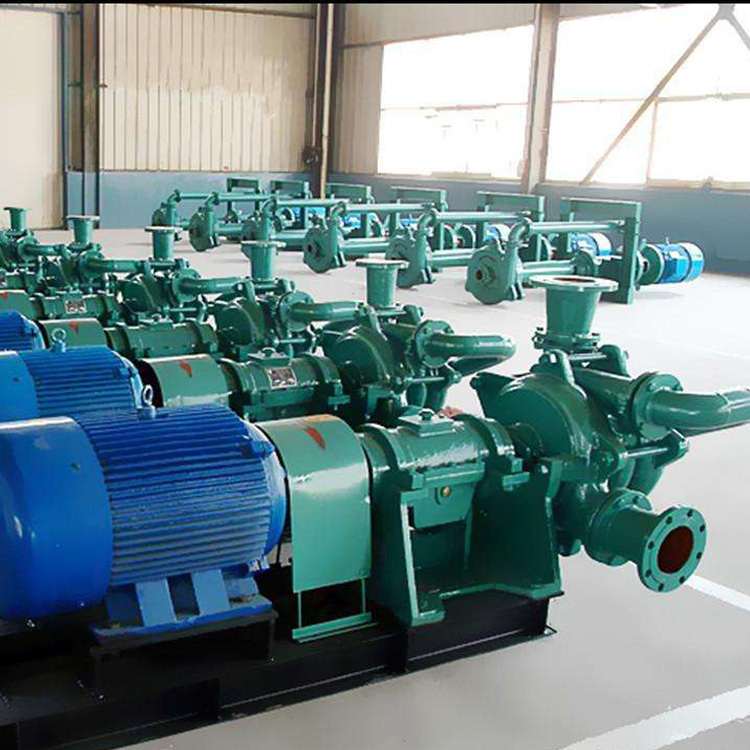
From an engineering perspective, the FS19 slurry pump operates on the principle of centrifugal force, where the kinetic energy imparted by the impeller is converted into pressure energy. A core engineering challenge is the management of the "critical solids concentration." As the percentage of solids increases, the apparent viscosity of the slurry rises exponentially, leading to increased friction losses and a potential drop in the Net Positive Suction Head available (NPSHa). To counteract this, the FS19 utilizes a wide-passage impeller design that reduces the probability of clogging and lowers the internal velocity, thereby reducing the rate of abrasive wear (which is typically proportional to the cube of the velocity).
Force analysis reveals that the pump must withstand significant radial thrust, especially when operating away from the Best Efficiency Point (BEP). This is managed through a heavy-duty bearing housing and a reinforced frame that distributes the load evenly across the spherical roller bearings. Environmental resistance is achieved through the application of industrial-grade epoxy coatings on non-wetted surfaces to prevent atmospheric corrosion in humid mine environments. Compliance with international hydraulic standards ensures that the pump maintains a stable efficiency curve even as the impeller diameter is reduced during the wear-down process, allowing the pump to remain operational for longer intervals between complete overhauls.
Technical Specifications
| Parameter Dimension | Standard Configuration | High-Wear Option | Chemical Resistance Option | Tolerance Range |
|---|---|---|---|---|
| Liner Material | High-Chrome Alloy (27% Cr) | High-Chrome Alloy (28% Cr) | Natural Rubber / CD4MCu | ±0.5% Composition |
| Max Flow Rate (m³/h) | 450 - 600 | 400 - 550 | 300 - 500 | ±5% Deviation |
| Max Discharge Head (m) | 35 - 50 | 30 - 45 | 25 - 40 | ±2% Variance |
| Impeller Hardness (HRC) | 60 - 62 | 64 - 66 | N/A (Elastomeric) | ±2 HRC |
| Max Particle Size (mm) | 12 - 20 | 15 - 25 | 8 - 15 | ±1 mm |
| Bearing Type | Spherical Roller | Heavy-Duty Roller | Sealed Precision | ISO Grade 0 |
Failure Mode & Maintenance
The primary failure mode for the FS19 slurry pump is abrasive wear, which manifests as the thinning of the volute liner and the erosion of the impeller vanes. When the impeller diameter decreases due to wear, the pump experiences a shift in its performance curve, resulting in decreased head and flow. Another critical failure mode is cavitation, typically occurring at the impeller eye due to insufficient suction pressure or excessive slurry viscosity. This leads to the formation of vapor bubbles that implode with extreme force, causing pitting and fatigue cracking on the metal surface.
Secondary failures include seal degradation and shaft fatigue. The ingress of slurry particles into the gland packing or mechanical seal can cause rapid scoring of the shaft sleeve, leading to leakage and potential bearing contamination. Maintenance protocols must include regular vibration analysis to detect misalignment or bearing wear. To mitigate these failures, a preventive maintenance schedule is recommended: monthly inspections of the liner thickness using ultrasonic testing, quarterly lubrication of the bearing housing with high-viscosity industrial grease, and semi-annual verification of the impeller clearance. For severe wear cases, the "sacrificial liner" strategy is employed, where replaceable liners are installed to protect the pump casing from direct contact with the slurry.
Industry FAQ
Q: How does the FS19 handle a sudden increase in slurry density without overloading the motor?
A: The FS19 is designed with a conservative power curve. When slurry density increases, the torque requirement rises. To prevent motor overload, we recommend integrating a Variable Frequency Drive (VFD) that monitors current draw and automatically adjusts the RPM to maintain a constant torque limit while optimizing the flow rate.
Q: What is the recommended method for detecting the end-of-life for the internal liners?
A: We utilize a combination of performance monitoring and physical measurement. A drop in discharge pressure of more than 10% at a constant RPM usually indicates significant liner wear. Additionally, ultrasonic thickness gauging should be performed at designated wear-points on the volute every 30 days.
Q: Can the FS19 operate in a dry-run condition during emergency shutdowns?
A: No, dry running is strictly prohibited. The slurry acts as a cooling agent for the internal components and provides lubrication for the seal interfaces. Dry running will lead to rapid heat buildup, resulting in the deformation of the mechanical seal and potential seizure of the impeller.
Q: Which material is better for the FS19 impeller: high-chrome alloy or natural rubber?
A: This depends on the particle size and angularity. High-chrome alloys are superior for large, sharp, and hard particles (high impact), whereas natural rubber is more effective for fine-particle abrasion where the material can absorb the energy of the impact through deformation.
Q: How do we address excessive vibration during the initial commissioning of the FS19?
A: Excessive vibration usually stems from shaft misalignment or improper anchoring. First, verify the laser alignment between the motor and pump shafts. Second, ensure that the baseplate is fully grouted and the anchor bolts are torqued to the specified engineering tension to eliminate resonance.
Conclusion
The FS19 slurry pump represents a sophisticated integration of metallurgical precision and hydraulic engineering, specifically optimized for the most demanding abrasive environments. By balancing the hardness of high-chromium alloys with the structural integrity of forged steel shafts, the pump minimizes the total cost of ownership through extended mean time between failures (MTBF) and stabilized throughput efficiency. The critical success factor in its operation lies in the alignment of material selection with the specific abrasive characteristics of the transported medium.
Looking forward, the optimization of slurry transport will likely move toward intelligent monitoring, incorporating real-time wear sensors and AI-driven predictive maintenance. For operators, the priority remains the strict adherence to NPSH requirements and the systematic replacement of wear components. Implementing these technical rigors ensures that the FS19 remains a reliable cornerstone of industrial mineral processing, maximizing operational uptime and process reliability.
-
Comprehensive Guide to Waterproof ORings for Optimal Sealing Solutions
News2026-06-09
-
Septic Pump System Performance Analysis
News2026-06-08
-
pump for septic Material Science
News2026-06-08
-
basement sewer pump Performance Analysis
News2026-06-08
-
submerged pump Performance Engineering
News2026-06-08
-
Septic System Pumps Performance Analysis
News2026-06-08
-
septic system pump Material Science and Manufacturing
News2026-06-07
-
pump for septic tank Material Science Manufacturing
News2026-06-07
-
submersible sewage pump Material Science
News2026-06-07
-
Sewage Ejector Material Science and Manufacturing
News2026-06-07
-
Ejection Pump Material Science
News2026-06-07
-
pump submersible Performance Analysis
News2026-06-06
-
ejector pumps Performance Engineering
News2026-06-06
-
basement ejector pump Material Science Manufacturing
News2026-06-06
-
Septic Tanks Pumping Performance Analysis
News2026-06-06




