English
- Afrikaans
- Albanian
- Amharic
- Arabic
- Armenian
- Azerbaijani
- Basque
- Belarusian
- Bengali
- Bosnian
- Bulgarian
- Catalan
- Cebuano
- Corsican
- Croatian
- Czech
- Danish
- Dutch
- English
- Esperanto
- Estonian
- Finnish
- French
- Frisian
- Galician
- Georgian
- German
- Greek
- Gujarati
- Haitian Creole
- hausa
- hawaiian
- Hebrew
- Hindi
- Miao
- Hungarian
- Icelandic
- igbo
- Indonesian
- irish
- Italian
- Japanese
- Javanese
- Kannada
- kazakh
- Khmer
- Rwandese
- Korean
- Kurdish
- Kyrgyz
- Lao
- Latin
- Latvian
- Lithuanian
- Luxembourgish
- Macedonian
- Malgashi
- Malay
- Malayalam
- Maltese
- Maori
- Marathi
- Mongolian
- Myanmar
- Nepali
- Norwegian
- Norwegian
- Occitan
- Pashto
- Persian
- Polish
- Portuguese
- Punjabi
- Romanian
- Russian
- Samoan
- Scottish Gaelic
- Serbian
- Sesotho
- Shona
- Sindhi
- Sinhala
- Slovak
- Slovenian
- Somali
- Spanish
- Sundanese
- Swahili
- Swedish
- Tagalog
- Tajik
- Tamil
- Tatar
- Telugu
- Thai
- Turkish
- Turkmen
- Ukrainian
- Urdu
- Uighur
- Uzbek
- Vietnamese
- Welsh
- Bantu
- Yiddish
- Yoruba
- Zulu

Telephone: +86 13120555503
Email: frank@cypump.com


Apr . 01, 2024 17:55 Back to list
electric slurry pump Manufacturing Specification and Performance Analysis
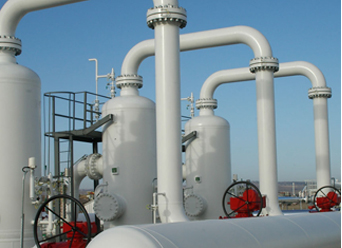
Electric Slurry Pump Manufacturing Specification and Performance Analysis
The electric slurry pump is a specialized heavy-duty centrifugal machine engineered to transport fluids containing high concentrations of suspended abrasive solids. Positioned as a critical asset in the mid-stream of mining, dredging, and chemical processing chains, these pumps bridge the gap between raw material extraction and primary processing. Unlike standard water pumps, the electric slurry pump must manage non-Newtonian fluid dynamics and extreme mechanical attrition. The core technical challenge lies in balancing the hydraulic efficiency required for high-volume throughput with the structural integrity needed to resist the erosive forces of particulates such as silica, alumina, and iron ore. Its performance is primarily defined by its ability to maintain a stable flow rate under varying slurry densities while minimizing the rate of wear on internal wetted components.
Material Science & Manufacturing
The longevity of an electric slurry pump is fundamentally determined by the metallurgical properties of its wear parts. The industry standard utilizes High-Chrome (Hi-Cr) alloys, typically consisting of 25% to 28% Chromium, which undergo a heat-treatment process to form hard M7C3 carbides embedded in a martensitic matrix. This microstructure provides the necessary hardness (typically 60-65 HRC) to resist abrasive wear. For applications involving highly corrosive acidic slurries, duplex stainless steels or natural rubber liners are employed; the latter leverages elastomer deformation to absorb the impact of larger particles, thereby preventing the brittle fracture seen in metallic liners.
Manufacturing involves high-precision investment casting for the impeller and volute to ensure hydraulic balance and reduce turbulence, which can lead to localized erosion. The impeller is often dynamically balanced to ISO 1940 standards to minimize vibration-induced fatigue. The shafting is typically constructed from forged alloy steel, precision-ground and induction-hardened at the sleeve interfaces. A critical manufacturing parameter is the "tightness" of the wear ring clearances; excessive clearances lead to internal recirculation and a drop in volumetric efficiency, while overly tight clearances risk seizure during thermal expansion or particulate ingress.
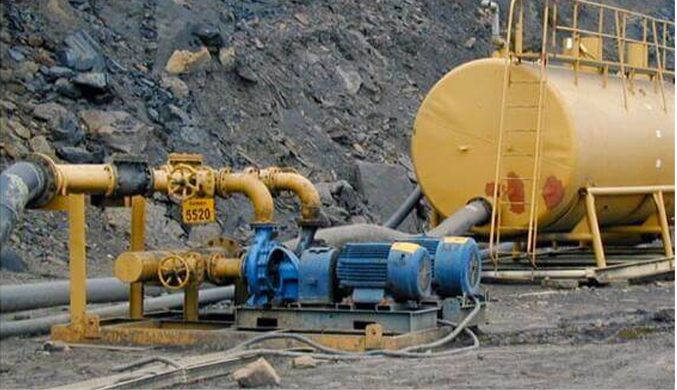
Performance & Engineering
Engineering an electric slurry pump requires a comprehensive analysis of the slurry's rheological properties. The "Critical Settling Velocity" must be calculated to ensure that the flow velocity remains high enough to keep solids in suspension, preventing pipeline blockage, yet low enough to avoid exponential increases in abrasive wear, which typically scales with the cube of the velocity. Force analysis focuses on the radial thrust exerted on the shaft, which increases significantly as the pump operates away from its Best Efficiency Point (BEP). To counter this, heavy-duty spherical roller bearings are utilized, housed in robust cast-iron bearing frames with integrated lubrication systems.
Environmental resistance is managed through the sealing system. Most industrial electric slurry pumps employ a combination of a mechanical seal and an expeller (flushing) impeller. The expeller creates a low-pressure zone at the seal face, effectively pushing abrasive particles away from the sealing interface and toward the pump discharge. This engineering redundancy is vital for maintaining the integrity of the motor-pump coupling, preventing the slurry from infiltrating the bearing housing and causing catastrophic failure.
Technical Specifications
| Parameter Dimension | Standard Duty Specification | Heavy Duty Specification | Ultra-Abrasive Specification | Metric Unit |
|---|---|---|---|---|
| Maximum Flow Rate | 150 | 450 | 600 | m³/h |
| Maximum Discharge Head | 25 | 65 | 110 | meters |
| Max Particle Size | 15 | 40 | 80 | mm |
| Max Slurry Density | 1.3 | 1.5 | 1.8 | t/m³ |
| Impeller Material | High-Chrome Alloy | Duplex Steel | Ceramic-Lined Alloy | Material |
| Motor Power Range | 30 | 110 | 250 | kW |
Failure Mode & Maintenance
The primary failure mode in electric slurry pumps is "Accelerated Abrasive Wear," specifically cavitation-induced erosion. When the Net Positive Suction Head Available (NPSHa) falls below the NPSH Required (NPSHr), vapor bubbles form and collapse violently against the impeller vanes, stripping the protective oxide layer of the metal and accelerating the abrasive action of the slurry. Another critical failure mode is "Shaft Deflection," caused by uneven wear of the impeller or the presence of large foreign objects, leading to premature bearing failure and mechanical seal leakage.
Maintenance protocols must shift from reactive to predictive. This involves the use of vibration analysis to detect bearing wear and ultrasonic thickness testing on the volute liner to determine the remaining wall thickness. Professional maintenance requires the periodic replacement of the "wear sleeve" and "liner plates" before the base casting is compromised. For the electric motor, insulation resistance testing (megger testing) is mandatory to ensure that the high-moisture environment of slurry operations has not degraded the winding insulation, which would lead to a phase-to-ground short circuit.
Industry FAQ
Q: How does the slurry concentration affect the pump's NPSH requirements?
A: Increased slurry concentration increases the fluid's viscosity and density, which generally elevates the NPSH required. As the concentration of solids rises, the frictional losses in the suction piping increase, reducing the NPSH available and increasing the risk of cavitation at the impeller eye.
Q: Why choose High-Chrome alloys over Stainless Steel for mining slurries?
A: While stainless steel offers superior corrosion resistance, it lacks the hardness required to withstand the scouring action of abrasive minerals. High-Chrome alloys form hard carbides that provide a physical barrier against abrasion, which is the dominant wear mechanism in mining applications.
Q: What is the impact of impeller speed on the wear rate of the pump?
A: The wear rate is non-linearly proportional to the impeller speed. Specifically, the erosion rate typically increases with the cube of the velocity. Even a small increase in RPM to achieve higher flow can lead to a disproportionately large decrease in the lifespan of the wear parts.
Q: How do you prevent "sanding in" during pump shutdown?
A: To prevent solids from settling and blocking the pump during shutdown, a flushing cycle must be implemented. The pump should be flushed with clean water until the discharge fluid is clear, ensuring that the impeller and volute are free of sediment before the motor is powered down.
Q: Which sealing arrangement is most effective for high-density tailings?
A: A combination of an expeller impeller and a gland seal with a continuous water flush is most effective. The expeller diverts the slurry away from the seal, while the flush water provides a positive pressure barrier that prevents any remaining particulates from entering the seal faces.
Conclusion
The engineering of an electric slurry pump is a complex optimization problem that balances material hardness, hydraulic efficiency, and mechanical robustness. By integrating high-chrome metallurgy with precise fluid dynamic design and advanced sealing mechanisms, these pumps can operate in the world's most punishing industrial environments. The transition from standard centrifugal design to slurry-specific architecture is essential to prevent premature failure and ensure operational continuity in high-throughput industries.
Looking forward, the integration of smart sensors for real-time wear monitoring and the development of nano-composite liners are expected to further extend the Mean Time Between Failures (MTBF). For procurement and engineering teams, the focus must remain on the precise matching of pump specifications to the rheological profile of the slurry to maximize lifecycle value and minimize total cost of ownership.
-
Comprehensive Guide to Waterproof ORings for Optimal Sealing Solutions
News2026-06-09
-
submergable pump Material Science
News2026-06-23
-
sewer injection pump Performance Engineering
News2026-06-23
-
Sewer Ejector Pump System Performance Analysis
News2026-06-23
-
septic tank pump for sale Performance Engineering
News2026-06-23
-
septic pump for sale Performance Engineering
News2026-06-23
-
septic ejector system Performance Analysis
News2026-06-22
-
replace septic pump Performance Analysis
News2026-06-22
-
pump system septic tank Performance Analysis
News2026-06-22
-
lift pump for sewer Performance and Engineering
News2026-06-22
-
industrial submersible water pump Material Science
News2026-06-22
-
industrial submersible pumps Material Science and Manufacturing
News2026-06-21
-
best sewer ejector pump Performance Analysis
News2026-06-21
-
best septic pump Performance Analysis
News2026-06-21
-
1 2 hp septic pump Performance Engineering
News2026-06-21




