English
- Afrikaans
- Albanian
- Amharic
- Arabic
- Armenian
- Azerbaijani
- Basque
- Belarusian
- Bengali
- Bosnian
- Bulgarian
- Catalan
- Cebuano
- Corsican
- Croatian
- Czech
- Danish
- Dutch
- English
- Esperanto
- Estonian
- Finnish
- French
- Frisian
- Galician
- Georgian
- German
- Greek
- Gujarati
- Haitian Creole
- hausa
- hawaiian
- Hebrew
- Hindi
- Miao
- Hungarian
- Icelandic
- igbo
- Indonesian
- irish
- Italian
- Japanese
- Javanese
- Kannada
- kazakh
- Khmer
- Rwandese
- Korean
- Kurdish
- Kyrgyz
- Lao
- Latin
- Latvian
- Lithuanian
- Luxembourgish
- Macedonian
- Malgashi
- Malay
- Malayalam
- Maltese
- Maori
- Marathi
- Mongolian
- Myanmar
- Nepali
- Norwegian
- Norwegian
- Occitan
- Pashto
- Persian
- Polish
- Portuguese
- Punjabi
- Romanian
- Russian
- Samoan
- Scottish Gaelic
- Serbian
- Sesotho
- Shona
- Sindhi
- Sinhala
- Slovak
- Slovenian
- Somali
- Spanish
- Sundanese
- Swahili
- Swedish
- Tagalog
- Tajik
- Tamil
- Tatar
- Telugu
- Thai
- Turkish
- Turkmen
- Ukrainian
- Urdu
- Uighur
- Uzbek
- Vietnamese
- Welsh
- Bantu
- Yiddish
- Yoruba
- Zulu

Telephone: +86 13120555503
Email: frank@cypump.com


Apr . 01, 2024 17:55 Back to list
diesel slurry pump Manufacturing Specifications and Performance Analysis
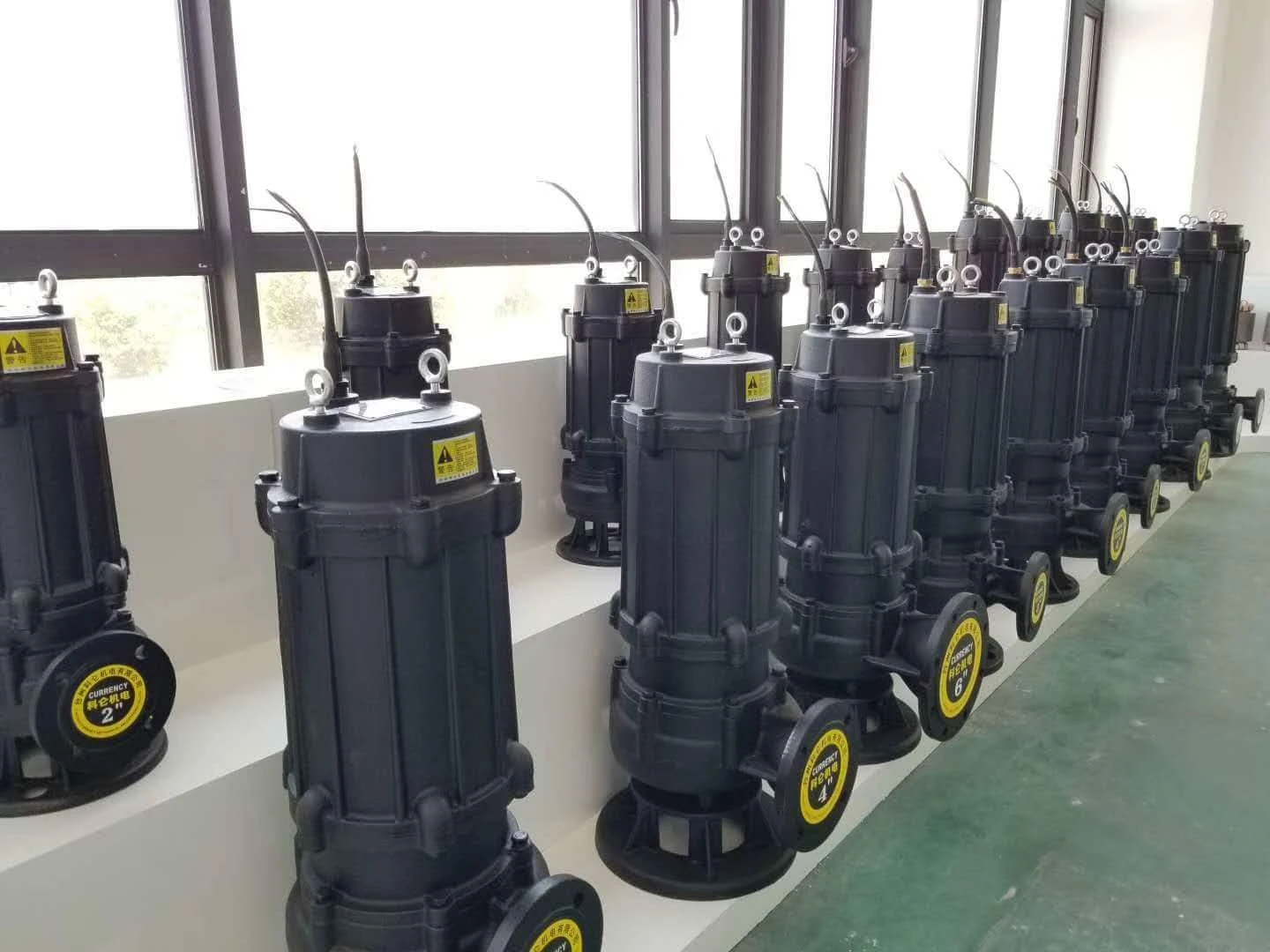
Diesel Slurry Pump: Manufacturing Specifications and Performance Analysis
A diesel slurry pump is a specialized heavy-duty centrifugal pumping system engineered to transport highly abrasive, viscous, and non-homogeneous fluids—commonly referred to as slurries—in environments where electrical infrastructure is absent. Positioned as a critical asset in the primary extraction and processing stage of the industrial chain, these pumps are ubiquitous in mining, dredging, oil sands extraction, and large-scale civil engineering projects. Unlike standard water pumps, a diesel slurry pump must balance the high torque requirements of a diesel internal combustion engine with the extreme hydraulic stresses exerted by suspended solids. The core performance of these units is defined by their ability to maintain a critical carrying velocity to prevent particle sedimentation while resisting the aggressive erosive wear caused by the constant impingement of mineral particles against the internal wetted surfaces.
Material Science & Manufacturing
The operational longevity of a diesel slurry pump is fundamentally determined by the metallurgical properties of its wear components. Because the pumped medium often contains high concentrations of quartz, pyrite, or alumina, standard cast iron or stainless steels are insufficient. Industry-leading manufacturing utilizes High-Chrome White Iron (ASTM A532), typically containing 25% to 28% Chromium. This alloy forms a hard network of M7C3 carbides embedded in a martensitic matrix, providing a hardness typically exceeding 60 HRC, which is essential for resisting abrasive wear.
For applications involving extreme chemical aggression combined with abrasion, duplex stainless steels or specialized elastomer linings (such as Natural Rubber or Polyurethane) are employed. The manufacturing process involves precision investment casting for the impeller to ensure balanced hydraulic profiles, followed by CNC machining of the mating surfaces to ensure a hermetic seal. The pump casing is often reinforced with additional wear plates to protect the structural integrity of the volute. The integration of the diesel engine requires a heavy-duty coupling system and a rigid steel chassis, designed using Finite Element Analysis (FEA) to dampen the low-frequency vibrations inherent in diesel combustion, which could otherwise lead to premature bearing failure or misalignment of the pump shaft.
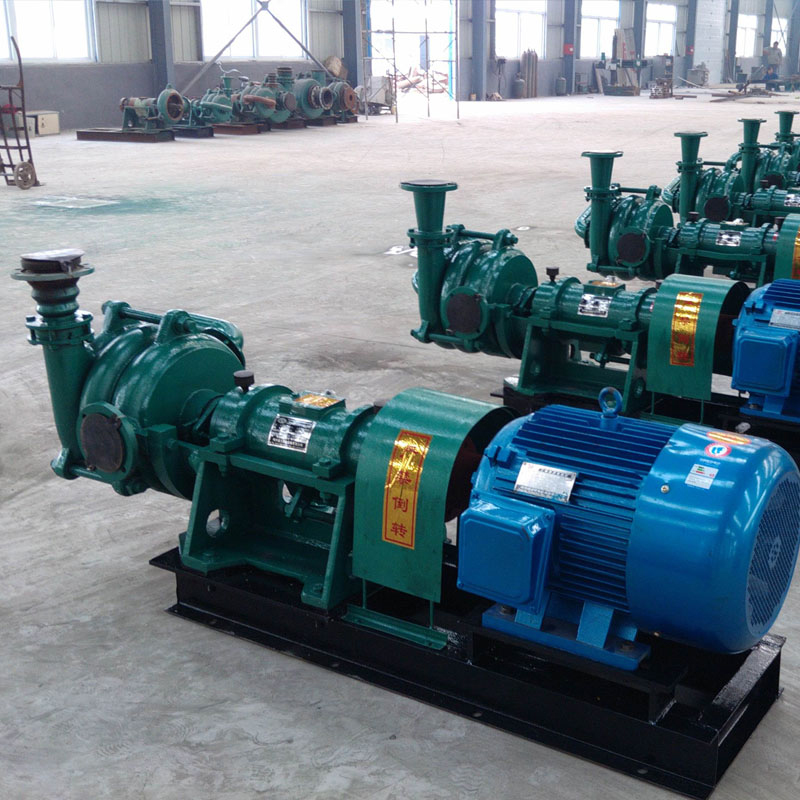
Performance & Engineering
Engineering a diesel slurry pump requires a rigorous analysis of fluid dynamics and force distribution. The primary challenge is the management of "critical velocity"—the minimum velocity required to keep solids in suspension. If the flow rate drops below this threshold, particles settle, leading to pipeline blockage and localized turbulence that accelerates erosion. Engineering calculations must account for the slurry density (Specific Gravity), as the increased mass of the fluid increases the required Brake Horsepower (BHP) of the diesel engine and elevates the radial loads on the shaft.
Environmental resistance is another critical engineering pillar. Since these pumps operate in open-pit mines or coastal areas, the diesel engine is equipped with heavy-duty air filtration systems to prevent dust ingestion and corrosion-resistant coatings on the frame to withstand saline or acidic atmospheres. The sealing mechanism typically employs a gland packing system or a mechanical seal with an external flush to prevent abrasive particles from migrating into the bearing housing. Furthermore, the pump is designed to operate under varying Net Positive Suction Head (NPSH) conditions to prevent cavitation, which in slurry applications can cause "pitting" and rapid degradation of the impeller vanes.
Technical Specifications
| Parameter Dimension | Standard Grade (Medium Duty) | Heavy Duty (Mining Grade) | Extreme Duty (Dredging Grade) | Testing Standard |
|---|---|---|---|---|
| Impeller Material | High Chrome Iron (27% Cr) | Hardened Chrome Alloy | Tungsten Carbide Coated | ASTM A532 |
| Max Flow Rate (m³/h) | 450 | 800 | 1,200 | ISO 5199 |
| Max Head (m) | 30 | 55 | 70 | ISO 9906 |
| Diesel Engine Power (kW) | 110 | 220 | 350 | DIN 65910 |
| Max Particle Size (mm) | 15 | 30 | 50 | Internal Spec |
| Operating Temp Range (°C) | -10 to +60 | -20 to +80 | -20 to +90 | IEC 60068 |
Failure Mode & Maintenance
Failure analysis of diesel slurry pumps typically reveals three dominant modes: abrasive erosion, fatigue cracking, and seal degradation. Abrasive erosion occurs primarily at the impeller eye and the volute tongue, where fluid velocity is highest. This is characterized by a gradual loss of wall thickness and a subsequent drop in pump efficiency. Fatigue cracking is often the result of vibration induced by the diesel engine or the passage of oversized solids, which create transient shock loads on the shaft and bearings.
Maintenance protocols must be predictive rather than reactive. This involves regular ultrasonic thickness testing of the casing to monitor wear rates and vibration analysis of the bearing housings to detect early signs of misalignment. To mitigate failure, a strict lubrication schedule for the diesel engine and the pump bearings is mandatory, using high-viscosity lubricants that can withstand thermal expansion. When the impeller diameter reaches a critical wear limit (typically 10-15% reduction), immediate replacement is required to avoid cavitation and maintain the system's hydraulic efficiency.
Industry FAQ
Q: How do you determine the correct diesel engine sizing for a specific slurry density?
A: The engine must be sized based on the slurry's Specific Gravity (SG). The required power increases linearly with SG. We calculate the water power and apply a correction factor for the slurry's viscosity and solids concentration to ensure the engine operates at 75-85% load, providing a safety margin for surges in slurry density.
Q: What is the primary cause of premature impeller failure in high-chrome pumps?
A: The most common cause is "impact wear" from oversized solids or "cavitation erosion" caused by insufficient NPSH. While high-chrome iron is excellent for sliding abrasion, it is brittle; therefore, large rocks impacting the vanes can cause chipping or catastrophic cracking.
Q: Can these pumps handle acidic slurries without modification?
A: No. High-chrome irons are susceptible to chemical corrosion. For acidic media, the wetted parts must be swapped for duplex stainless steel or lined with acid-resistant elastomers like Hypalon or Nitrile to prevent rapid chemical degradation of the metal matrix.
Q: How does the diesel-drive configuration affect the pump's NPSH compared to electric drives?
A: The drive source itself does not change the NPSH, but the diesel engine allows for flexible placement. However, the engine's vibration can affect the stability of the suction line. Proper anchoring and the use of flexible couplings are essential to prevent vibration-induced air leaks in the suction pipe, which would devastate the NPSH.
Q: What is the recommended frequency for checking the wear liners?
A: This depends on the abrasive index of the slurry. For highly abrasive tailings, we recommend a visual inspection every 500 operational hours and ultrasonic thickness gauging every 1,000 hours to prevent the slurry from breaching the outer pressure casing.
Conclusion
The diesel slurry pump represents a sophisticated intersection of thermodynamics, metallurgy, and fluid mechanics. Its effectiveness depends not only on the raw power of the diesel prime mover but on the precision of the material selection and the engineering of the hydraulic flow path. By utilizing high-chrome alloys and rigorous FEA-based structural designs, these pumps can withstand the punishing conditions of industrial slurry transport, ensuring operational continuity in the most remote environments.
Looking forward, the integration of smart sensors for real-time wear monitoring and the adoption of hybrid-electric diesel drives will likely define the next generation of slurry pumping technology. For procurement managers and engineers, the focus must remain on the total cost of ownership (TCO), where the initial investment in superior materials is offset by reduced downtime and extended mean time between failures (MTBF).
-
Comprehensive Guide to Waterproof ORings for Optimal Sealing Solutions
News2026-06-09
-
submergable pump Material Science
News2026-06-23
-
sewer injection pump Performance Engineering
News2026-06-23
-
Sewer Ejector Pump System Performance Analysis
News2026-06-23
-
septic tank pump for sale Performance Engineering
News2026-06-23
-
septic pump for sale Performance Engineering
News2026-06-23
-
septic ejector system Performance Analysis
News2026-06-22
-
replace septic pump Performance Analysis
News2026-06-22
-
pump system septic tank Performance Analysis
News2026-06-22
-
lift pump for sewer Performance and Engineering
News2026-06-22
-
industrial submersible water pump Material Science
News2026-06-22
-
industrial submersible pumps Material Science and Manufacturing
News2026-06-21
-
best sewer ejector pump Performance Analysis
News2026-06-21
-
best septic pump Performance Analysis
News2026-06-21
-
1 2 hp septic pump Performance Engineering
News2026-06-21




