English
- Afrikaans
- Albanian
- Amharic
- Arabic
- Armenian
- Azerbaijani
- Basque
- Belarusian
- Bengali
- Bosnian
- Bulgarian
- Catalan
- Cebuano
- Corsican
- Croatian
- Czech
- Danish
- Dutch
- English
- Esperanto
- Estonian
- Finnish
- French
- Frisian
- Galician
- Georgian
- German
- Greek
- Gujarati
- Haitian Creole
- hausa
- hawaiian
- Hebrew
- Hindi
- Miao
- Hungarian
- Icelandic
- igbo
- Indonesian
- irish
- Italian
- Japanese
- Javanese
- Kannada
- kazakh
- Khmer
- Rwandese
- Korean
- Kurdish
- Kyrgyz
- Lao
- Latin
- Latvian
- Lithuanian
- Luxembourgish
- Macedonian
- Malgashi
- Malay
- Malayalam
- Maltese
- Maori
- Marathi
- Mongolian
- Myanmar
- Nepali
- Norwegian
- Norwegian
- Occitan
- Pashto
- Persian
- Polish
- Portuguese
- Punjabi
- Romanian
- Russian
- Samoan
- Scottish Gaelic
- Serbian
- Sesotho
- Shona
- Sindhi
- Sinhala
- Slovak
- Slovenian
- Somali
- Spanish
- Sundanese
- Swahili
- Swedish
- Tagalog
- Tajik
- Tamil
- Tatar
- Telugu
- Thai
- Turkish
- Turkmen
- Ukrainian
- Urdu
- Uighur
- Uzbek
- Vietnamese
- Welsh
- Bantu
- Yiddish
- Yoruba
- Zulu

Telephone: +86 13120555503
Email: frank@cypump.com


Apr . 01, 2024 17:55 Back to list
custom drilling mud and slurry pump Performance Analysis
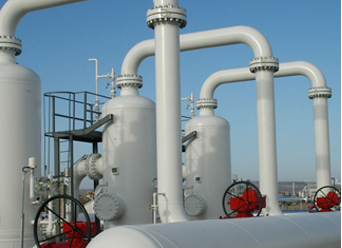
Custom Drilling Mud and Slurry Pump Performance Analysis
Custom drilling mud and slurry pumps are specialized positive displacement or centrifugal hydraulic machines engineered to transport high-density, abrasive, and non-Newtonian fluids within the drilling and mining industrial chains. These pumps occupy a critical position in the circulation system, responsible for maintaining borehole stability, transporting cuttings to the surface, and ensuring the effective delivery of drilling additives. Unlike standard water pumps, slurry pumps must manage fluids with high solid-volume concentrations and varying viscosity, necessitating a design that balances hydraulic efficiency with extreme mechanical durability. The core performance of these systems is defined by their ability to withstand severe erosive wear while maintaining a constant volumetric flow rate under high-discharge pressures, effectively preventing sedimentation and pipeline clogging in demanding geotechnical environments.
Material Science & Manufacturing
The engineering of a custom drilling mud pump begins with the selection of advanced materials capable of resisting both abrasive erosion and chemical corrosion. For the primary wear components—such as impellers, liners, and plungers—high-chromium cast irons (typically 25% to 28% Cr) are employed. These alloys form a matrix of hard primary carbides (M7C3) that provide the necessary hardness to resist the scouring action of silica and other mineral particulates found in drilling mud. In environments involving acidic or saline fluids, duplex stainless steels or nickel-based superalloys are utilized to prevent pitting and stress corrosion cracking.
The manufacturing process involves precision casting followed by rigorous heat treatment. The "Quench and Temper" cycle is critical to optimize the metallurgical structure, ensuring that the material possesses a balance of surface hardness and core toughness to prevent brittle fracture under shock loads. For custom plunger pumps, the fluid end is often CNC-machined from forged steel blocks to ensure absolute concentricity and eliminate internal porosity. Key parameter control focuses on the surface finish of the pumping chamber; a Ra value of 0.4 to 0.8 μm is maintained to minimize friction between the plunger and the seal, thereby extending the Mean Time Between Failures (MTBF). Furthermore, the integration of tungsten carbide inserts in high-velocity zones provides a secondary layer of defense against hydrothermal erosion.
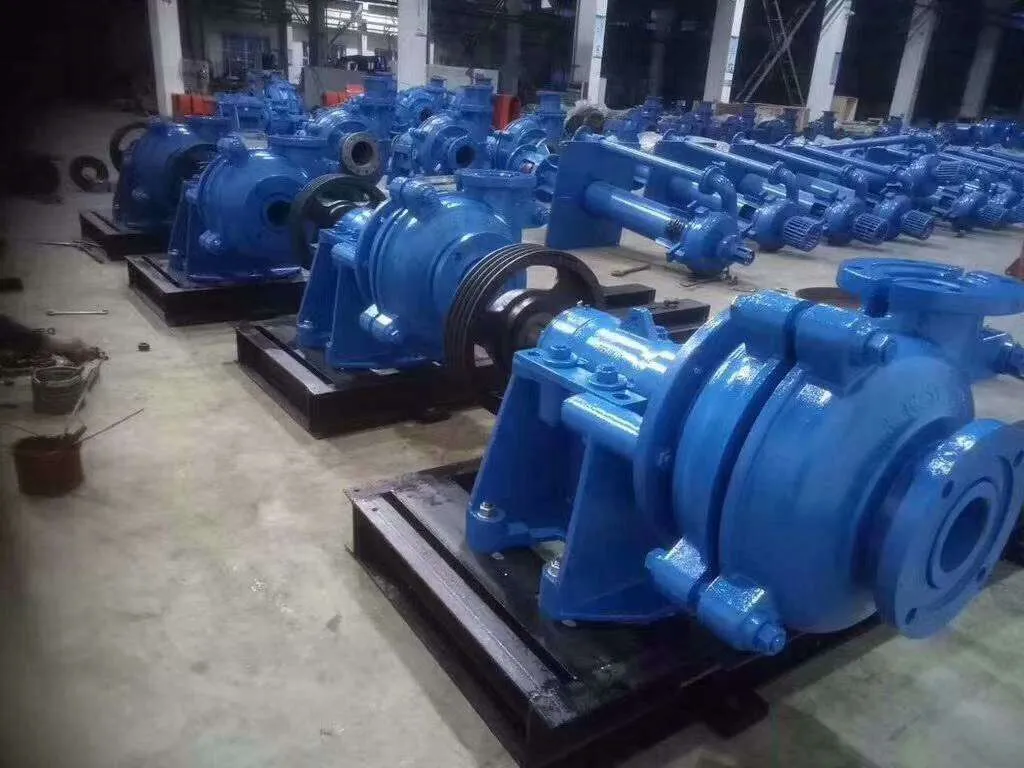
Performance & Engineering
From an engineering perspective, the operation of a slurry pump is governed by the rheology of the fluid. Drilling muds typically exhibit Bingham plastic or Power-law fluid behavior, where the viscosity changes based on the shear rate. Engineering calculations must account for the "Critical Settling Velocity" to ensure that solids remain in suspension during transport, preventing the catastrophic failure of the pipeline. Force analysis is applied to the pump shaft and bearings to mitigate the effects of unbalanced radial loads caused by the asymmetric distribution of solids within the impeller.
Environmental resistance is another primary engineering constraint. Custom pumps are designed to operate in extreme temperature gradients, from permafrost regions to deep-well geothermal environments. This requires the use of specialized elastomeric seals (such as Viton or HNBR) that maintain elasticity and sealing integrity at high temperatures. Compliance with API (American Petroleum Institute) standards ensures that the pump's pressure-containing components can withstand surge pressures without deformation. The implementation of Variable Frequency Drives (VFD) allows for the precise modulation of flow rates, optimizing energy consumption and reducing the "water hammer" effect during start-stop cycles.
Technical Specifications
| Specification Parameter | Standard Slurry Grade | Heavy-Duty Mining Grade | Custom Deep-Well Grade | Tolerance/Standard |
|---|---|---|---|---|
| Max Discharge Pressure | 15 - 25 MPa | 30 - 50 MPa | 70 - 120 MPa | ± 2% |
| Max Flow Rate | 100 - 500 L/min | 200 - 1000 L/min | 50 - 300 L/min | ± 5% |
| Max Solid Content (wt%) | 20% - 30% | 40% - 60% | 15% - 25% | Based on Density |
| Material Hardness (HRC) | 55 - 60 HRC | 62 - 68 HRC | 65 - 72 HRC | ASTM E18 |
| Operating Temp Range | -10°C to 60°C | -20°C to 80°C | -40°C to 150°C | ISO 12944 |
| Seal Type | Mechanical Seal | Double Mechanical | Specialized Metal-Polymer | API 682 |
Failure Mode & Maintenance
Failure analysis of custom drilling mud pumps typically identifies three primary modes: erosive wear, cavitation, and seal degradation. Erosive wear occurs when high-velocity particles impact the pump walls, leading to "wall thinning" and eventual breach. This is often accelerated by turbulence at the impeller eye. Cavitation occurs when the Net Positive Suction Head Available (NPSHa) falls below the Net Positive Suction Head Required (NPSHr), creating vapor bubbles that implode and pit the metal surfaces. Seal degradation is usually a result of chemical incompatibility between the drilling additives and the elastomer, or the ingress of abrasive fines into the seal face.
Professional maintenance solutions involve a predictive approach. Vibration analysis is utilized to detect bearing wear or shaft misalignment before catastrophic failure occurs. For erosive wear, the application of ceramic coatings or the timely replacement of sacrificial liners is mandatory. Cavitation is mitigated by increasing the suction head or reducing the fluid temperature. Maintenance schedules must include the regular inspection of the lubrication system to ensure that no slurry has contaminated the oil reservoirs, which would otherwise lead to rapid bearing seizure.
Industry FAQ
Q: How do you determine the correct material for a custom pump handling highly acidic slurry?
A: We conduct a chemical compatibility analysis based on the pH level and chloride concentration of the fluid. For highly acidic environments, we transition from high-chrome irons to Duplex 2205 or Super Duplex stainless steels, which provide a higher Pitting Resistance Equivalent Number (PREN) to prevent localized corrosion.
Q: What is the impact of slurry viscosity on the pump's volumetric efficiency?
A: Increased viscosity increases the internal friction losses (viscous drag) and can lead to higher slippage in positive displacement pumps. We compensate for this by optimizing the internal clearances and increasing the motor torque capacity to maintain the required flow rate.
Q: How can we distinguish between erosive wear and corrosive wear during a failure audit?
A: Erosive wear typically presents as "scooped out" smooth depressions or directional grooves aligned with the flow. Corrosive wear appears as generalized thinning, pitting, or a "sponge-like" surface texture. We use SEM (Scanning Electron Microscopy) to confirm the failure mechanism.
Q: Why is the NPSH value critical for high-density mud pumps?
A: High-density muds have lower vapor pressures and higher viscosity, making them more prone to cavitation. If the NPSH is insufficient, vapor pockets form, causing severe mechanical vibration and rapid destruction of the impeller edges.
Q: What is the recommended interval for replacing wear liners in a heavy-duty mining application?
A: While it depends on the abrasive index of the solids, we generally recommend ultrasonic thickness testing every 500 operating hours. Liners should be replaced once they reach 60% of their original wall thickness to prevent casing failure.
Conclusion
The engineering of custom drilling mud and slurry pumps is a sophisticated intersection of fluid dynamics, metallurgy, and mechanical engineering. By prioritizing the synergy between high-chromium alloys and precision manufacturing, these pumps can overcome the inherent challenges of abrasive wear and chemical degradation. The ability to customize the hydraulic parameters and material specifications ensures that the equipment can be optimized for specific geotechnical conditions, thereby maximizing operational uptime and reducing the total cost of ownership.
Looking forward, the integration of smart sensing technologies—such as real-time wear monitoring and AI-driven predictive maintenance—will further redefine the reliability of slurry transport systems. Industry professionals are encouraged to adopt a holistic approach to pump selection, focusing not only on initial flow and pressure specifications but also on the long-term metallurgical stability and the systemic impact of fluid rheology on mechanical longevity.
-
Comprehensive Guide to Waterproof ORings for Optimal Sealing Solutions
News2026-06-09
-
Septic Pump System Performance Analysis
News2026-06-08
-
pump for septic Material Science
News2026-06-08
-
basement sewer pump Performance Analysis
News2026-06-08
-
submerged pump Performance Engineering
News2026-06-08
-
Septic System Pumps Performance Analysis
News2026-06-08
-
septic system pump Material Science and Manufacturing
News2026-06-07
-
pump for septic tank Material Science Manufacturing
News2026-06-07
-
submersible sewage pump Material Science
News2026-06-07
-
Sewage Ejector Material Science and Manufacturing
News2026-06-07
-
Ejection Pump Material Science
News2026-06-07
-
pump submersible Performance Analysis
News2026-06-06
-
ejector pumps Performance Engineering
News2026-06-06
-
basement ejector pump Material Science Manufacturing
News2026-06-06
-
Septic Tanks Pumping Performance Analysis
News2026-06-06




