English
- Afrikaans
- Albanian
- Amharic
- Arabic
- Armenian
- Azerbaijani
- Basque
- Belarusian
- Bengali
- Bosnian
- Bulgarian
- Catalan
- Cebuano
- Corsican
- Croatian
- Czech
- Danish
- Dutch
- English
- Esperanto
- Estonian
- Finnish
- French
- Frisian
- Galician
- Georgian
- German
- Greek
- Gujarati
- Haitian Creole
- hausa
- hawaiian
- Hebrew
- Hindi
- Miao
- Hungarian
- Icelandic
- igbo
- Indonesian
- irish
- Italian
- Japanese
- Javanese
- Kannada
- kazakh
- Khmer
- Rwandese
- Korean
- Kurdish
- Kyrgyz
- Lao
- Latin
- Latvian
- Lithuanian
- Luxembourgish
- Macedonian
- Malgashi
- Malay
- Malayalam
- Maltese
- Maori
- Marathi
- Mongolian
- Myanmar
- Nepali
- Norwegian
- Norwegian
- Occitan
- Pashto
- Persian
- Polish
- Portuguese
- Punjabi
- Romanian
- Russian
- Samoan
- Scottish Gaelic
- Serbian
- Sesotho
- Shona
- Sindhi
- Sinhala
- Slovak
- Slovenian
- Somali
- Spanish
- Sundanese
- Swahili
- Swedish
- Tagalog
- Tajik
- Tamil
- Tatar
- Telugu
- Thai
- Turkish
- Turkmen
- Ukrainian
- Urdu
- Uighur
- Uzbek
- Vietnamese
- Welsh
- Bantu
- Yiddish
- Yoruba
- Zulu

Telephone: +86 13120555503
Email: frank@cypump.com


Apr . 01, 2024 17:55 Back to list
coal slurry pump Manufacturing Specifications and Performance Analysis
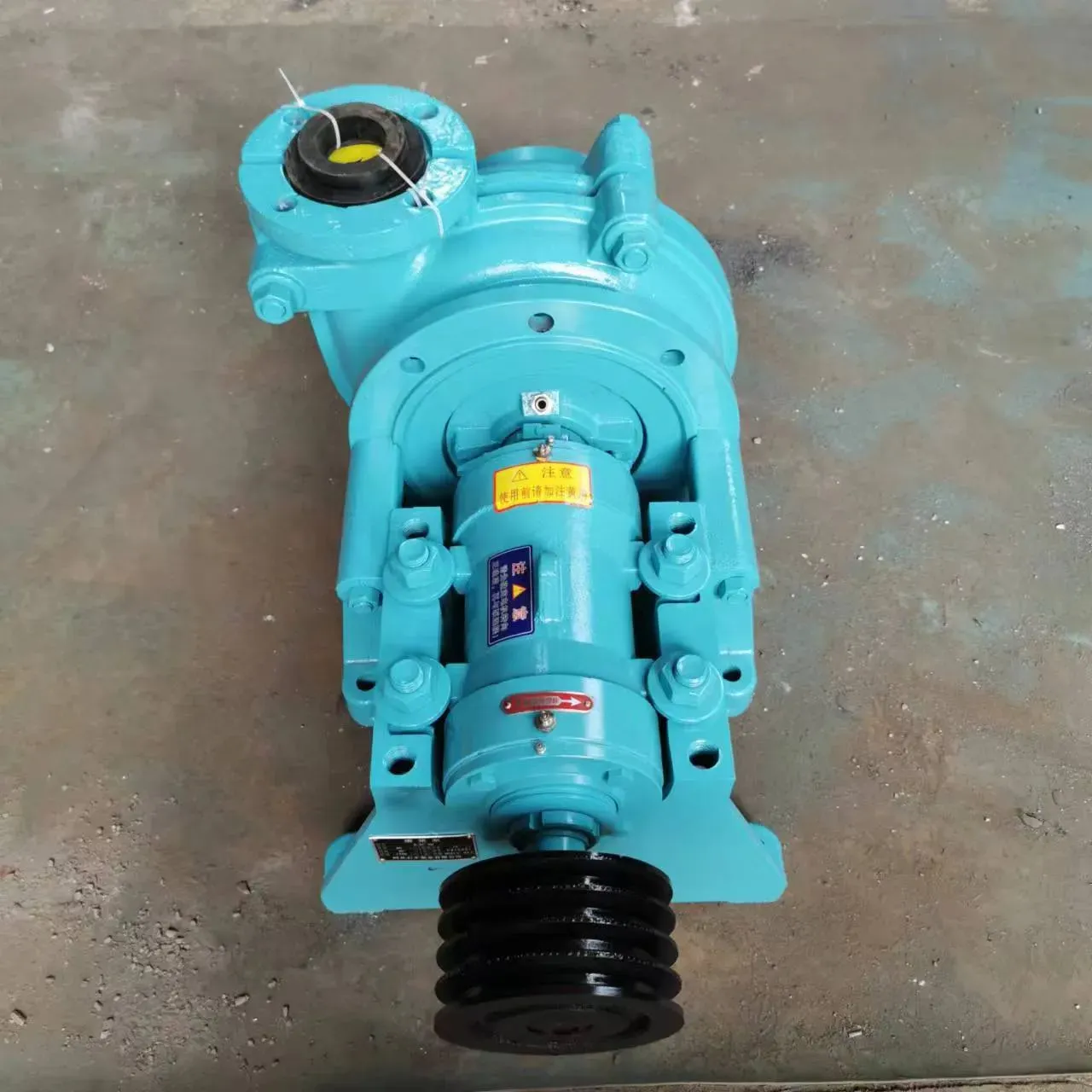
Coal Slurry Pump: Manufacturing Specifications and Performance Analysis
A coal slurry pump is a specialized heavy-duty centrifugal pump engineered to transport high-density fluids containing abrasive solid particles, specifically pulverized coal, tailings, and mineral slurries. In the industrial value chain, these pumps occupy a critical position between the extraction/crushing phase and the processing/transport phase. The core technical challenge of a coal slurry pump lies in managing the synergistic effect of erosive wear and corrosive chemical attacks. Unlike standard water pumps, coal slurry pumps must maintain hydraulic efficiency while resisting the high-velocity impact of hard particles that cause surface pitting and wall thinning. The performance of these machines is measured by their ability to handle high solids concentration (percentage by weight) while minimizing the Total Cost of Ownership (TCO) through extended Mean Time Between Failures (MTBF).
Material Science & Manufacturing
The longevity of a coal slurry pump is fundamentally dependent on the metallurgical properties of its wetted parts. Due to the extreme abrasiveness of coal particles, standard cast iron or stainless steels are insufficient. Industry-standard materials typically include High-Chrome White Cast Irons (ASTM A532), which contain high percentages of chromium (typically 25% to 28%) to form hard M7C3 carbides within a martensitic matrix. These carbides provide the primary defense against abrasive wear. For environments with higher acidity or chemical volatility, Duplex Stainless Steels or specialized rubber linings (Natural Rubber or Nitrile) are employed to provide elasticity, allowing the surface to absorb the impact of particles rather than fracturing.
The manufacturing process involves precision casting and rigorous post-processing. Investment casting or sand casting is used for the impeller and volute, followed by heat treatment (quenching and tempering) to optimize the hardness-to-toughness ratio. Precision CNC machining is applied to the bearing housings and shafts to ensure concentricity, which is vital for reducing vibration and preventing premature seal failure. Furthermore, the impeller geometry is optimized using Computational Fluid Dynamics (CFD) to reduce turbulence and "dead zones" where slurry stagnation could lead to localized erosion or sedimentation.
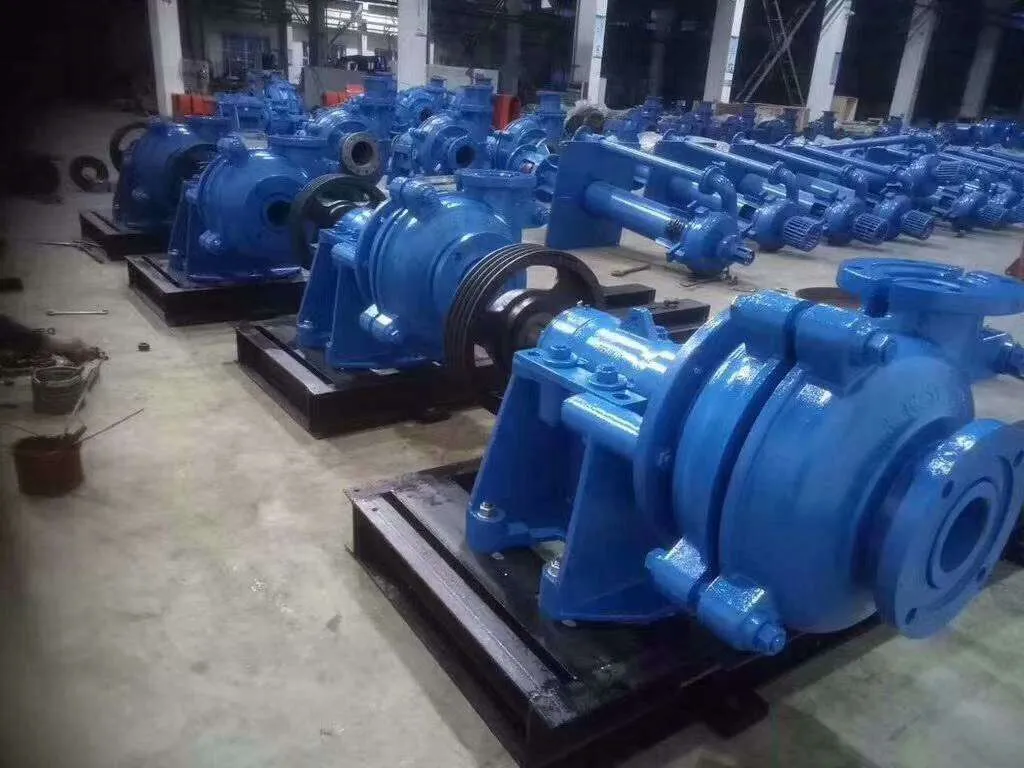
Performance & Engineering
Engineering a coal slurry pump requires a deep analysis of the slurry's rheological properties. The fluid is treated as a non-Newtonian mixture where viscosity varies with the shear rate. A critical engineering parameter is the "Critical Settling Velocity"—the minimum velocity required to keep solid particles in suspension to prevent pipe blockage. If the pump operates below this velocity, sedimentation occurs, leading to increased friction loss and potential catastrophic clogging.
Force analysis focuses on the radial thrust exerted on the shaft, which is significantly higher in slurry applications due to the uneven distribution of solids. To counteract this, heavy-duty double-row angular contact bearings are typically used. Seal engineering is equally critical; the transition from traditional packing to mechanical seals often involves the use of "expeller seals" or "flushing systems" that inject clean water into the seal chamber to prevent abrasive particles from entering the sealing faces, thereby preventing scoring and leakage. Compliance with international standards ensures that the pump can withstand the transient pressures caused by "water hammer" effects during startup and shutdown cycles.
Technical Specifications
| Performance Metric | High-Chrome Alloy Grade | Rubber Lined Grade | Duplex Steel Grade | Standard Specification |
|---|---|---|---|---|
| Abrasive Resistance (Hardness) | 60-65 HRC | 60-70 Shore A | 25-30 HRC | ASTM G65 Standard |
| Max Solids Concentration (%) | Up to 70% | Up to 40% | Up to 50% | By Weight (wt%) |
| Operating Temperature Range | -20°C to 150°C | -10°C to 70°C | -40°C to 200°C | Celsius (°C) |
| Max Flow Rate (m³/h) | 1200 m³/h | 800 m³/h | 1000 m³/h | Nominal Peak |
| Maximum Head (m) | 150 m | 80 m | 120 m | Total Dynamic Head |
| Corrosion Rate (mm/year) | Low-Medium | Very Low | Extremely Low | In Acidic Slurry |
Failure Mode & Maintenance
Failure analysis of coal slurry pumps typically reveals three primary modes: Abrasive Wear, Cavitation, and Fatigue Cracking. Abrasive wear manifests as gradual wall thinning in the volute and impeller vanes, leading to a drop in discharge pressure. Cavitation occurs when the Net Positive Suction Head Available (NPSHa) falls below the Required (NPSHr), creating vapor bubbles that implode and create micro-jets, pitting the metal surfaces. Fatigue cracking is often the result of unbalanced impellers or misalignment, causing cyclic stress on the shaft and bearing housings.
Professional maintenance protocols mandate a predictive approach. Vibration analysis using accelerometers is employed to detect bearing wear before failure occurs. Regular ultrasound thickness testing (UT) of the pump casing allows operators to schedule liner replacements before a full breach occurs. Maintenance technicians must ensure that when replacing impellers, they are dynamically balanced to ISO 1940 standards. Lubrication systems should be monitored for particle contamination, utilizing oil analysis to detect early signs of internal mechanical wear.
Industry FAQ
Q: How do we determine the optimal material choice between High-Chrome and Rubber lining?
A: The choice depends on the particle size and hardness. High-Chrome alloys are superior for larger, harder particles that would cut through rubber. Rubber linings are preferred for smaller, finer particles and highly corrosive slurries where the "bounce-back" effect of the elastomer prevents material loss.
Q: What causes the sudden drop in efficiency of a coal slurry pump over time?
A: The primary cause is the widening of the clearances between the impeller and the wear plate. As abrasive wear increases these gaps, internal recirculation increases, which reduces the net discharge pressure and volumetric efficiency.
Q: How can we mitigate the risk of cavitation in high-density coal transport?
A: Increasing the suction head by raising the slurry tank level or reducing the suction pipe friction losses. Additionally, ensuring the pump is operated within its Best Efficiency Point (BEP) minimizes the turbulence that triggers cavitation.
Q: Why is the "Critical Settling Velocity" vital for pump operation?
A: If the flow velocity drops below the critical threshold, the solid coal particles settle at the bottom of the pipe. This increases the effective diameter of the flow path, increases friction, and can lead to complete blockage, requiring costly manual cleaning.
Q: What is the recommended strategy for seal maintenance in abrasive environments?
A: We recommend implementing a pressurized external flushing system (API Plan 32 or 54). By maintaining a higher pressure of clean water at the seal face than the internal slurry pressure, you create a hydraulic barrier that prevents solids from entering the seal interface.
Conclusion
The operational efficiency of a coal slurry pump is not merely a function of its motor power, but a complex synergy of material science and hydraulic engineering. By utilizing high-chrome alloys and optimizing the internal flow geometry to minimize turbulence, industry operators can significantly mitigate the effects of abrasive wear and corrosion. The integration of CFD analysis and precision manufacturing ensures that these pumps can withstand the harsh realities of coal processing while maintaining stable flow rates and high pressure.
Looking forward, the industry is moving toward "smart" slurry pumps equipped with real-time wear sensors and automated variable speed drives (VSD) to maintain critical velocity. It is recommended that procurement managers shift their focus from initial purchase price to the Total Cost of Ownership, prioritizing pumps with modular wear parts and high-grade metallurgy to ensure long-term operational stability and reduced downtime.
-
Comprehensive Guide to Waterproof ORings for Optimal Sealing Solutions
News2026-06-09
-
Septic Pump System Performance Analysis
News2026-06-08
-
pump for septic Material Science
News2026-06-08
-
basement sewer pump Performance Analysis
News2026-06-08
-
submerged pump Performance Engineering
News2026-06-08
-
Septic System Pumps Performance Analysis
News2026-06-08
-
septic system pump Material Science and Manufacturing
News2026-06-07
-
pump for septic tank Material Science Manufacturing
News2026-06-07
-
submersible sewage pump Material Science
News2026-06-07
-
Sewage Ejector Material Science and Manufacturing
News2026-06-07
-
Ejection Pump Material Science
News2026-06-07
-
pump submersible Performance Analysis
News2026-06-06
-
ejector pumps Performance Engineering
News2026-06-06
-
basement ejector pump Material Science Manufacturing
News2026-06-06
-
Septic Tanks Pumping Performance Analysis
News2026-06-06




