English
- Afrikaans
- Albanian
- Amharic
- Arabic
- Armenian
- Azerbaijani
- Basque
- Belarusian
- Bengali
- Bosnian
- Bulgarian
- Catalan
- Cebuano
- Corsican
- Croatian
- Czech
- Danish
- Dutch
- English
- Esperanto
- Estonian
- Finnish
- French
- Frisian
- Galician
- Georgian
- German
- Greek
- Gujarati
- Haitian Creole
- hausa
- hawaiian
- Hebrew
- Hindi
- Miao
- Hungarian
- Icelandic
- igbo
- Indonesian
- irish
- Italian
- Japanese
- Javanese
- Kannada
- kazakh
- Khmer
- Rwandese
- Korean
- Kurdish
- Kyrgyz
- Lao
- Latin
- Latvian
- Lithuanian
- Luxembourgish
- Macedonian
- Malgashi
- Malay
- Malayalam
- Maltese
- Maori
- Marathi
- Mongolian
- Myanmar
- Nepali
- Norwegian
- Norwegian
- Occitan
- Pashto
- Persian
- Polish
- Portuguese
- Punjabi
- Romanian
- Russian
- Samoan
- Scottish Gaelic
- Serbian
- Sesotho
- Shona
- Sindhi
- Sinhala
- Slovak
- Slovenian
- Somali
- Spanish
- Sundanese
- Swahili
- Swedish
- Tagalog
- Tajik
- Tamil
- Tatar
- Telugu
- Thai
- Turkish
- Turkmen
- Ukrainian
- Urdu
- Uighur
- Uzbek
- Vietnamese
- Welsh
- Bantu
- Yiddish
- Yoruba
- Zulu

Telephone: +86 13120555503
Email: frank@cypump.com


Apr . 01, 2024 17:55 Back to list
china wholesale slurry pump Performance and Engineering
Introduction
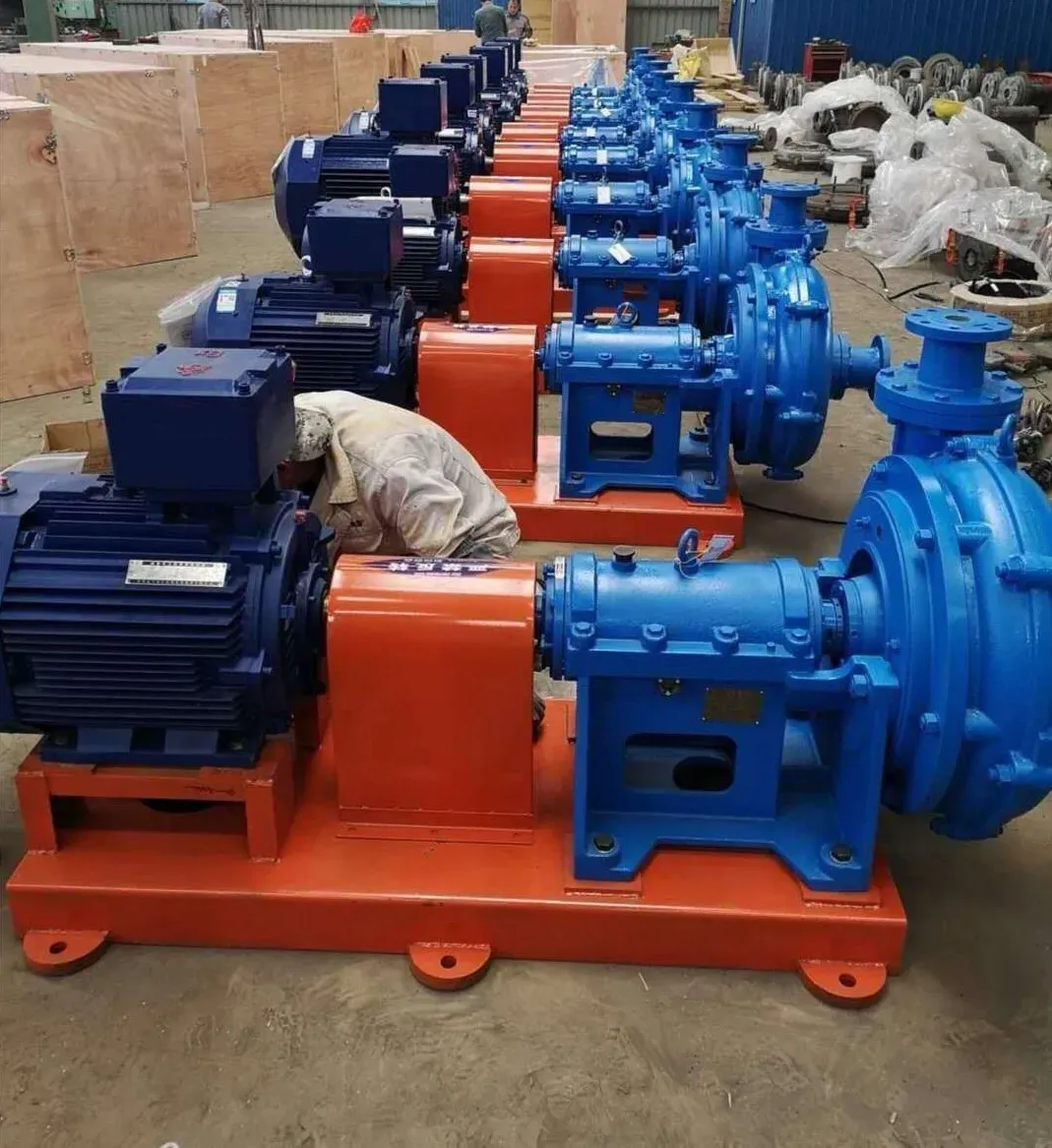
Slurry pumps, specifically china wholesale slurry pumps, represent a critical component in numerous industrial processes involving the transportation of abrasive or dense fluids. These pumps are distinguished by their robust construction and ability to handle materials ranging from mineral slurries in mining operations to wastewater treatment and chemical processing. Within the industrial chain, the slurry pump occupies a pivotal position between material extraction/preparation and subsequent processing stages. Performance is defined by flow rate (typically measured in gallons per minute or cubic meters per hour), head (the height the pump can lift the slurry, in feet or meters), and solids handling capability (maximum particle size and concentration by weight or volume). A key industry pain point lies in balancing pump longevity and efficiency; abrasive slurries cause significant wear, necessitating frequent maintenance or costly replacements. Furthermore, selecting the appropriate pump for a specific slurry composition requires extensive knowledge of material compatibility and erosion resistance.
Material Science & Manufacturing
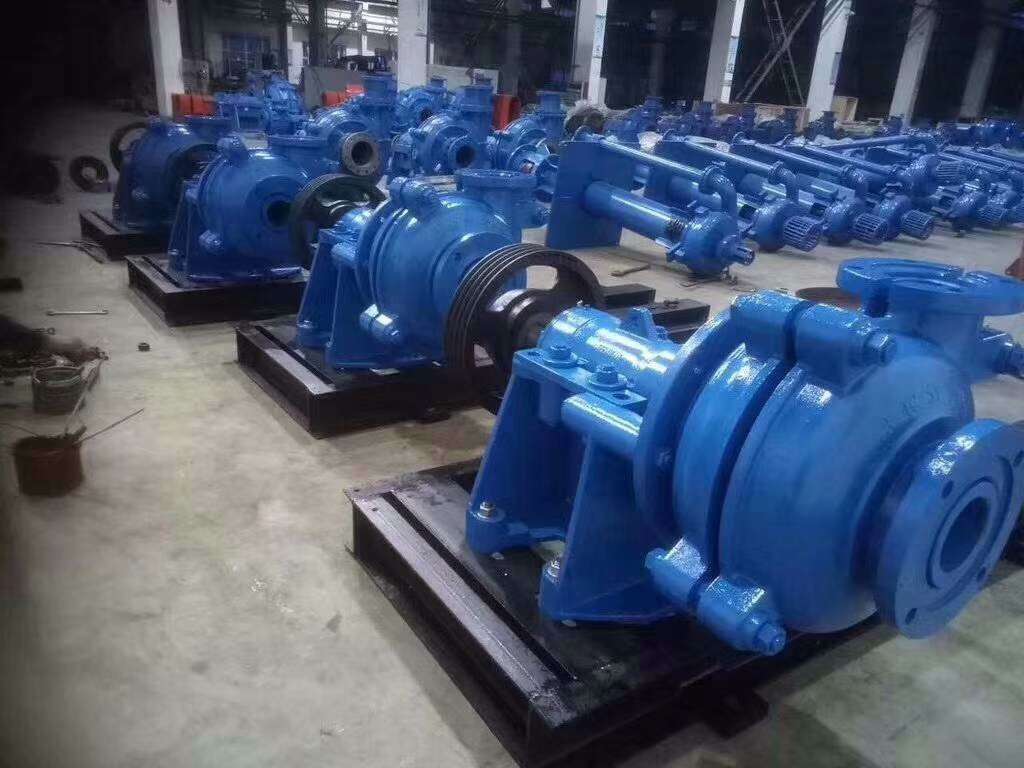
The core materials in a china wholesale slurry pump are dictated by the demands of abrasion, corrosion, and impact resistance. Pump casings are typically constructed from high-chrome cast iron (approximately 27-30% chromium content) due to its excellent hardness and wear resistance, although stainless steel alloys (304, 316, duplex stainless steels) are utilized for corrosive environments. Impellers, the rotating component responsible for imparting energy to the slurry, are often manufactured from similar materials to the casing. Liners, fitted internally to protect the casing, are commonly made of rubber (natural rubber, EPDM) or polyurethane, providing a sacrificial wear layer. Shafts are typically forged from alloy steels, heat-treated to achieve high tensile strength and torsional rigidity.
Manufacturing processes vary depending on component complexity. Casings are commonly produced via sand casting followed by heat treatment and machining. Impellers are often manufactured using investment casting for intricate designs and dimensional accuracy. Shafts undergo forging, machining, and often surface hardening treatments like induction hardening. Rubber and polyurethane liners are formed through molding processes. Critical parameter control during manufacturing includes ensuring accurate impeller blade profiles to maximize hydraulic efficiency, maintaining tight tolerances on shaft runout to prevent bearing failure, and precise rubber liner bonding to the casing to prevent separation. Welding, frequently used for repairs and casing construction, requires qualified procedures and non-destructive testing (NDT) such as radiographic inspection to ensure weld integrity. The quality of casting sand, alloy composition, and heat treatment cycles all directly affect the final pump’s performance and lifespan.
Performance & Engineering
Slurry pump performance is governed by fundamental principles of fluid mechanics, specifically the Bernoulli equation and affinity laws. Force analysis focuses on hydrodynamic forces acting on the impeller, static pressure within the casing, and the mechanical stresses on rotating components. Environmental resistance considerations include operating temperature, ambient humidity, and exposure to corrosive agents. Pumps are engineered to withstand the combined stresses of flow, pressure, and slurry abrasion. Cavitation, a significant concern, occurs when the absolute pressure at the impeller inlet drops below the vapor pressure of the slurry, forming vapor bubbles that collapse and cause localized erosion.
Compliance requirements vary internationally. In North America, pumps must adhere to Hydraulic Institute (HI) standards for performance testing and classification. European regulations, such as the CE marking directive, ensure safety and environmental protection. For handling potentially explosive materials, pumps require ATEX certification. Pump selection necessitates careful consideration of Net Positive Suction Head Required (NPSHr), a critical parameter indicating the minimum pressure required at the pump inlet to prevent cavitation. Proper pipe sizing and system layout are also vital to minimize friction losses and ensure optimal pump performance. Material selection must account for slurry density, particle size distribution, and chemical composition to prevent corrosion or erosion.
Technical Specifications
| Parameter | Unit | Typical Value (China Wholesale Slurry Pump) | Tolerance |
|---|---|---|---|
| Flow Rate | GPM (Gallons Per Minute) | 50 - 500 | ±5% |
| Head | ft (Feet) | 20 - 150 | ±10% |
| Maximum Solids Size | inches | 0.5 - 4 | N/A |
| Slurry Concentration (Weight %) | % | Up to 70 | N/A |
| Casing Material | - | High Chrome Cast Iron (A532 Grade 1 Class 30) | Per ASTM Standards |
| Impeller Material | - | High Chrome Cast Iron | Per ASTM Standards |
Failure Mode & Maintenance
Common failure modes in china wholesale slurry pumps include impeller erosion, casing wear, bearing failure, and seal leakage. Impeller erosion is primarily caused by the impact of abrasive particles within the slurry. Casing wear, particularly in areas subjected to high slurry velocity, results from similar abrasive action. Bearing failure can occur due to inadequate lubrication, excessive load, or contamination. Seal leakage is often attributed to seal wear or improper installation. Fatigue cracking in the shaft can also occur under cyclical loading.
Failure Analysis typically involves visual inspection, dimensional measurements, and material analysis (e.g., hardness testing, microscopic examination of wear surfaces). Preventive maintenance strategies include regular lubrication of bearings, inspection and replacement of wear liners, monitoring of vibration levels, and periodic seal replacement. Routine maintenance should also include checking the alignment of the pump and motor. To mitigate failure, employing sacrificial wear components like rubber liners and hardened impellers is crucial. Implementing a robust monitoring system to track pump performance parameters (flow rate, pressure, power consumption) can detect anomalies indicating impending failure. Regular visual inspection for signs of erosion, corrosion, or leakage is paramount.
Industry FAQ
Q: What is the expected lifespan of a china wholesale slurry pump handling a highly abrasive silica slurry?
A: The lifespan is highly dependent on slurry characteristics and operational conditions. A silica slurry, being extremely abrasive, will significantly reduce component life. Expect a casing lifespan of 12-24 months, impellers 6-12 months, and liners 3-6 months with continuous operation. Regular inspections and liner replacements are critical to maximize service life.
Q: How does the pump’s efficiency change as the impeller wears?
A: As the impeller wears, the pump's hydraulic efficiency decreases. The altered impeller geometry reduces the energy transfer to the slurry, resulting in lower flow rates and head. Increased power consumption may also be observed as the pump works harder to maintain the desired flow. Monitoring pump performance curves and comparing them to baseline data can quantify the efficiency loss.
Q: What material selection considerations are critical for handling sulfuric acid slurry?
A: Sulfuric acid is highly corrosive. Stainless steel alloys (316, duplex stainless steel) or specialized polymer coatings are essential. Avoid carbon steel or high-chrome cast iron as they will rapidly corrode. The concentration and temperature of the sulfuric acid significantly influence the corrosion rate; higher concentrations and temperatures demand more resistant materials.
Q: What are the key parameters to consider when selecting a slurry pump for a long-distance pipeline?
A: For long-distance pipelines, consider the slurry’s flow characteristics (viscosity, shear thinning), pipeline diameter and roughness, and elevation changes. A higher head pump will be required to overcome friction losses. Pump selection should also account for potential solids settling in the pipeline, necessitating pumps capable of re-suspending solids.
Q: How do different impeller designs (e.g., closed, open, semi-open) affect pump performance with varying solids concentrations?
A: Closed impellers are most efficient with low solids concentrations but are prone to clogging with higher concentrations. Open and semi-open impellers are better suited for handling slurries with high solids content, as they allow solids to pass through more easily, but typically exhibit lower hydraulic efficiency than closed impellers.
Conclusion
China wholesale slurry pumps are essential components in a vast array of industrial applications, demanding careful consideration of material science, manufacturing processes, and performance engineering. The longevity and efficiency of these pumps are heavily influenced by the slurry’s composition, abrasive characteristics, and operational parameters. Selecting the appropriate pump requires a thorough understanding of hydraulic principles, material compatibility, and relevant industry standards.
Future advancements in slurry pump technology will likely focus on developing more wear-resistant materials, optimizing impeller designs for improved hydraulic efficiency, and integrating smart monitoring systems for predictive maintenance. Implementing advanced coatings and exploring novel materials like ceramics and composites will further enhance pump performance and reduce lifecycle costs. Continued research and development are critical to addressing the evolving challenges of slurry handling in increasingly demanding industrial environments.
-
Effluent vs Sump Pump Performance Analysis
News2026-05-22
-
effluent septic pump Performance Engineering
News2026-05-22
-
best sewer pumps Performance Engineering
News2026-05-22
-
best sewer pump Performance Analysis
News2026-05-22
-
best sewage pumps Performance Engineering
News2026-05-22
-
basement bathroom sewage pump Material Science Manufacturing
News2026-05-21
-
wastewater treatment plant pumps Material Science Manufacturing
News2026-05-21
-
waste water pump for basement Material Science Manufacturing
News2026-05-21
-
sump pump sewage Performance Analysis
News2026-05-21
-
sump pump for sewage Material Science and Manufacturing
News2026-05-21
-
sump pump for septic systems Material Science Manufacturing
News2026-05-20
-
sump pump and ejector pump Material Science Manufacturing
News2026-05-20
-
sewage treatment plant pumps Performance Analysis
News2026-05-20
-
sewage tank pump Material Science and Manufacturing
News2026-05-20
-
sewage pump for septic tank Performance Analysis
News2026-05-20




