English
- Afrikaans
- Albanian
- Amharic
- Arabic
- Armenian
- Azerbaijani
- Basque
- Belarusian
- Bengali
- Bosnian
- Bulgarian
- Catalan
- Cebuano
- Corsican
- Croatian
- Czech
- Danish
- Dutch
- English
- Esperanto
- Estonian
- Finnish
- French
- Frisian
- Galician
- Georgian
- German
- Greek
- Gujarati
- Haitian Creole
- hausa
- hawaiian
- Hebrew
- Hindi
- Miao
- Hungarian
- Icelandic
- igbo
- Indonesian
- irish
- Italian
- Japanese
- Javanese
- Kannada
- kazakh
- Khmer
- Rwandese
- Korean
- Kurdish
- Kyrgyz
- Lao
- Latin
- Latvian
- Lithuanian
- Luxembourgish
- Macedonian
- Malgashi
- Malay
- Malayalam
- Maltese
- Maori
- Marathi
- Mongolian
- Myanmar
- Nepali
- Norwegian
- Norwegian
- Occitan
- Pashto
- Persian
- Polish
- Portuguese
- Punjabi
- Romanian
- Russian
- Samoan
- Scottish Gaelic
- Serbian
- Sesotho
- Shona
- Sindhi
- Sinhala
- Slovak
- Slovenian
- Somali
- Spanish
- Sundanese
- Swahili
- Swedish
- Tagalog
- Tajik
- Tamil
- Tatar
- Telugu
- Thai
- Turkish
- Turkmen
- Ukrainian
- Urdu
- Uighur
- Uzbek
- Vietnamese
- Welsh
- Bantu
- Yiddish
- Yoruba
- Zulu

Telephone: +86 13120555503
Email: frank@cypump.com


Apr . 01, 2024 17:55 Back to list
china vertical spindle slurry pump Performance Analysis
Introduction
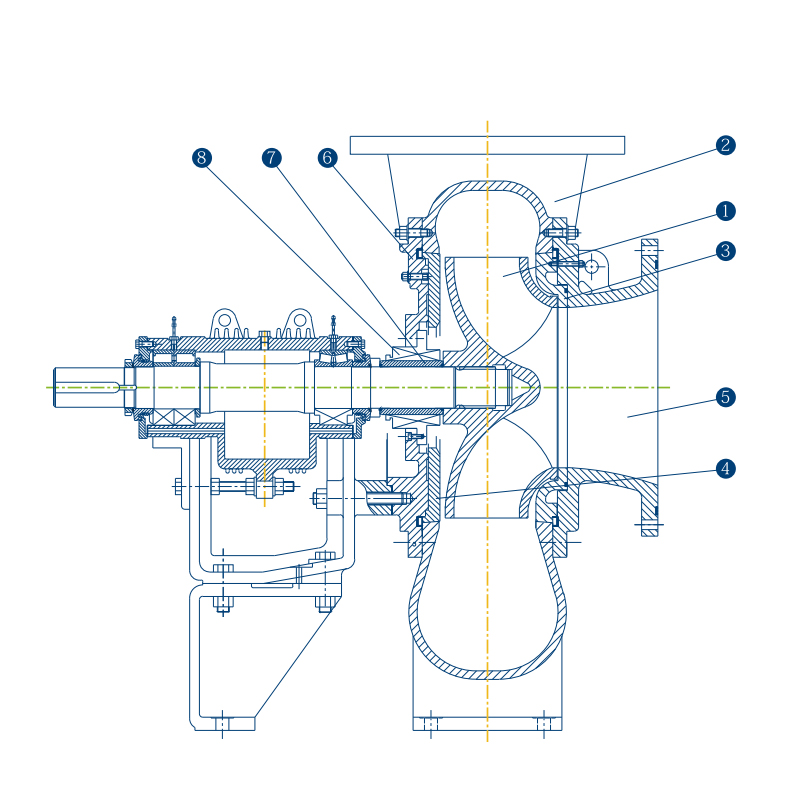
The China Vertical Spindle Slurry Pump is a centrifugal pump specifically designed for the handling of abrasive and erosive slurries. Positioned within the industrial fluid transfer chain, it serves critical roles in mineral processing, wastewater treatment, dredging, and chemical handling. Unlike conventional horizontal slurry pumps, the vertical spindle configuration offers several advantages including reduced footprint, simplified suction lift capabilities, and enhanced bearing support, contributing to extended operational life and reduced maintenance. Core performance characteristics include high head generation with moderate flow rates, tolerance for solids content up to 70% by weight, and robust construction designed to withstand the corrosive nature of many processed slurries. The primary industry pain point addressed by this pump is minimizing downtime and maintenance costs associated with abrasive wear and corrosion in demanding slurry applications.
Material Science & Manufacturing
The primary materials used in the construction of a China Vertical Spindle Slurry Pump are selected for their abrasion resistance and corrosion resistance. The pump casing is typically manufactured from high-chrome cast iron (approximately 27% chromium content) or stainless steel (304, 316, or duplex stainless steel depending on the slurry composition). High-chrome iron offers excellent resistance to abrasive wear due to the formation of hard chromium carbides during the casting process. Stainless steel grades are chosen for their corrosion resistance in acidic or alkaline slurries. The impeller is commonly constructed from similar materials, with variations based on the slurry’s impact velocity. The shaft is typically made from high-strength alloy steel (e.g., 4140 or 4340) and hardened to resist bending and torsional stresses. Seals are critical components, often utilizing mechanical seals constructed from silicon carbide or tungsten carbide faces, with elastomers like Viton or EPDM selected for compatibility with the specific slurry.
Manufacturing processes begin with sand casting or investment casting for the pump casing and impeller. Welding is employed for joining casing sections and attaching components. Following casting, the components undergo heat treatment to achieve the desired hardness and tensile strength. The shaft is machined to precise tolerances to ensure concentricity and bearing alignment. Critical parameters such as impeller vane angles, casing volute geometry, and shaft runout are carefully controlled during manufacturing. The assembly process involves meticulous fitting of the impeller, shaft, bearings, and seals. Non-destructive testing (NDT) methods, including radiography and ultrasonic testing, are used to verify weld integrity and material soundness. Finally, hydrostatic testing is performed to ensure the pump casing is leak-proof under pressure.
Performance & Engineering
Performance analysis of a China Vertical Spindle Slurry Pump hinges on understanding the interplay between head, flow rate, and power requirements. The pump’s performance curve is heavily influenced by impeller diameter, impeller speed, and the internal clearances within the casing. Force analysis must account for the radial loads imposed by the slurry on the impeller, which translate into bending moments on the shaft and stresses on the bearings. Bearing selection is crucial; deep groove ball bearings or cylindrical roller bearings are commonly used, with lubrication systems designed to prevent slurry ingress. Environmental resistance is a key consideration; the pump must withstand the temperature extremes and potential exposure to corrosive atmospheres present in various industrial environments. Compliance requirements vary depending on the application and region. For example, pumps used in mining operations must meet safety standards related to explosion-proof design (ATEX or IECEx certification). Pumps used in wastewater treatment may require compliance with environmental regulations regarding leakage and material compatibility. The functional implementation involves careful selection of the pump curve to match the system’s requirements, ensuring adequate NPSH (Net Positive Suction Head) to prevent cavitation and optimizing impeller trimming to achieve the desired flow rate and head.
Technical Specifications
| Parameter | Unit | Typical Value (Range) | Notes |
|---|---|---|---|
| Maximum Flow Rate | m³/h | 50-500 | Dependent on impeller diameter and speed. |
| Maximum Head | m | 20-120 | Varies with impeller design and pump speed. |
| Maximum Solids Content | % by weight | Up to 70 | Dependent on slurry characteristics and pump design. |
| Pump Casing Material | - | High-Chrome Iron, Stainless Steel (304, 316) | Material selection based on slurry corrosivity. |
| Impeller Material | - | High-Chrome Iron, Stainless Steel (304, 316) | Material selection based on slurry abrasiveness. |
| Shaft Material | - | 4140 Alloy Steel | Hardened and tempered for high strength. |
Failure Mode & Maintenance
Common failure modes in China Vertical Spindle Slurry Pumps include abrasive wear of the impeller and casing, erosion of the pump volute, corrosion of metallic components, mechanical seal failure, and bearing failure. Abrasive wear is the most prevalent failure mechanism, resulting from the impact of solid particles on the pump’s internal surfaces. Erosion occurs due to the high velocity of the slurry, gradually wearing away material. Corrosion can lead to pitting, crevice corrosion, and overall material degradation. Mechanical seal failure is often caused by abrasive particles damaging the seal faces or by incompatibility between the seal materials and the slurry. Bearing failure can result from inadequate lubrication, excessive loads, or slurry ingress.
Preventative maintenance is crucial for maximizing pump lifespan. Regular inspections should be conducted to check for signs of wear, corrosion, and leakage. Impeller and casing wear rates should be monitored, and components replaced before they reach critical levels. Lubrication systems should be inspected and maintained to ensure adequate lubrication of the bearings. Mechanical seals should be inspected for damage and replaced as needed. Slurry composition should be analyzed periodically to identify potential corrosion risks, and appropriate corrosion inhibitors should be used. Consider implementing a condition monitoring program utilizing vibration analysis or oil analysis to detect early signs of bearing failure. Routine flushing of the pump casing can help remove abrasive particles and prevent buildup. Proper alignment of the pump and motor is essential to minimize bearing loads and vibration.
Industry FAQ
Q: What is the expected lifespan of an impeller in a high-abrasive slurry application?
A: The lifespan of an impeller in a high-abrasive slurry application is highly variable, depending on the slurry’s particle size distribution, hardness, and concentration, as well as the impeller material and pump operating conditions. However, a typical lifespan ranges from 6 months to 2 years. Regular inspection and wear monitoring are crucial for predicting impeller failure and scheduling replacements.
Q: What are the key considerations when selecting a mechanical seal for a specific slurry?
A: The key considerations when selecting a mechanical seal include slurry composition (pH, corrosivity, abrasive content), temperature, pressure, and solids concentration. Seal face materials (silicon carbide, tungsten carbide) and elastomers (Viton, EPDM) must be compatible with the slurry to prevent premature failure. Double mechanical seals with a barrier fluid are often recommended for abrasive or corrosive slurries.
Q: How does NPSH affect pump performance and reliability?
A: Net Positive Suction Head (NPSH) is critical for preventing cavitation, which can cause severe damage to the impeller and reduce pump efficiency. Insufficient NPSH can lead to vapor bubbles forming within the pump, collapsing and eroding the impeller surfaces. The available NPSH (NPSHa) must always be greater than the required NPSH (NPSHr) specified by the pump manufacturer.
Q: What type of bearing lubrication is recommended for vertical spindle slurry pumps?
A: Grease lubrication is commonly used for vertical spindle slurry pumps, with a lithium-based grease designed for heavy-duty applications. The grease should be resistant to water washout and provide adequate protection against corrosion. Oil lubrication systems with forced circulation are also used in larger pumps, offering improved cooling and lubrication.
Q: What are the best practices for minimizing slurry settling within the pump casing during periods of inactivity?
A: To minimize slurry settling, it’s recommended to keep the pump casing filled with slurry during periods of inactivity. If complete drainage is necessary, flushing the casing with clean water before shutdown can help prevent sediment buildup. Regularly inspecting and cleaning the pump casing during scheduled maintenance is also crucial.
Conclusion
The China Vertical Spindle Slurry Pump represents a robust and efficient solution for handling abrasive and corrosive slurries across a wide range of industrial applications. Its vertical spindle design, coupled with careful material selection and rigorous manufacturing processes, addresses the core industry pain points of downtime and maintenance costs. Understanding the pump’s performance characteristics, potential failure modes, and proper maintenance procedures is paramount for ensuring long-term reliability and maximizing return on investment.
Future trends in vertical spindle slurry pump technology include the development of advanced materials with enhanced wear and corrosion resistance, the integration of smart sensors for real-time performance monitoring, and the implementation of optimized impeller designs for improved hydraulic efficiency. Continued research and development efforts will focus on reducing energy consumption, minimizing environmental impact, and extending pump service life in the most challenging slurry applications.
-
Precision at the Pump: How Better Machining Protects Flow and Uptime
News2026-11-20
-
Why Pump Reliability Begins Before the First Drop of Fluid
News2026-11-20
-
Beyond the Pump: Designing Safer Access Around Critical Water Infrastructure
News2026-11-20
-
Why Pumping Stations Depend on the Infrastructure Beneath the Pumps
News2026-11-20
-
Beyond the Pump Room: How Smarter Loading Protects Industrial Equipment
News2026-11-19
-
When Pumps Stop: Designing More Resilient Power for Critical Pumping Systems
News2026-11-19
-
The Hidden Role of Dust and Gas Monitoring in Reliable Pump Operations
News2026-11-19
-
The Hidden Role of Mineral Compounds in Extending Industrial Pump Lifespan
News2026-10-12
-
Why Pump System Reliability Depends on Precision Hose Assembly Methods
News2026-09-15
-
How Advanced Imaging Films Are Transforming Pump Component Quality Control
News2026-08-25
-
How Advanced Filtration Protects Pump Systems from Premature Wear and Costly Downtime
News2026-08-25
-
How Steel Material Selection Drives Pump Reliability in Heavy-Duty Systems
News2026-08-25
-
Ensuring Pump System Efficiency: The Role of High-Quality Pipe Fittings and Tubing
News2026-08-24
-
Optimizing Fluid Dynamics and Material Consistency in Industrial Processing
News2026-08-18
-
Innovations and Challenges in Hydraulic Systems for Heavy Machinery
News2026-08-13




