English
- Afrikaans
- Albanian
- Amharic
- Arabic
- Armenian
- Azerbaijani
- Basque
- Belarusian
- Bengali
- Bosnian
- Bulgarian
- Catalan
- Cebuano
- Corsican
- Croatian
- Czech
- Danish
- Dutch
- English
- Esperanto
- Estonian
- Finnish
- French
- Frisian
- Galician
- Georgian
- German
- Greek
- Gujarati
- Haitian Creole
- hausa
- hawaiian
- Hebrew
- Hindi
- Miao
- Hungarian
- Icelandic
- igbo
- Indonesian
- irish
- Italian
- Japanese
- Javanese
- Kannada
- kazakh
- Khmer
- Rwandese
- Korean
- Kurdish
- Kyrgyz
- Lao
- Latin
- Latvian
- Lithuanian
- Luxembourgish
- Macedonian
- Malgashi
- Malay
- Malayalam
- Maltese
- Maori
- Marathi
- Mongolian
- Myanmar
- Nepali
- Norwegian
- Norwegian
- Occitan
- Pashto
- Persian
- Polish
- Portuguese
- Punjabi
- Romanian
- Russian
- Samoan
- Scottish Gaelic
- Serbian
- Sesotho
- Shona
- Sindhi
- Sinhala
- Slovak
- Slovenian
- Somali
- Spanish
- Sundanese
- Swahili
- Swedish
- Tagalog
- Tajik
- Tamil
- Tatar
- Telugu
- Thai
- Turkish
- Turkmen
- Ukrainian
- Urdu
- Uighur
- Uzbek
- Vietnamese
- Welsh
- Bantu
- Yiddish
- Yoruba
- Zulu

Telephone: +86 13120555503
Email: frank@cypump.com


Apr . 01, 2024 17:55 Back to list
china sp slurry pump Performance Analysis
Introduction
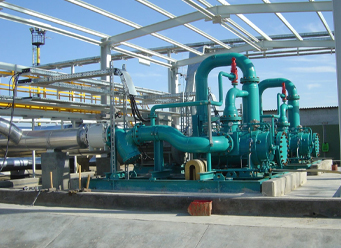
The SP slurry pump, manufactured in China, represents a critical component in numerous industrial processes involving abrasive or corrosive fluid transport. Positioned within the fluid handling sector, these pumps are integral to applications spanning mining, wastewater treatment, chemical processing, and dredging. Unlike centrifugal pumps designed for clean fluids, SP slurry pumps are specifically engineered to handle mixtures of liquids and solids, maintaining efficiency and reliability despite the presence of abrasive particles. Core performance characteristics include high head, large flow rates, and the ability to tolerate substantial solids content without significant wear or blockage. Their robust construction and specialized impeller designs differentiate them from standard pumps, addressing the unique challenges presented by slurry handling. This guide provides an in-depth technical overview of SP slurry pump technology, covering material science, manufacturing processes, performance parameters, failure modes, and relevant industry standards.
Material Science & Manufacturing
SP slurry pump construction typically utilizes high-chrome cast iron (A532 Grade 1A) for the impeller, volute liner, and throat bush due to its exceptional abrasion resistance. The chemical composition focuses on maximizing the volume fraction of hard chrome carbides (Cr3C2) within a ferrous matrix. This microstructure provides significant protection against erosion from solid particle impingement. Pump casings are often manufactured from ductile iron (ASTM A536 65-45-12) offering a balance between tensile strength and impact resistance. Shaft materials typically consist of alloy steels (e.g., 4140 or 4340) which undergo heat treatment to achieve high yield strength and fatigue resistance. Manufacturing processes begin with sand casting for the major components. Impellers are often subjected to precision machining to ensure accurate hydraulic profiling and balance. The volute liner is typically secured to the casing via a bolted connection. Key parameter control during manufacturing includes precise alloy composition verification, hardness testing (HRC), and dimensional inspection using coordinate measuring machines (CMM). Welding, when employed (e.g., for casing repairs), necessitates the use of low-hydrogen electrodes and post-weld heat treatment to prevent cracking. Rubber liners, often EPDM or NR, are frequently utilized in highly abrasive applications, adhered to the metal casing with specialized epoxy adhesives, requiring careful surface preparation to guarantee bond strength and longevity.
Performance & Engineering
SP slurry pump performance is fundamentally governed by hydraulic principles, specifically the balance between head, flow rate, and power consumption. Force analysis centers around impeller dynamics – the centrifugal force generated by the rotating impeller imparts kinetic energy to the slurry. The volute casing then converts this kinetic energy into pressure head. Cavitation, a significant concern, occurs when the absolute pressure at the impeller inlet drops below the vapor pressure of the slurry, forming vapor bubbles that collapse and damage the impeller. Net Positive Suction Head Required (NPSHr) is a critical parameter determined by pump speed, impeller design, and slurry properties. Environmental resistance is crucial, particularly in corrosive applications. Material selection must consider the pH, temperature, and chemical composition of the slurry. For example, highly acidic slurries necessitate the use of stainless steel or specialized alloys. Compliance requirements vary by region but generally encompass safety standards (ISO 12100), electromagnetic compatibility (EMC) directives (IEC 61000), and potentially ATEX certification for use in hazardous environments. Pump performance curves are generated through rigorous hydraulic testing, measuring head, flow, and power consumption at various impeller speeds and slurry concentrations. The pump’s mechanical seal selection is vital, utilizing designs like double mechanical seals with barrier fluid systems for handling abrasive or hazardous liquids.
Technical Specifications
| Parameter | Unit | SP-80 | SP-150 |
|---|---|---|---|
| Maximum Flow Rate | m3/h | 80 | 150 |
| Maximum Head | m | 30 | 50 |
| Maximum Solids Handling Size | mm | 50 | 75 |
| Pump Speed | RPM | 800-1500 | 600-1200 |
| Motor Power | kW | 7.5 | 15 |
| Casing Material | - | Ductile Iron | Ductile Iron |
Failure Mode & Maintenance
SP slurry pumps are susceptible to several failure modes. Impeller wear, caused by abrasive particle impingement, is a common issue, leading to reduced pump efficiency and head. Fatigue cracking can occur in the impeller vanes due to cyclic loading, particularly if the pump operates near its design limits. Volute liner erosion results in increased internal clearances and reduced pump performance. Mechanical seal failure is often linked to abrasive particles damaging the seal faces or incorrect installation. Bearing failure can arise from inadequate lubrication or excessive loads. Cavitation, as previously mentioned, can cause severe impeller damage. Preventive maintenance is crucial. Regular inspections should focus on impeller wear, liner thickness, seal integrity, and bearing condition. Lubrication schedules must be strictly followed. Vibration analysis can detect early signs of bearing or impeller imbalance. Scheduled replacement of wear parts (liners, impellers, seals) is essential to maintain optimal pump performance. For significant repairs, non-destructive testing methods like ultrasonic testing and liquid penetrant inspection should be employed to identify cracks or defects before catastrophic failure occurs. Proper slurry handling practices, such as classifying solids to reduce particle size and maintaining adequate slurry velocity, can significantly extend pump life.
Industry FAQ
Q: What are the key differences between a high-chrome iron impeller and a rubber impeller in an SP slurry pump?
A: High-chrome iron impellers excel in abrasive wear resistance due to the hard chrome carbides in the microstructure. They are ideal for slurries with sharp, angular particles. Rubber impellers, however, offer superior resilience and impact resistance, making them suitable for slurries with larger particle sizes and higher impact velocities. Rubber impellers also dampen noise and vibration, but typically have a shorter lifespan in highly abrasive environments.
Q: How does slurry concentration affect the pump's performance and lifespan?
A: Increasing slurry concentration generally reduces pump efficiency and head. Higher concentrations increase the slurry's viscosity and density, requiring more power to pump. Furthermore, a higher solid content accelerates abrasive wear on pump components. It's crucial to operate the pump within its specified solids handling capabilities to prevent premature failure.
Q: What are the common causes of cavitation in SP slurry pumps, and how can it be mitigated?
A: Cavitation occurs when the NPSHa (Net Positive Suction Head Available) is less than the NPSHr (Net Positive Suction Head Required). Causes include insufficient suction head, high slurry viscosity, restricted suction piping, and excessive pump speed. Mitigation strategies involve increasing suction head, reducing slurry viscosity (e.g., by heating), ensuring adequate pipe diameter, and optimizing pump speed.
Q: What type of mechanical seal arrangement is recommended for handling highly abrasive or corrosive slurries?
A: A double mechanical seal arrangement with a barrier fluid system is typically recommended. The barrier fluid lubricates and cools the seal faces, preventing abrasive particles from entering and causing damage. The barrier fluid also helps to maintain a positive pressure within the seal chamber, preventing ingress of the corrosive slurry.
Q: How often should the wear liners in an SP slurry pump be replaced?
A: The replacement frequency of wear liners depends on the abrasiveness of the slurry, the pump’s operating conditions, and the liner material. Regular inspections, measuring liner thickness, are essential. As a general guideline, liners should be replaced when their thickness is reduced by 25-50% of their original thickness, or when noticeable performance degradation is observed.
Conclusion
The SP slurry pump is a robust and versatile machine designed to handle the demanding requirements of abrasive and corrosive slurry applications. Its performance is intrinsically linked to material selection, manufacturing precision, and careful adherence to operating parameters. Understanding the underlying principles of slurry flow, hydraulic design, and potential failure modes is paramount for maximizing pump lifespan and minimizing downtime.
Continued advancements in material science, such as the development of new alloys and ceramic composites, promise to further enhance the abrasion and corrosion resistance of SP slurry pumps. Furthermore, the integration of condition monitoring systems and predictive maintenance algorithms will enable proactive identification of potential failures, optimizing maintenance schedules and reducing overall operating costs. The longevity and efficiency of these pumps are heavily reliant on a comprehensive approach to design, operation, and maintenance.
-
Effluent vs Sump Pump Performance Analysis
News2026-05-22
-
effluent septic pump Performance Engineering
News2026-05-22
-
best sewer pumps Performance Engineering
News2026-05-22
-
best sewer pump Performance Analysis
News2026-05-22
-
best sewage pumps Performance Engineering
News2026-05-22
-
basement bathroom sewage pump Material Science Manufacturing
News2026-05-21
-
wastewater treatment plant pumps Material Science Manufacturing
News2026-05-21
-
waste water pump for basement Material Science Manufacturing
News2026-05-21
-
sump pump sewage Performance Analysis
News2026-05-21
-
sump pump for sewage Material Science and Manufacturing
News2026-05-21
-
sump pump for septic systems Material Science Manufacturing
News2026-05-20
-
sump pump and ejector pump Material Science Manufacturing
News2026-05-20
-
sewage treatment plant pumps Performance Analysis
News2026-05-20
-
sewage tank pump Material Science and Manufacturing
News2026-05-20
-
sewage pump for septic tank Performance Analysis
News2026-05-20




