English
- Afrikaans
- Albanian
- Amharic
- Arabic
- Armenian
- Azerbaijani
- Basque
- Belarusian
- Bengali
- Bosnian
- Bulgarian
- Catalan
- Cebuano
- Corsican
- Croatian
- Czech
- Danish
- Dutch
- English
- Esperanto
- Estonian
- Finnish
- French
- Frisian
- Galician
- Georgian
- German
- Greek
- Gujarati
- Haitian Creole
- hausa
- hawaiian
- Hebrew
- Hindi
- Miao
- Hungarian
- Icelandic
- igbo
- Indonesian
- irish
- Italian
- Japanese
- Javanese
- Kannada
- kazakh
- Khmer
- Rwandese
- Korean
- Kurdish
- Kyrgyz
- Lao
- Latin
- Latvian
- Lithuanian
- Luxembourgish
- Macedonian
- Malgashi
- Malay
- Malayalam
- Maltese
- Maori
- Marathi
- Mongolian
- Myanmar
- Nepali
- Norwegian
- Norwegian
- Occitan
- Pashto
- Persian
- Polish
- Portuguese
- Punjabi
- Romanian
- Russian
- Samoan
- Scottish Gaelic
- Serbian
- Sesotho
- Shona
- Sindhi
- Sinhala
- Slovak
- Slovenian
- Somali
- Spanish
- Sundanese
- Swahili
- Swedish
- Tagalog
- Tajik
- Tamil
- Tatar
- Telugu
- Thai
- Turkish
- Turkmen
- Ukrainian
- Urdu
- Uighur
- Uzbek
- Vietnamese
- Welsh
- Bantu
- Yiddish
- Yoruba
- Zulu

Telephone: +86 13120555503
Email: frank@cypump.com


Apr . 01, 2024 17:55 Back to list
china slurry pump spares Technical Dimension and Performance Analysis
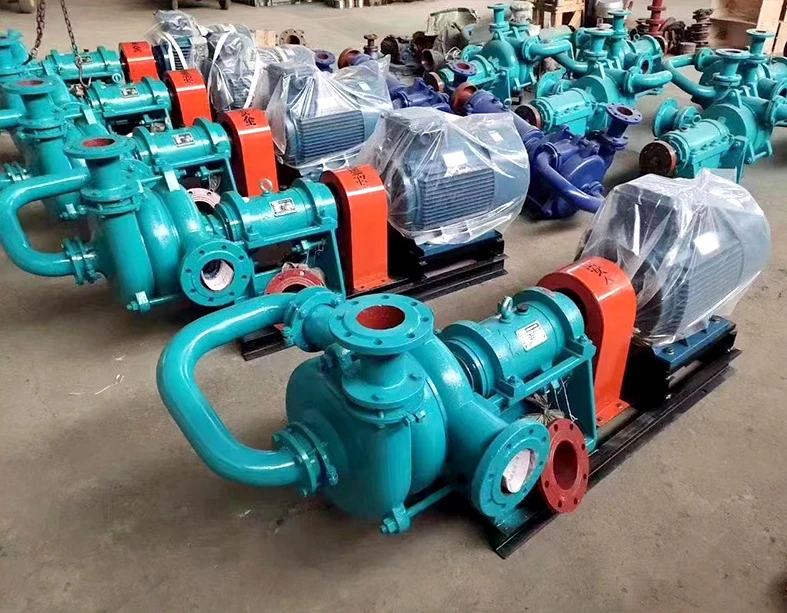
China Slurry Pump Spares: Technical Dimension and Performance Analysis
China slurry pump spares represent a critical segment of the industrial fluid handling supply chain, specifically engineered for the transport of abrasive, corrosive, and high-density fluids. These components, including impellers, liners, and seals, are the primary interface between the mechanical energy of the pump and the destructive forces of the medium. In the hierarchy of mining, dredging, and chemical processing, the technical position of these spares is defined by their ability to maintain hydraulic efficiency while resisting rapid erosive wear. The core performance of these components is measured by their volumetric efficiency, mean time between failures (MTBF), and their capacity to withstand severe cavitation and impingement. By optimizing the metallurgy and geometric precision of these spares, operators can significantly reduce operational expenditure (OPEX) and prevent catastrophic unscheduled downtime in heavy-duty industrial environments.
Material Science & Manufacturing
The efficacy of slurry pump spares is fundamentally rooted in material science, specifically the balance between hardness and toughness. The primary materials employed in the manufacturing of high-performance spares include High-Chrome Alloys (27% Cr), Natural Rubber, and specialized Duplex Stainless Steels. High-chrome white irons are utilized for extreme abrasion resistance; the microstructure consists of hard M7C3 carbides embedded in a martensitic matrix, which prevents the "plowing" effect of abrasive particles. Conversely, for finer particles and high-velocity flows, natural rubber liners are employed due to their resilience—the ability to deform under impact and rebound, thereby absorbing the kinetic energy of the slurry rather than eroding.
The manufacturing process involves precise metallurgical control. For metal spares, investment casting and centrifugal casting are utilized to ensure a dense, non-porous structure, eliminating internal voids that could act as stress concentrators. Heat treatment is a critical parameter; quenching and tempering are meticulously controlled to achieve a Rockwell C hardness typically ranging from 58 to 65 HRC. For elastomeric components, vulcanization parameters—including temperature and pressure—are strictly monitored to ensure cross-linking density, which dictates the tear strength and chemical compatibility of the rubber. Final machining is performed using CNC grinding and precision milling to ensure that tolerances for impellers and wear plates meet strict ISO specifications, minimizing leakage and optimizing the hydraulic flow path.
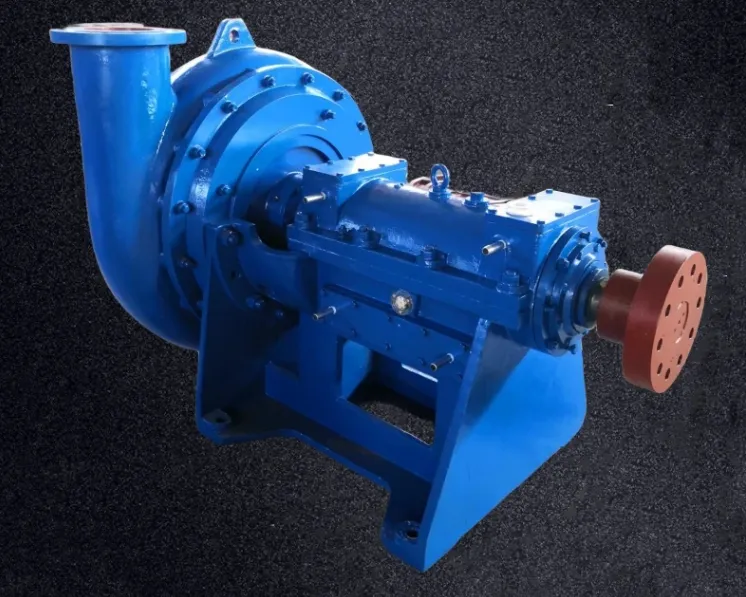
Performance & Engineering
Engineering slurry pump spares requires a deep understanding of fluid dynamics and tribology. The primary engineering challenge is the management of the "wear profile." In an impeller, the leading edge is subject to the highest velocity and impingement angles, making it the most vulnerable point. Engineering solutions involve the implementation of variable thickness liners and the optimization of vane geometry to reduce turbulence and localized eddies, which otherwise accelerate erosion through cavitation. Force analysis is conducted to ensure that the structural integrity of the spares can withstand the radial and axial thrusts generated during the pumping of high-specific-gravity fluids.
Environmental resistance is another critical dimension. In acidic or alkaline slurry applications, the interaction between the material and the chemical medium can lead to corrosion-erosion synergy, where corrosion removes the protective oxide layer, exposing fresh metal to abrasive wear. To combat this, spares are engineered with molybdenum-enhanced alloys or specialized polymer coatings. Compliance requirements mandate that all pressure-containing components undergo non-destructive testing (NDT), including ultrasonic testing and X-ray diffraction, to ensure there are no subsurface flaws that could lead to premature fatigue cracking under cyclic loading conditions.
Technical Specifications
| Material Grade | Hardness (HRC/Shore A) | Abrasion Resistance Index | Typical Application |
|---|---|---|---|
| High Chrome (A05) | 60-65 HRC | Excellent (Coarse Slurry) | Mining Tailings, Gold Processing |
| High Chrome (A03) | 55-60 HRC | Very High (Medium Slurry) | Iron Ore, Sand Pumping |
| Natural Rubber (NR) | 60-70 Shore A | Superior (Fine Slurry) | Coal Washing, FGD Systems |
| Duplex Stainless (2205) | 25-30 HRC | Moderate (Corrosive Slurry) | Chemical Processing, Brine |
| Hardened Steel (ASTM A532) | 50-55 HRC | High (General Purpose) | Aggregate Transport |
| Polyurethane (PU) | 85-95 Shore A | High (Impact/Wear) | Dredging, Sludge Transfer |
Failure Mode & Maintenance
Analysis of slurry pump spare failure reveals several dominant modes: abrasive wear, cavitation erosion, and fatigue cracking. Abrasive wear typically manifests as thinning of the impeller vanes and liner walls, eventually leading to a drop in pump head and efficiency. Cavitation erosion occurs when local pressure drops below the vapor pressure of the liquid, causing bubbles to collapse violently against the surface, resulting in a "pitted" or "sponge-like" appearance. Fatigue cracking is often found in the impeller hub or the connection points of the wear plate, usually triggered by vibration or unstable flow regimes (surging).
Professional maintenance requires a predictive approach rather than a reactive one. The use of ultrasonic thickness gauges allows technicians to monitor liner wear in real-time without dismantling the pump. When replacement is necessary, the "matching" of spares is critical; installing a high-chrome impeller with a rubber liner in a high-velocity application can lead to premature failure due to mismatched hardness levels. Maintenance protocols must include the verification of clearance between the impeller and the wear plate; excessive clearance increases recirculation and accelerates internal erosion. Furthermore, the lubrication of bearings and the integrity of the gland packing or mechanical seal must be audited during every spare replacement cycle to prevent slurry ingress into the pump housing.
Industry FAQ
Q: How do I determine whether to select a high-chrome or a rubber liner for my application?
A: The selection depends primarily on the particle size and the velocity of the slurry. High-chrome alloys are superior for coarse, large-particle slurries that cause high-impact wear. Natural rubber is more effective for fine-particle slurries where the wear mechanism is predominantly sliding abrasion, as the rubber can absorb the impact and "sling" the particles away.
Q: What is the primary cause of premature impeller failure in high-density tailings pumps?
A: The most common cause is cavitation combined with abrasive wear. If the Net Positive Suction Head available (NPSHa) is lower than the required (NPSHr), vapor bubbles form and collapse on the impeller vanes, stripping the protective oxide layer and allowing abrasive particles to remove material at an accelerated rate.
Q: Why is the hardness of the spare part not the only factor in its longevity?
A: While hardness resists abrasion, excessive hardness can lead to brittleness. In applications with high impact (e.g., large rocks in the slurry), an overly hard part may crack or chip (brittle fracture). The ideal spare part balances hardness with toughness to ensure it can withstand both abrasion and impact.
Q: How does the "clearance" between the impeller and the wear plate affect the life of the spares?
A: Excessive clearance allows the slurry to leak back from the discharge side to the suction side. This creates a high-velocity recirculation loop that subjects the internal surfaces to continuous, unnecessary erosion, effectively shortening the lifespan of both the impeller and the liner.
Q: Can these spares be refurbished, or must they be replaced entirely?
A: Depending on the severity of the wear, certain metal spares can be refurbished using hard-facing welding (applying a layer of tungsten carbide or chrome carbide). However, if the structural integrity of the part is compromised or the hydraulic profile is significantly distorted, complete replacement is necessary to maintain pump efficiency.
Conclusion
The technical integrity of china slurry pump spares is the decisive factor in the operational reliability of heavy-duty fluid transport systems. By integrating advanced material science—specifically the strategic use of high-chrome alloys and resilient elastomers—with precision manufacturing and rigorous heat treatment, these components can withstand the most aggressive industrial environments. The shift from reactive replacement to a technical analysis of wear profiles and failure modes allows for a significant extension of the pump's lifecycle and a reduction in total cost of ownership.
Looking forward, the industry is moving toward the adoption of smart monitoring and hybrid materials to further enhance durability. It is recommended that procurement and engineering teams prioritize the alignment of material properties with the specific slurry characteristics—particle size, chemical pH, and flow velocity—to ensure optimal performance. Maintaining strict adherence to international manufacturing standards remains the only viable pathway to ensuring safety and efficiency in high-pressure slurry applications.
-
Comprehensive Guide to Waterproof ORings for Optimal Sealing Solutions
News2026-06-09
-
submersable pumps Performance Analysis
News2026-06-12
-
submerge pump Performance Analysis
News2026-06-12
-
Septic Tank Lift Pump Performance Analysis
News2026-06-12
-
Septic System Pump Replacement Performance Analysis
News2026-06-12
-
Septic Pumps Cost Performance Analysis
News2026-06-12
-
best sewage ejector pump Performance Engineering
News2026-06-11
-
aerobic septic system pump Performance Analysis
News2026-06-11
-
Sumergible Pump Performance Analysis
News2026-06-11
-
ejector pump for basement Performance Engineering
News2026-06-11
-
sewer lift pump Performance Engineering
News2026-06-11
-
Septic Pump Replacement Performance Analysis
News2026-06-10
-
Septic Pump Price Performance Analysis
News2026-06-10
-
pumps for septic systems Material Science Manufacturing
News2026-06-10
-
ejector pumps for basement bathrooms Performance Analysis
News2026-06-10




