English
- Afrikaans
- Albanian
- Amharic
- Arabic
- Armenian
- Azerbaijani
- Basque
- Belarusian
- Bengali
- Bosnian
- Bulgarian
- Catalan
- Cebuano
- Corsican
- Croatian
- Czech
- Danish
- Dutch
- English
- Esperanto
- Estonian
- Finnish
- French
- Frisian
- Galician
- Georgian
- German
- Greek
- Gujarati
- Haitian Creole
- hausa
- hawaiian
- Hebrew
- Hindi
- Miao
- Hungarian
- Icelandic
- igbo
- Indonesian
- irish
- Italian
- Japanese
- Javanese
- Kannada
- kazakh
- Khmer
- Rwandese
- Korean
- Kurdish
- Kyrgyz
- Lao
- Latin
- Latvian
- Lithuanian
- Luxembourgish
- Macedonian
- Malgashi
- Malay
- Malayalam
- Maltese
- Maori
- Marathi
- Mongolian
- Myanmar
- Nepali
- Norwegian
- Norwegian
- Occitan
- Pashto
- Persian
- Polish
- Portuguese
- Punjabi
- Romanian
- Russian
- Samoan
- Scottish Gaelic
- Serbian
- Sesotho
- Shona
- Sindhi
- Sinhala
- Slovak
- Slovenian
- Somali
- Spanish
- Sundanese
- Swahili
- Swedish
- Tagalog
- Tajik
- Tamil
- Tatar
- Telugu
- Thai
- Turkish
- Turkmen
- Ukrainian
- Urdu
- Uighur
- Uzbek
- Vietnamese
- Welsh
- Bantu
- Yiddish
- Yoruba
- Zulu

Telephone: +86 13120555503
Email: frank@cypump.com


Apr . 01, 2024 17:55 Back to list
china slurry pump Performance Engineering
Introduction
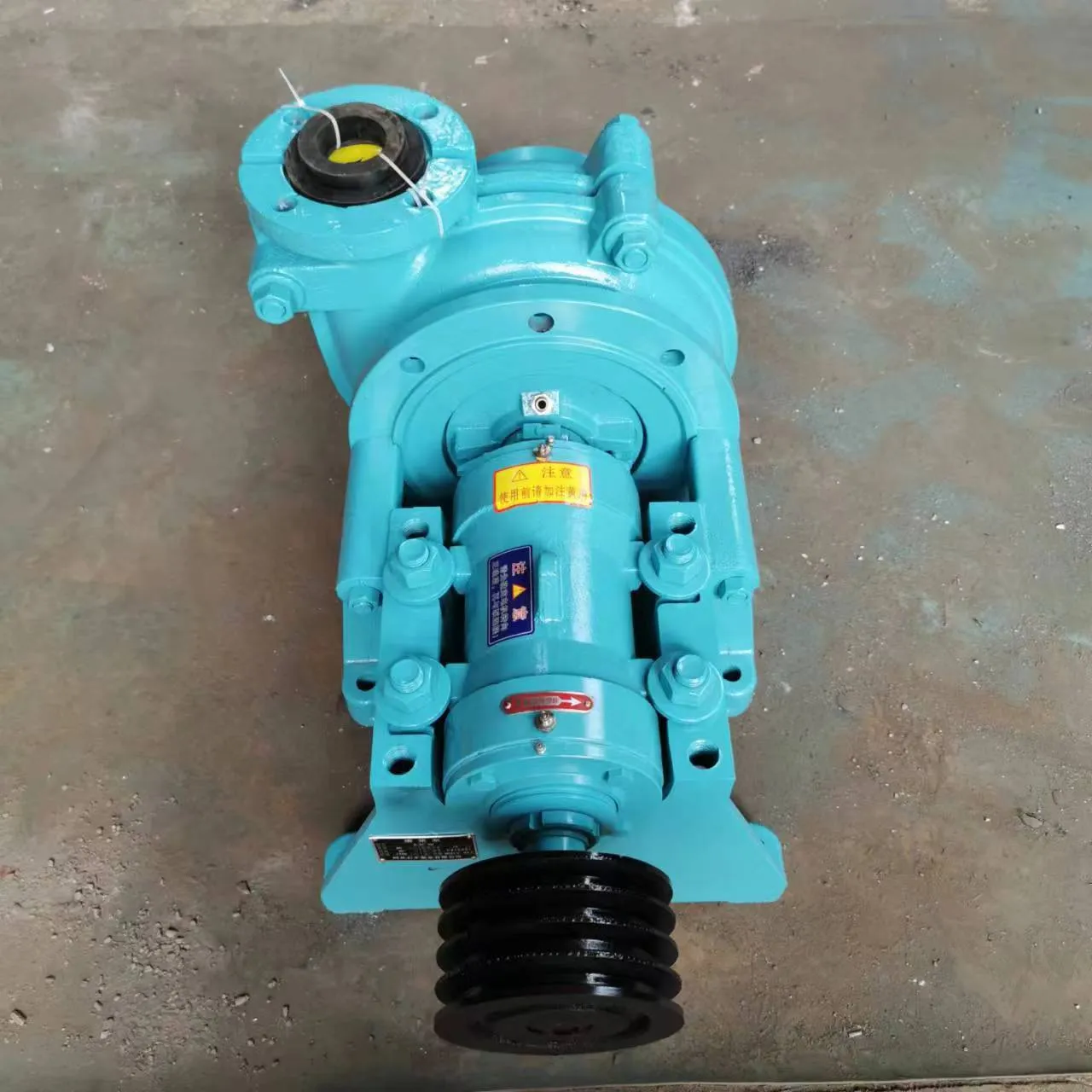
China slurry pumps are centrifugal pumps specifically designed for the transportation of abrasive, corrosive, and high-solids content slurries. These pumps occupy a critical position within the mineral processing, wastewater treatment, dredging, and chemical industries, functioning as a vital link in material handling systems. Unlike standard centrifugal pumps, slurry pumps utilize robust construction materials and specialized impeller designs to mitigate wear and maintain efficiency when handling challenging fluid mixtures. Core performance characteristics defining slurry pump suitability include flow rate (typically measured in cubic meters per hour or gallons per minute), head (expressed in meters or feet), solids handling capability (percentage by weight or diameter of solids), and abrasion resistance (determined by material composition and hardness). The increasing demand for efficient and reliable slurry handling, driven by infrastructure development and resource extraction, has positioned China as a major global manufacturer of these pumps, focusing on both cost-effectiveness and technological advancements.
Material Science & Manufacturing
The construction of a china slurry pump hinges on the selection of materials able to withstand the corrosive and abrasive nature of the transported slurry. Pump casings are commonly manufactured from high-chrome cast iron (typically containing 15-30% chromium) offering excellent wear resistance, or alternatively, from ductile iron with rubber linings for applications involving highly corrosive fluids. Impellers, the critical components responsible for imparting energy to the slurry, can be manufactured from similar high-chrome cast irons, or specialized materials like ceramic or polyurethane for extreme abrasion scenarios. Shafts are typically constructed from alloy steels, heat-treated to enhance tensile strength and fatigue resistance.
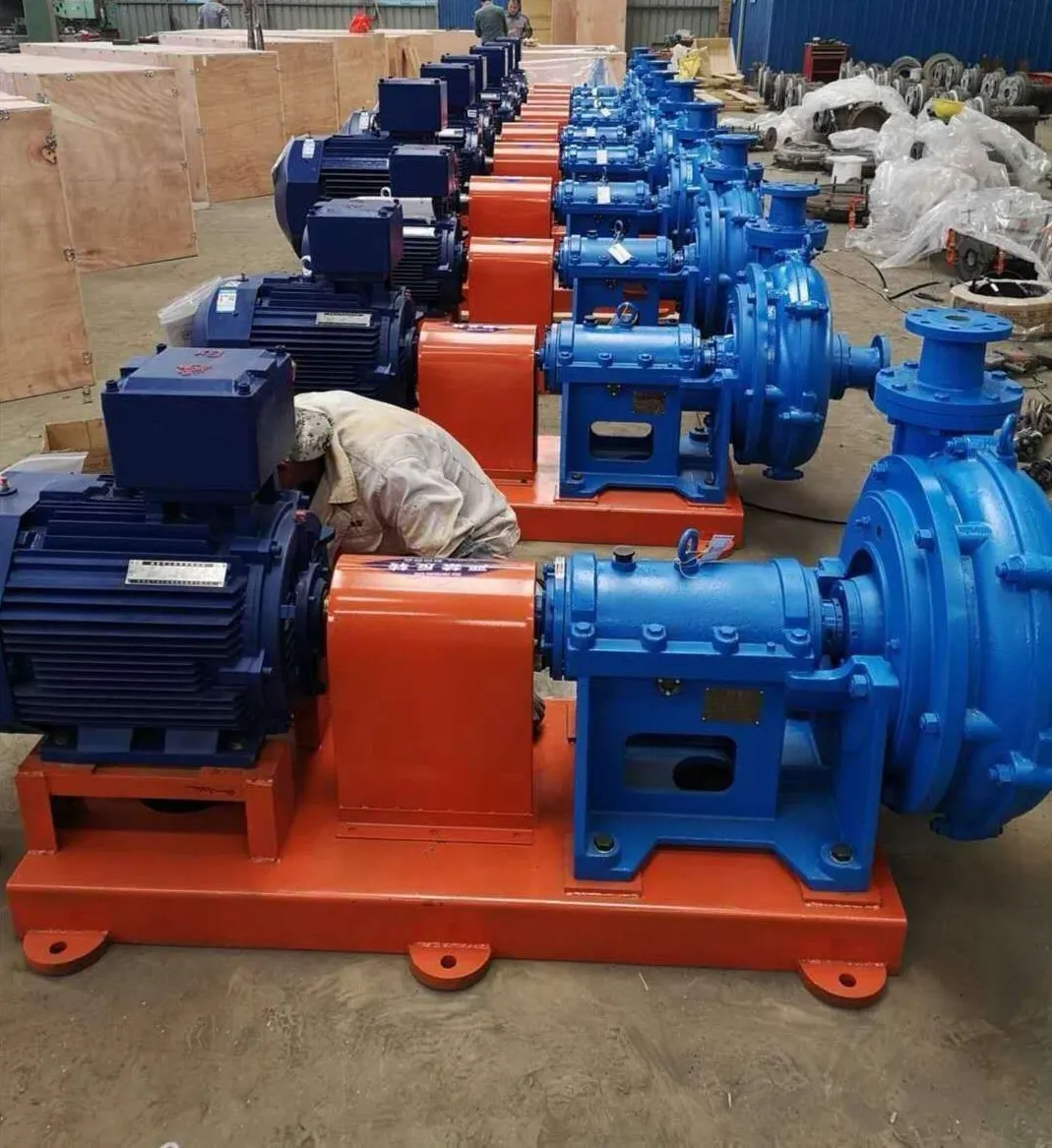
Manufacturing processes involve several key stages. Casing production commonly utilizes sand casting, followed by precision machining to ensure dimensional accuracy and surface finish. Impellers are often investment cast, allowing for complex geometries crucial for efficient slurry handling. Welding processes, particularly shielded metal arc welding (SMAW) and submerged arc welding (SAW), are employed for joining components, requiring stringent quality control to prevent defects that could compromise structural integrity. Critical parameters controlled during manufacturing include: chemical composition verification of cast irons, hardness testing (Brinell or Vickers), dimensional inspections using coordinate measuring machines (CMMs), and non-destructive testing (NDT) such as radiographic testing (RT) and ultrasonic testing (UT) to detect internal flaws. Rubber lining application requires precise bonding techniques and cure cycles to ensure adhesion and prevent delamination. Finally, hydraulic testing at pressures exceeding operational limits confirms the structural integrity of the finished pump.
Performance & Engineering
The performance of a slurry pump is fundamentally governed by principles of fluid mechanics, specifically the relationship between flow rate, head, and power consumption. Force analysis involves assessing the hydraulic forces exerted on the impeller and casing, as well as the mechanical stresses induced by pressure differentials and rotational forces. Cavitation, a significant concern in slurry pump operation, arises from localized pressure drops below the vapor pressure of the slurry, leading to the formation and collapse of vapor bubbles which erode pump components. Preventing cavitation requires careful selection of pump speed, net positive suction head available (NPSHa), and impeller design. Environmental resistance is critical, particularly in outdoor installations or corrosive environments. Coating systems such as epoxy or polyurethane are often applied to protect metallic surfaces from corrosion.
Compliance requirements vary based on the application and geographic region. For example, pumps used in the oil and gas industry must adhere to API 674 standards for positive displacement pumps, while pumps handling wastewater may need to comply with environmental regulations regarding leakage and material compatibility. Functional implementation involves careful consideration of system piping layout to minimize head loss, selection of appropriate sealing systems to prevent leakage and contamination, and integration with control systems for automated operation and monitoring. The design of the impeller is paramount; open or semi-open impeller designs are favored for high solids content slurries to minimize clogging, while closed impeller designs offer higher efficiencies for cleaner fluids.
Technical Specifications
| Parameter | Unit | Typical Range (Small Pump) | Typical Range (Large Pump) |
|---|---|---|---|
| Flow Rate | m³/h | 5-50 | 200-1000 |
| Head | m | 10-30 | 50-150 |
| Solids Handling Capacity | % by weight | 10-30 | 30-60 |
| Maximum Particle Size | mm | 25 | 75 |
| Pump Speed | RPM | 1450-2900 | 750-1450 |
| Casing Material | - | High Chrome Cast Iron | High Chrome Cast Iron/Rubber Lined |
Failure Mode & Maintenance
Slurry pumps are susceptible to several failure modes related to the abrasive and corrosive nature of the handled fluids. Fatigue cracking in the impeller and casing, often initiated at stress concentration points, is a common occurrence, particularly under cyclic loading. Abrasion wear, caused by the impact of solid particles, leads to gradual material loss from impeller vanes and casing walls, reducing pump performance. Corrosion, especially in aggressive chemical environments, results in material degradation and potential leakage. Delamination of rubber linings can occur due to poor bonding or exposure to extreme temperatures. Shaft misalignment and bearing failure contribute to increased vibration and premature wear.
Professional maintenance solutions include regular inspections for wear and corrosion, impeller balancing to minimize vibration, shaft alignment checks, and bearing lubrication. Preventative maintenance schedules should include periodic replacement of wear parts such as liners, impellers, and seals. Non-destructive testing methods (UT, RT, visual inspection) can be employed to detect hidden cracks or flaws. In the event of a failure, a thorough failure analysis should be conducted to identify the root cause and implement corrective actions. Proper slurry preparation, including screening to remove oversized particles and controlling slurry concentration, can significantly extend pump life. Implementing a robust lubrication schedule and monitoring bearing temperatures are also critical for preventing bearing failures.
Industry FAQ
Q: What are the key differences between a slurry pump and a centrifugal pump designed for clean liquids?
A: Slurry pumps differ significantly in their construction and design. Clean liquid centrifugal pumps prioritize efficiency and typically utilize close-tolerance clearances. Slurry pumps, however, prioritize wear resistance and solids handling capability. They feature heavier casings, larger flow passages, and often employ open or semi-open impeller designs to minimize clogging and abrasion. They also utilize materials specifically chosen for their resistance to wear and corrosion.
Q: How do I determine the appropriate slurry pump size for my application?
A: Determining the correct size involves several factors. You must know the flow rate required, the total dynamic head (TDH) the pump needs to overcome, the specific gravity and viscosity of the slurry, and the solids concentration and particle size distribution. A pump curve analysis, comparing your system requirements to the pump’s performance curve, is essential. Oversizing leads to inefficiency, while undersizing causes premature wear and potential pump damage.
Q: What impact does solids concentration have on slurry pump performance?
A: Higher solids concentrations increase slurry viscosity and density, resulting in reduced flow rate and increased power consumption. They also accelerate abrasive wear. Slurry pumps are typically rated for a maximum solids concentration by weight. Exceeding this limit can lead to impeller clogging, reduced efficiency, and increased maintenance requirements.
Q: What are the advantages and disadvantages of using rubber linings in slurry pump casings?
A: Rubber linings offer excellent corrosion resistance, particularly against acidic and abrasive slurries. They also dampen noise and vibration. However, rubber linings have limited temperature resistance and can be susceptible to damage from mechanical impact or certain solvents. They also require periodic inspection and replacement as they degrade over time.
Q: What preventative maintenance practices are most effective for extending slurry pump life?
A: Regularly inspect the pump for wear and corrosion, especially the impeller and casing. Implement a consistent lubrication schedule for bearings. Monitor vibration levels to detect potential issues early. Ensure proper slurry preparation by removing oversized particles. Conduct periodic impeller balancing and shaft alignment checks. And always adhere to the manufacturer’s recommended maintenance procedures.
Conclusion
China slurry pumps represent a critical component in numerous industrial processes, offering a robust and cost-effective solution for handling challenging fluid mixtures. Their design and material selection are inherently geared towards maximizing wear resistance and solids handling capability, differing fundamentally from pumps designed for clean liquids. Understanding the underlying principles of fluid mechanics, material science, and the potential failure modes is crucial for selecting the optimal pump for a given application and implementing effective preventative maintenance strategies.
As industries increasingly prioritize efficiency and sustainability, continued advancements in slurry pump technology, including the development of new materials and optimized impeller designs, will be essential. Focus on predictive maintenance techniques, leveraging sensor data and machine learning algorithms, will further enhance pump reliability and minimize downtime. Selecting a reputable manufacturer with a commitment to quality control and adherence to international standards remains paramount to ensure long-term performance and cost-effectiveness.
-
Sewage Pump Company Performance and Engineering
News2026-05-24
-
sewage pump 1/2 hp Performance Analysis
News2026-05-24
-
Sewage Ejector Systems Performance Analysis
News2026-05-24
-
Sewage Ejection System Material Science and Manufacturing
News2026-05-24
-
sewage and effluent pumps Performance Engineering
News2026-05-24
-
pump for sewage water Performance Analysis
News2026-05-23
-
plumbing sewage ejector pump Performance Engineering
News2026-05-23
-
home sewer pump station Performance and Engineering
News2026-05-23
-
high pressure sump pump Performance Analysis
News2026-05-23
-
high head effluent pump Performance Analysis
News2026-05-23
-
Effluent vs Sump Pump Performance Analysis
News2026-05-22
-
effluent septic pump Performance Engineering
News2026-05-22
-
best sewer pumps Performance Engineering
News2026-05-22
-
best sewer pump Performance Analysis
News2026-05-22
-
best sewage pumps Performance Engineering
News2026-05-22




