English
- Afrikaans
- Albanian
- Amharic
- Arabic
- Armenian
- Azerbaijani
- Basque
- Belarusian
- Bengali
- Bosnian
- Bulgarian
- Catalan
- Cebuano
- Corsican
- Croatian
- Czech
- Danish
- Dutch
- English
- Esperanto
- Estonian
- Finnish
- French
- Frisian
- Galician
- Georgian
- German
- Greek
- Gujarati
- Haitian Creole
- hausa
- hawaiian
- Hebrew
- Hindi
- Miao
- Hungarian
- Icelandic
- igbo
- Indonesian
- irish
- Italian
- Japanese
- Javanese
- Kannada
- kazakh
- Khmer
- Rwandese
- Korean
- Kurdish
- Kyrgyz
- Lao
- Latin
- Latvian
- Lithuanian
- Luxembourgish
- Macedonian
- Malgashi
- Malay
- Malayalam
- Maltese
- Maori
- Marathi
- Mongolian
- Myanmar
- Nepali
- Norwegian
- Norwegian
- Occitan
- Pashto
- Persian
- Polish
- Portuguese
- Punjabi
- Romanian
- Russian
- Samoan
- Scottish Gaelic
- Serbian
- Sesotho
- Shona
- Sindhi
- Sinhala
- Slovak
- Slovenian
- Somali
- Spanish
- Sundanese
- Swahili
- Swedish
- Tagalog
- Tajik
- Tamil
- Tatar
- Telugu
- Thai
- Turkish
- Turkmen
- Ukrainian
- Urdu
- Uighur
- Uzbek
- Vietnamese
- Welsh
- Bantu
- Yiddish
- Yoruba
- Zulu

Telephone: +86 13120555503
Email: frank@cypump.com


Apr . 01, 2024 17:55 Back to list
china self priming sewage pump Performance Analysis
Introduction
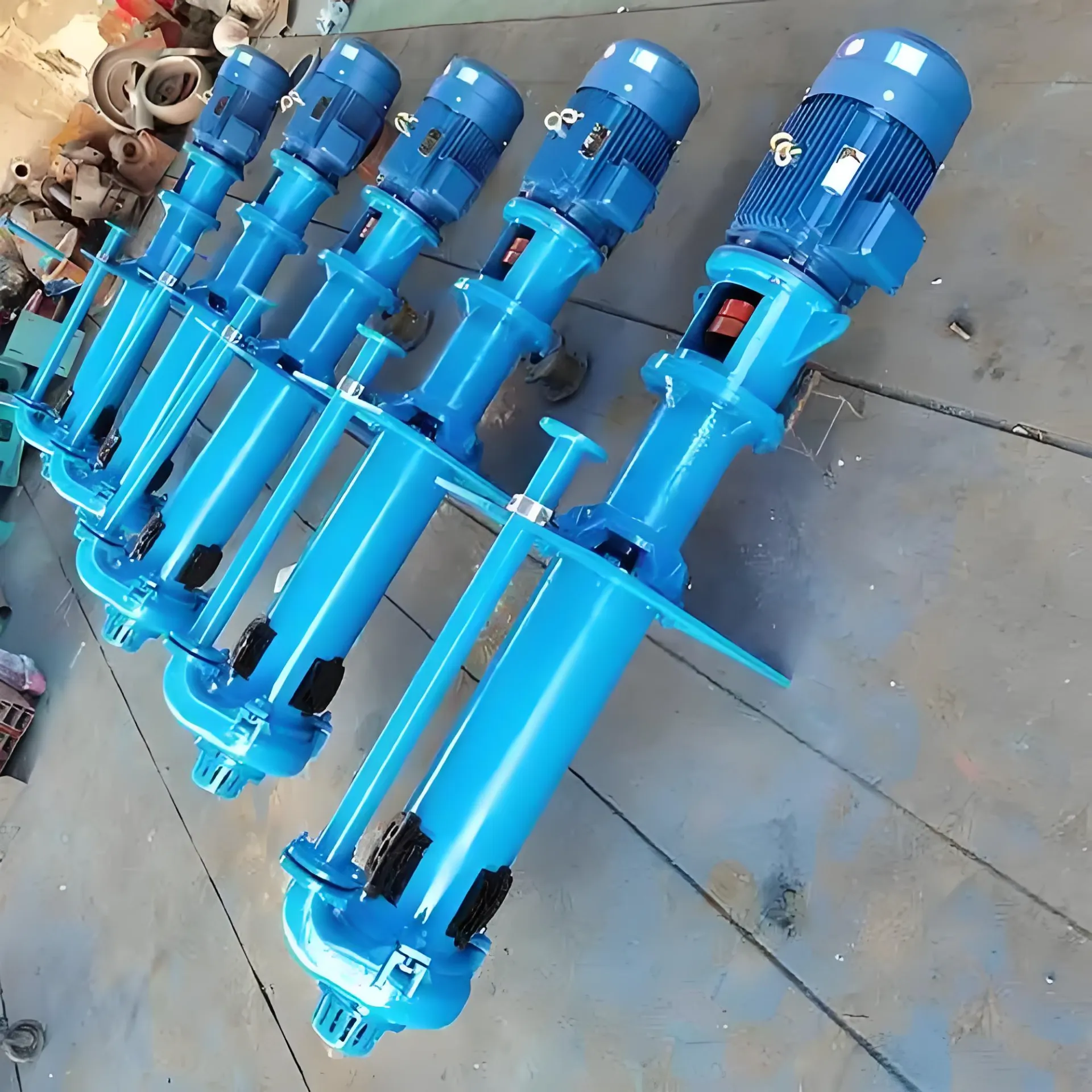
China self-priming sewage pumps represent a critical component in wastewater management and fluid transfer applications across a diverse range of industries, including municipal engineering, construction, agriculture, and industrial processing. These pumps are designed to efficiently remove solids-laden wastewater, sewage, and slurries from below the pump's intake level, eliminating the need for initial priming. Their technical position within the industry chain lies between raw material suppliers (cast iron, stainless steel, polymers), pump component manufacturers (impellers, housings, seals), assembly plants, and end-users encompassing municipalities, contractors, and industrial facilities. Core performance characteristics are defined by flow rate (typically measured in cubic meters per hour or gallons per minute), head (expressed in meters or feet), solids handling capability (diameter and concentration), motor power (kW or HP), and efficiency (percentage). A key industry pain point is the balancing act between abrasion resistance, corrosion resistance, and cost-effectiveness, particularly when handling highly abrasive or corrosive wastewater streams. Furthermore, achieving reliable self-priming performance and minimizing clogging within the impeller and volute are ongoing engineering challenges.
Material Science & Manufacturing
The construction of a china self-priming sewage pump typically involves several key materials. Pump housings are commonly manufactured from cast iron (ASTM A48 Class 30 or equivalent GB standard) due to its cost-effectiveness and reasonable wear resistance, although ductile iron (ASTM A536) is increasingly preferred for improved strength and toughness. Impellers, subjected to high wear rates from abrasive solids, are frequently constructed from high-chrome cast iron (typically containing 15-28% chromium) or stainless steel (304, 316 or duplex grades) for enhanced abrasion resistance. Shafts are generally manufactured from carbon steel (45# steel equivalent to AISI 1045) hardened and tempered for strength and fatigue resistance. Seals, crucial for preventing leakage, utilize materials like nitrile rubber (NBR), fluoroelastomers (FKM/Viton), or silicon carbide faces depending on the fluid being pumped and operating temperature. Manufacturing processes include sand casting for housings, investment casting or centrifugal casting for impellers, and machining for shafts and other components. Welding is employed to join housing sections or attach mounting brackets. Critical parameters include controlling the chemical composition of castings, ensuring proper heat treatment of steel components to achieve desired hardness and toughness, and maintaining tight tolerances during machining to ensure proper impeller-volute clearances. Quality control involves non-destructive testing (NDT) such as radiographic inspection and ultrasonic testing to detect casting defects and ensure weld integrity. Surface treatments like epoxy coating or ceramic lining may be applied to the housing and impeller to further enhance corrosion and abrasion resistance.
Performance & Engineering
The performance of a china self-priming sewage pump is fundamentally governed by principles of fluid dynamics and mechanical engineering. Force analysis considers hydrostatic forces from the fluid, dynamic forces from impeller rotation, and external forces from piping connections. The pump’s ability to self-prime relies on the impeller's design to create a vacuum within the pump casing, drawing air and fluid simultaneously. This necessitates a carefully designed impeller with appropriate vane angles and clearances. Environmental resistance is a key consideration, particularly in applications involving exposure to corrosive fluids, UV radiation, and extreme temperatures. Material selection, as discussed previously, directly impacts corrosion resistance. Motor enclosures must be appropriately rated (e.g., IP68) for submersion and protection against ingress of solids and water. Compliance requirements vary by region and application. In Europe, CE marking is mandatory, demonstrating conformity with relevant directives. In North America, pumps may need to meet EPA standards for efficiency and solids handling. The pump’s hydraulic efficiency is directly related to the impeller geometry, volute design, and internal surface finish. Computational Fluid Dynamics (CFD) is often utilized during the design phase to optimize these parameters. Furthermore, the pump’s mechanical stability and resistance to vibration are crucial to preventing premature failure. Proper shaft alignment and bearing selection are essential for minimizing vibration and extending pump life. Considerations also include the pump's Net Positive Suction Head Required (NPSHr) to prevent cavitation.
Technical Specifications
| Model Number | Flow Rate (m³/h) | Head (m) | Motor Power (kW) | Solids Handling (mm) | Impeller Material |
|---|---|---|---|---|---|
| CSP-80A | 20-60 | 15-25 | 2.2 | 50 | High-Chrome Cast Iron |
| CSP-100B | 40-100 | 20-35 | 4.0 | 75 | Stainless Steel 304 |
| CSP-150C | 80-180 | 30-50 | 7.5 | 100 | Stainless Steel 316 |
| CSP-200D | 150-300 | 40-65 | 11.0 | 150 | Ductile Iron with Rubber Lining |
| CSP-250E | 200-400 | 50-80 | 15.0 | 200 | High-Chrome Cast Iron |
| CSP-300F | 300-500 | 60-90 | 18.5 | 250 | Stainless Steel 316 |
Failure Mode & Maintenance
China self-priming sewage pumps are susceptible to several failure modes. Fatigue cracking of the impeller, particularly around the vanes, can occur due to cyclic loading and stress concentration. This is often exacerbated by abrasive wear. Delamination of coatings (epoxy, rubber) on the housing or impeller reduces corrosion resistance and accelerates material loss. Clogging within the impeller or volute, caused by large solids or debris, reduces pump efficiency and can lead to motor overload and overheating. Cavitation, resulting from insufficient NPSH, causes pitting and erosion of the impeller and volute surfaces. Bearing failure, due to inadequate lubrication or contamination, can lead to increased vibration and eventual pump seizure. Seal failure results in leakage and potential motor damage. Preventative maintenance includes regular inspection of the impeller and volute for wear, cleaning of the pump casing to remove accumulated debris, lubrication of bearings according to manufacturer's recommendations, and periodic replacement of seals. Vibration analysis can identify potential bearing failures before they occur. In the event of a failure, a thorough root cause analysis should be conducted to identify the underlying cause and prevent recurrence. Repair typically involves impeller replacement, housing repair (welding or coating), bearing replacement, and seal replacement. Regular monitoring of pump performance parameters (flow rate, head, motor current) can provide early warning signs of potential problems.
Industry FAQ
Q: What is the impact of varying solids concentrations on impeller wear rates?
A: Increasing solids concentrations significantly accelerate impeller wear rates. Abrasive particles act as cutting tools, eroding the impeller material. Higher concentrations lead to more frequent and severe impacts, resulting in faster material loss. Selecting a higher-grade impeller material (e.g., high-chrome cast iron or stainless steel) is critical in these applications, and regular impeller inspections are essential.
Q: How does the impeller geometry affect self-priming capability?
A: The impeller geometry, specifically the vane angle, vane width, and impeller diameter, directly impacts self-priming performance. A larger impeller diameter and optimized vane angles generate a stronger vacuum within the pump casing, facilitating faster and more reliable priming. Impeller design must also consider the balance between priming capability and pump efficiency.
Q: What are the key considerations when selecting a seal material for corrosive fluids?
A: When handling corrosive fluids, seal material selection is paramount. Nitrile rubber (NBR) is suitable for mild corrosives, but fluoroelastomers (FKM/Viton) offer superior resistance to a wider range of chemicals. Silicon carbide faces are the most corrosion-resistant option, particularly for highly aggressive fluids, but are also the most expensive. Compatibility charts should be consulted to ensure the seal material is compatible with the specific fluid being pumped.
Q: What is the significance of NPSHr and how can it be addressed if insufficient?
A: Net Positive Suction Head Required (NPSHr) is the minimum absolute pressure required at the pump suction to prevent cavitation. Insufficient NPSH results in vapor bubble formation, leading to pitting erosion and reduced pump performance. Addressing insufficient NPSH involves lowering the pump elevation, increasing the suction pipe diameter, reducing the suction pipe length, or increasing the liquid level in the suction tank.
Q: What are the benefits of using a variable frequency drive (VFD) with a sewage pump?
A: Utilizing a Variable Frequency Drive (VFD) offers several benefits. It allows for precise control of pump speed, optimizing flow rate to match demand and reducing energy consumption. VFDs also provide soft starting, reducing stress on the motor and mechanical components, and can protect the pump from overload conditions. They also allow for reduced wear and tear on the pump system, extending its overall lifespan.
Conclusion
China self-priming sewage pumps represent a vital technology for efficient wastewater management. Their performance is intrinsically linked to material science, precise manufacturing processes, and a deep understanding of fluid dynamics. Proper material selection, optimized impeller design, and adherence to relevant industry standards are critical for ensuring reliability, durability, and cost-effectiveness.
Future developments will likely focus on further enhancing abrasion resistance through advanced materials and coatings, improving energy efficiency through optimized hydraulic designs and VFD integration, and incorporating smart sensors and data analytics for predictive maintenance. A continued emphasis on robust design and rigorous quality control will solidify the position of these pumps as essential components in modern infrastructure.
-
Precision at the Pump: How Better Machining Protects Flow and Uptime
News2026-11-20
-
Why Pump Reliability Begins Before the First Drop of Fluid
News2026-11-20
-
Beyond the Pump: Designing Safer Access Around Critical Water Infrastructure
News2026-11-20
-
Why Pumping Stations Depend on the Infrastructure Beneath the Pumps
News2026-11-20
-
Beyond the Pump Room: How Smarter Loading Protects Industrial Equipment
News2026-11-19
-
When Pumps Stop: Designing More Resilient Power for Critical Pumping Systems
News2026-11-19
-
The Hidden Role of Dust and Gas Monitoring in Reliable Pump Operations
News2026-11-19
-
The Hidden Role of Mineral Compounds in Extending Industrial Pump Lifespan
News2026-10-12
-
Why Pump System Reliability Depends on Precision Hose Assembly Methods
News2026-09-15
-
How Advanced Imaging Films Are Transforming Pump Component Quality Control
News2026-08-25
-
How Advanced Filtration Protects Pump Systems from Premature Wear and Costly Downtime
News2026-08-25
-
How Steel Material Selection Drives Pump Reliability in Heavy-Duty Systems
News2026-08-25
-
Ensuring Pump System Efficiency: The Role of High-Quality Pipe Fittings and Tubing
News2026-08-24
-
Optimizing Fluid Dynamics and Material Consistency in Industrial Processing
News2026-08-18
-
Innovations and Challenges in Hydraulic Systems for Heavy Machinery
News2026-08-13




