English
- Afrikaans
- Albanian
- Amharic
- Arabic
- Armenian
- Azerbaijani
- Basque
- Belarusian
- Bengali
- Bosnian
- Bulgarian
- Catalan
- Cebuano
- Corsican
- Croatian
- Czech
- Danish
- Dutch
- English
- Esperanto
- Estonian
- Finnish
- French
- Frisian
- Galician
- Georgian
- German
- Greek
- Gujarati
- Haitian Creole
- hausa
- hawaiian
- Hebrew
- Hindi
- Miao
- Hungarian
- Icelandic
- igbo
- Indonesian
- irish
- Italian
- Japanese
- Javanese
- Kannada
- kazakh
- Khmer
- Rwandese
- Korean
- Kurdish
- Kyrgyz
- Lao
- Latin
- Latvian
- Lithuanian
- Luxembourgish
- Macedonian
- Malgashi
- Malay
- Malayalam
- Maltese
- Maori
- Marathi
- Mongolian
- Myanmar
- Nepali
- Norwegian
- Norwegian
- Occitan
- Pashto
- Persian
- Polish
- Portuguese
- Punjabi
- Romanian
- Russian
- Samoan
- Scottish Gaelic
- Serbian
- Sesotho
- Shona
- Sindhi
- Sinhala
- Slovak
- Slovenian
- Somali
- Spanish
- Sundanese
- Swahili
- Swedish
- Tagalog
- Tajik
- Tamil
- Tatar
- Telugu
- Thai
- Turkish
- Turkmen
- Ukrainian
- Urdu
- Uighur
- Uzbek
- Vietnamese
- Welsh
- Bantu
- Yiddish
- Yoruba
- Zulu

Telephone: +86 13120555503
Email: frank@cypump.com


Apr . 01, 2024 17:55 Back to list
China PTO Slurry Pump Performance Analysis
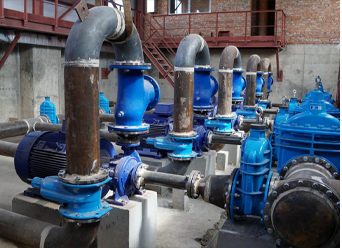
China PTO Slurry Pump Performance Analysis
A China PTO (Power Take-Off) slurry pump is a specialized centrifugal pumping system engineered to transport highly abrasive, viscous, and non-Newtonian fluids by leveraging the mechanical power of a vehicle's internal combustion engine. Positioned as a critical component in the mobile industrial chain, these pumps eliminate the need for independent electric motors, making them indispensable for dredging, mining, slurry transport, and municipal vacuum sewage operations. The core technical challenge of these pumps lies in the equilibrium between high volumetric flow rates and the extreme erosive wear caused by suspended solids. By integrating a robust PTO drive shaft with a reinforced centrifugal impeller, these systems convert rotational torque into hydraulic energy capable of overcoming the significant frictional losses inherent in slurry transport. This guide provides an exhaustive engineering analysis of the materials, fluid dynamics, and failure modes associated with high-performance PTO slurry pumps.
Material Science & Manufacturing
The longevity of a PTO slurry pump is fundamentally dictated by the metallurgical properties of its wetted parts. Given the continuous impact of abrasive particles, standard cast iron is insufficient. Leading China PTO slurry pumps utilize High-Chrome (Hi-Cr) alloys, typically containing 25% to 28% chromium. This creates a microstructure of hard primary carbides (M7C3) embedded in a martensitic matrix, providing a hardness typically exceeding 60 HRC. For applications involving corrosive chemical slurries, duplex stainless steels or nickel-hardened alloys are employed to prevent pitting and stress corrosion cracking.
The manufacturing process involves precision investment casting to ensure the internal flow paths are smooth, reducing turbulence-induced erosion. The impeller—the most critical component—undergoes dynamic balancing to ISO 1940 G2.5 standards to minimize vibration, which would otherwise accelerate bearing fatigue and seal failure. The housing is often reinforced through heat treatment processes to relieve internal casting stresses. Furthermore, the PTO interface is machined using CNC precision grinding to ensure a concentricity tolerance of less than 0.02mm, preventing axial misalignment during the transmission of high-torque loads from the truck's drivetrain to the pump shaft.
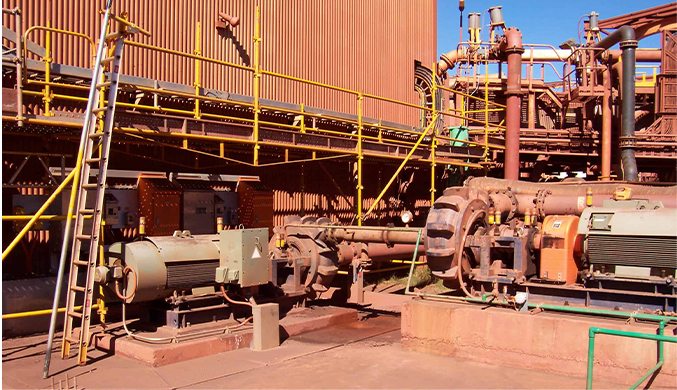
Performance & Engineering
From an engineering perspective, the performance of a PTO slurry pump is evaluated based on the "Critical Velocity" concept. If the flow velocity falls below the critical threshold, suspended solids will settle, leading to pipeline blockage and localized "slugging" that can cause catastrophic mechanical shock. Engineering calculations must account for the slurry density (specific gravity), which increases the required Brake Horsepower (BHP) compared to water pumping. The formula BHP = (Flow × Head × SG) / (3960 × Efficiency) is used to ensure the vehicle's PTO can provide sufficient torque without overheating the transmission.
Force analysis focuses on the radial thrust generated by the impeller. In slurry pumps, uneven wear on the impeller vanes can create hydraulic imbalance, leading to shaft deflection. To counteract this, heavy-duty tapered roller bearings are utilized to absorb both radial and axial loads. Environmental resistance is managed through the use of specialized mechanical seals or gland packing with a constant water-flushing system. This "seal water" creates a pressure barrier that prevents abrasive particles from entering the bearing housing, effectively isolating the mechanical drive from the corrosive slurry medium.
Technical Specifications
| Parameter Dimension | Standard Specification | High-Performance Range | Tolerance/Unit |
|---|---|---|---|
| Impeller Material | High-Chrome Alloy (27% Cr) | Ceramic-Lined Alloy | Hardness > 60 HRC |
| Max Flow Rate | 500 - 1200 m³/h | Up to 2500 m³/h | ± 5% Flow |
| Max Discharge Head | 20 - 60 Meters | Up to 110 Meters | ± 2% Head |
| PTO Input Speed | 800 - 1500 RPM | Adjustable via Gearbox | ± 50 RPM |
| Maximum Particle Size | 15 - 30 mm | Up to 50 mm | Spherical Equiv. |
| Seal Type | Expeller Seal/Gland Packing | Double Mechanical Seal | Zero Leakage Target |
Failure Mode & Maintenance
Failure analysis of PTO slurry pumps generally categorizes failures into three modes: Abrasive Wear, Cavitation, and Mechanical Fatigue. Abrasive wear is the primary failure mode, manifesting as "thinning" of the impeller vanes and volute liner. This occurs when the slurry's particle velocity exceeds the material's surface hardness, leading to micro-cutting of the metal. Cavitation occurs when the Net Positive Suction Head Available (NPSHa) drops below the Net Positive Suction Head Required (NPSHr), causing vapor bubbles to implode against the impeller surface, creating microscopic pits that accelerate corrosion.
Mechanical fatigue typically manifests as shaft cracking or bearing seizure, often caused by misalignment between the PTO drive and the pump shaft. Maintenance protocols must prioritize "Preventative Liner Replacement." Instead of waiting for the pump to lose prime, liners should be replaced when they reach 70% wear to prevent the slurry from eroding the outer structural casing. Lubrication schedules for the bearing housing must be strictly followed, utilizing high-viscosity EP2 grease to withstand the thermal loads generated by the high-RPM PTO drive. Monthly vibration analysis is recommended to detect early signs of impeller imbalance or bearing degradation.
Industry FAQ
Q: How do you determine the correct PTO gear ratio for a specific slurry density?
A: The gear ratio must be calculated by matching the engine's peak torque curve with the pump's required BHP at the desired flow rate. As slurry density increases, the torque requirement rises linearly. We utilize a torque-conversion matrix to ensure the PTO output RPM maintains the pump within its Best Efficiency Point (BEP) without overloading the vehicle's transmission.
Q: What is the impact of "slugging" on the pump's internal components?
A: Slugging occurs when concentrated pockets of solids enter the pump, causing an instantaneous spike in hydraulic load. This creates massive radial forces on the shaft, potentially leading to sudden bearing failure or shaft deflection. We mitigate this by implementing a slurry mixing tank or using a variable-speed PTO drive to smooth out the intake flow.
Q: Why is High-Chrome alloy preferred over Stainless Steel for abrasive slurries?
A: While stainless steel offers superior chemical corrosion resistance, it lacks the hardness required to resist abrasive wear. High-Chrome alloys form hard carbides that act as a shield against the scouring action of sand and minerals, whereas stainless steel would be eroded rapidly despite its lack of rust.
Q: How can I identify the onset of cavitation in a PTO-driven pump?
A: Cavitation is typically identified by a characteristic "marbles in the pump" sound and a fluctuating discharge pressure gauge. Technically, it is measured by monitoring the suction vacuum; if the vacuum exceeds the design limit, the intake line diameter must be increased or the pump must be lowered to increase the static head.
Q: What is the recommended maintenance interval for the expeller seal?
A: For standard abrasive applications, the expeller seal and wear plates should be inspected every 500 operating hours. If the pump is handling high-quartz sand, this interval should be reduced to 250 hours to prevent slurry ingress into the bearing housing, which would cause an immediate total system failure.
Conclusion
The China PTO slurry pump represents a sophisticated integration of automotive power transmission and heavy-duty fluid engineering. Its effectiveness is not merely a result of raw power, but the precise application of material science—specifically the use of high-chrome alloys—and the strict adherence to hydraulic principles to manage abrasive wear and cavitation. By optimizing the synergy between the PTO drive and the centrifugal pump's internal geometry, operators can achieve high volumetric efficiency while maximizing the mean time between failures (MTBF).
Looking forward, the industry is shifting toward "smart" slurry pumping, integrating real-time wear sensors and automated lubrication systems to reduce unplanned downtime. For procurement managers and engineers, the focus must remain on the total cost of ownership (TCO), where the initial investment in superior metallurgy and precision alignment pays dividends through reduced maintenance cycles and extended component lifespans in the most demanding industrial environments.
-
Comprehensive Guide to Waterproof ORings for Optimal Sealing Solutions
News2026-06-09
-
Septic Pump System Performance Analysis
News2026-06-08
-
pump for septic Material Science
News2026-06-08
-
basement sewer pump Performance Analysis
News2026-06-08
-
submerged pump Performance Engineering
News2026-06-08
-
Septic System Pumps Performance Analysis
News2026-06-08
-
septic system pump Material Science and Manufacturing
News2026-06-07
-
pump for septic tank Material Science Manufacturing
News2026-06-07
-
submersible sewage pump Material Science
News2026-06-07
-
Sewage Ejector Material Science and Manufacturing
News2026-06-07
-
Ejection Pump Material Science
News2026-06-07
-
pump submersible Performance Analysis
News2026-06-06
-
ejector pumps Performance Engineering
News2026-06-06
-
basement ejector pump Material Science Manufacturing
News2026-06-06
-
Septic Tanks Pumping Performance Analysis
News2026-06-06




