English
- Afrikaans
- Albanian
- Amharic
- Arabic
- Armenian
- Azerbaijani
- Basque
- Belarusian
- Bengali
- Bosnian
- Bulgarian
- Catalan
- Cebuano
- Corsican
- Croatian
- Czech
- Danish
- Dutch
- English
- Esperanto
- Estonian
- Finnish
- French
- Frisian
- Galician
- Georgian
- German
- Greek
- Gujarati
- Haitian Creole
- hausa
- hawaiian
- Hebrew
- Hindi
- Miao
- Hungarian
- Icelandic
- igbo
- Indonesian
- irish
- Italian
- Japanese
- Javanese
- Kannada
- kazakh
- Khmer
- Rwandese
- Korean
- Kurdish
- Kyrgyz
- Lao
- Latin
- Latvian
- Lithuanian
- Luxembourgish
- Macedonian
- Malgashi
- Malay
- Malayalam
- Maltese
- Maori
- Marathi
- Mongolian
- Myanmar
- Nepali
- Norwegian
- Norwegian
- Occitan
- Pashto
- Persian
- Polish
- Portuguese
- Punjabi
- Romanian
- Russian
- Samoan
- Scottish Gaelic
- Serbian
- Sesotho
- Shona
- Sindhi
- Sinhala
- Slovak
- Slovenian
- Somali
- Spanish
- Sundanese
- Swahili
- Swedish
- Tagalog
- Tajik
- Tamil
- Tatar
- Telugu
- Thai
- Turkish
- Turkmen
- Ukrainian
- Urdu
- Uighur
- Uzbek
- Vietnamese
- Welsh
- Bantu
- Yiddish
- Yoruba
- Zulu

Telephone: +86 13120555503
Email: frank@cypump.com


Apr . 01, 2024 17:55 Back to list
china oem short delivery slurry pump Performance Analysis
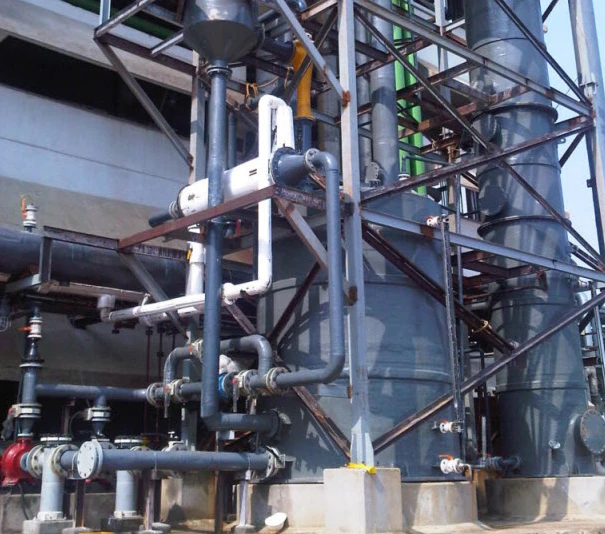
China OEM Short Delivery Slurry Pump Performance Analysis
The China OEM short delivery slurry pump is a specialized industrial centrifugal machine engineered for the transport of high-density, abrasive fluids over limited distances. Positioned as a critical node in the mineral processing and construction supply chain, these pumps are designed to handle slurries—mixtures of solids and liquids—where the concentration of abrasive particulates would rapidly erode standard pumping equipment. Unlike long-distance pipeline pumps that prioritize efficiency and low friction loss, the short delivery variant focuses on high-pressure head capacity and extreme wear resistance to manage thick tailings, sand, and chemical slags. The technical core of these systems lies in the optimization of hydraulic flow paths to minimize turbulence and the deployment of advanced metallurgy to combat the dual threats of impingement erosion and chemical corrosion.
Material Science & Manufacturing
The longevity of a short delivery slurry pump is fundamentally determined by the synergy between its metallurgical composition and the precision of its manufacturing process. At the material level, China OEM manufacturers utilize high-chrome cast irons (such as ASTM A532) and natural rubber linings to address different wear profiles. High-chrome alloys, typically containing 25% to 28% chromium, form hard M7C3 carbides within a martensitic matrix, providing a hardness level often exceeding 60 HRC. This is essential for resisting the scouring action of coarse mineral particles. For applications involving finer, more corrosive slurries, soft-lining technology using high-molecular-weight elastomers is employed to absorb the impact energy of particles, thereby protecting the pump casing.
The manufacturing process integrates advanced casting and precision machining to ensure structural integrity. The process begins with investment casting or sand casting, followed by a rigorous heat treatment cycle—including quenching and tempering—to eliminate internal stresses and homogenize the microstructure. Key parameter control is focused on the "clearance gap" between the impeller and the wear plate; excessive gaps lead to recirculation and accelerated wear (the "vortex effect"), while overly tight tolerances risk seizure under thermal expansion. Furthermore, CNC grinding is applied to the shaft and bearing housings to ensure concentricity within microns, reducing vibrational amplitude that could otherwise lead to premature fatigue failure of the mechanical seals.
Performance & Engineering
Engineering a short delivery slurry pump requires a rigorous force analysis of the fluid-structure interaction. The primary engineering challenge is managing the "critical velocity"—the minimum speed at which solids remain suspended in the carrier fluid. If the flow velocity drops below this threshold, sedimentation occurs, leading to pipeline blockage and catastrophic pump surges. To combat this, the impeller geometry is designed with a semi-open or closed vane configuration to maintain a consistent centrifugal force, ensuring that the slurry is propelled outward with sufficient kinetic energy to overcome the high viscosity of the medium.
Environmental resistance is another critical engineering pillar. Because these pumps often operate in mining or chemical environments, the external housings are treated with epoxy-based anti-corrosion coatings to prevent atmospheric oxidation. From a compliance standpoint, the pumps are engineered to meet strict vibration and noise emission standards. The implementation of a heavy-duty bearing frame, often reinforced with cast iron ribs, ensures that the pump can withstand the radial loads generated by the non-homogeneous nature of the slurry. Furthermore, the integration of an adjustable wear plate allows operators to maintain optimal efficiency as the internal components erode over time, effectively extending the mean time between overhauls (MTBO).
Technical Specifications
| Specification Parameter | Standard Series (Small) | Heavy Duty Series (Medium) | Industrial Series (Large) | Ultra-High Pressure Series |
|---|---|---|---|---|
| Max Flow Rate (m³/h) | 50 - 150 | 200 - 600 | 700 - 1500 | 1600 - 3000 |
| Maximum Head (m) | 15 - 30 | 30 - 60 | 60 - 110 | 120 - 180 |
| Impeller Material | High Chrome (27% Cr) | High Chrome (28% Cr) | Duplex Stainless Steel | Tungsten Carbide Coated |
| Max Particle Size (mm) | ≤ 10 | ≤ 25 | ≤ 50 | ≤ 80 |
| Shaft Power (kW) | 11 - 30 | 37 - 110 | 132 - 400 | 500 - 1200 |
| Operating Temp (°C) | -10 to 80 | -10 to 90 | -20 to 120 | -20 to 150 |
Failure Mode & Maintenance
In practical industrial applications, short delivery slurry pumps are prone to specific failure modes derived from the aggressive nature of the pumped media. The most prevalent failure is "Abrasive Erosion," typically occurring at the impeller vanes and the volute tongue. This is characterized by the physical removal of material through the repetitive impact of hard particles. A second critical failure mode is "Cavitation," which occurs when the Net Positive Suction Head available (NPSHa) is lower than the required (NPSHr), causing vapor bubbles to collapse and create microscopic pits in the metal surface. Additionally, "Mechanical Seal Leakage" is common due to the infiltration of abrasive fines into the seal faces, causing scoring and loss of vacuum.
Professional maintenance requires a predictive rather than reactive approach. We recommend the implementation of a vibration monitoring system to detect bearing wear or impeller imbalance before a catastrophic failure occurs. Maintenance protocols should include: 1) Monthly inspection of the wear plate thickness and adjustment of the clearance gap to maintain hydraulic efficiency. 2) Lubrication analysis to check for metal shavings in the bearing oil, which indicates premature wear. 3) Periodic ultrasonic thickness testing (UT) of the pump casing to monitor wall thinning. For seal maintenance, the transition to a double-mechanical seal with a pressurized flush system (API Plan 53 or 54) is advised to keep particulates away from the sealing interfaces.
Industry FAQ
Q: How do you determine the optimal impeller material for a specific slurry type?
A: The selection depends on the PH value and the Mohs hardness of the solids. For highly acidic slurries with low solids concentration, rubber-lined components are superior. For neutral or alkaline slurries containing quartz or magnetite, high-chrome alloys (27% Cr) are required to prevent rapid erosive wear.
Q: Why is the pump experiencing excessive vibration despite correct alignment?
A: In slurry pumps, this is often caused by "asymmetric wear." If the impeller wears unevenly due to the slurry's flow pattern, it creates a dynamic imbalance. We recommend checking the impeller for erosion patterns and replacing it if the imbalance exceeds ISO 1940 G2.5 standards.
Q: What is the impact of slurry density on the pump's power consumption?
A: An increase in slurry density directly increases the fluid viscosity and specific gravity, which raises the brake horsepower (BHP) required. If the density exceeds the design limit, the motor may trip due to overload, necessitating a variable frequency drive (VFD) to optimize flow.
Q: How can we prevent "plugging" during startup in short delivery systems?
A: Plugging occurs when solids settle during downtime. The engineering solution is to implement a water-flush cycle prior to starting the slurry feed, ensuring the line is clear and the pump is primed to avoid dry running and subsequent seal failure.
Q: What is the expected lifespan of a wear liner in a high-abrasion environment?
A: Lifespan varies by application, but with high-chrome liners, we typically see 6 to 18 months of operation. By monitoring the discharge pressure drop, engineers can predict the exact point of liner failure and schedule replacements during planned shutdowns.
Conclusion
The China OEM short delivery slurry pump is a complex piece of engineering that balances the conflicting requirements of high structural strength and extreme wear resistance. Through the integration of high-chrome metallurgy, precision CNC manufacturing, and rigorous hydraulic analysis, these pumps provide a robust solution for the most demanding abrasive transport tasks. The technical success of these units relies not only on the initial material selection but on the precise control of operational parameters such as critical velocity and clearance gaps.
Looking forward, the industry is moving toward "intelligent slurry management," incorporating IoT sensors for real-time wear monitoring and AI-driven predictive maintenance. For procurement managers and engineers, the focus must remain on the total cost of ownership (TCO), where a higher initial investment in premium alloys and precision engineering results in significantly lower operational costs through reduced downtime and extended component life.
-
sand gravel pump Performance Analysis
News2026-06-02
-
sand and gravel dredge pumps Performance Analysis
News2026-06-02
-
terapump aquarium gravel sand bpafree pump Performance Analysis
News2026-06-02
-
sand and gravel pump Material Science Manufacturing
News2026-06-02
-
air pump sand and gravel Performance Analysis
News2026-06-02
-
submersible pump for sewage treatment plant Performance Analysis
News2026-06-01
-
single phase sewage submersible pump Material Science Manufacturing
News2026-06-01
-
sewage water submersible pump Material Science Manufacturing
News2026-06-01
-
Sewage Submersible Pump Price List Performance Analysis
News2026-06-01
-
sewage submersible pump 3hp Performance Analysis
News2026-06-01
-
submersible effluent sewage pump Performance Analysis
News2026-05-31
-
stainless steel submersible sewage pumps Performance Engineering
News2026-05-31
-
stainless steel submersible sewage pump Material Science Manufacturing
News2026-05-31
-
Sewage Submersible Pump Installation Performance Analysis
News2026-05-31
-
sewage submersible pump 2hp Performance Analysis
News2026-05-31




