English
- Afrikaans
- Albanian
- Amharic
- Arabic
- Armenian
- Azerbaijani
- Basque
- Belarusian
- Bengali
- Bosnian
- Bulgarian
- Catalan
- Cebuano
- Corsican
- Croatian
- Czech
- Danish
- Dutch
- English
- Esperanto
- Estonian
- Finnish
- French
- Frisian
- Galician
- Georgian
- German
- Greek
- Gujarati
- Haitian Creole
- hausa
- hawaiian
- Hebrew
- Hindi
- Miao
- Hungarian
- Icelandic
- igbo
- Indonesian
- irish
- Italian
- Japanese
- Javanese
- Kannada
- kazakh
- Khmer
- Rwandese
- Korean
- Kurdish
- Kyrgyz
- Lao
- Latin
- Latvian
- Lithuanian
- Luxembourgish
- Macedonian
- Malgashi
- Malay
- Malayalam
- Maltese
- Maori
- Marathi
- Mongolian
- Myanmar
- Nepali
- Norwegian
- Norwegian
- Occitan
- Pashto
- Persian
- Polish
- Portuguese
- Punjabi
- Romanian
- Russian
- Samoan
- Scottish Gaelic
- Serbian
- Sesotho
- Shona
- Sindhi
- Sinhala
- Slovak
- Slovenian
- Somali
- Spanish
- Sundanese
- Swahili
- Swedish
- Tagalog
- Tajik
- Tamil
- Tatar
- Telugu
- Thai
- Turkish
- Turkmen
- Ukrainian
- Urdu
- Uighur
- Uzbek
- Vietnamese
- Welsh
- Bantu
- Yiddish
- Yoruba
- Zulu

Telephone: +86 13120555503
Email: frank@cypump.com


Apr . 01, 2024 17:55 Back to list
china oem medium head heavy duty slurry pump Technical Performance Analysis
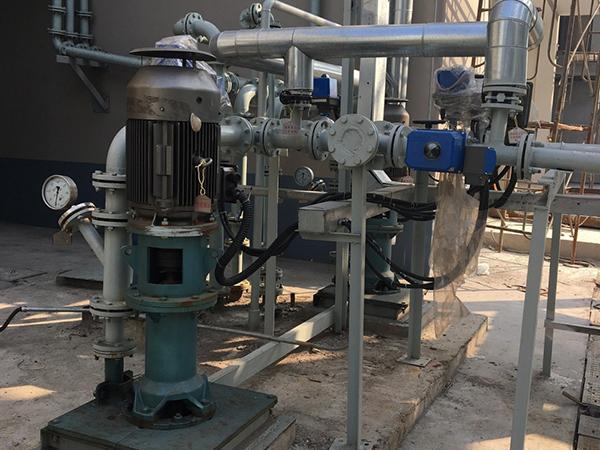
China OEM Medium Head Heavy Duty Slurry Pump: Technical Performance Analysis
The China OEM medium head heavy duty slurry pump represents a critical engineering solution designed for the transport of high-density, abrasive, and corrosive fluids within the mining, dredging, and mineral processing industries. Positioned strategically within the industrial fluid-handling chain, these pumps are engineered to bridge the gap between low-head high-volume transfer pumps and high-head specialty pumps. The "medium head" designation typically refers to a total dynamic head (TDH) range that allows for efficient elevation and horizontal transport of slurries containing particulate matter such as tailings, quartz, magnetite, and coal wash. The core technical objective of these machines is to maximize the Mean Time Between Maintenance (MTBM) while maintaining a constant volumetric flow rate despite the aggressive nature of the pumped medium. By integrating advanced hydrodynamic design with high-chrome alloys, these pumps mitigate the systemic energy losses associated with turbulent flow and particulate friction, ensuring operational stability in extreme industrial environments.
Material Science & Manufacturing
The longevity of a heavy-duty slurry pump is fundamentally determined by its resistance to erosive wear and chemical degradation. For China OEM medium head heavy duty slurry pumps, the material selection focuses on high-chromium cast irons (e.g., ASTM A532) and natural rubber linings. High-chrome alloys (typically 25% to 28% Cr) are utilized for the impeller and volute liners; these materials undergo a specific heat treatment process to form M7C3 carbides within a martensitic matrix, providing a hardness typically exceeding 60 HRC. This metallurgical structure is essential to resist the scouring effect of high-velocity abrasive particles.
Manufacturing begins with precision investment casting or sand casting, followed by rigorous CNC machining to ensure the tight tolerances required for the wear plate and impeller clearance. The "medium head" capability is achieved through the optimization of the impeller geometry—balancing the vane angle and width to minimize cavitation while maximizing hydraulic lift. A critical manufacturing parameter is the dynamic balancing of the impeller, which is conducted to G2.5 standards to prevent vibration-induced fatigue in the shaft and bearings. Furthermore, the pump casing is often reinforced with thick-walled sections to accommodate the high internal pressures generated during the transport of high-specific-gravity slurries, ensuring that the structural integrity is maintained under transient pressure surges.
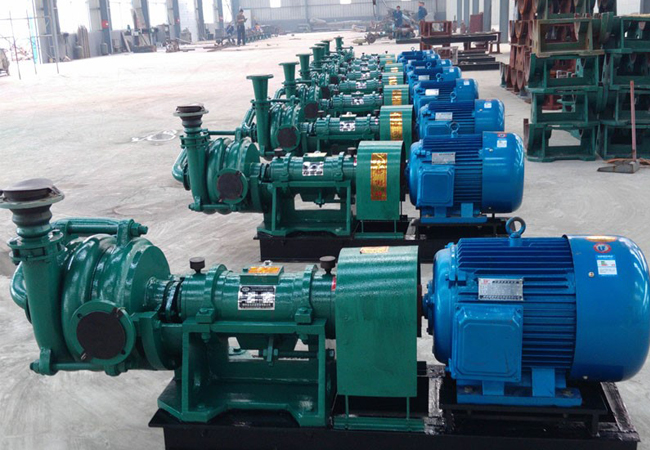
Performance & Engineering
Engineering a medium head heavy duty slurry pump requires a deep understanding of fluid dynamics and the rheology of non-Newtonian fluids. The primary engineering challenge is managing the "critical settling velocity"—the minimum velocity required to keep solids in suspension to prevent pipeline blockage. To achieve medium head performance, engineers employ a closed or semi-open impeller design that maximizes the conversion of kinetic energy into pressure head. Force analysis is conducted to ensure that the radial thrust exerted on the shaft is neutralized, typically through the use of a balanced impeller or optimized volute tongue positioning.
Environmental resistance is addressed through the implementation of specialized sealing systems. Given the abrasive nature of the slurry, traditional mechanical seals are often replaced or supplemented by heavy-duty expeller seals or gland packing with high-pressure flushing water (seal water). This prevents the slurry from entering the bearing housing, which would otherwise lead to catastrophic failure. Compliance requirements for these pumps include stringent vibration limits and noise emission standards, ensuring they can be integrated into large-scale processing plants without compromising safety. The engineering focus remains on the Efficiency Curve; by optimizing the Best Efficiency Point (BEP), the pump minimizes internal recirculation and turbulence, which are the primary drivers of localized erosion (pitting) within the pump volute.
Technical Specifications
| Performance Parameter | Standard Range (Medium Head) | Material Composition | Operational Tolerance |
|---|---|---|---|
| Total Dynamic Head (TDH) | 20m - 60m | High Chrome (27% Cr) | ± 5% |
| Flow Rate (Capacity) | 100 - 1200 m³/h | Natural Rubber (NBR) | ± 10% |
| Slurry Density | 1.1 - 1.5 sg | Martensitic Stainless Steel | Max 1.8 sg |
| Particle Size (Max) | Up to 15mm | Alloy Steel (42CrMo) | Spherical Grade |
| Rotational Speed | 600 - 1800 RPM | Cast Iron (GG25) | ± 2% |
| Operating Pressure | 0.6 - 1.2 MPa | Hardened Chrome Steel | Test Pressure 1.5x |
Failure Mode & Maintenance
The primary failure modes of medium head heavy duty slurry pumps are concentrated in the wear components and the sealing interfaces. Abrasive Wear is the most common failure, characterized by the thinning of the impeller vanes and volute liners. This leads to a drop in head pressure and flow efficiency. Cavitation Erosion occurs when the Net Positive Suction Head Available (NPSHa) falls below the Required (NPSHr), creating vapor bubbles that implode and pit the metal surface, typically near the impeller eye.
Fatigue Cracking may occur in the pump shaft due to cyclic loading or misalignment between the pump and the motor. Chemical Degradation is a risk when pumping acidic or alkaline slurries, leading to the leaching of the binder in the alloy and accelerating wear. Maintenance protocols must include a scheduled "Wear Audit," where the clearance between the impeller and the wear plate is measured. Once the clearance exceeds the engineering threshold, the pump's efficiency drops sharply, and the risk of internal recirculation increases. Professional maintenance involves the precision replacement of liners, the application of laser alignment tools for the drive train, and the implementation of a vibration monitoring system to detect early signs of bearing fatigue or impeller imbalance.
Industry FAQ
Q: How do you determine if a "medium head" pump is appropriate for a specific slurry viscosity?
A: We analyze the slurry's rheological profile using a viscometer to determine if it is Bingham plastic or pseudoplastic. For medium head applications, we calculate the pressure drop across the system; if the required lift and friction loss fall within the 20-60m range while maintaining the critical settling velocity, a medium head pump is the optimal choice.
Q: What is the impact of increasing the impeller diameter on the pump's wear rate?
A: Increasing the impeller diameter increases the head and flow but also increases the peripheral velocity at the impeller tip. Since erosive wear is typically proportional to the cube of the velocity (V³), a small increase in diameter can lead to a significantly accelerated wear rate on the leading edges of the vanes.
Q: Can these pumps handle chemicals alongside abrasive solids?
A: Yes, provided the material selection is adjusted. While high-chrome alloys excel in abrasion, they may fail in highly acidic environments. In such cases, we specify duplex stainless steel or specialized polymer linings to ensure chemical compatibility without sacrificing structural rigidity.
Q: How often should the wear liners be replaced in a heavy-duty application?
A: Replacement intervals vary by slurry concentration and particle hardness. However, based on technical telemetry, we recommend a detailed inspection every 2,000 operating hours. In high-quartz applications, liner replacement may be necessary every 3-6 months to avoid casing penetration.
Q: What is the most effective way to prevent cavitation in medium head slurry pumps?
A: The most effective method is to ensure the pump is installed with sufficient suction head (flooded suction) and to minimize the length and number of elbows in the suction piping. Additionally, using a variable frequency drive (VFD) to match the pump speed to the actual system requirement can prevent operating too far to the left of the BEP.
Conclusion
The China OEM medium head heavy duty slurry pump is a sophisticated piece of industrial machinery that balances hydraulic efficiency with extreme material durability. By leveraging high-chromium metallurgy and precision engineering, these pumps successfully address the core industry pain points of erosive wear and mechanical fatigue, ensuring a stable throughput of abrasive media in the most demanding environments.
Looking forward, the integration of intelligent monitoring—such as embedded wear sensors and AI-driven predictive maintenance—will further enhance the operational lifecycle of these pumps. For procurement managers and engineers, the priority must remain on the alignment of material specifications with the specific mineralogy of the slurry to maximize the return on investment and minimize unscheduled downtime.
-
sand gravel pump Performance Analysis
News2026-06-02
-
sand and gravel dredge pumps Performance Analysis
News2026-06-02
-
terapump aquarium gravel sand bpafree pump Performance Analysis
News2026-06-02
-
sand and gravel pump Material Science Manufacturing
News2026-06-02
-
air pump sand and gravel Performance Analysis
News2026-06-02
-
submersible pump for sewage treatment plant Performance Analysis
News2026-06-01
-
single phase sewage submersible pump Material Science Manufacturing
News2026-06-01
-
sewage water submersible pump Material Science Manufacturing
News2026-06-01
-
Sewage Submersible Pump Price List Performance Analysis
News2026-06-01
-
sewage submersible pump 3hp Performance Analysis
News2026-06-01
-
submersible effluent sewage pump Performance Analysis
News2026-05-31
-
stainless steel submersible sewage pumps Performance Engineering
News2026-05-31
-
stainless steel submersible sewage pump Material Science Manufacturing
News2026-05-31
-
Sewage Submersible Pump Installation Performance Analysis
News2026-05-31
-
sewage submersible pump 2hp Performance Analysis
News2026-05-31




