English
- Afrikaans
- Albanian
- Amharic
- Arabic
- Armenian
- Azerbaijani
- Basque
- Belarusian
- Bengali
- Bosnian
- Bulgarian
- Catalan
- Cebuano
- Corsican
- Croatian
- Czech
- Danish
- Dutch
- English
- Esperanto
- Estonian
- Finnish
- French
- Frisian
- Galician
- Georgian
- German
- Greek
- Gujarati
- Haitian Creole
- hausa
- hawaiian
- Hebrew
- Hindi
- Miao
- Hungarian
- Icelandic
- igbo
- Indonesian
- irish
- Italian
- Japanese
- Javanese
- Kannada
- kazakh
- Khmer
- Rwandese
- Korean
- Kurdish
- Kyrgyz
- Lao
- Latin
- Latvian
- Lithuanian
- Luxembourgish
- Macedonian
- Malgashi
- Malay
- Malayalam
- Maltese
- Maori
- Marathi
- Mongolian
- Myanmar
- Nepali
- Norwegian
- Norwegian
- Occitan
- Pashto
- Persian
- Polish
- Portuguese
- Punjabi
- Romanian
- Russian
- Samoan
- Scottish Gaelic
- Serbian
- Sesotho
- Shona
- Sindhi
- Sinhala
- Slovak
- Slovenian
- Somali
- Spanish
- Sundanese
- Swahili
- Swedish
- Tagalog
- Tajik
- Tamil
- Tatar
- Telugu
- Thai
- Turkish
- Turkmen
- Ukrainian
- Urdu
- Uighur
- Uzbek
- Vietnamese
- Welsh
- Bantu
- Yiddish
- Yoruba
- Zulu

Telephone: +86 13120555503
Email: frank@cypump.com


Apr . 01, 2024 17:55 Back to list
china oem heavy duty slurry pump Performance Analysis and Engineering Specifications
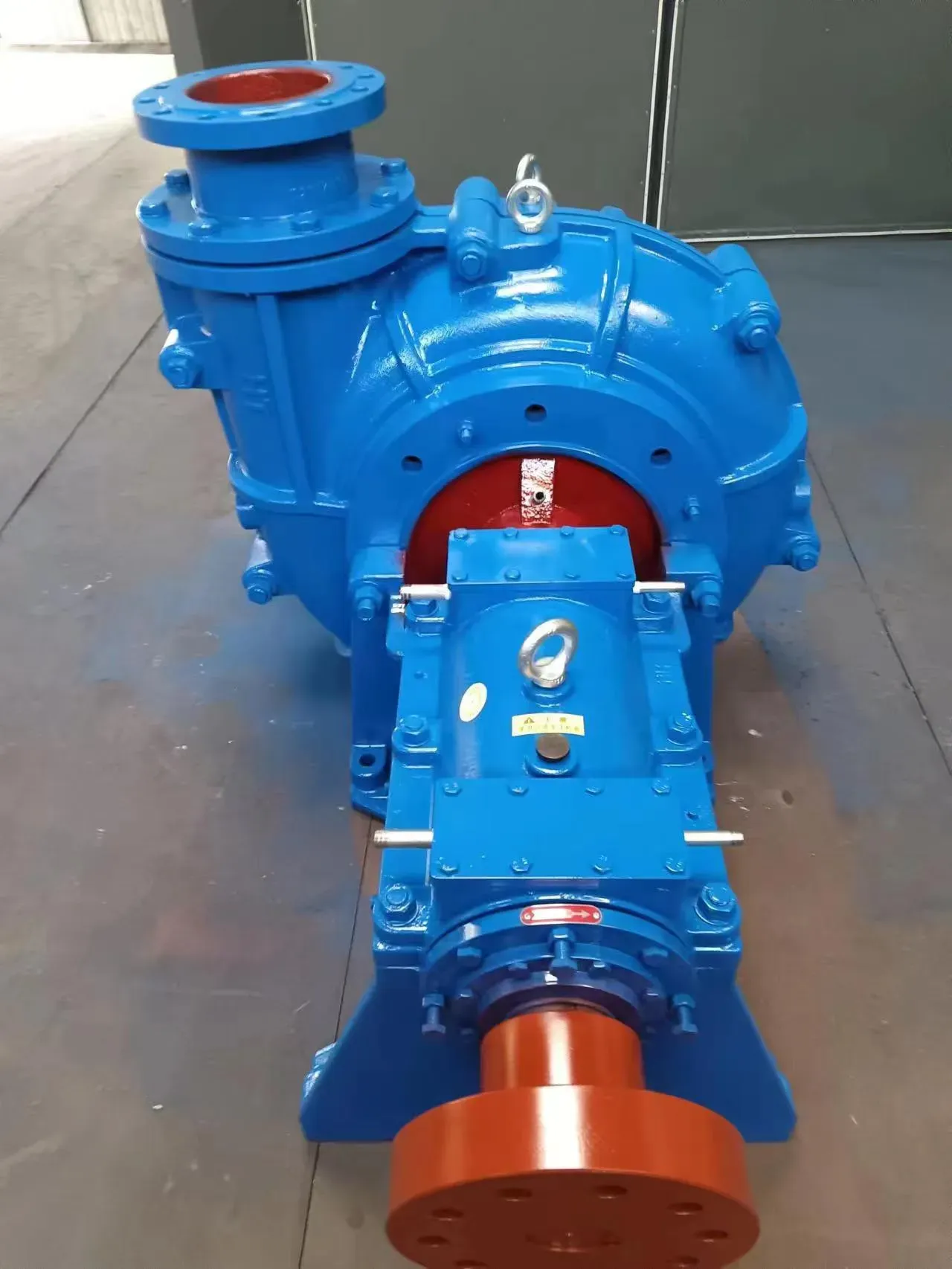
China OEM Heavy Duty Slurry Pump: Performance Analysis and Engineering Specifications
The heavy duty slurry pump represents a critical component in the industrial value chain, specifically engineered for the transport of highly abrasive, corrosive, and viscous fluids. In the context of China's OEM manufacturing landscape, these pumps are designed to bridge the gap between high-volume throughput and extreme material durability. Positioned primarily in mining, dredging, chemical processing, and mineral tailings management, the heavy duty slurry pump must manage non-Newtonian fluid dynamics while resisting the mechanical attrition caused by suspended solid particles. The core technical challenge lies in balancing hydraulic efficiency—minimizing turbulence and pressure drops—with the structural integrity required to withstand continuous impingement by high-density solids. This technical guide examines the metallurgical advancements, fluid engineering principles, and failure analysis protocols that define modern OEM slurry pump architecture.
Material Science & Manufacturing
The operational lifespan of a heavy duty slurry pump is fundamentally determined by its material composition, as the internal wetted parts are subjected to combined erosive-corrosive wear. OEM manufacturers utilize advanced metallurgical strategies to combat this degradation.
1. High-Chromium White Cast Irons (ASTM A532): For extreme abrasion resistance, 25% to 28% Cr white irons are employed. The microstructure consists of hard M7C3 carbides embedded in a martensitic matrix. The carbide volume fraction and size are strictly controlled through precise cooling rates during casting to prevent the formation of brittle networks while ensuring a hardness typically exceeding 60 HRC. This prevents "micro-cutting" by sharp particles in the slurry.
2. Natural and Synthetic Elastomers: In applications involving smaller particle sizes or high corrosive acidity, polyurethane or natural rubber liners are used. These materials operate on the principle of elastic deformation; rather than resisting the particle impact through hardness, they absorb the energy and "bounce" the particle away, significantly reducing the wear rate of the pump casing.
3. Manufacturing Process Control: The casting process utilizes vacuum degassing and precision sand molding to eliminate porosity and slag inclusions, which would otherwise act as initiation sites for fatigue cracking. Following casting, components undergo rigorous heat treatment, including austenitizing and quenching, followed by tempering to optimize the toughness-to-hardness ratio. The machining phase involves CNC precision grinding of the impeller-to-volute clearance to minimize recirculation losses and prevent premature cavitation.
Performance & Engineering
Engineering a heavy duty slurry pump requires a deep understanding of fluid mechanics and force analysis. Unlike clean water pumps, slurry pumps must account for the "settling velocity" of solids to prevent pipeline blockage and pump clogging.
Hydraulic Design and Velocity Optimization: The pump is engineered to maintain a "Critical Carrying Velocity" (CCV). If the flow velocity falls below this threshold, solids precipitate, leading to localized turbulence and accelerated wear. The impeller geometry is designed with a wide flow passage and a specialized vane profile to maximize the head-to-power ratio while minimizing shear forces that could degrade sensitive slurry components.
Force Analysis and Structural Rigidity: The pump shaft is subjected to significant radial and axial loads due to the uneven distribution of solids within the impeller. To counteract this, heavy-duty bearings and reinforced shaft sleeves are integrated. The use of high-tensile alloy steel for the shaft ensures a high fatigue limit, preventing shaft deflection that would otherwise lead to mechanical seal failure or impeller rubbing.
Environmental Resistance and Sealing: The sealing system typically employs an expeller or a gland packing system with a constant water-flush (flushing water) to create a pressure barrier, preventing abrasive particles from entering the bearing housing. This ensures that the lubrication remains uncontaminated, maintaining the pump's operational stability in caustic or saline environments.
Technical Specifications
| Parameter Dimension | Standard Grade | High-Performance Grade | Extreme-Duty Grade | Tolerance/Limit |
|---|---|---|---|---|
| Max Flow Rate (m³/h) | 450 | 1,200 | 3,500 | ± 5% |
| Total Dynamic Head (m) | 20 | 65 | 150 | ± 2% |
| Max Particle Size (mm) | 15 | 40 | 100 | Strict Maximum |
| Material Hardness (HRC) | 55-58 | 60-64 | 65-70 | ± 2 HRC |
| Max Slurry Density (g/cm³) | 1.3 | 1.6 | 1.9 | Variable |
| Design Service Life (Hrs) | 8,000 | 15,000 | 25,000 | Based on 25% solids |
Failure Mode & Maintenance
In industrial applications, heavy duty slurry pumps are prone to specific failure modes that require systemic monitoring and professional intervention.
1. Erosive Wear and Thinning: The most common failure mode is the thinning of the volute liner and impeller vanes. This is caused by the continuous impingement of abrasive particles. Failure is identified by a gradual decline in pump head and an increase in power consumption. Maintenance involves the scheduled replacement of wear liners before the base casting is compromised.
2. Cavitation Erosion: Occurs when the Net Positive Suction Head Available (NPSHa) falls below the Net Positive Suction Head Required (NPSHr). This creates vapor bubbles that collapse violently against the metal surface, causing pitting. Professional mitigation involves optimizing the suction piping layout and reducing the distance between the slurry tank and the pump inlet.
3. Mechanical Seal and Gland Failure: Leakage at the stuffing box is often a result of particle ingress or improper flush water pressure. This leads to rapid wear of the shaft sleeve. Maintenance requires the precise alignment of the shaft and the calibration of the flush water system to ensure a positive pressure gradient away from the seal.
4. Fatigue Cracking: Cyclic loading and vibration can lead to stress corrosion cracking (SCC) in the pump housing. This is analyzed through non-destructive testing (NDT) such as ultrasonic testing or dye penetrant inspection during annual shutdowns.
Industry FAQ
Q: How do we determine whether to use High-Chrome or Rubber lining for a specific OEM pump?
A: The decision is based on the particle size and the nature of the abrasive. High-Chrome alloys are superior for large, sharp particles (greater than 0.1mm) that cause impact wear. Rubber liners are significantly more effective for fine particles and high-velocity sliding abrasion, as they absorb energy rather than resisting it through hardness.
Q: What is the impact of slurry viscosity on the NPSHr of the pump?
A: Increased viscosity increases the frictional losses in the suction line, which reduces the NPSHa. This increases the risk of cavitation. Engineers must compensate by either increasing the suction pipe diameter or lowering the pump installation height relative to the slurry source.
Q: How does an OEM pump handle "slugging" or sudden changes in solids concentration?
A: Heavy duty pumps are designed with a higher safety factor in shaft torque and motor power. To handle slugging, we implement Variable Frequency Drives (VFDs) that allow the pump to adjust speed based on real-time pressure and torque feedback, preventing motor overload during high-density spikes.
Q: What is the recommended maintenance interval for the impeller in a high-abrasion environment?
A: While it varies by application, we recommend a performance audit every 2,000 operating hours. If the flow rate drops by more than 10% at a constant RPM, the impeller should be inspected for vane thinning and replaced if the wear exceeds 25% of the original thickness.
Q: Can these pumps handle chemical corrosives alongside abrasive solids?
A: Yes, but it requires a duplex stainless steel or specialized alloy casting (such as Hastelloy or Duplex 2205) instead of standard high-chrome iron. This provides a passive oxide layer to resist chemical attack while maintaining sufficient hardness to resist erosion.
Conclusion
The engineering of China OEM heavy duty slurry pumps is a complex convergence of material science and fluid dynamics. By prioritizing the synergy between high-chromium metallurgical structures and optimized hydraulic geometries, these pumps achieve the durability necessary for the most demanding industrial environments. The transition from simple casting to precision-engineered components ensures that wear rates are minimized and operational efficiency is maximized.
Looking forward, the integration of smart sensors for real-time wear monitoring and the development of nano-ceramic coatings will further extend the service life of slurry pumps. For procurement and engineering teams, the focus must remain on a holistic approach—aligning material selection with the specific chemical and physical properties of the medium to ensure total cost of ownership (TCO) is minimized over the equipment's lifecycle.
-
sand gravel pump Performance Analysis
News2026-06-02
-
sand and gravel dredge pumps Performance Analysis
News2026-06-02
-
terapump aquarium gravel sand bpafree pump Performance Analysis
News2026-06-02
-
sand and gravel pump Material Science Manufacturing
News2026-06-02
-
air pump sand and gravel Performance Analysis
News2026-06-02
-
submersible pump for sewage treatment plant Performance Analysis
News2026-06-01
-
single phase sewage submersible pump Material Science Manufacturing
News2026-06-01
-
sewage water submersible pump Material Science Manufacturing
News2026-06-01
-
Sewage Submersible Pump Price List Performance Analysis
News2026-06-01
-
sewage submersible pump 3hp Performance Analysis
News2026-06-01
-
submersible effluent sewage pump Performance Analysis
News2026-05-31
-
stainless steel submersible sewage pumps Performance Engineering
News2026-05-31
-
stainless steel submersible sewage pump Material Science Manufacturing
News2026-05-31
-
Sewage Submersible Pump Installation Performance Analysis
News2026-05-31
-
sewage submersible pump 2hp Performance Analysis
News2026-05-31




