English
- Afrikaans
- Albanian
- Amharic
- Arabic
- Armenian
- Azerbaijani
- Basque
- Belarusian
- Bengali
- Bosnian
- Bulgarian
- Catalan
- Cebuano
- Corsican
- Croatian
- Czech
- Danish
- Dutch
- English
- Esperanto
- Estonian
- Finnish
- French
- Frisian
- Galician
- Georgian
- German
- Greek
- Gujarati
- Haitian Creole
- hausa
- hawaiian
- Hebrew
- Hindi
- Miao
- Hungarian
- Icelandic
- igbo
- Indonesian
- irish
- Italian
- Japanese
- Javanese
- Kannada
- kazakh
- Khmer
- Rwandese
- Korean
- Kurdish
- Kyrgyz
- Lao
- Latin
- Latvian
- Lithuanian
- Luxembourgish
- Macedonian
- Malgashi
- Malay
- Malayalam
- Maltese
- Maori
- Marathi
- Mongolian
- Myanmar
- Nepali
- Norwegian
- Norwegian
- Occitan
- Pashto
- Persian
- Polish
- Portuguese
- Punjabi
- Romanian
- Russian
- Samoan
- Scottish Gaelic
- Serbian
- Sesotho
- Shona
- Sindhi
- Sinhala
- Slovak
- Slovenian
- Somali
- Spanish
- Sundanese
- Swahili
- Swedish
- Tagalog
- Tajik
- Tamil
- Tatar
- Telugu
- Thai
- Turkish
- Turkmen
- Ukrainian
- Urdu
- Uighur
- Uzbek
- Vietnamese
- Welsh
- Bantu
- Yiddish
- Yoruba
- Zulu

Telephone: +86 13120555503
Email: frank@cypump.com


Apr . 01, 2024 17:55 Back to list
china mobile slurry pump Performance Analysis and Engineering Specifications
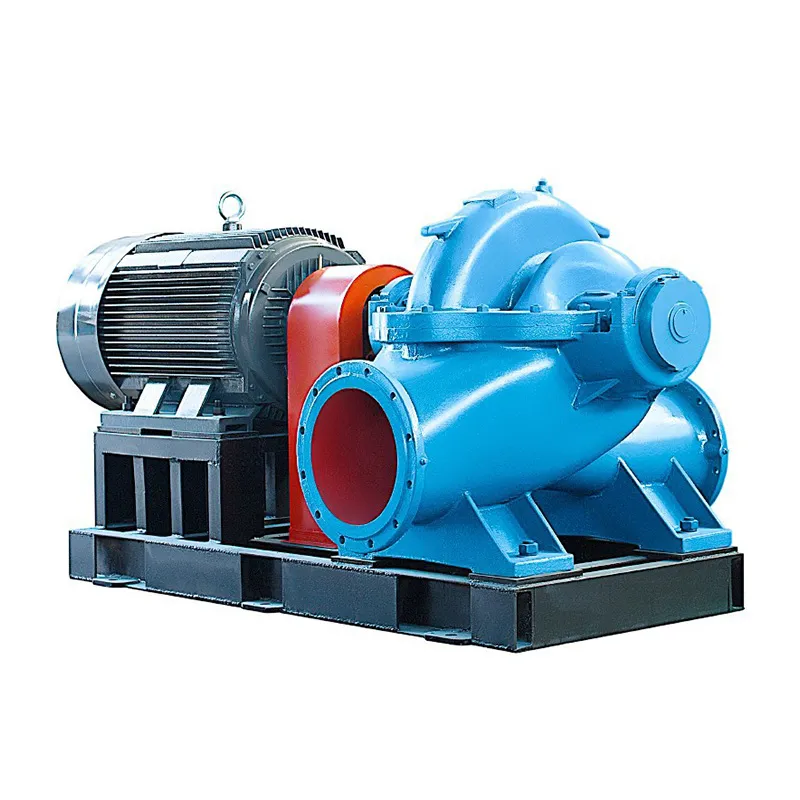
China Mobile Slurry Pump Performance Analysis and Engineering Specifications
The china mobile slurry pump is a specialized industrial fluid-handling system engineered for the transport of high-density, abrasive, and corrosive suspensions. Positioned as a critical asset in the mid-stream of mining, dredging, and mineral processing chains, these units integrate high-torque pumping mechanisms with mobile chassis systems to allow for rapid deployment in volatile geological environments. Unlike stationary centrifugal pumps, the mobile slurry pump must reconcile the contradictory requirements of high hydraulic efficiency and extreme structural resilience. Its technical position is defined by its ability to maintain a constant critical carrying velocity—the minimum velocity required to prevent solid particles from settling—while operating under significant systemic pressure and variable slurry viscosities. Core performance metrics center on the Net Positive Suction Head (NPSH), the wear rate of the impeller and volute, and the volumetric efficiency when handling non-Newtonian fluids.
Material Science & Manufacturing
The operational longevity of a china mobile slurry pump is dictated by the metallurgical properties of its wetted parts. Due to the high concentration of abrasive particles (such as quartz, pyrite, or hematite), standard stainless steels are insufficient. Industry-standard manufacturing employs High-Chrome White Cast Iron (ASTM A532) for impellers and liners, typically containing 25% to 28% chromium. This creates a hard martensitic matrix embedded with M7C3 carbides, providing a Brinell hardness (HB) exceeding 600, which is essential for resisting erosive wear. In highly acidic or alkaline environments, duplex stainless steels or rubber-lined casings (using natural rubber or nitrile) are utilized to prevent chemical corrosion and reduce the impact energy of smaller particles.
The manufacturing process begins with precision investment casting for the impeller to ensure hydraulic balance and minimize turbulence. The casing is typically produced via sand casting, followed by rigorous CNC machining to maintain tolerances within microns, ensuring an airtight seal between the pump body and the mechanical seals. The mobile chassis is constructed from high-tensile Q345B structural steel, subjected to submerged arc welding (SAW) to ensure joint integrity under the dynamic loads of transport. Key parameter control during assembly focuses on the alignment of the pump shaft with the prime mover (diesel engine or electric motor), where laser alignment is employed to eliminate vibration frequencies that could lead to premature bearing failure or shaft fatigue.
Performance & Engineering
Engineering a china mobile slurry pump requires a deep analysis of fluid dynamics and force distribution. The primary engineering challenge is the management of the "slurry effect," where the increased density of the fluid elevates the required brake horsepower (BHP) compared to water. Force analysis focuses on the radial thrust exerted on the shaft when operating away from the Best Efficiency Point (BEP). To mitigate this, engineers implement heavy-duty double-row spherical roller bearings and reinforced shaft sleeves to distribute the load and prevent deflection.
Environmental resistance is achieved through the integration of IP65-rated electrical components and corrosion-resistant coatings on the chassis. Functional implementation also includes the integration of a Variable Frequency Drive (VFD), which allows operators to adjust the pump speed based on the real-time solids concentration of the slurry, thereby optimizing energy consumption and preventing pipe blockage. Compliance requirements dictate that the pump must operate within the limits of the ISO 5199 standard for centrifugal pumps, ensuring that the noise levels, leakage rates, and vibration amplitudes remain within acceptable industrial thresholds for mobile machinery.
Technical Specifications
| Technical Parameter | Standard Configuration | High-Density Option | Extreme Corrosive Option | Unit of Measure |
|---|---|---|---|---|
| Max Flow Rate | 450 | 300 | 250 | m³/h |
| Maximum Head | 60 | 90 | 75 | m |
| Impeller Material | High-Chrome Iron | Ceramic Composite | Duplex Steel | Material |
| Max Particle Size | 40 | 60 | 30 | mm |
| Max Slurry Density | 1.3 | 1.6 | 1.4 | t/m³ |
| Operational Temp | -10 to 80 | -10 to 60 | -20 to 110 | °C |
Failure Mode & Maintenance
Failure analysis in china mobile slurry pumps typically reveals three primary modes: erosive wear, cavitation, and seal degradation. Erosive wear manifests as the thinning of the impeller vanes and volute walls, caused by the continuous impingement of abrasive particles. This leads to a drop in discharge pressure and flow rate. Cavitation occurs when the NPSH available falls below the NPSH required, creating vapor bubbles that collapse violently against the impeller surface, resulting in characteristic pitting and severe vibration. Seal degradation is often the result of solids infiltrating the seal faces, leading to abrasive wear of the silicon carbide or tungsten carbide rings.
Professional maintenance solutions involve a predictive maintenance schedule based on vibration analysis and ultrasound thickness testing of the casing. To combat erosive wear, the implementation of interchangeable wear liners is mandatory, allowing for the replacement of internal surfaces without dismantling the entire pump body. For cavitation prevention, suction piping must be optimized to reduce friction losses, and the pump should be installed as close to the source as possible to maximize the suction head. Seal maintenance requires the use of a pressurized flushing system (API Plan 32 or 54) to keep the seal chamber clean and lubricated, preventing the ingress of slurry particles into the sealing interface.
Industry FAQ
Q: How do you determine the correct impeller material for a specific mineral slurry?
A: The selection is based on the Mohs hardness of the minerals and the pH level of the slurry. For high-silica content (high hardness), High-Chrome alloys are preferred. For acidic slurries with moderate abrasiveness, duplex stainless steel or rubber lining is required to prevent chemical leaching and pitting.
Q: What is the impact of slurry viscosity on the pump's efficiency?
A: Increased viscosity raises the internal friction losses within the pump, which significantly increases the power requirement and reduces the overall hydraulic efficiency. This requires the use of a larger motor safety margin and a revised pump curve to account for the non-Newtonian behavior of the fluid.
Q: How does the mobile chassis affect the operational stability of the pump?
A: The chassis must provide a rigid, dampened foundation to prevent resonance. Improperly stabilized mobile platforms can introduce external vibrations that exacerbate shaft misalignment, leading to accelerated bearing wear and potential mechanical seal failure.
Q: What is the critical carrying velocity, and how is it managed in these pumps?
A: The critical carrying velocity is the minimum speed required to keep solids suspended. It is managed by selecting an impeller speed and discharge diameter that ensures the flow velocity remains 10-20% above this threshold, preventing sediment buildup and pipeline clogging.
Q: Which maintenance indicator is the most reliable for predicting impeller failure?
A: The most reliable indicator is the correlation between an increase in motor amperage and a decrease in discharge pressure at a constant RPM. This indicates that the impeller's hydraulic geometry has degraded, increasing internal recirculation and reducing efficiency.
Conclusion
The china mobile slurry pump represents a sophisticated convergence of metallurgical science and hydraulic engineering, designed to operate under the most grueling industrial conditions. By prioritizing high-chrome alloys and precision-engineered tolerances, these systems effectively mitigate the inherent risks of abrasive wear and mechanical fatigue, ensuring stable transport of high-density media in diverse field applications.
Moving forward, the industry is trending toward the integration of smart sensing and IoT-enabled condition monitoring to transition from scheduled to predictive maintenance. Ensuring strict adherence to international manufacturing standards and rigorous material validation will remain the cornerstone for enhancing the operational lifecycle and reliability of mobile slurry pumping systems in the global mining and dredging sectors.
-
submersible pump for sewage treatment plant Performance Analysis
News2026-06-01
-
single phase sewage submersible pump Material Science Manufacturing
News2026-06-01
-
sewage water submersible pump Material Science Manufacturing
News2026-06-01
-
Sewage Submersible Pump Price List Performance Analysis
News2026-06-01
-
sewage submersible pump 3hp Performance Analysis
News2026-06-01
-
submersible effluent sewage pump Performance Analysis
News2026-05-31
-
stainless steel submersible sewage pumps Performance Engineering
News2026-05-31
-
stainless steel submersible sewage pump Material Science Manufacturing
News2026-05-31
-
Sewage Submersible Pump Installation Performance Analysis
News2026-05-31
-
sewage submersible pump 2hp Performance Analysis
News2026-05-31
-
sewage submersible pump 1hp Performance Analysis
News2026-05-30
-
1 hp sewage submersible pump Performance Analysis
News2026-05-30
-
waste pump for basement bathroom Performance and Engineering
News2026-05-30
-
Sump Pump Drain Field Performance Analysis
News2026-05-30
-
small sewage pump Performance Analysis
News2026-05-30




