English
- Afrikaans
- Albanian
- Amharic
- Arabic
- Armenian
- Azerbaijani
- Basque
- Belarusian
- Bengali
- Bosnian
- Bulgarian
- Catalan
- Cebuano
- Corsican
- Croatian
- Czech
- Danish
- Dutch
- English
- Esperanto
- Estonian
- Finnish
- French
- Frisian
- Galician
- Georgian
- German
- Greek
- Gujarati
- Haitian Creole
- hausa
- hawaiian
- Hebrew
- Hindi
- Miao
- Hungarian
- Icelandic
- igbo
- Indonesian
- irish
- Italian
- Japanese
- Javanese
- Kannada
- kazakh
- Khmer
- Rwandese
- Korean
- Kurdish
- Kyrgyz
- Lao
- Latin
- Latvian
- Lithuanian
- Luxembourgish
- Macedonian
- Malgashi
- Malay
- Malayalam
- Maltese
- Maori
- Marathi
- Mongolian
- Myanmar
- Nepali
- Norwegian
- Norwegian
- Occitan
- Pashto
- Persian
- Polish
- Portuguese
- Punjabi
- Romanian
- Russian
- Samoan
- Scottish Gaelic
- Serbian
- Sesotho
- Shona
- Sindhi
- Sinhala
- Slovak
- Slovenian
- Somali
- Spanish
- Sundanese
- Swahili
- Swedish
- Tagalog
- Tajik
- Tamil
- Tatar
- Telugu
- Thai
- Turkish
- Turkmen
- Ukrainian
- Urdu
- Uighur
- Uzbek
- Vietnamese
- Welsh
- Bantu
- Yiddish
- Yoruba
- Zulu

Telephone: +86 13120555503
Email: frank@cypump.com


Apr . 01, 2024 17:55 Back to list
china metal slurry pump Technical Analysis and Manufacturing Specifications
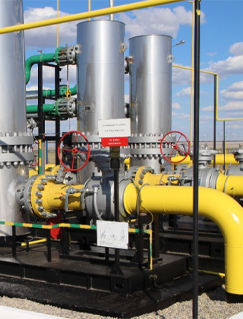
China Metal Slurry Pump: Technical Analysis and Manufacturing Specifications
The china metal slurry pump is a specialized heavy-duty centrifugal machine engineered to transport highly abrasive, non-Newtonian fluids containing suspended solid particles, typically within the mining, metallurgical, and chemical processing sectors. Positioned as a critical node in the industrial value chain, these pumps bridge the gap between raw ore extraction and refined material processing. Unlike standard water pumps, the slurry pump must manage the complex rheology of particulate-laden media, where the interaction between solid particles and the pump wall leads to severe erosive wear. The core performance of these units is measured by their ability to maintain high volumetric efficiency and Net Positive Suction Head (NPSH) while maximizing the Mean Time Between Failures (MTBF) in environments characterized by extreme pH levels and high solid concentrations.
Material Science & Manufacturing
The longevity of a china metal slurry pump is fundamentally determined by the metallurgy of its wetted parts. To combat the synergistic effects of abrasion and corrosion, high-chromium cast irons (ASTM A532) are typically employed. These materials utilize a eutectic structure consisting of primary M7C3 carbides embedded in a martensitic matrix, providing a hardness typically exceeding 60 HRC. For environments with higher acid concentrations, duplex stainless steels or specialized rubber linings are utilized to prevent chemical degradation of the substrate.
The manufacturing process begins with precision investment casting or sand casting of the impeller and volute. Post-casting, a rigorous heat treatment cycle—including austenitizing and quenching—is mandatory to ensure a uniform martensitic transformation, eliminating internal stresses that could lead to premature fatigue cracking. The impeller geometry is optimized using Computational Fluid Dynamics (CFD) to minimize turbulence and secondary flow patterns, which are primary drivers of localized erosion. Machining is performed using CNC grinding to achieve tight tolerances on the wear plate and impeller interfaces, ensuring a minimal clearance gap that prevents "recirculation wear" and maintains hydraulic efficiency.
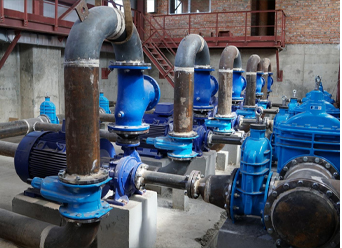
Performance & Engineering
Engineering a china metal slurry pump requires a sophisticated force analysis of the fluid-structure interaction. The primary challenge is the management of the "slurry velocity," where the velocity must be kept above the critical settling velocity to prevent pipe blockage, yet below the threshold that triggers exponential erosive wear (which typically scales with the cube of the velocity). The engineering focus is on the optimization of the impeller's vane angle and the volute's spiral curvature to ensure a smooth transition of kinetic energy into pressure energy.
Environmental resistance is achieved through a robust sealing system. Heavy-duty slurry pumps often employ an expeller seal (mechanical seal) or a gland packing system with a dedicated flush water line to prevent the ingress of abrasive particles into the bearing housing. From a compliance standpoint, the pump must adhere to strict vibration limits to prevent mechanical resonance, which can accelerate the fatigue of the shaft. The integration of Variable Frequency Drives (VFD) allows for the precise control of the flow rate, enabling the system to adapt to changes in slurry density without risking cavitation or pump surge.
Technical Specifications
| Parameter Dimension | High-Chrome Specification | Duplex Steel Specification | Rubber-Lined Specification | Testing Standard |
|---|---|---|---|---|
| Hardness (Rockwell C) | 60 - 65 HRC | 25 - 35 HRC | N/A (Shore A 60-70) | ASTM E18 |
| Max Particle Size (mm) | 15.0 mm | 10.0 mm | 8.0 mm | ISO 10816 |
| Max Slurry Density (g/cm³) | 1.85 g/cm³ | 1.60 g/cm³ | 1.40 g/cm³ | Internal Lab Test |
| Corrosion Rate (mm/year) | Low (in alkaline) | Very Low (in acid) | Negligible | ASTM G31 |
| Operating Temp Range (°C) | -20 to 120°C | -40 to 200°C | -10 to 70°C | IEC 60034 |
| Efficiency Rate (%) | 72% - 85% | 75% - 88% | 68% - 80% | HI Standard |
Failure Mode & Maintenance
Failure analysis of china metal slurry pumps typically reveals three primary modes: erosive wear, cavitation-induced pitting, and mechanical seal failure. Erosive wear occurs most aggressively at the impeller eye and the volute tongue, where high-velocity slurry impacts the surface. This leads to a gradual increase in the clearance between the impeller and the wear plate, resulting in a precipitous drop in pump head and flow rate. Cavitation occurs when the local pressure drops below the vapor pressure of the liquid, forming bubbles that collapse violently and create micro-jets that pit the metal surface, often mistaken for chemical corrosion.
Maintenance strategies must shift from reactive to predictive. Real-time vibration monitoring and ultrasonic thickness gauging of the volute wall are recommended to determine the exact moment for liner replacement. To prevent shaft fatigue, precision laser alignment of the pump and motor is critical. Maintenance personnel should implement a rigorous "flushing protocol" before shutdown to ensure that abrasive solids do not settle and solidify within the pump casing, which would otherwise necessitate destructive disassembly during the next startup cycle.
Industry FAQ
Q: How do you determine whether to use high-chrome alloy or rubber lining for a specific application?
A: The selection depends on the particle size and hardness. High-chrome alloys are superior for large, hard particles that would easily puncture or tear rubber. Rubber linings are preferred for smaller, finer particles and environments with high chemical corrosivity where the rubber acts as a barrier to prevent the base metal from oxidizing.
Q: What is the impact of slurry viscosity on the NPSH requirements of the pump?
A: Increased viscosity increases the friction loss in the suction piping, which reduces the available NPSH. For highly viscous slurries, the pump must be installed at a lower elevation relative to the source or a booster pump must be utilized to avoid cavitation and ensure a steady flow of material.
Q: Why is the "critical settling velocity" so important in the engineering design?
A: If the flow velocity drops below the critical settling velocity, the solid particles will precipitate out of the suspension and settle at the bottom of the pump or pipe. This creates "sand-bedding," which drastically increases friction, restricts flow, and can eventually lead to a complete blockage of the system.
Q: How does a VFD improve the lifespan of the pump's internal components?
A: A VFD allows the operator to match the pump speed to the actual slurry density and flow requirements. By avoiding the operation of the pump at the far right of the performance curve (high flow, low head), the fluid velocity is kept within a range that minimizes erosive wear and prevents excessive vibration.
Q: What are the indicators that the impeller has reached its wear limit?
A: The primary indicators are a measurable decrease in discharge pressure and an increase in the motor's current draw due to turbulence and inefficiency. When the pump can no longer reach its rated head at the design flow rate, it indicates that the impeller diameter has decreased due to wear, necessitating replacement.
Conclusion
The operational efficiency of a china metal slurry pump is the result of a precise synergy between advanced metallurgy, hydraulic engineering, and rigorous manufacturing tolerances. By utilizing high-chromium cast irons and optimizing the fluid dynamics of the volute and impeller, these machines can withstand the extreme abrasive forces inherent in mineral processing. The technical density of the design ensures that the system maximizes throughput while minimizing the frequency of unplanned downtime.
Looking forward, the integration of IoT-based condition monitoring and the development of nano-composite coatings are expected to further extend the service life of wetted components. Engineers and procurement managers must prioritize the total cost of ownership (TCO) over initial capital expenditure, focusing on material compatibility and adherence to international standards to ensure long-term industrial reliability.
-
submersible pump for sewage treatment plant Performance Analysis
News2026-06-01
-
single phase sewage submersible pump Material Science Manufacturing
News2026-06-01
-
sewage water submersible pump Material Science Manufacturing
News2026-06-01
-
Sewage Submersible Pump Price List Performance Analysis
News2026-06-01
-
sewage submersible pump 3hp Performance Analysis
News2026-06-01
-
submersible effluent sewage pump Performance Analysis
News2026-05-31
-
stainless steel submersible sewage pumps Performance Engineering
News2026-05-31
-
stainless steel submersible sewage pump Material Science Manufacturing
News2026-05-31
-
Sewage Submersible Pump Installation Performance Analysis
News2026-05-31
-
sewage submersible pump 2hp Performance Analysis
News2026-05-31
-
sewage submersible pump 1hp Performance Analysis
News2026-05-30
-
1 hp sewage submersible pump Performance Analysis
News2026-05-30
-
waste pump for basement bathroom Performance and Engineering
News2026-05-30
-
Sump Pump Drain Field Performance Analysis
News2026-05-30
-
small sewage pump Performance Analysis
News2026-05-30