English
- Afrikaans
- Albanian
- Amharic
- Arabic
- Armenian
- Azerbaijani
- Basque
- Belarusian
- Bengali
- Bosnian
- Bulgarian
- Catalan
- Cebuano
- Corsican
- Croatian
- Czech
- Danish
- Dutch
- English
- Esperanto
- Estonian
- Finnish
- French
- Frisian
- Galician
- Georgian
- German
- Greek
- Gujarati
- Haitian Creole
- hausa
- hawaiian
- Hebrew
- Hindi
- Miao
- Hungarian
- Icelandic
- igbo
- Indonesian
- irish
- Italian
- Japanese
- Javanese
- Kannada
- kazakh
- Khmer
- Rwandese
- Korean
- Kurdish
- Kyrgyz
- Lao
- Latin
- Latvian
- Lithuanian
- Luxembourgish
- Macedonian
- Malgashi
- Malay
- Malayalam
- Maltese
- Maori
- Marathi
- Mongolian
- Myanmar
- Nepali
- Norwegian
- Norwegian
- Occitan
- Pashto
- Persian
- Polish
- Portuguese
- Punjabi
- Romanian
- Russian
- Samoan
- Scottish Gaelic
- Serbian
- Sesotho
- Shona
- Sindhi
- Sinhala
- Slovak
- Slovenian
- Somali
- Spanish
- Sundanese
- Swahili
- Swedish
- Tagalog
- Tajik
- Tamil
- Tatar
- Telugu
- Thai
- Turkish
- Turkmen
- Ukrainian
- Urdu
- Uighur
- Uzbek
- Vietnamese
- Welsh
- Bantu
- Yiddish
- Yoruba
- Zulu

Telephone: +86 13120555503
Email: frank@cypump.com


Apr . 01, 2024 17:55 Back to list
china metal liner slurry pump Performance Analysis and Manufacturing Specifications
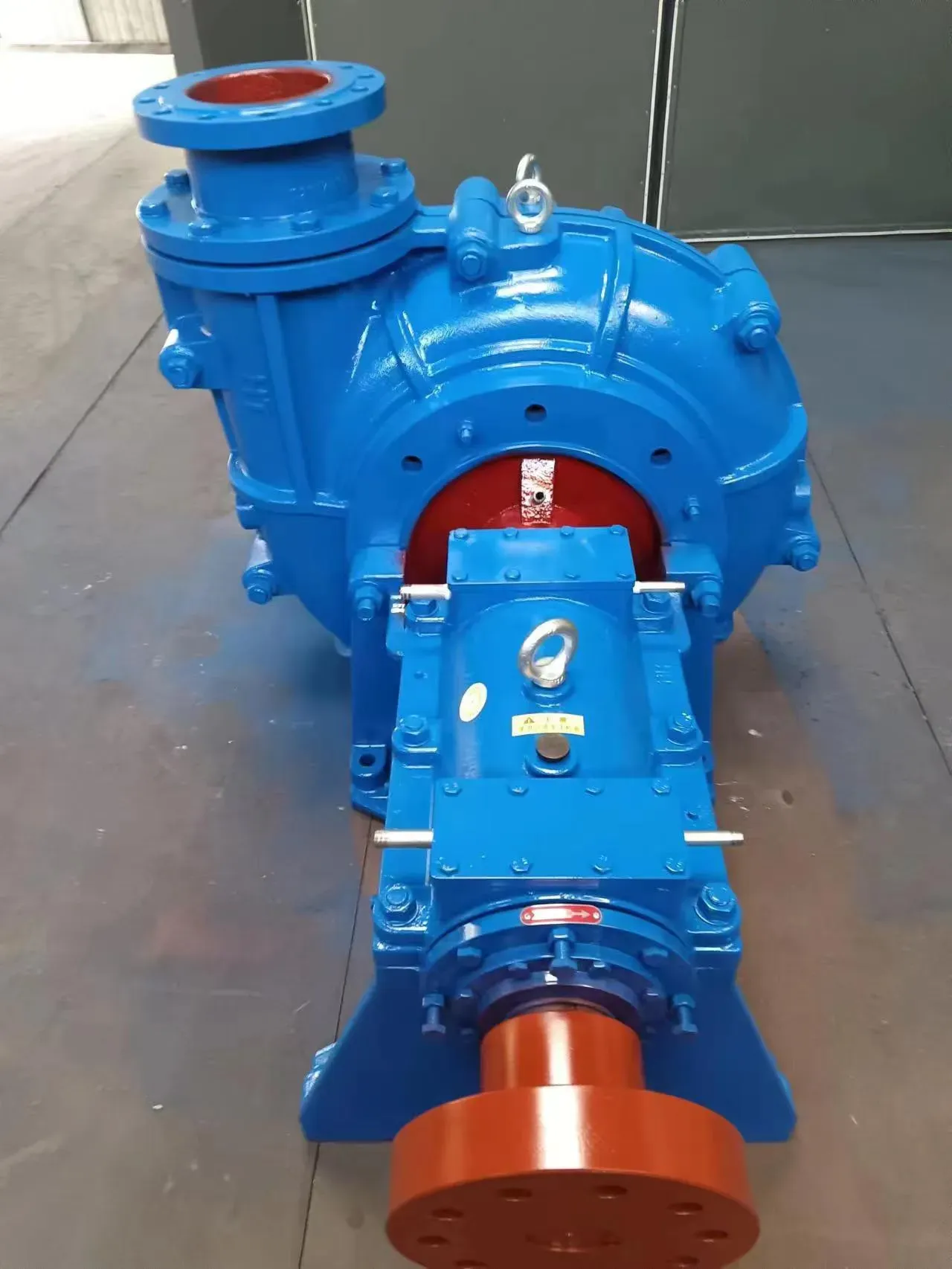
China Metal Liner Slurry Pump Performance Analysis and Manufacturing Specifications
The china metal liner slurry pump is a specialized heavy-duty centrifugal pump engineered to transport highly abrasive and corrosive fluids, commonly referred to as slurries. Positioned as a critical asset in the midstream of mining, mineral processing, and dredging industry chains, these pumps are designed to handle high concentrations of solid particles without catastrophic internal wear. The core technical challenge addressed by the metal liner design is the management of impingement erosion and abrasive wear, which occurs when high-velocity particulates collide with the internal pump surfaces. By utilizing advanced metallurgical liners, these pumps maintain hydraulic efficiency and structural integrity under extreme shear stresses, ensuring consistent flow rates and reducing the total cost of ownership through extended mean time between failures (MTBF).
Material Science & Manufacturing
The longevity of a china metal liner slurry pump is fundamentally dependent on the metallurgical properties of its wear components. The primary materials employed are High-Chrome Alloys (ASTM A532) and Natural Rubber-lined Cast Iron. High-chrome white irons, typically containing 20% to 30% chromium, are utilized for high-pressure, high-velocity applications. The microstructure consists of hard M7C3 carbides embedded in a martensitic matrix, providing a hardness typically ranging from 55 to 65 HRC. This combination ensures that the liner can resist the cutting action of sharp minerals like quartz or pyrite.
The manufacturing process involves precision investment casting or sand casting, followed by a rigorous heat treatment cycle including austenitizing and quenching to optimize the carbide distribution. To prevent uneven wear, the liner is cast with a specific "wear allowance"—additional material thickness that allows the pump to operate for thousands of hours before the structural casing is compromised. Furthermore, the integration of the liner involves a shrink-fit process or heavy-duty bolting, ensuring a zero-clearance interface between the liner and the pump housing to prevent slurry leakage, which would otherwise cause "wash-out" or rapid external corrosion of the outer shell.
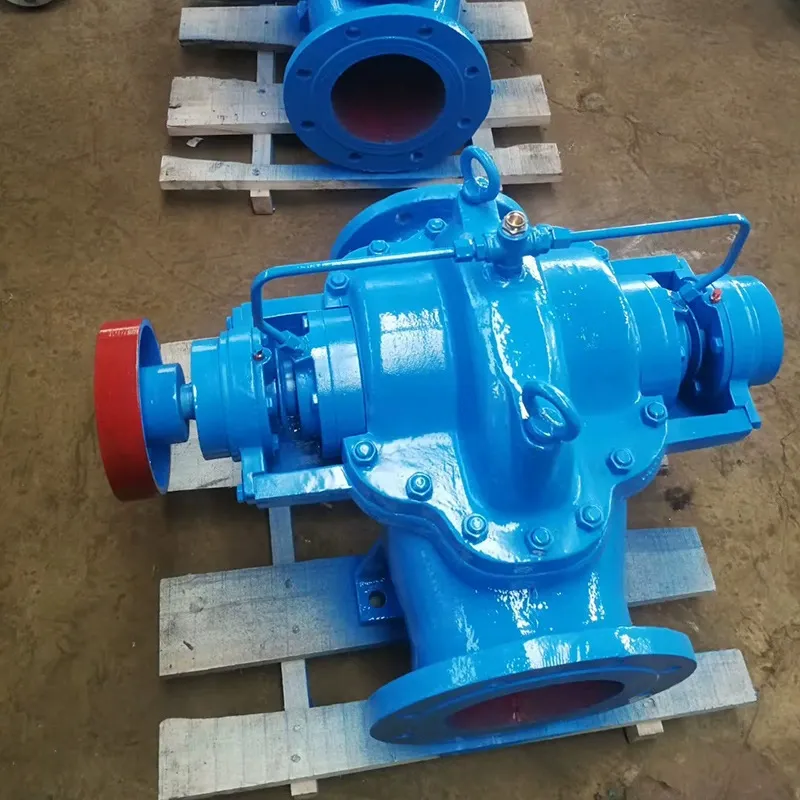
Performance & Engineering
Engineering a slurry pump requires a deep analysis of the fluid dynamics of non-Newtonian mixtures. The primary engineering focus is the reduction of turbulence at the impeller eye and the volute tongue, as turbulence exponentially increases the rate of erosion. By optimizing the vane geometry and utilizing Computational Fluid Dynamics (CFD), engineers minimize the angle of impingement; a shallower angle of attack reduces the kinetic energy transferred to the metal liner, thereby slowing the wear rate.
Force analysis in these pumps must account for the increased specific gravity of the slurry compared to clean water. A slurry with a density of 1.4 t/m³ requires significantly higher torque and shaft strength to maintain the same RPM. To address this, the shaft is typically constructed from 42CrMo alloy steel, heat-treated for high torsional strength. Environmental resistance is managed through the use of specialized mechanical seals or gland packing systems that incorporate high-pressure flushing water to keep abrasive particles away from the shaft sleeve, preventing premature scoring and leakage.
Technical Specifications
| Parameter Dimension | High-Chrome Liner (27% Cr) | Chrome-Iron Alloy (ASTM A532) | Hardened Steel Liner | Standard Performance Metric |
|---|---|---|---|---|
| Brinell Hardness (HB) | 600 - 650 HB | 550 - 600 HB | 450 - 500 HB | High Wear Resistance |
| Max Slurry Density | 1.6 t/m³ | 1.5 t/m³ | 1.3 t/m³ | Specific Gravity Limit |
| Operating Temp Range | -10°C to 120°C | -10°C to 100°C | -20°C to 150°C | Thermal Stability |
| Erosion Rate (mm/1000h) | 0.2 - 0.5 mm | 0.4 - 0.8 mm | 0.8 - 1.2 mm | Material Degradation |
| Max Particle Size | 12 mm | 10 mm | 8 mm | Solid Handling Cap. |
| Corrosion Resistance | Excellent (Acidic) | Good (Neutral) | Moderate | Chemical Compatibility |
Failure Mode & Maintenance
Failure analysis of metal liner slurry pumps typically reveals three primary modes: erosive wear, cavitation-induced pitting, and fatigue cracking. Erosive wear is the most common, manifesting as "grooving" or localized thinning in high-velocity zones. This is often exacerbated by "settling" during pump idle time, where solids accumulate and create uneven flow profiles upon restart. Cavitation occurs when the Net Positive Suction Head available (NPSHa) falls below the required level (NPSHr), causing vapor bubbles to collapse against the metal liner, resulting in microscopic craters that accelerate erosion.
Maintenance protocols must prioritize the monitoring of the "gap" between the impeller and the suction liner. As the liner wears, the clearance increases, leading to internal recirculation and a sharp drop in hydraulic efficiency. Professional maintenance involves ultrasonic thickness testing (UT) to measure liner wear without dismantling the pump. When the liner thickness reaches the minimum safety threshold (typically 20% of original thickness), a full replacement is required. To prevent premature failure, it is recommended to implement a "soft start" system to avoid sudden hydraulic shocks and to ensure that the pump is always primed to avoid dry-running the liners.
Industry FAQ
Q: How do we determine whether to use a High-Chrome liner or a Rubber liner for our specific slurry?
A: The choice depends on the particle size and the nature of the abrasive. High-Chrome liners are superior for large, sharp particles and high-pressure applications where the impact energy is high. Rubber liners are more effective for fine-particle slurries and lower pressure, as the elastomer absorbs the kinetic energy of the particle through deformation, whereas metal resists it through hardness.
Q: What causes "wash-out" on the outer casing, and how can it be prevented?
A: Wash-out occurs when the liner does not fit perfectly against the casing, allowing abrasive slurry to leak into the gap. The high velocity in this narrow gap creates a "jetting" effect that erodes the casing rapidly. This is prevented by using precision-machined liners and applying high-strength sealing compounds or ensuring correct bolt torque during installation.
Q: Can the pump handle chemical corrosives alongside abrasive solids?
A: Yes, provided the metallurgy is selected correctly. For acidic slurries, duplex stainless steel liners or specialized high-chrome alloys with molybdenum additions are used to prevent chemical oxidation while maintaining hardness. Standard white iron may suffer from "corrosive wear," where the chemical removes the binder, causing the hard carbides to fall out.
Q: Why is the pump experiencing excessive vibration despite new liners?
A: This is often due to impeller imbalance caused by uneven wear or the accumulation of solids in the volute. It may also indicate cavitation if the suction line is restricted. We recommend checking the alignment of the pump-motor coupling and verifying that the NPSH requirements are met for the current slurry density.
Q: What is the recommended frequency for ultrasonic thickness measurements?
A: For high-concentration slurries (above 30% solids by weight), measurements should be taken every 500 to 1,000 operating hours. This allows for the prediction of the liner's end-of-life and enables procurement of replacement parts without unplanned downtime.
Conclusion
The technical integrity of the china metal liner slurry pump rests upon the synergy between advanced metallurgy and fluid dynamic engineering. By utilizing high-chrome alloys and optimizing internal geometries to minimize impingement angles, these pumps solve the fundamental industrial pain point of abrasive wear in mineral transport. The transition from reactive maintenance to predictive monitoring, through the use of ultrasonic testing and CFD analysis, ensures that these systems operate at peak hydraulic efficiency while maximizing the lifespan of the wear components.
Looking forward, the integration of smart sensors for real-time wear monitoring and the development of nano-ceramic coatings on metal liners promise to further extend service intervals. For procurement and engineering managers, the focus must remain on matching the liner material precisely to the slurry's chemical and physical properties to prevent premature failure and optimize the operational expenditure of the processing plant.
-
submersible effluent sewage pump Performance Analysis
News2026-05-31
-
stainless steel submersible sewage pumps Performance Engineering
News2026-05-31
-
stainless steel submersible sewage pump Material Science Manufacturing
News2026-05-31
-
Sewage Submersible Pump Installation Performance Analysis
News2026-05-31
-
sewage submersible pump 2hp Performance Analysis
News2026-05-31
-
sewage submersible pump 1hp Performance Analysis
News2026-05-30
-
1 hp sewage submersible pump Performance Analysis
News2026-05-30
-
waste pump for basement bathroom Performance and Engineering
News2026-05-30
-
Sump Pump Drain Field Performance Analysis
News2026-05-30
-
small sewage pump Performance Analysis
News2026-05-30
-
sewer pump for basement Material Science Manufacturing
News2026-05-29
-
sewage sump pumps Performance and Engineering
News2026-05-29
-
sewage pumps for septic tanks Material Science and Manufacturing
News2026-05-29
-
Sewage Pumping Companies Performance Analysis
News2026-05-29
-
Sewage Pump Manufacturers Performance Engineering
News2026-05-29




