English
- Afrikaans
- Albanian
- Amharic
- Arabic
- Armenian
- Azerbaijani
- Basque
- Belarusian
- Bengali
- Bosnian
- Bulgarian
- Catalan
- Cebuano
- Corsican
- Croatian
- Czech
- Danish
- Dutch
- English
- Esperanto
- Estonian
- Finnish
- French
- Frisian
- Galician
- Georgian
- German
- Greek
- Gujarati
- Haitian Creole
- hausa
- hawaiian
- Hebrew
- Hindi
- Miao
- Hungarian
- Icelandic
- igbo
- Indonesian
- irish
- Italian
- Japanese
- Javanese
- Kannada
- kazakh
- Khmer
- Rwandese
- Korean
- Kurdish
- Kyrgyz
- Lao
- Latin
- Latvian
- Lithuanian
- Luxembourgish
- Macedonian
- Malgashi
- Malay
- Malayalam
- Maltese
- Maori
- Marathi
- Mongolian
- Myanmar
- Nepali
- Norwegian
- Norwegian
- Occitan
- Pashto
- Persian
- Polish
- Portuguese
- Punjabi
- Romanian
- Russian
- Samoan
- Scottish Gaelic
- Serbian
- Sesotho
- Shona
- Sindhi
- Sinhala
- Slovak
- Slovenian
- Somali
- Spanish
- Sundanese
- Swahili
- Swedish
- Tagalog
- Tajik
- Tamil
- Tatar
- Telugu
- Thai
- Turkish
- Turkmen
- Ukrainian
- Urdu
- Uighur
- Uzbek
- Vietnamese
- Welsh
- Bantu
- Yiddish
- Yoruba
- Zulu

Telephone: +86 13120555503
Email: frank@cypump.com


Apr . 01, 2024 17:55 Back to list
china medium head heavy duty slurry pump Performance Analysis
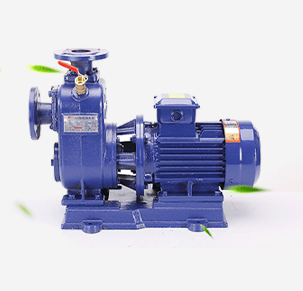
China Medium Head Heavy Duty Slurry Pump Performance Analysis
The China medium head heavy duty slurry pump is a specialized centrifugal hydraulic machine engineered for the transport of highly abrasive and corrosive fluids, typically categorized as slurries. In the industrial value chain, these pumps occupy a critical position between primary extraction (mining) and secondary processing (beneficiation), providing the necessary kinetic energy to move particulate-laden media across moderate elevations and distances. Unlike standard water pumps, the medium head heavy duty slurry pump is designed to balance the trade-off between volumetric flow rate and discharge pressure (head), ensuring that the critical velocity of the fluid is maintained to prevent solids sedimentation within the pipeline. The core performance of these units is defined by their ability to maintain hydraulic efficiency while resisting the extreme erosive wear caused by high-velocity particulate impact, typically operating in the range of 20 to 80 meters of total dynamic head (TDH).
Material Science & Manufacturing
The operational longevity of a medium head heavy duty slurry pump is fundamentally dependent on the metallurgical properties of its wetted parts. Given the extreme abrasive nature of mining slurries, materials science focuses on the synergy between hardness and toughness. The primary materials employed include High-Chrome White Irons (ASTM A532), which consist of a martensitic matrix embedded with primary M7C3 carbides. These carbides provide a hardness typically exceeding 60 HRC, offering superior resistance to micro-cutting and abrasive wear. For applications involving high acidity or salinity, duplex stainless steels or specialized rubber linings (such as natural rubber or nitrile) are utilized to prevent chemical corrosion and impact wear.
The manufacturing process involves precision casting and rigorous machining. The impeller, the most critical component, is produced via investment casting or sand casting followed by a specific heat treatment cycle (quenching and tempering) to stabilize the microstructure and eliminate internal stresses. To ensure the "heavy duty" classification, the pump casing is designed with thick walls and reinforced ribs to withstand high internal pressures and external vibrations. The assembly process incorporates precision-ground shafts and high-load tapered roller bearings to ensure concentricity, thereby reducing mechanical seal friction and preventing premature shaft deflection under the load of high-density slurries.
Performance & Engineering
Engineering a medium head heavy duty slurry pump requires a deep analysis of fluid dynamics and force distribution. A primary concern is the "Critical Settling Velocity"—the minimum velocity required to keep particles in suspension. Engineers utilize the Durand equation to calculate this threshold, ensuring that the pump's head and flow characteristics prevent the accumulation of solids, which would otherwise lead to pipe blockage and catastrophic pump failure. The impeller design typically features a semi-open or closed geometry with optimized vane angles to minimize turbulence and cavitation, particularly at the suction eye where the Net Positive Suction Head available (NPSHa) must exceed the NPSH required (NPSHr).
Environmental resistance is addressed through the implementation of advanced sealing systems. Heavy-duty slurry pumps often employ an expeller (booster) mechanism to create a low-pressure zone at the stuffing box, diverting slurry away from the sealing faces. This reduces the reliance on external flush water and minimizes the wear on the mechanical seals. Compliance with international engineering standards ensures that the structural integrity of the pump frame can support the massive torque generated by the prime mover, while the vibration profiles are kept within ISO 10816 limits to prevent fatigue cracking in the pump housing and piping connections.
Technical Specifications
| Parameter Dimension | Standard Specification | Heavy Duty Range | Tolerance/Metric |
|---|---|---|---|
| Total Dynamic Head (TDH) | 30m - 60m | Up to 80m | ± 5% |
| Max Flow Rate (Q) | 100 - 1200 m³/h | Up to 2500 m³/h | ± 10% |
| Liner Material Hardness | High-Chrome Alloy | 60 - 65 HRC | ± 2 HRC |
| Max Particle Size | 10mm - 50mm | Up to 100mm | Design Dependent |
| Slurry Density | 1.1 - 1.4 t/m³ | Up to 1.8 t/m³ | Based on SG |
| Operational Speed | 600 - 1800 RPM | Customized | ± 1% |
Failure Mode & Maintenance
Failure analysis of medium head slurry pumps typically reveals three primary modes: abrasive erosion, cavitation, and mechanical seal degradation. Abrasive erosion manifests as thinning of the impeller vanes and casing walls, leading to a drop in discharge pressure and efficiency. This is often caused by operating the pump too far from its Best Efficiency Point (BEP), resulting in high internal turbulence. Cavitation occurs when the local pressure drops below the vapor pressure of the liquid, creating vapor bubbles that collapse violently against the metal surfaces, resulting in "pitting" or sponge-like textures on the impeller eye. Mechanical seal failure is usually attributed to the ingress of abrasive particles into the seal faces or inadequate lubrication of the bearing housing.
Professional maintenance involves a proactive "Condition-Based Monitoring" (CBM) approach. This includes regular vibration analysis to detect bearing wear and ultrasonic thickness gauging of the liners to schedule replacements before the pump casing is compromised. Maintenance protocols must prioritize the alignment of the pump and motor using laser alignment tools to prevent shaft bending. When replacing liners, it is critical to ensure that the mating surfaces are clean and that bolts are torqued to specification to avoid gaps where slurry can seep through and erode the outer shell (washout).
Industry FAQ
Q: How do you determine the correct impeller material for a specific slurry application?
A: Selection is based on the "Wear Index" of the slurry. For high-impact, coarse particles, high-chrome alloys (27% Cr) are preferred. For fine, highly abrasive particles or corrosive chemicals, natural rubber linings are employed due to their elastic deformation capacity, which absorbs impact energy rather than resisting it through hardness.
Q: What is the impact of increasing the slurry density on the pump's total head?
A: Increasing the specific gravity (SG) of the slurry increases the required power (BHP) to maintain the same flow rate. While the head (measured in meters) remains theoretically similar, the pressure (measured in kPa) increases proportionally with the density, which places higher stress on the pump casing and seals.
Q: Why is the "Best Efficiency Point" (BEP) critical for slurry pump longevity?
A: Operating away from the BEP creates recirculating flows and turbulence within the volute. In slurry applications, this turbulence accelerates the localized erosion of the casing and impeller, drastically reducing the Mean Time Between Failures (MTBF) and increasing energy consumption.
Q: How can we prevent the pump from running dry, and what are the consequences of doing so?
A: Dry running leads to rapid overheating of the mechanical seals and potential warping of the impeller due to thermal expansion. We recommend installing low-pressure sensors or flow meters integrated with an automated PLC shutdown system to ensure the pump is always primed.
Q: What is the role of the expeller in a heavy-duty slurry pump?
A: The expeller is a secondary impeller that rotates faster than the main impeller to create a centrifugal force that pushes the slurry away from the shaft sealing area. This reduces the pressure at the stuffing box, significantly extending the life of the seals and reducing the amount of seal-flush water required.
Conclusion
The engineering of a China medium head heavy duty slurry pump is a complex intersection of fluid dynamics and metallurgy. By optimizing the balance between high-chrome material hardness and hydraulic efficiency, these pumps enable the reliable transport of abrasive media under demanding industrial conditions. The technical integrity of the system relies not only on the initial manufacturing precision but also on the strict adherence to operational parameters such as the critical settling velocity and the Best Efficiency Point.
Looking forward, the integration of smart sensors for real-time wear monitoring and the development of nano-composite liners are expected to further extend the service life of these machines. For procurement and engineering teams, the focus must remain on specifying materials based on precise slurry chemistry and implementing rigorous maintenance schedules to maximize the total cost of ownership (TCO) efficiency in mining and industrial processing plants.
-
submersible effluent sewage pump Performance Analysis
News2026-05-31
-
stainless steel submersible sewage pumps Performance Engineering
News2026-05-31
-
stainless steel submersible sewage pump Material Science Manufacturing
News2026-05-31
-
Sewage Submersible Pump Installation Performance Analysis
News2026-05-31
-
sewage submersible pump 2hp Performance Analysis
News2026-05-31
-
sewage submersible pump 1hp Performance Analysis
News2026-05-30
-
1 hp sewage submersible pump Performance Analysis
News2026-05-30
-
waste pump for basement bathroom Performance and Engineering
News2026-05-30
-
Sump Pump Drain Field Performance Analysis
News2026-05-30
-
small sewage pump Performance Analysis
News2026-05-30
-
sewer pump for basement Material Science Manufacturing
News2026-05-29
-
sewage sump pumps Performance and Engineering
News2026-05-29
-
sewage pumps for septic tanks Material Science and Manufacturing
News2026-05-29
-
Sewage Pumping Companies Performance Analysis
News2026-05-29
-
Sewage Pump Manufacturers Performance Engineering
News2026-05-29




