English
- Afrikaans
- Albanian
- Amharic
- Arabic
- Armenian
- Azerbaijani
- Basque
- Belarusian
- Bengali
- Bosnian
- Bulgarian
- Catalan
- Cebuano
- Corsican
- Croatian
- Czech
- Danish
- Dutch
- English
- Esperanto
- Estonian
- Finnish
- French
- Frisian
- Galician
- Georgian
- German
- Greek
- Gujarati
- Haitian Creole
- hausa
- hawaiian
- Hebrew
- Hindi
- Miao
- Hungarian
- Icelandic
- igbo
- Indonesian
- irish
- Italian
- Japanese
- Javanese
- Kannada
- kazakh
- Khmer
- Rwandese
- Korean
- Kurdish
- Kyrgyz
- Lao
- Latin
- Latvian
- Lithuanian
- Luxembourgish
- Macedonian
- Malgashi
- Malay
- Malayalam
- Maltese
- Maori
- Marathi
- Mongolian
- Myanmar
- Nepali
- Norwegian
- Norwegian
- Occitan
- Pashto
- Persian
- Polish
- Portuguese
- Punjabi
- Romanian
- Russian
- Samoan
- Scottish Gaelic
- Serbian
- Sesotho
- Shona
- Sindhi
- Sinhala
- Slovak
- Slovenian
- Somali
- Spanish
- Sundanese
- Swahili
- Swedish
- Tagalog
- Tajik
- Tamil
- Tatar
- Telugu
- Thai
- Turkish
- Turkmen
- Ukrainian
- Urdu
- Uighur
- Uzbek
- Vietnamese
- Welsh
- Bantu
- Yiddish
- Yoruba
- Zulu

Telephone: +86 13120555503
Email: frank@cypump.com


Apr . 01, 2024 17:55 Back to list
china krebs slurry pumps Performance Analysis
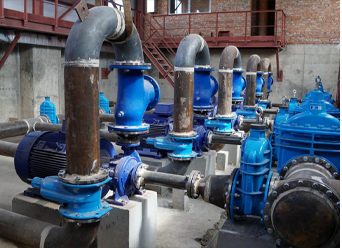
China Krebs Slurry Pumps Performance Analysis
China Krebs slurry pumps represent a critical intersection of centrifugal hydraulic engineering and advanced materials science, specifically designed for the transport of highly abrasive and corrosive fluids. In the industrial value chain, these pumps serve as the primary motive force in mineral processing, dredging, chemical tailings management, and power plant ash handling. The core technical position of these pumps is to maintain a steady volumetric flow rate while mitigating the exponential rate of erosive wear caused by suspended solids. Performance is measured not only by head and flow capacity but by the Mean Time Between Failures (MTBF) of the wetted parts. By optimizing the impeller geometry and utilizing high-chromium alloys, these pumps minimize turbulence and secondary flow vortices, which are the primary catalysts for localized wall thinning and premature component failure in heavy-duty slurry applications.
Material Science & Manufacturing
The longevity of China Krebs slurry pumps is predicated on the metallurgical integrity of their components. The primary challenge is balancing hardness (to resist abrasion) with toughness (to prevent brittle fracture under impact). The manufacturing process utilizes a spectrum of advanced alloys: High-Chromium White Cast Irons (ASTM A532), which feature a microstructure of primary M7C3 carbides embedded in a martensitic matrix, providing extreme hardness typically ranging from 60 to 65 HRC. For environments where chemical corrosion accompanies abrasion, duplex stainless steels or specialty rubber linings (such as Natural Rubber or Nitrile) are employed. The rubber lining process involves a precision bonding technique where the elastomer is vulcanized to the cast iron shell, creating a compliant layer that absorbs the kinetic energy of impacting particles.
Manufacturing tolerances are strictly controlled via CNC machining and dynamic balancing of the impeller to ISO 1940-1 standards, reducing vibration-induced fatigue. The casting process employs precision sand casting with controlled cooling rates to prevent the formation of large, brittle eutectic carbides that could act as stress concentrators. Furthermore, the shaft assemblies are typically manufactured from forged alloy steel, heat-treated to achieve a specific yield strength that prevents deflection under the high radial loads characteristic of non-Newtonian slurry flow.
Performance & Engineering
Engineering a slurry system requires a complex analysis of the fluid's rheology. China Krebs slurry pumps are engineered to handle "critical settling velocity," the minimum speed required to keep solids in suspension to prevent pipe blockage. From a force analysis perspective, the pump must overcome the higher specific gravity of the slurry compared to water, requiring a derating of the pump curve to account for the increased density and viscosity. The Net Positive Suction Head required (NPSHr) is carefully calculated to avoid cavitation, which is exacerbated in slurry pumps as the vapor bubbles collapse against a surface already being eroded by solids, leading to accelerated "pitting" corrosion.
Functional implementation involves the integration of advanced sealing systems. To prevent the ingress of abrasive particles into the bearing housing, these pumps utilize expeller seals or gland packing with external flush water systems. The hydraulic design focuses on reducing the "velocity gradient" at the impeller periphery, as high-velocity zones are where the most significant material loss occurs. By employing computational fluid dynamics (CFD), the flow paths are optimized to ensure a linear transition from the suction eye to the discharge volute, minimizing the internal recirculation that leads to premature wear of the liner plates.
Technical Specifications
| Parameter Dimension | High-Chrome Alloy Grade | Natural Rubber Lined | Duplex Stainless Steel | Specialty Ceramic Liner |
|---|---|---|---|---|
| Hardness (HRC/Shore A) | 60 - 65 HRC | 65 - 75 Shore A | 25 - 35 HRC | > 90 HRC |
| Max Particle Size (mm) | Up to 100mm | Up to 40mm | Up to 20mm | Up to 10mm |
| Corrosion Resistance | Moderate | High (Acidic/Alkali) | Very High (Chlorides) | Extreme |
| Wear Mechanism | Abrasive Erosion | Impact Abrasion | Chemical Erosion | Micro-cutting |
| Max Operating Temp (°C) | Up to 350°C | Up to 80°C | Up to 200°C | Up to 450°C |
| Typical Application | Mining Tailings | Coal Slurry | Chemical Waste | High-Pure Silica |
Failure Mode & Maintenance
The primary failure modes of China Krebs slurry pumps are categorized into erosive wear, cavitation-induced pitting, and mechanical seal failure. Erosive wear typically manifests as "channeling" in the volute or thinning of the impeller vanes, caused by the high-velocity impact of angular particles. This leads to a drop in discharge pressure and volumetric efficiency. Cavitation occurs when the suction pressure drops below the vapor pressure of the liquid, creating imploding bubbles that strip the protective oxide layer from the metal, exposing fresh material to rapid corrosion.
Maintenance protocols must be predictive rather than reactive. This includes the implementation of ultrasonic thickness testing (UT) on the pump liner and volute to monitor wear rates without dismantling the unit. Bearing failure is often a result of seal leakage; therefore, the maintenance of the gland water system is paramount. When replacing impellers, it is critical to verify the balance grade to prevent shaft deflection. Professional maintenance involves the "staged replacement" strategy, where liners are replaced based on the calculated wear-life curve to avoid the risk of catastrophic shell penetration, which would lead to immediate system downtime and potential environmental contamination.
Industry FAQ
Q: How do we determine the optimal material selection between High-Chrome and Rubber lining for a specific slurry?
A: The decision is based on the particle size and the nature of the abrasion. High-Chrome alloys are superior for large, angular particles and high-pressure applications where the material must resist cutting. Rubber lining is preferred for fine particles and high-impact applications, as the elastomer absorbs the energy of the particles, though it is limited by temperature and chemical compatibility.
Q: What causes the sudden increase in vibration levels in a pump that was previously stable?
A: This is typically indicative of an unbalanced impeller due to uneven wear or a partial blockage (plugging) in the volute. Alternatively, it may signal bearing degradation or the onset of severe cavitation. We recommend performing a vibration spectrum analysis to identify if the frequency corresponds to the vane-pass frequency or a mechanical looseness.
Q: Why is the pump not reaching the rated head despite the motor running at full RPM?
A: This usually points to excessive internal clearances between the impeller and the wear plates. As these components wear down, internal recirculation (leakage from discharge back to suction) increases, significantly reducing the pump's efficiency and head capacity. A measurement of the clearance gap is necessary to determine if replacements are required.
Q: How does the specific gravity of the slurry affect the motor power requirements?
A: The power required is directly proportional to the density of the fluid. Since slurry has a higher specific gravity than water, the brake horsepower (BHP) increases linearly. Failure to account for the slurry density during motor sizing can lead to frequent overloading and motor burnout during periods of high solids concentration.
Q: What is the best practice for preventing seal failure in highly abrasive environments?
A: The most effective method is the use of a dedicated seal water system that provides a constant positive pressure of clean water to the seal face. This creates a "water curtain" that prevents slurry particles from entering the seal chamber. Monitoring the flow and pressure of this flush water is the primary way to prevent premature seal failure.
Conclusion
The operational efficiency of China Krebs slurry pumps is fundamentally dependent on the synergy between hydraulic design and material durability. By employing high-chromium alloys and precision engineering, these pumps successfully mitigate the aggressive nature of abrasive slurry transport, ensuring that industrial processes remain continuous and cost-effective. The technical integration of CFD-optimized flow paths and rigorous metallurgical controls allows these machines to operate in the most demanding environments of the global mining and chemical industries.
Looking forward, the industry is shifting toward "intelligent pumping," where real-time wear sensors and variable frequency drives (VFDs) are used to optimize the flow velocity based on the actual slurry density. To maximize the lifecycle of these assets, operators must prioritize a regimen of predictive maintenance and precise material selection tailored to the specific rheological properties of their media, thereby reducing total cost of ownership and enhancing system reliability.
-
submersible effluent sewage pump Performance Analysis
News2026-05-31
-
stainless steel submersible sewage pumps Performance Engineering
News2026-05-31
-
stainless steel submersible sewage pump Material Science Manufacturing
News2026-05-31
-
Sewage Submersible Pump Installation Performance Analysis
News2026-05-31
-
sewage submersible pump 2hp Performance Analysis
News2026-05-31
-
sewage submersible pump 1hp Performance Analysis
News2026-05-30
-
1 hp sewage submersible pump Performance Analysis
News2026-05-30
-
waste pump for basement bathroom Performance and Engineering
News2026-05-30
-
Sump Pump Drain Field Performance Analysis
News2026-05-30
-
small sewage pump Performance Analysis
News2026-05-30
-
sewer pump for basement Material Science Manufacturing
News2026-05-29
-
sewage sump pumps Performance and Engineering
News2026-05-29
-
sewage pumps for septic tanks Material Science and Manufacturing
News2026-05-29
-
Sewage Pumping Companies Performance Analysis
News2026-05-29
-
Sewage Pump Manufacturers Performance Engineering
News2026-05-29




