English
- Afrikaans
- Albanian
- Amharic
- Arabic
- Armenian
- Azerbaijani
- Basque
- Belarusian
- Bengali
- Bosnian
- Bulgarian
- Catalan
- Cebuano
- Corsican
- Croatian
- Czech
- Danish
- Dutch
- English
- Esperanto
- Estonian
- Finnish
- French
- Frisian
- Galician
- Georgian
- German
- Greek
- Gujarati
- Haitian Creole
- hausa
- hawaiian
- Hebrew
- Hindi
- Miao
- Hungarian
- Icelandic
- igbo
- Indonesian
- irish
- Italian
- Japanese
- Javanese
- Kannada
- kazakh
- Khmer
- Rwandese
- Korean
- Kurdish
- Kyrgyz
- Lao
- Latin
- Latvian
- Lithuanian
- Luxembourgish
- Macedonian
- Malgashi
- Malay
- Malayalam
- Maltese
- Maori
- Marathi
- Mongolian
- Myanmar
- Nepali
- Norwegian
- Norwegian
- Occitan
- Pashto
- Persian
- Polish
- Portuguese
- Punjabi
- Romanian
- Russian
- Samoan
- Scottish Gaelic
- Serbian
- Sesotho
- Shona
- Sindhi
- Sinhala
- Slovak
- Slovenian
- Somali
- Spanish
- Sundanese
- Swahili
- Swedish
- Tagalog
- Tajik
- Tamil
- Tatar
- Telugu
- Thai
- Turkish
- Turkmen
- Ukrainian
- Urdu
- Uighur
- Uzbek
- Vietnamese
- Welsh
- Bantu
- Yiddish
- Yoruba
- Zulu

Telephone: +86 13120555503
Email: frank@cypump.com


Apr . 01, 2024 17:55 Back to list
china high pressure pump for detergent slurry Manufacturing Specification and Performance Analysis
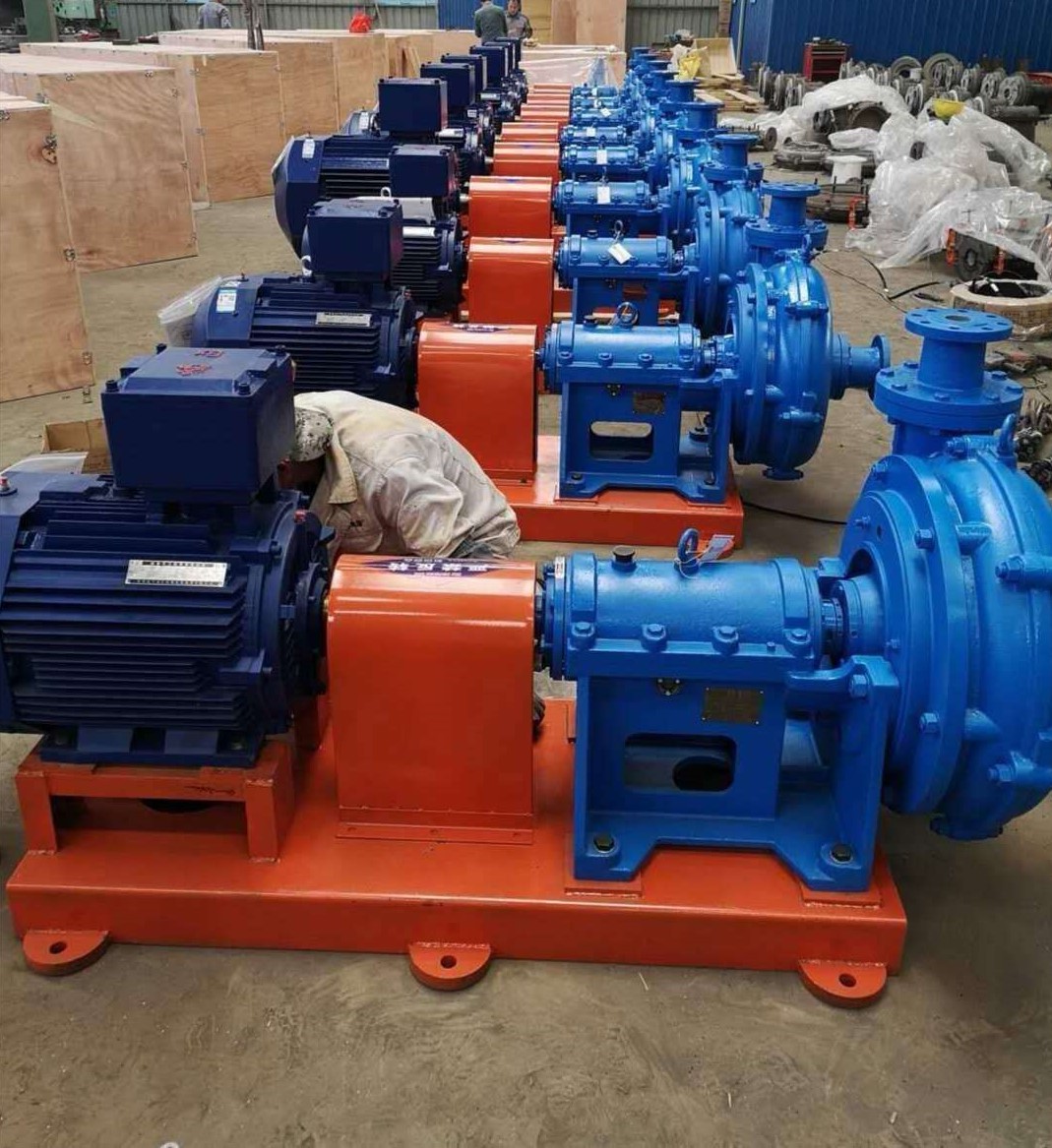
China High Pressure Pump for Detergent Slurry: Manufacturing Specification and Performance Analysis
In the industrial chemical processing chain, the transport of detergent slurry represents one of the most challenging fluid dynamics problems due to the non-Newtonian behavior of the medium. Detergent slurry—typically a concentrated mixture of surfactants, builders (such as zeolites or sodium tripolyphosphate), and fragrance stabilizers—exhibits high viscosity, significant shear-thinning properties, and an inherent abrasive nature. The China high pressure pump for detergent slurry is a specialized piece of capital equipment engineered to overcome these rheological hurdles, ensuring precise volumetric dosing and high-pressure conveyance from mixing vessels to filling lines or secondary reaction chambers. Positioned as a critical nexus in the production line, these pumps must maintain laminar flow stability while resisting the chemical aggression of alkaline agents and the physical erosion of suspended solid particulates. The technical core of these systems lies in their ability to maintain a constant discharge pressure despite fluctuations in slurry density, ensuring that the final product homogeneity is not compromised by cavitation or shear-induced degradation of the surfactant molecular chains.
Material Science & Manufacturing
The engineering of a high-pressure pump for detergent slurry begins with a rigorous selection of materials capable of resisting both electrochemical corrosion and mechanical abrasion. Given that detergent slurries often contain high pH levels and abrasive crystalline particles, standard 304 stainless steel is frequently insufficient. Industry-leading pumps utilize AISI 316L molybdenum-bearing stainless steel or duplex stainless steels (such as SAF 2205) for the wetted parts. The addition of molybdenum enhances the pitting resistance equivalent number (PREN), which is vital for preventing localized corrosion in the presence of chlorides often found in industrial-grade detergents.
Manufacturing processes focus heavily on the precision of the fluid end. The pump casings are typically produced via investment casting followed by CNC precision machining to ensure tight tolerances between the piston/plunger and the cylinder liner. To combat the abrasive nature of the slurry, the cylinder liners are often coated with Tungsten Carbide (WC) or Chromium Oxide via High-Velocity Oxy-Fuel (HVOF) thermal spraying. This creates a surface hardness exceeding 1000 HV, significantly reducing the wear rate caused by the sliding friction of abrasive particles.
Sealing technology is the most critical failure point in slurry pumping. These pumps employ a multi-stage sealing architecture, combining high-performance PTFE (Polytetrafluoroethylene) V-rings with reinforced elastomers like EPDM or Viton, depending on the chemical compatibility of the surfactant base. The manufacturing of the valves involves the use of hardened ceramic balls (Alumina or Zirconia) and reinforced seats to prevent "wire-drawing"—a phenomenon where high-velocity slurry erodes a narrow channel through the valve seat, leading to internal leakage and loss of volumetric efficiency.
Performance & Engineering
From an engineering perspective, the performance of the pump is governed by the interaction between the pump's mechanical energy and the slurry's yield stress. Detergent slurries often behave as Bingham plastics; they require a minimum threshold of shear stress to initiate flow. The pump is engineered to provide high starting torque and a positive displacement mechanism (typically triplex or quintuplex plunger designs) to ensure that the fluid is moved regardless of its viscosity, avoiding the slip common in centrifugal pumps.
Force analysis indicates that the peak pressure loads occur during the discharge stroke, where the pump must overcome the system's backpressure and the frictional losses of the pipeline. To prevent hydraulic shock (water hammer), these pumps incorporate precision-engineered pulsation dampeners. These dampeners use a nitrogen-charged bladder to absorb pressure spikes, thereby protecting the piping infrastructure and ensuring a steady flow rate, which is essential for accurate metering in automated filling processes.
Environmental resistance is another key engineering pillar. The pump exterior is treated with epoxy-based chemical-resistant coatings to withstand the caustic environment of a detergent plant. Furthermore, the drive system is typically isolated from the fluid end via a crankshaft and connecting rod assembly, ensuring that the motor is protected from chemical splashes and that the heat generated by the high-pressure compression of the slurry is efficiently dissipated through integrated cooling jackets in the fluid end.
Technical Specifications
| Technical Parameter | Standard Grade (316L) | Heavy Duty (Duplex) | Ultra-High Pressure | Evaluation Metric |
|---|---|---|---|---|
| Maximum Discharge Pressure | 100 - 200 Bar | 200 - 400 Bar | Up to 600 Bar | Hydraulic Testing |
| Flow Rate Capacity | 5 - 50 m³/h | 10 - 100 m³/h | 2 - 30 m³/h | Volumetric Efficiency |
| Maximum Slurry Viscosity | 5,000 cPs | 15,000 cPs | 10,000 cPs | Dynamic Viscometry |
| Wetted Part Material | AISI 316L SS | SAF 2205 Duplex | Super Duplex / Hastelloy | Corrosion Resistance |
| Seal Material | PTFE + EPDM | PTFE + Viton | Diamond-Like Carbon (DLC) | Wear Rate Analysis |
| Permissible Solid Content | < 15% by weight | < 30% by weight | < 20% by weight | Erosion Testing |
Failure Mode & Maintenance
The failure modes of high-pressure detergent slurry pumps are primarily categorized into mechanical wear, chemical degradation, and hydraulic instability. The most prevalent failure mode is seal extrusion and abrasion. In this scenario, the abrasive particles in the slurry penetrate the primary seal lip, creating micro-grooves in the PTFE surface. This leads to "weeping," where the slurry leaks into the crankcase or external environment, eventually causing pump seizure if not detected. To mitigate this, a scheduled replacement cycle for seals based on operating hours (typically every 2,000–4,000 hours) is mandatory.
Another critical failure mode is cavitation erosion, which typically occurs at the suction inlet. If the Net Positive Suction Head Available (NPSHa) falls below the required level (NPSHr) due to the high viscosity of the slurry, vapor bubbles form and collapse violently against the pump internals. This results in pitting and a significant drop in discharge pressure. Maintenance teams must ensure that suction lines are oversized and that the pump is positioned as close to the supply tank as possible to minimize pressure drop.
Valve Seat Delamination can also occur when the pump is subjected to frequent start-stop cycles with highly concentrated slurries. The impact of the ceramic ball against the seat can cause micro-fractures. Professional maintenance involves the use of ultrasonic testing to detect internal cracks in the valve seats and the application of a specialized polishing compound to restore the seating surface without compromising the dimensional tolerance. Regular lubrication of the crankshaft bearings with high-viscosity synthetic oils is also required to prevent fatigue cracking of the connecting rods under high-load conditions.
Industry FAQ
Q: How do we determine if a pump is suitable for a non-Newtonian detergent slurry with high yield stress?
A: You must analyze the slurry's rheological profile using a rotational viscometer to identify the shear-thinning coefficient. For high yield stress fluids, a positive displacement pump (plunger or diaphragm) is required over a centrifugal pump because it provides a constant flow regardless of the fluid's resistance, ensuring the pump does not "slip" or fail to prime.
Q: What is the impact of surfactant concentration on the selection of seal materials?
A: High concentrations of anionic surfactants can cause certain elastomers to swell or degrade. While EPDM is excellent for general alkaline detergents, if the slurry contains specific organic solvents or fragrance oils, Viton or perfluoroelastomers (FFKM) are necessary to maintain seal integrity and prevent premature leakage.
Q: Why is the discharge pressure fluctuating despite a stable motor speed?
A: This is usually indicative of either a failing pulsation dampener (loss of nitrogen pre-charge) or an air leak in the suction line causing cavitation. We recommend checking the bladder pressure of the dampener first, as the compressibility of the nitrogen gas is what smooths the flow of the incompressible slurry.
Q: Can we increase the solid content of the slurry without replacing the pump?
A: Increasing solid content increases the abrasive wear rate linearly. If you increase the solid percentage, you must reduce the pump speed (RPM) to lower the velocity of the particles against the cylinder walls and transition to Tungsten Carbide coated liners to prevent rapid bore enlargement.
Q: How does the "China high pressure pump" design specifically handle the risk of "dead-heading"?
A: These pumps are equipped with high-precision pressure relief valves (PRV) and integrated pressure transducers. If a downstream valve is closed, the PRV triggers an automatic bypass or a system shutdown via the PLC to prevent the catastrophic failure of the pump casing or the rupture of the high-pressure piping.
Conclusion
The selection and operation of a high-pressure pump for detergent slurry are governed by a complex interplay of material science, fluid rheology, and mechanical engineering. To achieve operational longevity, one must prioritize the use of corrosion-resistant alloys such as AISI 316L or Duplex stainless steel, combined with advanced surface treatments like HVOF coatings. The ability to manage non-Newtonian flow characteristics through positive displacement and effective pulsation dampening is what separates industrial-grade equipment from standard pumping solutions, directly impacting the consistency and quality of the final detergent product.
Looking forward, the industry is shifting toward "smart pumping" systems that utilize IoT-enabled vibration and pressure sensors to predict seal failure before it occurs. By implementing a predictive maintenance framework based on real-time data, manufacturers can reduce unplanned downtime and optimize the lifecycle of the pump. For procurement managers and engineers, the focus must remain on the total cost of ownership (TCO), where a higher initial investment in superior metallurgy and sealing technology yields significant savings in maintenance and operational efficiency over the long term.
-
sewage submersible pump 1hp Performance Analysis
News2026-05-30
-
1 hp sewage submersible pump Performance Analysis
News2026-05-30
-
waste pump for basement bathroom Performance and Engineering
News2026-05-30
-
Sump Pump Drain Field Performance Analysis
News2026-05-30
-
small sewage pump Performance Analysis
News2026-05-30
-
sewer pump for basement Material Science Manufacturing
News2026-05-29
-
sewage sump pumps Performance and Engineering
News2026-05-29
-
sewage pumps for septic tanks Material Science and Manufacturing
News2026-05-29
-
Sewage Pumping Companies Performance Analysis
News2026-05-29
-
Sewage Pump Manufacturers Performance Engineering
News2026-05-29
-
sewage pump for basement Performance and Engineering
News2026-05-28
-
Sewage Pump Companies Performance Analysis
News2026-05-28
-
Sewage Pit and Pump Performance Analysis
News2026-05-28
-
Sewage Lift Pumps Material Science
News2026-05-28
-
Sewage Ejector Tank Material Science and Manufacturing
News2026-05-28




