English
- Afrikaans
- Albanian
- Amharic
- Arabic
- Armenian
- Azerbaijani
- Basque
- Belarusian
- Bengali
- Bosnian
- Bulgarian
- Catalan
- Cebuano
- Corsican
- Croatian
- Czech
- Danish
- Dutch
- English
- Esperanto
- Estonian
- Finnish
- French
- Frisian
- Galician
- Georgian
- German
- Greek
- Gujarati
- Haitian Creole
- hausa
- hawaiian
- Hebrew
- Hindi
- Miao
- Hungarian
- Icelandic
- igbo
- Indonesian
- irish
- Italian
- Japanese
- Javanese
- Kannada
- kazakh
- Khmer
- Rwandese
- Korean
- Kurdish
- Kyrgyz
- Lao
- Latin
- Latvian
- Lithuanian
- Luxembourgish
- Macedonian
- Malgashi
- Malay
- Malayalam
- Maltese
- Maori
- Marathi
- Mongolian
- Myanmar
- Nepali
- Norwegian
- Norwegian
- Occitan
- Pashto
- Persian
- Polish
- Portuguese
- Punjabi
- Romanian
- Russian
- Samoan
- Scottish Gaelic
- Serbian
- Sesotho
- Shona
- Sindhi
- Sinhala
- Slovak
- Slovenian
- Somali
- Spanish
- Sundanese
- Swahili
- Swedish
- Tagalog
- Tajik
- Tamil
- Tatar
- Telugu
- Thai
- Turkish
- Turkmen
- Ukrainian
- Urdu
- Uighur
- Uzbek
- Vietnamese
- Welsh
- Bantu
- Yiddish
- Yoruba
- Zulu

Telephone: +86 13120555503
Email: frank@cypump.com


Apr . 01, 2024 17:55 Back to list
china high head slurry pump Technical Dimension and Performance Analysis
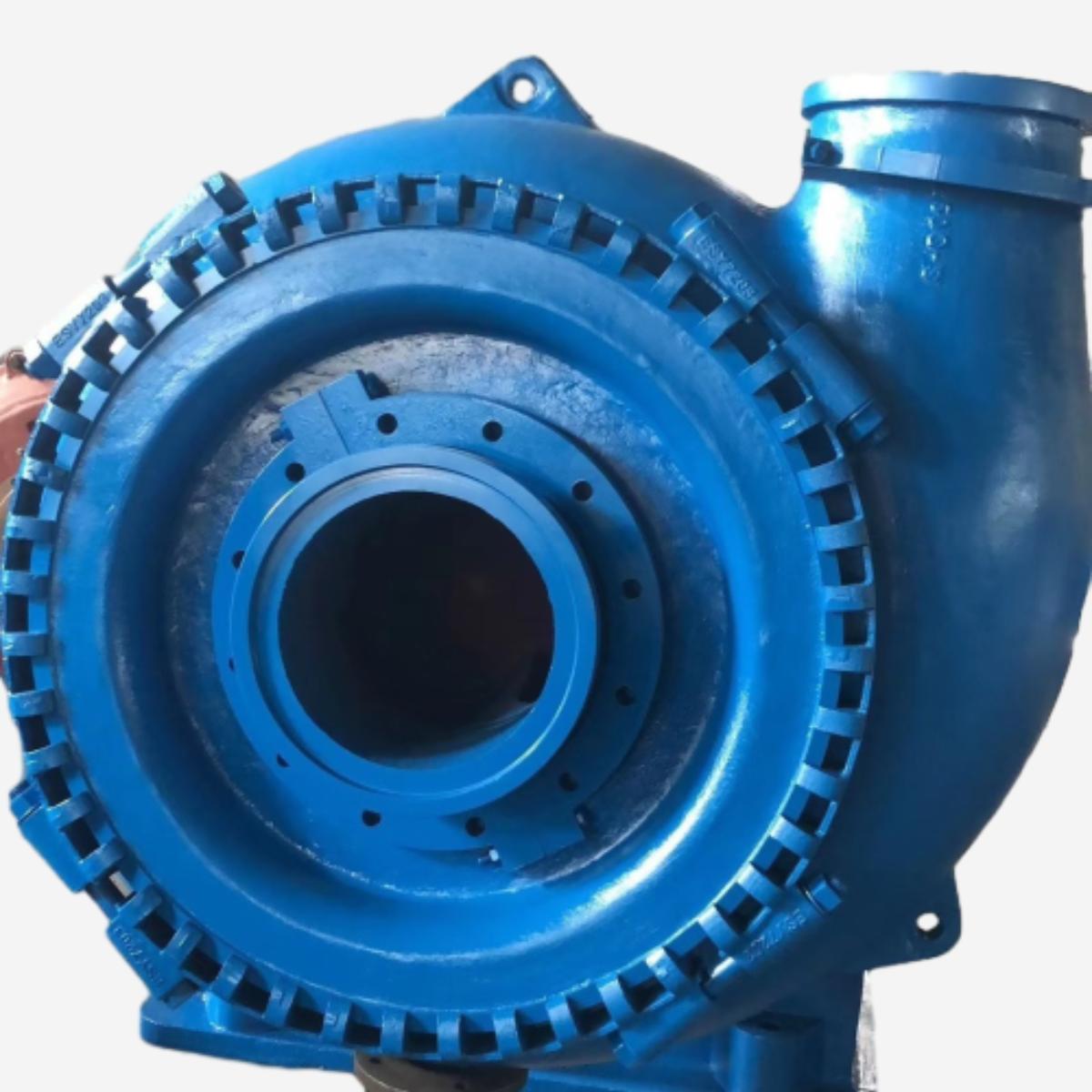
China High Head Slurry Pump: Technical Dimension and Performance Analysis
The china high head slurry pump is a specialized heavy-duty centrifugal machine engineered to transport highly abrasive, viscous, and dense fluids—commonly referred to as slurries—across significant vertical or horizontal elevations. Positioned at the critical juncture of the mineral processing and wastewater treatment industry chains, these pumps serve as the primary kinetic driver for tailings disposal, ore concentrate transport, and chemical leaching cycles. Unlike standard centrifugal pumps, high head slurry pumps must overcome extreme hydraulic resistance and internal erosion while maintaining a stable discharge pressure. The core technical challenge lies in balancing the High Head (H) requirements with the Net Positive Suction Head required (NPSHr) to prevent cavitation in fluids containing suspended solids, ensuring that the kinetic energy imparted by the impeller is sufficient to propel the slurry without causing premature component failure or systemic blockage.
Material Science & Manufacturing
The longevity of a china high head slurry pump is fundamentally determined by the synergy between metallurgical composition and precision manufacturing. Given the constant impingement of abrasive particles (such as silica, alumina, or iron ore), the wetted parts are constructed from advanced erosion-resistant alloys. High-chromium cast iron (typically 27% Cr) is the industry standard for impeller and liner construction, utilizing a martensitic matrix embedded with primary M7C3 carbides. These carbides provide a hardness typically exceeding 60 HRC, which is essential for resisting micro-cutting and plastic deformation caused by high-velocity slurry impact.
Manufacturing involves a rigorous sequence of investment casting and CNC precision machining. The casting process is tightly controlled to eliminate porosity and shrinkage cavities, which could otherwise become initiation sites for stress corrosion cracking. Following casting, the components undergo a specific heat-treatment cycle—quenching and tempering—to optimize the balance between hardness and fracture toughness. The pump casing is often designed with replaceable wear liners (rubber or alloy), allowing for the sacrificial wearing of internal surfaces. Furthermore, the shaft is typically fabricated from forged alloy steel, precision-ground to ensure concentricity, and treated with induction hardening or chrome plating to prevent shaft sleeve wear at the sealing interfaces.
Performance & Engineering
Engineering a high head slurry pump requires a sophisticated analysis of fluid dynamics and force distribution. The primary engineering objective is to minimize the relative velocity between the slurry and the pump walls, as erosion rates increase exponentially with velocity. This is achieved through the optimization of the impeller vane geometry and the use of a volute design that converts kinetic energy into static pressure with minimal turbulence. Force analysis indicates that high-head operations induce significant radial and axial thrusts on the bearings; consequently, heavy-duty spherical roller bearings are employed to accommodate minor shaft deflections while maintaining structural rigidity.
Environmental resistance is another critical engineering pillar. In mining environments, the slurry is often chemically aggressive (acidic or alkaline). To combat this, the pump employs chemical-resistant elastomers for seals and specialized coatings for external surfaces. Compliance with hydraulic efficiency standards requires the implementation of Variable Frequency Drives (VFDs), allowing operators to adjust the pump speed to match the slurry density and viscosity, thereby avoiding the "plugging" effect and reducing energy consumption. The sealing system—usually a combination of mechanical seals and gland packing with an external flush water system—is engineered to prevent the ingress of abrasive particles into the bearing housing, which would otherwise lead to catastrophic seizure.
Technical Specifications
| Parameter Dimension | Standard High Head Range | Extreme Duty Range | Material Specification | Tolerance Grade |
|---|---|---|---|---|
| Maximum Discharge Head | 50 - 120 Meters | 120 - 250 Meters | High-Cr Alloy / Duplex SS | ISO 286-IT7 |
| Flow Capacity (Q) | 100 - 800 m³/h | 800 - 2500 m³/h | ASTM A532 Class III | ± 2% Deviation |
| Maximum Slurry Density | 1.1 - 1.4 t/m³ | 1.4 - 1.8 t/m³ | Hardened Martensite | N/A |
| Max Particle Size | ≤ 10 mm | ≤ 30 mm | Wear-resistant Rubber | ± 0.5 mm |
| Operating Speed (RPM) | 720 - 1450 RPM | 1450 - 2900 RPM | Forged 42CrMo Steel | ± 1 RPM |
| Shaft Deflection Limit | < 0.05 mm | < 0.03 mm | Induction Hardened | Precision Grade 6 |
Failure Mode & Maintenance
Failure analysis of high head slurry pumps typically reveals three primary modes: abrasive erosion, cavitation-induced pitting, and fatigue cracking. Abrasive erosion occurs predominantly at the impeller vane tips and the volute tongue, where fluid velocity is highest. This leads to a gradual increase in the internal clearances, resulting in a precipitous drop in pump efficiency and discharge head. Cavitation occurs when the NPSH available falls below the NPSH required, creating vapor bubbles that implode with extreme force, pitting the metal surfaces and causing severe vibration.
Fatigue cracking often originates from the shaft or the impeller hub due to cyclic loading and hydraulic shocks (water hammer). To mitigate these failures, a professional maintenance regimen must be implemented. This includes the use of ultrasonic thickness gauging to monitor liner wear without dismantling the pump. Lubrication systems must be monitored for metallic particulates using oil analysis to detect early bearing degradation. When replacing impellers, dynamic balancing to G2.5 standards is mandatory to prevent vibration-induced seal failure. Furthermore, the flush water pressure must be maintained at 0.5-1.0 bar above the pump discharge pressure to ensure that particles are kept away from the sealing faces.
Industry FAQ
Q: How does the pump handle a sudden increase in slurry density?
A: An increase in density raises the fluid's viscosity and specific gravity, which increases the power demand on the motor. To prevent motor overload, we utilize VFDs to modulate speed and ensure the pump operates within its safe power curve while maintaining the required head.
Q: What is the primary cause of premature impeller wear in high-head applications?
A: The primary cause is "impingement erosion," where high-velocity particles strike the surface at an angle. If the slurry contains large particles or if the pump is operated far from its Best Efficiency Point (BEP), internal turbulence accelerates this wear.
Q: Can this pump handle acidic slurries without modifying the materials?
A: Not if the pH is below 4. High-chromium alloys provide excellent abrasion resistance but limited corrosion resistance. For acidic environments, we specify Duplex Stainless Steel or specialized polymer linings to prevent chemical degradation.
Q: How do you determine when the wear liner needs replacement?
A: We recommend a combination of scheduled downtime inspections and performance monitoring. A drop in discharge pressure at a constant RPM and flow rate usually indicates that internal clearances have expanded beyond the operational limit.
Q: Why is the NPSHr critical for high head slurry pumps compared to water pumps?
A: Slurries have higher viscosity and varying particle distributions, which increase the frictional losses in the suction line. If the NPSHr is not carefully managed, the pump will cavitate much sooner than a water pump, leading to rapid impeller destruction.
Conclusion
The technical integrity of a china high head slurry pump relies on the precise integration of high-chromium metallurgy, fluid dynamic optimization, and robust mechanical engineering. By focusing on the mitigation of abrasive wear and the management of hydraulic forces, these pumps ensure the continuous operation of critical industrial processes. The shift toward higher-grade alloys and the implementation of intelligent monitoring systems have significantly extended the mean time between failures (MTBF), optimizing the total cost of ownership for the end-user.
Looking forward, the industry is moving toward "smart pumping" systems, incorporating IoT sensors for real-time erosion tracking and AI-driven predictive maintenance. For procurement and engineering teams, the focus should remain on aligning the pump's material specification with the specific mineralogy of the slurry to maximize lifespan and energy efficiency in high-head transport applications.
-
sewage submersible pump 1hp Performance Analysis
News2026-05-30
-
1 hp sewage submersible pump Performance Analysis
News2026-05-30
-
waste pump for basement bathroom Performance and Engineering
News2026-05-30
-
Sump Pump Drain Field Performance Analysis
News2026-05-30
-
small sewage pump Performance Analysis
News2026-05-30
-
sewer pump for basement Material Science Manufacturing
News2026-05-29
-
sewage sump pumps Performance and Engineering
News2026-05-29
-
sewage pumps for septic tanks Material Science and Manufacturing
News2026-05-29
-
Sewage Pumping Companies Performance Analysis
News2026-05-29
-
Sewage Pump Manufacturers Performance Engineering
News2026-05-29
-
sewage pump for basement Performance and Engineering
News2026-05-28
-
Sewage Pump Companies Performance Analysis
News2026-05-28
-
Sewage Pit and Pump Performance Analysis
News2026-05-28
-
Sewage Lift Pumps Material Science
News2026-05-28
-
Sewage Ejector Tank Material Science and Manufacturing
News2026-05-28




