English
- Afrikaans
- Albanian
- Amharic
- Arabic
- Armenian
- Azerbaijani
- Basque
- Belarusian
- Bengali
- Bosnian
- Bulgarian
- Catalan
- Cebuano
- Corsican
- Croatian
- Czech
- Danish
- Dutch
- English
- Esperanto
- Estonian
- Finnish
- French
- Frisian
- Galician
- Georgian
- German
- Greek
- Gujarati
- Haitian Creole
- hausa
- hawaiian
- Hebrew
- Hindi
- Miao
- Hungarian
- Icelandic
- igbo
- Indonesian
- irish
- Italian
- Japanese
- Javanese
- Kannada
- kazakh
- Khmer
- Rwandese
- Korean
- Kurdish
- Kyrgyz
- Lao
- Latin
- Latvian
- Lithuanian
- Luxembourgish
- Macedonian
- Malgashi
- Malay
- Malayalam
- Maltese
- Maori
- Marathi
- Mongolian
- Myanmar
- Nepali
- Norwegian
- Norwegian
- Occitan
- Pashto
- Persian
- Polish
- Portuguese
- Punjabi
- Romanian
- Russian
- Samoan
- Scottish Gaelic
- Serbian
- Sesotho
- Shona
- Sindhi
- Sinhala
- Slovak
- Slovenian
- Somali
- Spanish
- Sundanese
- Swahili
- Swedish
- Tagalog
- Tajik
- Tamil
- Tatar
- Telugu
- Thai
- Turkish
- Turkmen
- Ukrainian
- Urdu
- Uighur
- Uzbek
- Vietnamese
- Welsh
- Bantu
- Yiddish
- Yoruba
- Zulu

Telephone: +86 13120555503
Email: frank@cypump.com


Apr . 01, 2024 17:55 Back to list
china high density slurry pump Manufacturing Specification and Performance Analysis
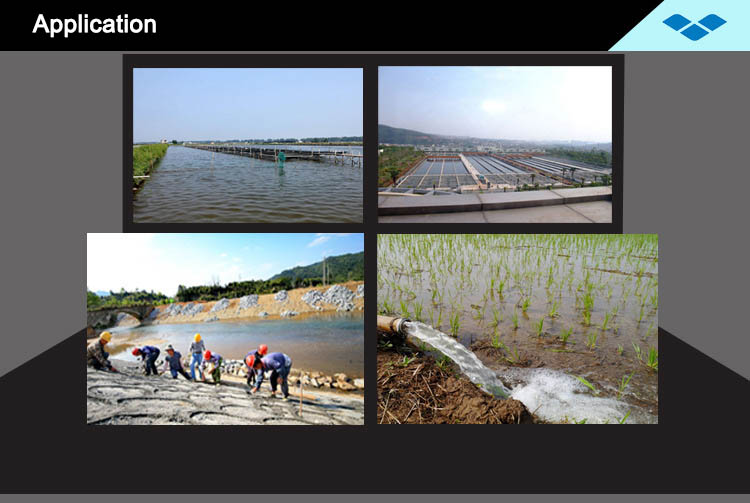
China High Density Slurry Pump Manufacturing Specification and Performance Analysis
The china high density slurry pump represents a critical engineering solution designed for the transport of high-concentration mineral slurries, tailings, and chemical waste. Positioned at the intersection of fluid dynamics and materials science, these pumps are engineered to handle fluids characterized by high viscosity, extreme abrasiveness, and often corrosive chemical compositions. Unlike standard centrifugal pumps, high-density slurry pumps must manage the non-Newtonian behavior of thick slurries—specifically Bingham plastics and pseudoplastic fluids—where the yield stress must be overcome to initiate flow. The core technical objective is to maximize the solids-by-volume percentage (Cv) while minimizing the critical settling velocity to prevent pipeline blockage and excessive internal wear. In the industrial value chain, these systems are indispensable for mining, metallurgy, dredging, and waste-water treatment, where the efficiency of the pump directly dictates the throughput of the entire processing plant.
Material Science & Manufacturing
The operational longevity of a china high density slurry pump is fundamentally dependent on the metallurgical integrity of its wetted parts. The primary challenge is "abrasive wear," which occurs through micro-cutting and plastic deformation of the surface. To counteract this, advanced High-Chrome Alloys (typically 27% Cr) are employed. These alloys create a hard M7C3 carbide network embedded in a martensitic matrix, providing a hardness typically exceeding 60 HRC. For applications involving extreme acidity or alkalinity combined with abrasion, duplex stainless steels or specialty rubber linings (such as natural rubber or nitrile) are utilized to provide a damping effect against particle impact.
The manufacturing process adheres to rigorous precision engineering standards. The impeller is typically produced via investment casting to ensure complex hydraulic geometries are maintained, followed by CNC machining to optimize the balance and minimize vibration. Heat treatment is a critical phase; controlled quenching and tempering are applied to eliminate internal stresses and ensure uniform hardness across the cross-section of the casing. Furthermore, the sealing systems employ a combination of mechanical seals and gland packing with external flushing systems to prevent the ingress of abrasive particles into the bearing housing, thereby ensuring the mechanical stability of the rotating assembly.
Performance & Engineering
Engineering a high-density slurry system requires a complex force analysis focusing on the Total Dynamic Head (TDH) and the Net Positive Suction Head available (NPSHa). Because high-density slurries exhibit increased apparent viscosity, the friction loss in the piping is significantly higher than that of clean water. Engineers must calculate the "Critical Carrying Velocity" to ensure that particles remain in suspension, avoiding the "saltation" effect where solids settle on the bottom of the pipe, increasing the risk of plugging and localized erosion.
From a fluid dynamics perspective, the pump's impeller is designed with a wide flow passage to reduce the fluid velocity at the impeller eye, thereby reducing the kinetic energy of the impacting particles and slowing the rate of wear. The engineering of the volute casing is equally critical; it is designed to convert kinetic energy into pressure with minimal turbulence. Environmental resistance is addressed through the use of anti-corrosion coatings on the exterior and the integration of heavy-duty bearings capable of supporting the increased radial loads generated by the non-uniform density of the pumped medium. Compliance with international vibration and noise standards is achieved through precision dynamic balancing of the rotating components to G2.5 or better.
Technical Specifications
| Parameter Dimension | High-Chrome Specification | Rubber-Lined Specification | Duplex Steel Specification | Performance Metric |
|---|---|---|---|---|
| Max Particle Size (mm) | 12.0 - 25.0 | 6.0 - 12.0 | 10.0 - 20.0 | $leq$ Impeller Passage |
| Maximum Flow Rate (m³/h) | 500 - 12,000 | 100 - 5,000 | 300 - 8,000 | Operational Range |
| Max Discharge Head (m) | 40 - 150 | 20 - 80 | 30 - 120 | Pressure Capability |
| Hardness (Brinell/HRC) | 60-65 HRC | Shore A 60-70 | 250-300 HB | Surface Resistance |
| Slurry Concentration (Cv%) | Up to 70% | Up to 50% | Up to 60% | Volumetric Density |
| Corrosion Rate (mm/year) | Low (Oxidizing) | Very Low | Extremely Low (Cl-) | Material Stability |
Failure Mode & Maintenance
Failure analysis in high-density slurry pumps typically reveals four primary modes of degradation: abrasive erosion, cavitation, fatigue cracking, and chemical corrosion. Abrasive erosion manifests as localized "thinning" of the volute lining or impeller vanes, usually at points of high turbulence. Cavitation occurs when the NPSHa drops below the NPSHr, creating vapor bubbles that implode and cause pitting on the impeller eye, which can lead to catastrophic structural failure. Fatigue cracking is often a result of unbalanced loads or excessive vibration, manifesting as radial cracks in the pump shaft.
Professional maintenance protocols necessitate a predictive approach. Ultrasonic thickness testing (UT) should be performed monthly on the pump casing to monitor wear rates. For the impeller, dynamic balancing checks are mandatory every 2,000 operational hours. When replacement is required, the "Fit-to-Size" method must be used to ensure the clearance between the impeller and the suction liner is minimized, as excessive clearance leads to internal recirculation and accelerated wear. Lubrication systems must be monitored for the presence of slurry particles, which indicates a failure in the sealing system and requires immediate replacement of the mechanical seals or packing.
Industry FAQ
Q: How do we determine the optimal material choice between High-Chrome alloy and Rubber lining for a specific slurry?
A: The selection depends on the particle size and hardness. High-Chrome alloys are superior for large, hard particles (e.g., quartz, iron ore) that cause high-impact wear. Rubber lining is preferred for smaller, finer particles that cause "scrubbing" wear, as the elastic nature of rubber absorbs the energy of the particle impact rather than resisting it through hardness.
Q: What is the impact of increasing the solids concentration (Cv%) on the pump's efficiency?
A: Increasing Cv% significantly increases the apparent viscosity and density of the fluid. This leads to a decrease in the pump's efficiency (η) and a reduction in the total head capacity. It also increases the power requirement (kW), meaning the motor must be sized with a safety margin to handle the higher torque requirements of dense slurries.
Q: How can we mitigate the risk of cavitation in high-density applications?
A: To prevent cavitation, you must increase the NPSHa by either raising the slurry tank level, increasing the suction pipe diameter to reduce friction losses, or lowering the pump installation height. Additionally, using a pump with a lower NPSHr (Net Positive Suction Head required) design is essential.
Q: Why does the pump experience premature wear at the discharge flange?
A: This is typically caused by flow separation and turbulence at the exit of the volute. If the discharge piping is not aligned perfectly or if there is an abrupt change in pipe diameter, eddies are formed that concentrate abrasive particles against the flange wall, leading to accelerated localized erosion.
Q: What is the recommended strategy for managing "plugging" in high-density slurry lines?
A: Pluggage is managed by maintaining the flow velocity above the critical settling velocity. If a pump is shut down, the lines should be flushed with clean water immediately to remove suspended solids. For critical systems, integrating a variable frequency drive (VFD) allows for a controlled ramp-up speed to move settled solids without overloading the motor.
Conclusion
The operational efficiency of a china high density slurry pump is not merely a function of its mechanical power, but a result of precise alignment between material science and hydraulic engineering. By integrating High-Chrome alloys and optimized impeller geometries, these pumps can withstand the extreme stresses of abrasive mineral transport, ensuring that the volumetric density of the slurry is maintained without compromising the structural integrity of the equipment.
Looking forward, the industry is moving toward "smart pumping" where real-time wear sensors and AI-driven flow optimization will reduce unplanned downtime. For procurement and engineering teams, the focus must remain on the rigorous analysis of slurry rheology and the strict adherence to international manufacturing standards to ensure long-term reliability in the most demanding industrial environments.
-
sewage submersible pump 1hp Performance Analysis
News2026-05-30
-
1 hp sewage submersible pump Performance Analysis
News2026-05-30
-
waste pump for basement bathroom Performance and Engineering
News2026-05-30
-
Sump Pump Drain Field Performance Analysis
News2026-05-30
-
small sewage pump Performance Analysis
News2026-05-30
-
sewer pump for basement Material Science Manufacturing
News2026-05-29
-
sewage sump pumps Performance and Engineering
News2026-05-29
-
sewage pumps for septic tanks Material Science and Manufacturing
News2026-05-29
-
Sewage Pumping Companies Performance Analysis
News2026-05-29
-
Sewage Pump Manufacturers Performance Engineering
News2026-05-29
-
sewage pump for basement Performance and Engineering
News2026-05-28
-
Sewage Pump Companies Performance Analysis
News2026-05-28
-
Sewage Pit and Pump Performance Analysis
News2026-05-28
-
Sewage Lift Pumps Material Science
News2026-05-28
-
Sewage Ejector Tank Material Science and Manufacturing
News2026-05-28




