English
- Afrikaans
- Albanian
- Amharic
- Arabic
- Armenian
- Azerbaijani
- Basque
- Belarusian
- Bengali
- Bosnian
- Bulgarian
- Catalan
- Cebuano
- Corsican
- Croatian
- Czech
- Danish
- Dutch
- English
- Esperanto
- Estonian
- Finnish
- French
- Frisian
- Galician
- Georgian
- German
- Greek
- Gujarati
- Haitian Creole
- hausa
- hawaiian
- Hebrew
- Hindi
- Miao
- Hungarian
- Icelandic
- igbo
- Indonesian
- irish
- Italian
- Japanese
- Javanese
- Kannada
- kazakh
- Khmer
- Rwandese
- Korean
- Kurdish
- Kyrgyz
- Lao
- Latin
- Latvian
- Lithuanian
- Luxembourgish
- Macedonian
- Malgashi
- Malay
- Malayalam
- Maltese
- Maori
- Marathi
- Mongolian
- Myanmar
- Nepali
- Norwegian
- Norwegian
- Occitan
- Pashto
- Persian
- Polish
- Portuguese
- Punjabi
- Romanian
- Russian
- Samoan
- Scottish Gaelic
- Serbian
- Sesotho
- Shona
- Sindhi
- Sinhala
- Slovak
- Slovenian
- Somali
- Spanish
- Sundanese
- Swahili
- Swedish
- Tagalog
- Tajik
- Tamil
- Tatar
- Telugu
- Thai
- Turkish
- Turkmen
- Ukrainian
- Urdu
- Uighur
- Uzbek
- Vietnamese
- Welsh
- Bantu
- Yiddish
- Yoruba
- Zulu

Telephone: +86 13120555503
Email: frank@cypump.com


Apr . 01, 2024 17:55 Back to list
china high chrome slurry pump Manufacturing Specifications and Performance Analysis
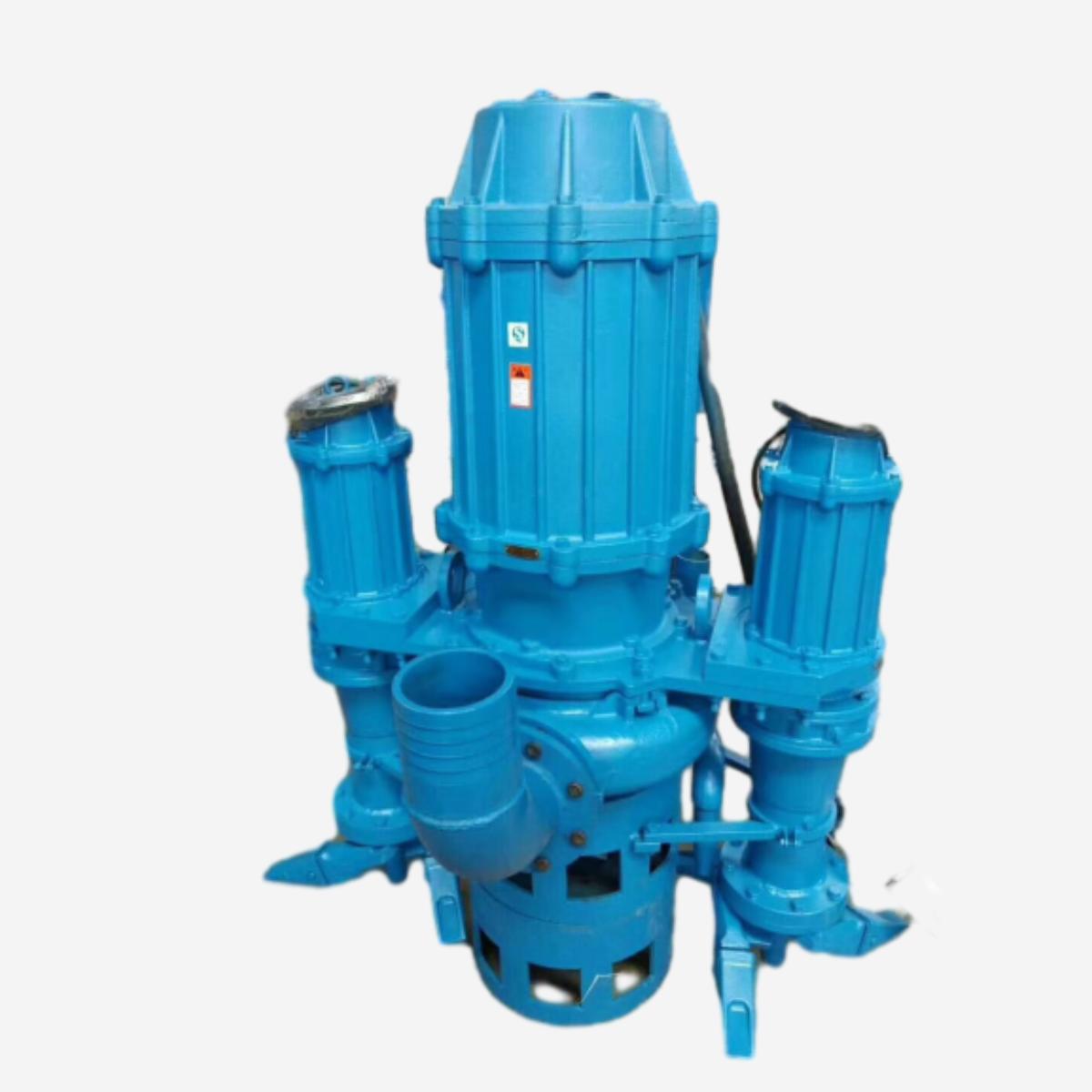
China High Chrome Slurry Pump: Manufacturing Specifications and Performance Analysis
The China high chrome slurry pump represents a critical engineering solution for the transport of highly abrasive, viscous, and corrosive fluids within the mining, mineral processing, and dredging industries. Positioned as the primary kinetic energy transfer mechanism in the slurry circuit, these pumps are designed to mitigate the extreme erosive wear caused by suspended solids such as tailings, ore concentrates, and crushed rock. Unlike standard centrifugal pumps, high chrome slurry pumps utilize advanced metallurgical compositions—specifically high-chromium white cast irons—to achieve a synergy between hardness and structural integrity. The technical objective of these pumps is to optimize the Total Dynamic Head (TDH) and flow rate while maximizing the Mean Time Between Failures (MTBF) in environments where particulate impact and sliding abrasion are the dominant degradation mechanisms.
Material Science & Manufacturing
The core of the high chrome slurry pump's durability lies in its material science, specifically the utilization of ASTM A532 Class III Type A high-chromium white iron. This material is characterized by a complex microstructure consisting of hard primary M7C3 carbides embedded in a martensitic matrix. The chromium content, typically ranging from 12% to 27%, promotes the formation of these carbides, which provide the necessary hardness (often exceeding 60 HRC) to resist the micro-cutting and plowing actions of abrasive slurry particles.
The manufacturing process begins with precise induction melting and pouring. To prevent segregation and ensure a uniform distribution of chromium carbides, controlled cooling rates are implemented during the casting phase. Following the casting of the impeller and liner, the components undergo a rigorous heat treatment process involving austenitizing and quenching, followed by tempering. This process transforms the matrix into tempered martensite, which provides the essential toughness required to prevent brittle fracture under the impact of large solids.
Precision machining is then applied to the critical mating surfaces. The impeller is dynamically balanced to ISO 1940 standards to minimize vibration-induced fatigue. The volute casing is often lined with replaceable high-chrome inserts, ensuring that the primary pressure-containing shell remains intact while the wear-prone surfaces can be exchanged. Key parameter controls during manufacturing include the carbon-equivalent calculation to prevent cold shuts and the use of X-ray diffraction to verify the phase composition of the alloy.
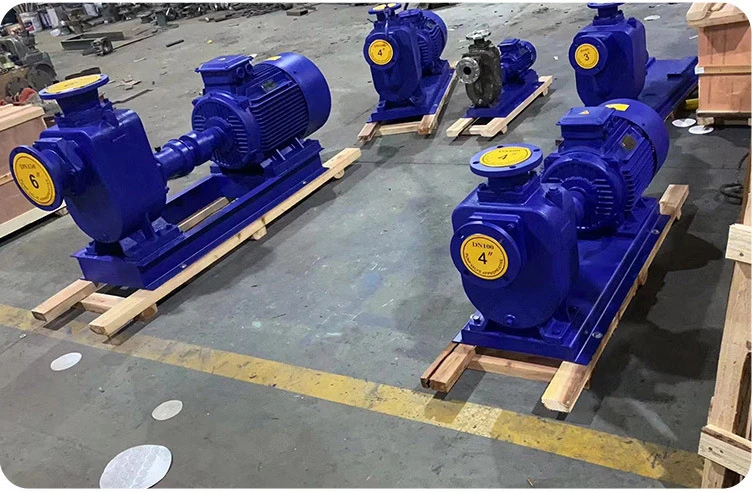
Performance & Engineering
Engineering a high chrome slurry pump requires a deep understanding of fluid dynamics and particle kinematics. The primary challenge is the "velocity-wear relationship," where the rate of erosion is proportional to the cube of the fluid velocity. To combat this, engineers optimize the impeller vane geometry to reduce turbulence and secondary flow vortices, which are primary sites for localized wear (cavitation-erosion synergy).
Force analysis in these pumps focuses on the radial and axial thrust loads. Because slurry has a higher density than water, the hydraulic loads are significantly amplified. Heavy-duty shafting, typically fabricated from 42CrMo or duplex stainless steel, is employed to withstand these bending moments. The bearing housing is designed for high-load capacity, often utilizing spherical roller bearings to accommodate slight shaft deflections under heavy slurry loads.
Environmental resistance is further managed through the implementation of specialized sealing systems. In high-chrome pumps, an expeller seal (mechanical seal or gland packing with a water jacket) is used to create a barrier, preventing abrasive particles from migrating into the bearing housing. Compliance with international standards ensures that the pump can operate under varying pH levels, where the high chromium content provides a passive oxide layer that inhibits chemical corrosion, complementing its physical hardness.
Technical Specifications
| Parameter Dimension | Standard Specification | High-Performance Grade | Extreme Duty Grade | Test Method |
|---|---|---|---|---|
| Hardness (HRC) | 58 - 62 HRC | 63 - 66 HRC | >68 HRC | ASTM E18 |
| Cr Content (%) | 12% - 18% | 22% - 25% | 27% - 29% | Spectrometry |
| Max Particle Size (mm) | 15 mm | 30 mm | 50 mm | Sieve Analysis |
| Max Flow Rate (m³/h) | Up to 1,200 | Up to 3,500 | Up to 8,000 | Flow Metering |
| Operating Temp (°C) | -10 to 90°C | -20 to 120°C | -40 to 150°C | Thermal Sensor |
| Wear Rate (mm/1000h) | 2.5 - 4.0 mm | 1.5 - 2.5 mm | 0.8 - 1.5 mm | Ultrasonic Gauge |
Failure Mode & Maintenance
Failure analysis of high chrome slurry pumps reveals three primary degradation modes: abrasive wear, cavitation erosion, and fatigue cracking. Abrasive wear typically manifests as "channeling" in the volute or "thinning" of the impeller vanes, caused by the continuous impingement of hard particles. This leads to a gradual drop in efficiency and a shift in the pump's performance curve (Head vs. Flow).
Cavitation occurs when the Net Positive Suction Head available (NPSHa) falls below the required (NPSHr), creating vapor bubbles that collapse violently against the high chrome surface. While the material is hard, the repeated micro-shocks can lead to "pitting," eventually causing structural failure of the casting. Fatigue cracking often originates at the impeller hub or the shaft coupling due to unbalanced loads or excessive vibration, exacerbated by the inherent brittleness of high-chrome alloys.
Professional maintenance requires a predictive approach. Ultrasonic thickness testing should be conducted monthly to monitor liner wear. When the liner thickness reaches the "critical limit" (usually 20% of original thickness), immediate replacement is mandatory to prevent casing breach. Impellers should be inspected for cavitation pitting; if found, the suction piping must be re-evaluated for flow restrictions. Bearing lubrication must be monitored for particulate contamination, using oil analysis to detect early signs of seal failure.
Industry FAQ
Q: How do we determine whether to use 27% Cr or 12% Cr alloy for a specific application?
A: The choice depends on the ratio of impact to abrasion. 27% Cr is superior for pure sliding abrasion and high-hardness particulates. However, if the slurry contains large, heavy rocks that create high-impact loads, a slightly lower Cr alloy or a duplex material may be preferred to increase fracture toughness and prevent brittle cracking.
Q: Why is the pump experiencing rapid wear despite using high-chrome liners?
A: This is often due to "turbulence-induced erosion." If the pump is operated too far from its Best Efficiency Point (BEP), internal recirculation and turbulence increase significantly. This increases the frequency and angle of particle impact, accelerating wear regardless of material hardness.
Q: Can high chrome slurry pumps handle acidic or alkaline slurries?
A: High chromium iron provides excellent resistance to neutral and slightly alkaline environments. However, in highly acidic conditions (pH < 4), the passive chrome-oxide layer can break down, leading to accelerated corrosion-erosion. In such cases, specialized coatings or higher-alloyed duplex steels are required.
Q: What is the impact of slurry density on the pump's mechanical seals?
A: Increased density increases the hydrostatic pressure and the probability of solids entering the seal face. We recommend implementing a pressurized flushing system (API Plan 32 or 54) to ensure that the seal faces are lubricated and that particles are pushed away from the mating surfaces.
Q: How does the impeller design affect the MTBF in high-solid concentrations?
A: An open or semi-open impeller design reduces the likelihood of clogging and decreases the fluid shear stress, which in turn reduces the wear rate on the vanes. Optimizing the vane angle to ensure a smooth transition of the slurry minimizes the "scrubbing" effect, thereby extending the MTBF.
Conclusion
The China high chrome slurry pump is a sophisticated intersection of metallurgical engineering and fluid dynamics. By utilizing a high-chromium white iron microstructure, these pumps effectively manage the aggressive abrasive forces inherent in industrial slurry transport. The critical balance between hardness (for wear resistance) and toughness (for impact resistance) defines the operational lifespan and efficiency of the system, making the precision of the heat treatment and casting process paramount.
Looking forward, the integration of Computational Fluid Dynamics (CFD) and real-time wear monitoring sensors will further optimize the performance of these pumps. For procurement and engineering teams, focusing on the synergy between material grade, operational BEP, and a rigorous predictive maintenance schedule is the only viable strategy to minimize downtime and optimize the total cost of ownership in heavy-duty mining operations.
-
sewage submersible pump 1hp Performance Analysis
News2026-05-30
-
1 hp sewage submersible pump Performance Analysis
News2026-05-30
-
waste pump for basement bathroom Performance and Engineering
News2026-05-30
-
Sump Pump Drain Field Performance Analysis
News2026-05-30
-
small sewage pump Performance Analysis
News2026-05-30
-
sewer pump for basement Material Science Manufacturing
News2026-05-29
-
sewage sump pumps Performance and Engineering
News2026-05-29
-
sewage pumps for septic tanks Material Science and Manufacturing
News2026-05-29
-
Sewage Pumping Companies Performance Analysis
News2026-05-29
-
Sewage Pump Manufacturers Performance Engineering
News2026-05-29
-
sewage pump for basement Performance and Engineering
News2026-05-28
-
Sewage Pump Companies Performance Analysis
News2026-05-28
-
Sewage Pit and Pump Performance Analysis
News2026-05-28
-
Sewage Lift Pumps Material Science
News2026-05-28
-
Sewage Ejector Tank Material Science and Manufacturing
News2026-05-28




