English
- Afrikaans
- Albanian
- Amharic
- Arabic
- Armenian
- Azerbaijani
- Basque
- Belarusian
- Bengali
- Bosnian
- Bulgarian
- Catalan
- Cebuano
- Corsican
- Croatian
- Czech
- Danish
- Dutch
- English
- Esperanto
- Estonian
- Finnish
- French
- Frisian
- Galician
- Georgian
- German
- Greek
- Gujarati
- Haitian Creole
- hausa
- hawaiian
- Hebrew
- Hindi
- Miao
- Hungarian
- Icelandic
- igbo
- Indonesian
- irish
- Italian
- Japanese
- Javanese
- Kannada
- kazakh
- Khmer
- Rwandese
- Korean
- Kurdish
- Kyrgyz
- Lao
- Latin
- Latvian
- Lithuanian
- Luxembourgish
- Macedonian
- Malgashi
- Malay
- Malayalam
- Maltese
- Maori
- Marathi
- Mongolian
- Myanmar
- Nepali
- Norwegian
- Norwegian
- Occitan
- Pashto
- Persian
- Polish
- Portuguese
- Punjabi
- Romanian
- Russian
- Samoan
- Scottish Gaelic
- Serbian
- Sesotho
- Shona
- Sindhi
- Sinhala
- Slovak
- Slovenian
- Somali
- Spanish
- Sundanese
- Swahili
- Swedish
- Tagalog
- Tajik
- Tamil
- Tatar
- Telugu
- Thai
- Turkish
- Turkmen
- Ukrainian
- Urdu
- Uighur
- Uzbek
- Vietnamese
- Welsh
- Bantu
- Yiddish
- Yoruba
- Zulu

Telephone: +86 13120555503
Email: frank@cypump.com


Apr . 01, 2024 17:55 Back to list
China Heavy Duty Slurry Pump Technical Dimension and Performance Analysis
China Heavy Duty Slurry Pump: Technical Dimension and Performance Analysis
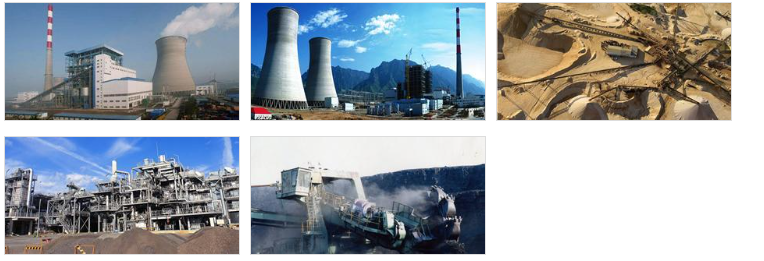
Heavy-duty slurry pumps are specialized centrifugal hydraulic machines engineered to transport highly abrasive, corrosive, and high-density fluids—collectively termed "slurries"—within industrial ecosystems. In the global industrial chain, these pumps occupy a critical position in the mid-stream processing phase of mining, mineral processing, dredging, and chemical manufacturing. Unlike standard water pumps, the china heavy duty slurry pump must manage a non-Newtonian fluid phase where suspended solids induce severe erosive wear on internal wetted parts. The core technical challenge lies in balancing hydraulic efficiency with extreme material hardness, ensuring that the pump can maintain a stable flow rate and head pressure despite the constant attrition caused by particles such as silica, magnetite, or alumina. The performance of these systems is primarily evaluated by their Net Positive Suction Head (NPSH) requirements, the wear life of the impeller and liner, and the mechanical seal's ability to withstand particulate infiltration.
Material Science & Manufacturing
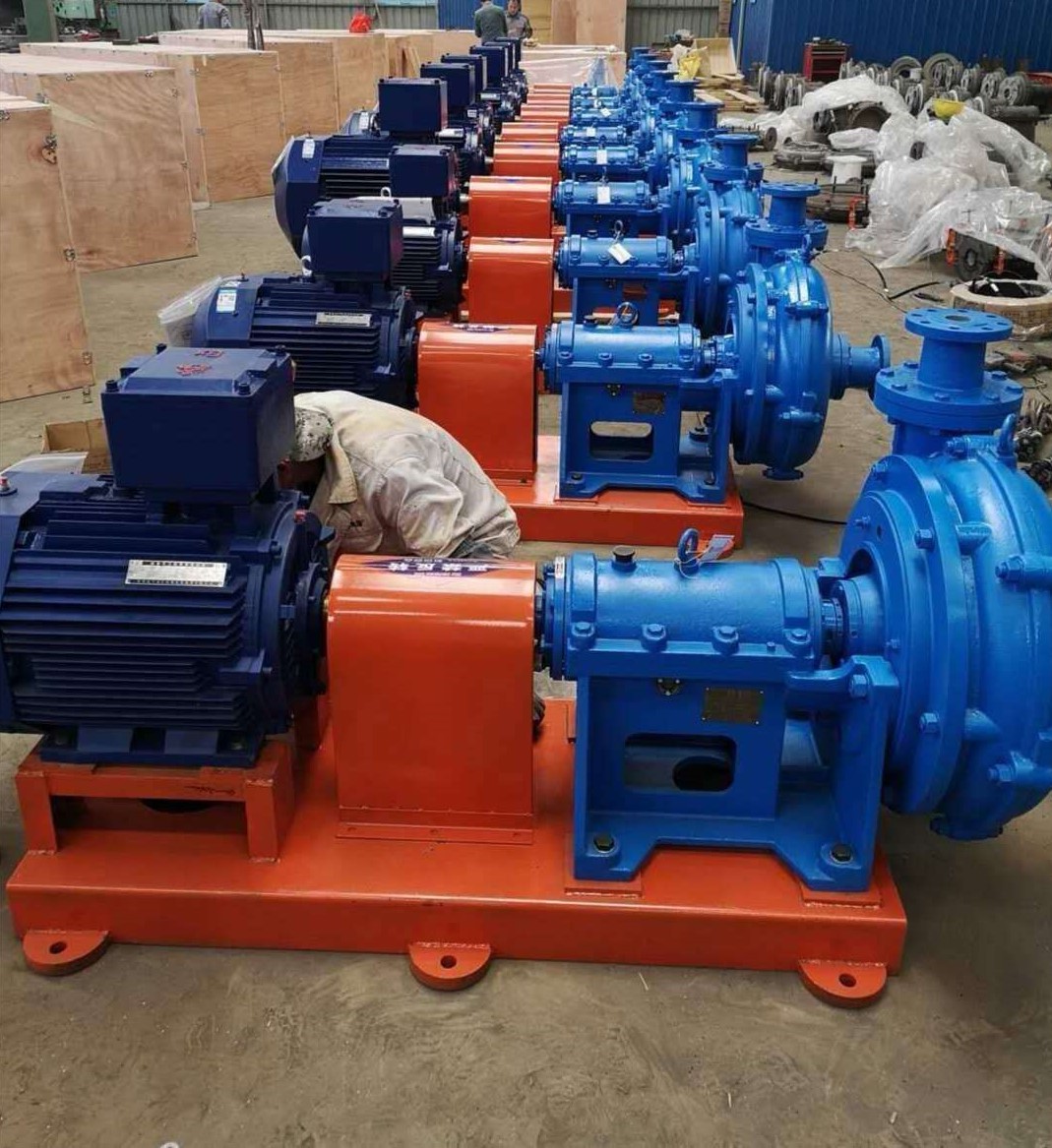
The longevity of a heavy-duty slurry pump is fundamentally dictated by its metallurgical composition. To combat the synergistic effect of erosion and corrosion, manufacturers employ advanced material science tailored to the specific slurry chemistry. The primary material choice typically falls between High-Chrome Alloys (ASTM A532) and Natural Rubber liners. High-Chrome white irons, containing 25% to 28% chromium, are utilized for high-velocity, high-impact applications where hard particles would shred softer materials. The microstructure of these alloys consists of hard M7C3 carbides embedded in a martensitic matrix, providing a hardness often exceeding 60 HRC.
For slurries with smaller particle sizes but higher concentrations of abrasive fines, elastomeric liners (such as NR or Polyurethane) are preferred. These materials possess high resilience, allowing the liner to absorb the kinetic energy of impacting particles rather than resisting them through hardness, thereby reducing the wear rate. The manufacturing process involves precision casting followed by rigorous heat treatment (quenching and tempering) to eliminate internal stresses and prevent brittle fracture under hydraulic shock. Furthermore, the impeller design employs CFD (Computational Fluid Dynamics) optimization to minimize turbulence and "dead zones," which are primary sites for localized accelerated wear. Critical tolerances in the mating of the impeller to the shaft are maintained via precision grinding to reduce vibration-induced fatigue.
Performance & Engineering
Engineering a heavy-duty slurry pump requires a deep dive into the rheology of the fluid. The primary engineering concern is the "Critical Settling Velocity," the minimum velocity required to keep solid particles suspended in the flow to prevent pipeline blockage (sanding). If the flow velocity drops below this threshold, the resulting accumulation increases friction losses and can lead to catastrophic pump failure due to starvation. Engineers must calculate the slurry density (specific gravity) and the viscosity of the carrier fluid to determine the required motor torque and pump head.
Force analysis reveals that the most significant stress occurs at the impeller vane tips and the volute tongue. To mitigate this, "sacrificial liners" are integrated into the design, allowing the inner shell to be replaced without dismantling the entire pump casing. Environmental resistance is managed through the use of specialized mechanical seals or gland packing systems with external flush water (seal water) to prevent abrasive particles from entering the bearing housing. Compliance with international engineering standards ensures that the pump's vibration levels and noise emissions remain within acceptable industrial limits, while the shaft deflection is minimized to protect the mechanical seals from premature leakage.
Technical Specifications
| Parameter Dimension | High-Chrome Specification | Natural Rubber Specification | Performance Metric |
|---|---|---|---|
| Hardness Rating | 60-65 HRC | 60-80 Shore A | Abrasion Resistance |
| Max Particle Size | Up to 50mm | Up to 10mm | Throughput Capacity |
| Operating Temp Range | -20°C to 150°C | -10°C to 70°C | Thermal Stability |
| Corrosion Resistance | High (Chromium-based) | Excellent (Chemical-inert) | Chemical Compatibility |
| Wear Mechanism | Impact/Erosion | Abrasive Sliding | Failure Mode Logic |
| Typical Application | Coarse Tailings/Ore | Fine Sludge/Coal Ash | Industry Fit |
Failure Mode & Maintenance
Failure analysis of heavy-duty slurry pumps typically identifies three primary modes: erosive wear, cavitation, and seal failure. Erosive wear occurs when high-velocity particles strike the pump surface, leading to material loss. This is often accelerated in the volute area where turbulence is highest. Cavitation occurs when the NPSH available is lower than the NPSH required, causing vapor bubbles to collapse and create micro-jets that pit the impeller surface, often mistaken for corrosion. Seal failure is usually the result of "grit infiltration," where abrasive particles bypass the seal faces, leading to rapid scoring and leakage.
Professional maintenance involves a structured "Condition Monitoring" approach. Vibration analysis is used to detect bearing wear or shaft misalignment before they lead to catastrophic failure. For wear components, the use of ultrasonic thickness gauges allows operators to measure liner wear without disassembly, enabling a "predictive replacement" schedule. When replacing impellers, it is critical to ensure dynamic balancing to prevent resonance. Lubrication systems must be checked for contamination; the presence of slurry in the oil indicates a failure of the seal water system and requires immediate intervention to prevent bearing seizure.
Industry FAQ
Q: How do we determine whether to use a High-Chrome or Rubber liner for a specific application?
A: The decision is based on particle size and impact energy. If the slurry contains large, sharp particles (e.g., crushed rock), High-Chrome alloys are necessary because rubber would be easily cut or torn. If the slurry consists of fine, sandy particles at high concentrations, rubber liners are superior as they absorb the energy of the particles, significantly extending the wear life.
Q: What is the primary cause of premature impeller failure in high-density slurry pumping?
A: The primary cause is typically a combination of cavitation and incorrect slurry velocity. Operating the pump too far from its Best Efficiency Point (BEP) creates internal recirculation and turbulence, which concentrates the erosive force on specific areas of the impeller, leading to localized "hole-through" failures.
Q: How does the specific gravity of the slurry affect the pump's power requirements?
A: Slurry density increases the fluid's mass, which directly increases the Brake Horsepower (BHP) required by the motor. Engineers must apply a correction factor to the water-based power calculations to account for the increased specific gravity, ensuring the motor does not overload during peak density surges.
Q: Why is seal water pressure critical in heavy-duty slurry pump operations?
A: Seal water must be maintained at a pressure higher than the internal pump pressure (typically 1-2 bars higher). This creates a positive pressure barrier that prevents the abrasive slurry from migrating into the stuffing box or mechanical seal faces, which would otherwise cause immediate abrasive wear and leakage.
Q: What is the impact of air entrainment on slurry pump performance?
A: Air entrainment reduces the effective density of the fluid and can lead to "air binding" or erratic flow. More critically, it increases the velocity of the liquid phase around the air bubbles, which can actually accelerate the erosive wear on the impeller and casing due to the increased local velocity of abrasive particles.
Conclusion
The engineering of a china heavy duty slurry pump is a complex exercise in balancing hydraulic efficiency with material durability. By integrating high-chrome alloys and resilient elastomers with CFD-optimized geometries, these pumps can withstand the most aggressive industrial environments. The technical success of the system depends not only on the initial material selection but also on the precise alignment of operational parameters—specifically flow velocity and NPSH—to minimize the synergistic effects of erosion and cavitation.
Looking forward, the industry is moving toward "Intelligent Wear Monitoring," utilizing embedded sensors to provide real-time data on liner thickness and vibration. For procurement and engineering teams, the focus must shift from initial capital expenditure to total cost of ownership (TCO), prioritizing pumps that offer extended Mean Time Between Failures (MTBF) through superior metallurgical integrity and robust sealing engineering.
-
sewage submersible pump 1hp Performance Analysis
News2026-05-30
-
1 hp sewage submersible pump Performance Analysis
News2026-05-30
-
waste pump for basement bathroom Performance and Engineering
News2026-05-30
-
Sump Pump Drain Field Performance Analysis
News2026-05-30
-
small sewage pump Performance Analysis
News2026-05-30
-
sewer pump for basement Material Science Manufacturing
News2026-05-29
-
sewage sump pumps Performance and Engineering
News2026-05-29
-
sewage pumps for septic tanks Material Science and Manufacturing
News2026-05-29
-
Sewage Pumping Companies Performance Analysis
News2026-05-29
-
Sewage Pump Manufacturers Performance Engineering
News2026-05-29
-
sewage pump for basement Performance and Engineering
News2026-05-28
-
Sewage Pump Companies Performance Analysis
News2026-05-28
-
Sewage Pit and Pump Performance Analysis
News2026-05-28
-
Sewage Lift Pumps Material Science
News2026-05-28
-
Sewage Ejector Tank Material Science and Manufacturing
News2026-05-28




