English
- Afrikaans
- Albanian
- Amharic
- Arabic
- Armenian
- Azerbaijani
- Basque
- Belarusian
- Bengali
- Bosnian
- Bulgarian
- Catalan
- Cebuano
- Corsican
- Croatian
- Czech
- Danish
- Dutch
- English
- Esperanto
- Estonian
- Finnish
- French
- Frisian
- Galician
- Georgian
- German
- Greek
- Gujarati
- Haitian Creole
- hausa
- hawaiian
- Hebrew
- Hindi
- Miao
- Hungarian
- Icelandic
- igbo
- Indonesian
- irish
- Italian
- Japanese
- Javanese
- Kannada
- kazakh
- Khmer
- Rwandese
- Korean
- Kurdish
- Kyrgyz
- Lao
- Latin
- Latvian
- Lithuanian
- Luxembourgish
- Macedonian
- Malgashi
- Malay
- Malayalam
- Maltese
- Maori
- Marathi
- Mongolian
- Myanmar
- Nepali
- Norwegian
- Norwegian
- Occitan
- Pashto
- Persian
- Polish
- Portuguese
- Punjabi
- Romanian
- Russian
- Samoan
- Scottish Gaelic
- Serbian
- Sesotho
- Shona
- Sindhi
- Sinhala
- Slovak
- Slovenian
- Somali
- Spanish
- Sundanese
- Swahili
- Swedish
- Tagalog
- Tajik
- Tamil
- Tatar
- Telugu
- Thai
- Turkish
- Turkmen
- Ukrainian
- Urdu
- Uighur
- Uzbek
- Vietnamese
- Welsh
- Bantu
- Yiddish
- Yoruba
- Zulu

Telephone: +86 13120555503
Email: frank@cypump.com


Apr . 01, 2024 17:55 Back to list
china froth centrifugal slurry pump Performance Analysis
China Froth Centrifugal Slurry Pump Performance Analysis
The China froth centrifugal slurry pump represents a specialized evolution of centrifugal pumping technology, specifically engineered for the transport of high-percentage air-to-liquid mixtures commonly found in mineral flotation and tailings management. Unlike standard slurry pumps, which experience catastrophic cavitation and loss of prime when encountering air-entrained fluids, the froth pump incorporates a specialized agitator and a recessed impeller design to homogenize the slurry and prevent air pocket formation. In the industrial value chain, these pumps serve as the critical link between the flotation cells and the thickeners or tailings dams, where the maintenance of a stable volumetric flow rate is paramount to preventing process instability. The core technical challenge addressed by this equipment is the mitigation of "air binding," where trapped air creates a gas lock in the impeller eye, effectively halting the movement of solids and causing severe mechanical vibration and hydraulic instability.
Material Science & Manufacturing
The manufacturing of a high-performance froth centrifugal slurry pump requires a sophisticated approach to material selection to combat the synergistic effects of abrasive wear and corrosive chemical environments. The primary wetted components—specifically the impeller and the volute liner—are typically constructed from high-chrome white irons (ASTM A532) or specialized natural rubber compounds. High-chrome alloys (typically 25% to 28% Cr) are utilized for high-density, coarse-particle slurries, providing a hard martensitic matrix interspersed with primary M7C3 carbides that resist micro-cutting and plowing. Conversely, for finer particles and highly acidic or alkaline environments, high-resilience elastomers are employed to absorb the kinetic energy of particle impact, thereby reducing the wear rate through elastic deformation.
The manufacturing process involves precision investment casting for the impeller to ensure the complex geometry of the froth-handling vanes is maintained within strict tolerances. This is followed by CNC machining of the mating surfaces to ensure a hermetic seal. A critical manufacturing parameter is the heat treatment cycle of the chrome alloy components; a controlled quenching and tempering process is essential to prevent internal stresses that could lead to stress-corrosion cracking. Furthermore, the pump casing is often designed with a double-walled structure, allowing for the installation of replaceable wear liners, which extends the lifecycle of the outer pressure-containing shell and simplifies the maintenance cycle in remote mining environments.
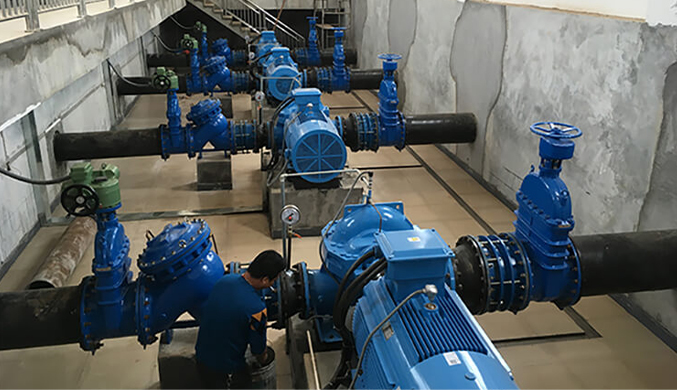
Performance & Engineering
From an engineering perspective, the froth centrifugal slurry pump must balance the conflicting requirements of high flow capacity and the ability to handle volatile air-liquid ratios. The integration of an agitator at the suction end is the primary engineering solution; this device breaks down large air bubbles and maintains the slurry in a suspended state, ensuring a constant feed to the impeller. The hydraulic design focuses on the Net Positive Suction Head (NPSH) requirements, which are significantly altered in froth applications. Engineers must account for the reduced density of the froth mixture, which affects the pump's total dynamic head (TDH) and power consumption calculations.
Force analysis in these pumps reveals that non-uniform air distribution can lead to radial thrust imbalances, putting excessive load on the shaft bearings. To counteract this, heavy-duty shafting made of duplex stainless steel or alloy steel with specialized coatings is employed. Furthermore, the sealing system is a critical engineering focal point; most froth pumps utilize an external gland water seal or a mechanical seal with a flushing system to prevent the abrasive froth from entering the bearing housing. Compliance with international safety and efficiency standards requires the pump to operate within a specific Best Efficiency Point (BEP) to minimize turbulence and subsequent erosive wear on the internal liners.
Technical Specifications
| Parameter Dimension | High-Chrome Specification | Natural Rubber Specification | Performance Metric |
|---|---|---|---|
| Material Hardness | 60-65 HRC | 60-80 Shore A | Wear Resistance Index |
| Max Particle Size | Up to 15mm | Up to 6mm | Passage Clearance |
| Slurry Density | Up to 1.4 t/m³ | Up to 1.3 t/m³ | Specific Gravity (SG) |
| Air Volumetric % | Up to 40% | Up to 30% | Froth Handling Capacity |
| Corrosion Resistance | Moderate (pH 4-10) | High (pH 2-12) | Chemical Compatibility |
| Service Life (Avg) | 8,000 - 12,000 Hours | 6,000 - 10,000 Hours | MTBF (Mean Time Between Failure) |
Failure Mode & Maintenance
The failure modes of froth centrifugal slurry pumps are primarily categorized into erosive wear, cavitation-induced pitting, and mechanical seal failure. Erosive wear typically manifests as "wall thinning" in the volute and "vane recession" in the impeller, caused by the constant bombardment of abrasive particles. This is often accelerated by high flow velocities. Cavitation occurs when the local pressure drops below the vapor pressure of the liquid, often exacerbated by the presence of air pockets that collapse violently, creating micro-jets that pit the metal surfaces. Another critical failure mode is shaft deflection, which occurs due to unbalanced hydraulic loads, leading to premature bearing failure and seal leakage.
Professional maintenance protocols require a transition from reactive to predictive maintenance. This involves the use of vibration analysis to detect bearing wear and ultrasonic thickness testing to monitor liner degradation without dismantling the pump. To mitigate failure, a rigorous gland water management system must be implemented to ensure that the seal faces remain lubricated and cooled. When replacing liners, it is imperative to verify the alignment of the pump and motor using laser alignment tools to prevent parasitic loads on the coupling. Regular inspection of the agitator's structural integrity is also required, as any deformation in the agitator can lead to inefficient air dispersion and subsequent pump surging.
Industry FAQ
Q: How does the froth pump prevent air binding compared to a standard slurry pump?
A: The froth pump incorporates a specialized agitator in the suction sump and a modified impeller geometry. The agitator mechanically breaks up the air-slurry interface, ensuring a homogenized mixture enters the impeller, while the impeller's design reduces the tendency for air to accumulate at the center (eye), thus maintaining continuous prime.
Q: When should I choose high-chrome alloys over rubber liners for froth applications?
A: High-chrome alloys should be selected when the slurry contains coarse, sharp particles or when the operating temperature exceeds the thermal stability limit of rubber. Rubber is preferred for finer particles and highly corrosive environments where the material's elasticity can absorb the impact of the slurry.
Q: What is the primary cause of premature seal failure in these pumps?
A: The most common cause is the failure of the gland water supply system. If the water pressure drops or the water becomes contaminated with solids, abrasive particles penetrate the seal faces, leading to rapid scoring and loss of containment.
Q: How does air content affect the power consumption of the pump?
A: Increasing the air volume percentage generally decreases the overall density of the fluid being pumped, which can reduce the brake horsepower (BHP) required. However, if the air content is too high, it leads to hydraulic instability and surging, which can cause inefficient power spikes and mechanical stress.
Q: What are the signs that the impeller requires immediate replacement?
A: Key indicators include a significant drop in discharge pressure (head loss) at a constant RPM, an increase in motor current fluctuations, and an increase in vibration levels detected by accelerometers on the bearing housing.
Conclusion
The China froth centrifugal slurry pump is a highly engineered solution to one of the most challenging problems in mineral processing: the transport of air-entrained abrasive fluids. By synthesizing advanced material science, such as high-chrome white irons, with specific hydraulic modifications like the suction agitator, these pumps ensure process continuity and minimize downtime in high-throughput mining operations. The technical superiority of the equipment is not found in a single component, but in the synergy between the metallurgy, the fluid dynamics of froth handling, and the robustness of the mechanical sealing systems.
Looking forward, the industry is moving toward the integration of smart sensing technology to monitor wear in real-time, allowing for an even more precise maintenance schedule. For operators, the key to maximizing the lifecycle of these pumps lies in the strict adherence to NPSH requirements and the meticulous maintenance of gland water systems. As ore grades decline and the need for processing larger volumes of material increases, the role of the froth centrifugal slurry pump as a cornerstone of efficient tailings and flotation management remains indispensable.
-
sewer pump for basement Material Science Manufacturing
News2026-05-29
-
sewage sump pumps Performance and Engineering
News2026-05-29
-
sewage pumps for septic tanks Material Science and Manufacturing
News2026-05-29
-
Sewage Pumping Companies Performance Analysis
News2026-05-29
-
Sewage Pump Manufacturers Performance Engineering
News2026-05-29
-
sewage pump for basement Performance and Engineering
News2026-05-28
-
Sewage Pump Companies Performance Analysis
News2026-05-28
-
Sewage Pit and Pump Performance Analysis
News2026-05-28
-
Sewage Lift Pumps Material Science
News2026-05-28
-
Sewage Ejector Tank Material Science and Manufacturing
News2026-05-28
-
sewage effluent pumps Material Science Manufacturing
News2026-05-27
-
septic tank effluent pump Performance Analysis
News2026-05-27
-
Septic Sewer Pump Performance Analysis
News2026-05-27
-
septic sewage pumps Performance Analysis
News2026-05-27
-
septic sewage pump Material Science and Manufacturing
News2026-05-27




