English
- Afrikaans
- Albanian
- Amharic
- Arabic
- Armenian
- Azerbaijani
- Basque
- Belarusian
- Bengali
- Bosnian
- Bulgarian
- Catalan
- Cebuano
- Corsican
- Croatian
- Czech
- Danish
- Dutch
- English
- Esperanto
- Estonian
- Finnish
- French
- Frisian
- Galician
- Georgian
- German
- Greek
- Gujarati
- Haitian Creole
- hausa
- hawaiian
- Hebrew
- Hindi
- Miao
- Hungarian
- Icelandic
- igbo
- Indonesian
- irish
- Italian
- Japanese
- Javanese
- Kannada
- kazakh
- Khmer
- Rwandese
- Korean
- Kurdish
- Kyrgyz
- Lao
- Latin
- Latvian
- Lithuanian
- Luxembourgish
- Macedonian
- Malgashi
- Malay
- Malayalam
- Maltese
- Maori
- Marathi
- Mongolian
- Myanmar
- Nepali
- Norwegian
- Norwegian
- Occitan
- Pashto
- Persian
- Polish
- Portuguese
- Punjabi
- Romanian
- Russian
- Samoan
- Scottish Gaelic
- Serbian
- Sesotho
- Shona
- Sindhi
- Sinhala
- Slovak
- Slovenian
- Somali
- Spanish
- Sundanese
- Swahili
- Swedish
- Tagalog
- Tajik
- Tamil
- Tatar
- Telugu
- Thai
- Turkish
- Turkmen
- Ukrainian
- Urdu
- Uighur
- Uzbek
- Vietnamese
- Welsh
- Bantu
- Yiddish
- Yoruba
- Zulu

Telephone: +86 13120555503
Email: frank@cypump.com


Apr . 01, 2024 17:55 Back to list
china coal mine slurry pump Technical Performance Analysis

China Coal Mine Slurry Pump Technical Performance Analysis
The china coal mine slurry pump is a specialized heavy-duty hydraulic machine designed for the transportation of high-density suspensions consisting of coal particles, rock fragments, and water. Positioned as a critical node in the mine drainage and tailings management chain, these pumps must manage non-Newtonian fluids characterized by high abrasive indices and varying viscosity. Unlike standard centrifugal pumps, coal mine slurry pumps are engineered to maintain volumetric efficiency while resisting the catastrophic erosive wear caused by the impingement of hard particles against internal surfaces. The core technical challenge lies in balancing the hydraulic efficiency of the impeller design with the metallurgical resilience of the wetted parts to ensure operational continuity in subterranean environments where maintenance downtime is prohibitively expensive.
Material Science & Manufacturing
The longevity of a china coal mine slurry pump is primarily determined by the synergy between its metallurgical composition and its precision manufacturing processes. Given the extreme abrasiveness of coal slurry, the selection of materials focuses on maximizing hardness and toughness to prevent both erosive wear and brittle fracture.
Metallurgical Composition: The industry standard utilizes High-Chrome Cast Irons (ASTM A532) and duplex stainless steels. High-chromium alloys (typically 25% to 28% Cr) are employed for impellers and volutes to create a matrix of primary M7C3 carbides. These carbides provide the requisite hardness (typically 60-65 HRC) to resist the scouring action of coal fines. In environments where chemical corrosion accompanies abrasion—such as acidic mine drainage—nickel-hardened alloys or rubber-lined casings are implemented. Rubber linings, specifically high-resilience natural rubber or polyurethane, are utilized for lower-pressure applications to absorb the kinetic energy of impacting particles, thereby reducing the wear rate compared to rigid metallic surfaces.
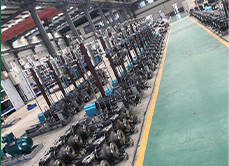
Manufacturing Process: The manufacturing flow involves precision investment casting or sand casting followed by rigorous heat treatment. Heat treatment is the most critical phase; quenching and tempering are meticulously controlled to refine the grain structure and eliminate internal stresses that could lead to fatigue cracking. The impellers undergo dynamic balancing to ISO 1940-1 standards to minimize vibration, which otherwise accelerates seal failure and bearing wear. Furthermore, the internal flow paths are precision-machined and polished to reduce turbulence, as turbulent eddies significantly increase the localized wear rate (the "wall shear stress") in the volute casing.
Performance & Engineering
Engineering a china coal mine slurry pump requires a deep understanding of fluid dynamics and the rheological properties of coal-water mixtures. The primary engineering objective is to maintain a "critical velocity"—a flow rate high enough to keep solids in suspension and prevent sedimentation (plugging), but low enough to minimize abrasive wear, which increases exponentially with fluid velocity.
Hydraulic Design and Force Analysis: The pump employs a semi-open or closed impeller design depending on the particle size distribution of the slurry. Force analysis reveals that the primary stress concentrations occur at the impeller vanes' leading edges and the volute tongue. To mitigate this, engineers employ "thick-wall" designs and sacrificial wear plates. The Net Positive Suction Head required (NPSHr) is carefully calculated to prevent cavitation, which is exacerbated in slurry pumping as gas bubbles can nucleate around solid particles, leading to rapid pitting of the impeller surface.
Environmental Resistance and Compliance: In underground coal mines, the pump must be intrinsically safe (explosion-proof) to prevent the ignition of methane (CH4) or coal dust. This involves the use of Flame-proof (Ex d) motors and specialized sealing systems. The sealing arrangement typically consists of a mechanical seal with a pressurized flushing system (API Plan 32 or 54) to ensure that no abrasive particles enter the seal faces and no hazardous gases leak into the mine atmosphere. Environmental compliance also dictates the use of non-toxic, biodegradable lubricants in the bearing housings to prevent groundwater contamination.
Technical Specifications
| Specification Parameter | Standard Duty Grade | Heavy Duty Grade | Ultra-Hard Grade | Testing Standard |
|---|---|---|---|---|
| Casing Material | ASTM A532 High-Cr Iron | Duplex Stainless Steel | Ceramic Lined Alloy | ISO 9001 / ASTM |
| Max Slurry Density | 1.3 t/m³ | 1.5 t/m³ | 1.8 t/m³ | GB/T 3216 |
| Impeller Hardness | 55-58 HRC | 60-62 HRC | 65+ HRC | Rockwell C Scale |
| Max Particle Size | 15 mm | 30 mm | 50 mm | Sieve Analysis |
| Seal Type | Single Mechanical Seal | Double Mechanical Seal | Pressurized Expeller | API 682 |
| Operating Temp Range | -10°C to 60°C | -20°C to 80°C | -20°C to 110°C | Thermal Cycling |
Failure Mode & Maintenance
The operational lifespan of a china coal mine slurry pump is limited by predictable failure modes. Understanding these modes is essential for transitioning from reactive to predictive maintenance.
1. Abrasive Erosion and Cavitation: The most common failure is the thinning of impeller vanes and the volute liner. This is characterized by a gradual drop in head (H) and efficiency (η). Cavitation occurs if the suction pressure drops below the vapor pressure, creating imploding bubbles that "blast" micro-pits into the metal. This is diagnosed via vibration analysis (high-frequency noise) and sudden performance degradation.
2. Seal Failure and Leakage: Abrasive particles that bypass the throat bushing can score the mechanical seal faces, leading to slurry leakage. This often causes secondary failure in the bearing housing due to contamination. The failure is usually indicated by visible leakage at the shaft or an increase in lubricant temperature.
3. Fatigue Cracking: Cyclic loading caused by unbalanced impellers or pulsations in the piping system can lead to stress corrosion cracking (SCC). These cracks typically originate at the weld joints or sharp geometry changes in the casing.
Professional Maintenance Solutions:
- Scheduled Liner Replacement: Implementing a thickness monitoring schedule using ultrasonic testing to replace liners before the base metal is compromised.
- Dynamic Balancing: Re-balancing the impeller after every major wear-liner replacement to prevent bearing fatigue.
- Seal Flushing Optimization: Increasing the flush water pressure to ensure a positive pressure barrier against the slurry.
- Vibration Monitoring: Installing accelerometers to detect misalignment or cavitation in real-time, allowing for operational adjustments before catastrophic failure.
Industry FAQ
Q: How do we determine the optimal impeller material for a specific coal mine site?
A: The selection is based on the "Wear-Corrosion Map." We analyze the slurry's pH level and the hardness of the solid particles (using Mohs scale). For low-pH, high-abrasion environments, we recommend duplex stainless steels; for neutral pH and extreme abrasion, high-chromium cast iron is the superior choice due to its carbide volume fraction.
Q: What is the impact of slurry viscosity on the pump's NPSH requirements?
A: Increased viscosity increases the frictional losses in the suction piping, which lowers the available NPSH (NPSHa). To prevent cavitation, the pump must either be installed at a lower elevation relative to the sump or the suction pipe diameter must be increased to reduce velocity and friction.
Q: Why do rubber-lined pumps sometimes fail more quickly than high-chrome pumps in certain coal applications?
A: Rubber linings are excellent for fine particles with high impact energy. However, if the slurry contains large, sharp rock fragments (greater than 20mm), these particles can "cut" or puncture the rubber lining. Once the lining is breached, the slurry attacks the cast iron shell rapidly, leading to localized perforation.
Q: How does the pump handle fluctuations in solids concentration?
A: Fluctuations change the fluid's density and viscosity. If the concentration drops too low, the pump may operate far from its Best Efficiency Point (BEP), increasing vibration. If it rises too high, the power demand increases, potentially overloading the motor. We recommend installing a Variable Frequency Drive (VFD) to adjust flow rates in real-time based on density sensors.
Q: What are the signs that the pump is operating in a cavitation state?
A: The most prominent sign is a "marbles in the pump" sound—a distinct rattling noise. This is accompanied by erratic discharge pressure readings and an increase in vibration amplitudes in the 1kHz to 5kHz range, as detected by an accelerometer.
Conclusion
The technical efficacy of the china coal mine slurry pump depends on a holistic integration of high-chromium metallurgy, precision hydraulic engineering, and stringent compliance with explosion-proof standards. By optimizing the balance between material hardness and fluid velocity, operators can significantly extend the mean time between failures (MTBF) and reduce the total cost of ownership in harsh mining environments.
Looking forward, the integration of IoT-based condition monitoring and the adoption of additive manufacturing for complex impeller geometries will likely further enhance efficiency. The industry must continue to move toward predictive maintenance models to ensure that slurry transport systems remain the robust backbone of sustainable coal mining operations.
-
sewer pump for basement Material Science Manufacturing
News2026-05-29
-
sewage sump pumps Performance and Engineering
News2026-05-29
-
sewage pumps for septic tanks Material Science and Manufacturing
News2026-05-29
-
Sewage Pumping Companies Performance Analysis
News2026-05-29
-
Sewage Pump Manufacturers Performance Engineering
News2026-05-29
-
sewage pump for basement Performance and Engineering
News2026-05-28
-
Sewage Pump Companies Performance Analysis
News2026-05-28
-
Sewage Pit and Pump Performance Analysis
News2026-05-28
-
Sewage Lift Pumps Material Science
News2026-05-28
-
Sewage Ejector Tank Material Science and Manufacturing
News2026-05-28
-
sewage effluent pumps Material Science Manufacturing
News2026-05-27
-
septic tank effluent pump Performance Analysis
News2026-05-27
-
Septic Sewer Pump Performance Analysis
News2026-05-27
-
septic sewage pumps Performance Analysis
News2026-05-27
-
septic sewage pump Material Science and Manufacturing
News2026-05-27




