English
- Afrikaans
- Albanian
- Amharic
- Arabic
- Armenian
- Azerbaijani
- Basque
- Belarusian
- Bengali
- Bosnian
- Bulgarian
- Catalan
- Cebuano
- Corsican
- Croatian
- Czech
- Danish
- Dutch
- English
- Esperanto
- Estonian
- Finnish
- French
- Frisian
- Galician
- Georgian
- German
- Greek
- Gujarati
- Haitian Creole
- hausa
- hawaiian
- Hebrew
- Hindi
- Miao
- Hungarian
- Icelandic
- igbo
- Indonesian
- irish
- Italian
- Japanese
- Javanese
- Kannada
- kazakh
- Khmer
- Rwandese
- Korean
- Kurdish
- Kyrgyz
- Lao
- Latin
- Latvian
- Lithuanian
- Luxembourgish
- Macedonian
- Malgashi
- Malay
- Malayalam
- Maltese
- Maori
- Marathi
- Mongolian
- Myanmar
- Nepali
- Norwegian
- Norwegian
- Occitan
- Pashto
- Persian
- Polish
- Portuguese
- Punjabi
- Romanian
- Russian
- Samoan
- Scottish Gaelic
- Serbian
- Sesotho
- Shona
- Sindhi
- Sinhala
- Slovak
- Slovenian
- Somali
- Spanish
- Sundanese
- Swahili
- Swedish
- Tagalog
- Tajik
- Tamil
- Tatar
- Telugu
- Thai
- Turkish
- Turkmen
- Ukrainian
- Urdu
- Uighur
- Uzbek
- Vietnamese
- Welsh
- Bantu
- Yiddish
- Yoruba
- Zulu

Telephone: +86 13120555503
Email: frank@cypump.com


Apr . 01, 2024 17:55 Back to list
china centrifugal slurry pump vertical Performance Analysis
Introduction
China centrifugal slurry pumps, specifically the vertical configuration, represent a critical component in numerous industrial processes involving the transportation of abrasive or corrosive fluids. These pumps are widely utilized in mining, wastewater treatment, dredging, and chemical processing due to their robust construction and ability to handle high solid content slurries. Their vertical design offers advantages in space utilization and ease of maintenance, especially in applications where sump access is limited. Unlike horizontal slurry pumps, vertical pumps eliminate the need for subsurface priming and are less susceptible to damage from large solids. This guide will delve into the material science, manufacturing processes, performance characteristics, potential failure modes, and industry standards governing these pumps, providing a comprehensive understanding for engineers, procurement managers, and maintenance personnel. A key performance indicator for these pumps is their ability to maintain flow rate and head while minimizing wear, impacting overall operational cost and downtime.
Material Science & Manufacturing
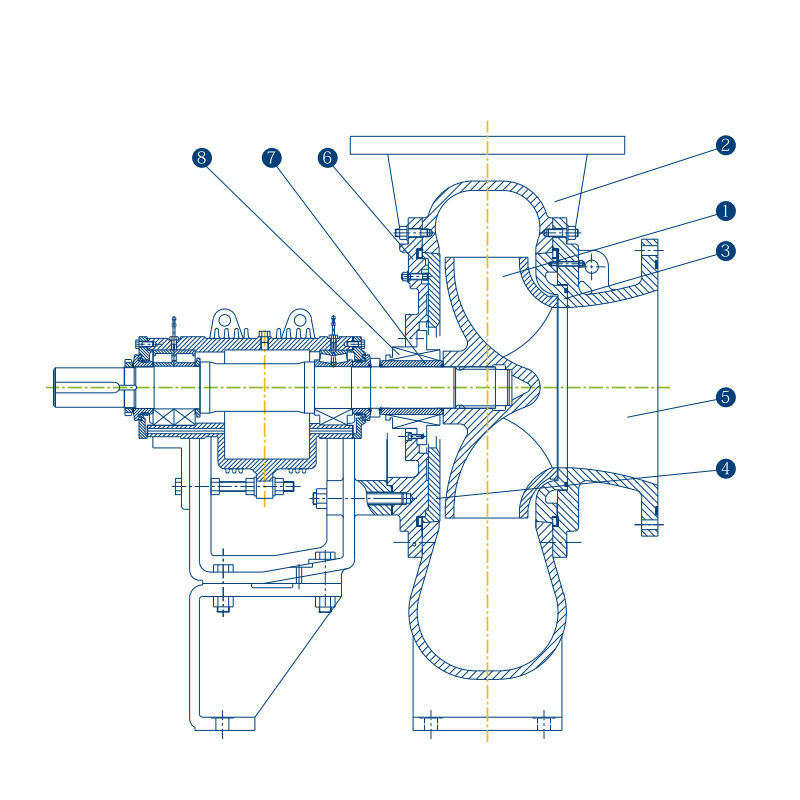
The construction of a china centrifugal slurry pump, vertical, necessitates careful material selection to withstand the abrasive and corrosive nature of the slurries handled. Key components and their typical materials include: the impeller (high-chrome cast iron, typically 27% Cr), casing (high-chrome cast iron or ductile iron with a rubber lining for highly abrasive slurries), shaft (alloy steel, such as 4140, heat treated for strength and wear resistance), and seals (various elastomers like EPDM, Viton, or PTFE depending on chemical compatibility). The impeller’s metallurgy is paramount; the high chromium content increases hardness and wear resistance, crucial for combating erosion. Manufacturing generally follows these steps: impeller casting and machining, casing casting and lining (if applicable), shaft forging and machining, assembly, and rigorous quality control, including hydrostatic testing and impeller balancing. Welding is common in the casing construction, demanding qualified welders and adherence to welding procedures (e.g., AWS D1.1) to prevent defects. Rubber lining application requires precise surface preparation and controlled vulcanization to ensure a strong bond and effective corrosion protection. Parameter control during casting, such as cooling rate and mold material, directly influences the microstructure and mechanical properties of the components. The hardness of the impeller is routinely measured using Rockwell C hardness testing to confirm material specifications. Improper heat treatment can lead to brittle failure of the shaft and impeller.
Performance & Engineering
Performance of a vertical centrifugal slurry pump is governed by fundamental principles of fluid dynamics and pump affinity laws. Key performance parameters include flow rate (Q), head (H), power consumption (P), and pump efficiency (η). The pump’s hydraulic design, specifically impeller geometry and casing volute shape, significantly influences these parameters. Force analysis reveals that the impeller experiences centrifugal forces due to rotation and hydraulic forces from the slurry. These forces induce stresses in the impeller and shaft, requiring robust design and material selection. Environmental resistance is a major consideration; pumps operating in harsh environments (e.g., extreme temperatures, corrosive atmospheres) require specialized coatings and materials. Compliance with industry standards, such as those set by Hydraulic Institute (HI) standards, is essential. Proper pump selection involves matching the pump curve (Q-H curve) to the system curve (resistance curve) to ensure optimal performance and avoid cavitation or overload. Cavitation, the formation and collapse of vapor bubbles, can severely damage the impeller. Net Positive Suction Head Required (NPSHr) must be carefully calculated and compared with Net Positive Suction Head Available (NPSHa) to prevent cavitation. Vertical pumps are susceptible to column vibration; proper alignment and support are crucial to maintain operational stability. Understanding the slurry’s specific gravity and viscosity is critical for accurate pump sizing and performance prediction.
Technical Specifications
| Parameter | Unit | Typical Range (China Manufactured) | Notes |
|---|---|---|---|
| Flow Rate | m³/h | 5 – 800 | Dependent on impeller diameter and speed. |
| Head | m | 10 – 120 | Related to impeller design and speed. |
| Slurry Concentration | % by weight | Up to 70 | Higher concentrations require robust impeller design. |
| Particle Size | mm | Up to 75 | Larger particles necessitate wear-resistant materials. |
| Pump Speed | RPM | 500 – 3600 | Variable frequency drives (VFDs) allow for speed control. |
| Motor Power | kW | 1.5 – 300 | Power rating determined by flow rate, head, and fluid properties. |
Failure Mode & Maintenance
Vertical centrifugal slurry pumps are subject to various failure modes. Common issues include impeller wear (erosion and abrasion), casing wear (especially in the volute region), seal failure (leading to leakage), bearing failure (due to overload or contamination), and shaft breakage (due to fatigue or corrosion). Failure analysis often reveals that impeller wear is the most frequent cause of performance degradation. The type of wear depends on the slurry composition; abrasive wear is dominant with hard particles, while corrosive wear occurs in acidic or alkaline environments. Seal failure is often attributed to improper seal selection, installation errors, or abrasive particles damaging the seal faces. Bearing failure can result from inadequate lubrication, contamination, or excessive load. Preventive maintenance is crucial to extend pump life. This includes regular inspection of impeller and casing for wear, seal replacement based on a defined schedule, lubrication of bearings, and monitoring of vibration levels. Non-destructive testing (NDT) methods, such as ultrasonic testing and radiography, can be employed to detect internal cracks or defects. Implementing a planned maintenance program, including logbooks documenting maintenance activities and repair history, is essential for optimizing pump reliability. Regular impeller balancing minimizes vibration and extends bearing life.
Industry FAQ
Q: What are the primary differences between a vertical and horizontal slurry pump regarding maintenance accessibility?
A: Vertical slurry pumps generally offer easier access to the impeller and internal components for maintenance, as the pump design allows for removal from the top without disturbing piping. Horizontal pumps often require disconnecting piping to access the impeller, increasing downtime and labor costs.
Q: How does slurry composition affect the choice of impeller material?
A: Highly abrasive slurries necessitate impellers made from high-chrome cast iron or ceramic materials to resist erosion. Corrosive slurries require alloys with high nickel and molybdenum content or rubber-lined impellers to prevent chemical attack. The concentration and particle size distribution of the slurry also influence material selection.
Q: What is NPSHa, and why is it critical to monitor?
A: NPSHa (Net Positive Suction Head Available) is the absolute pressure at the pump suction, minus the vapor pressure of the liquid. Monitoring NPSHa is critical to prevent cavitation, which can cause significant impeller damage and reduce pump efficiency. If NPSHa is less than NPSHr (Net Positive Suction Head Required), cavitation will occur.
Q: What role do mechanical seals play in the overall reliability of a vertical slurry pump?
A: Mechanical seals are crucial for preventing leakage and maintaining pump efficiency. Proper seal selection (material compatibility with the slurry) and installation are essential. Regular seal inspection and replacement based on a preventative maintenance schedule are vital for minimizing downtime and ensuring reliable operation.
Q: How does pump speed affect wear rates in slurry applications?
A: Increasing pump speed generally increases wear rates due to the higher kinetic energy of the slurry particles impacting the impeller and casing. However, reducing speed may also reduce capacity. Optimized speed control using variable frequency drives (VFDs) can balance wear and performance requirements.
Conclusion
China centrifugal slurry pumps, in their vertical configuration, represent a workhorse solution for demanding industrial fluid handling applications. Their performance and longevity are heavily dependent on careful material selection, meticulous manufacturing processes, and proactive maintenance strategies. Understanding the underlying principles of fluid dynamics, erosion mechanisms, and the impact of slurry properties is paramount for optimizing pump operation and minimizing total cost of ownership.
Future trends in vertical slurry pump technology will likely focus on advanced materials (e.g., silicon carbide), improved impeller designs (optimized for reduced wear and increased efficiency), and the integration of smart sensors and data analytics for predictive maintenance. The adoption of standardized testing procedures and quality control measures will further enhance the reliability and performance of these critical industrial components.
-
Precision at the Pump: How Better Machining Protects Flow and Uptime
News2026-11-20
-
Why Pump Reliability Begins Before the First Drop of Fluid
News2026-11-20
-
Beyond the Pump: Designing Safer Access Around Critical Water Infrastructure
News2026-11-20
-
Why Pumping Stations Depend on the Infrastructure Beneath the Pumps
News2026-11-20
-
Beyond the Pump Room: How Smarter Loading Protects Industrial Equipment
News2026-11-19
-
When Pumps Stop: Designing More Resilient Power for Critical Pumping Systems
News2026-11-19
-
The Hidden Role of Dust and Gas Monitoring in Reliable Pump Operations
News2026-11-19
-
The Hidden Role of Mineral Compounds in Extending Industrial Pump Lifespan
News2026-10-12
-
Why Pump System Reliability Depends on Precision Hose Assembly Methods
News2026-09-15
-
How Advanced Imaging Films Are Transforming Pump Component Quality Control
News2026-08-25
-
How Advanced Filtration Protects Pump Systems from Premature Wear and Costly Downtime
News2026-08-25
-
How Steel Material Selection Drives Pump Reliability in Heavy-Duty Systems
News2026-08-25
-
Ensuring Pump System Efficiency: The Role of High-Quality Pipe Fittings and Tubing
News2026-08-24
-
Optimizing Fluid Dynamics and Material Consistency in Industrial Processing
News2026-08-18
-
Innovations and Challenges in Hydraulic Systems for Heavy Machinery
News2026-08-13




